A facsimile edition of Sensation Comics #38 was released in December last year, some 81 years after it was first published in December 1944. The Wonder Woman Christmas cover seemed like a good reason to republish it, but, James Bacon realised, the stories inside seemed to offer a timely warning about contemporary America, echoing concerns of the 1940s…
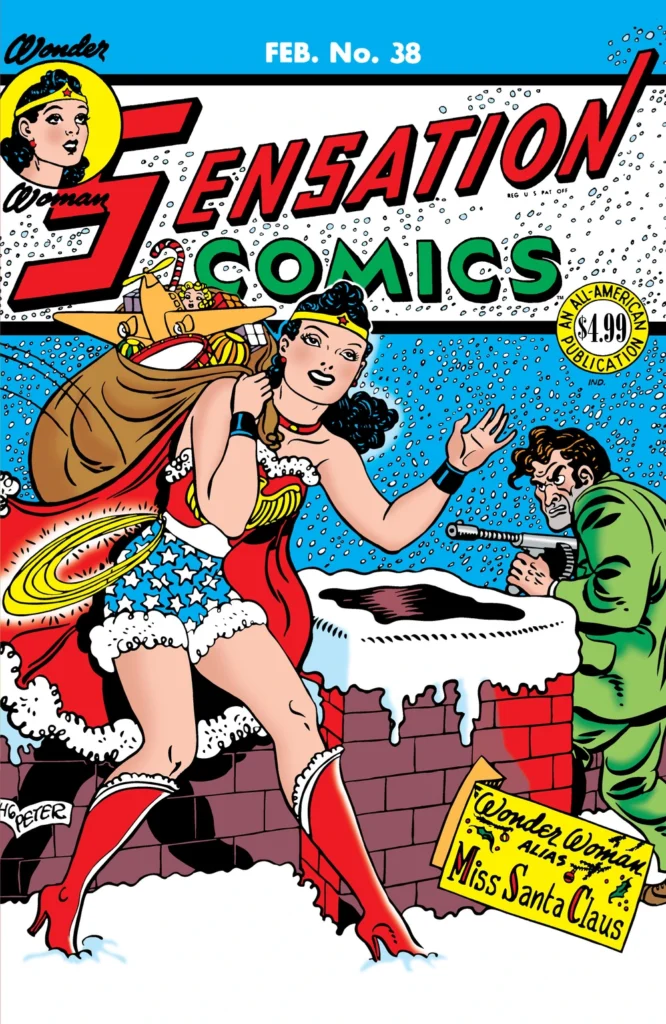
Published in 1944, Sensation Comics #38 not only sees Wonder Woman playing Santa Claus for some children who have lost all hope, a story that leads her into a fight with a gang of gold thieves; it also features the last appearance of Earl Keith Everett, aka The Gay Ghost in the title, taking on domestic hatred and Nazism, challenging right wing activities in the United Sates; and in doing so, bringing readers and one of the perpetrators to a future United States of America, where we see innocent people marched into barbed wire work camps.
For those unfamiliar with this lesser-known Irish hero, Keith Everett, The Gay Ghost, made his debut in Sensation Comics #1, published on 7th November 1941, which also saw the beginning of comics featuring the internationally renowned Wonder Woman, who first appeared in All Star Comics #8, published on 21st October 1941.
The Gay Ghost’s story began in Ireland in 1700, when the young Earl Keith Everett is ambushed by robbers, near the “ancient castle of Connaught in County Ulster, Ireland,” which is quite the location.
His horse is tripped and felled, and Everett’s shoulder smashed. Shot, he dies in the arms of his love, Deborah Wallace, but his spirit is summoned by his forebears, who offer him the chance to remain on Earth, if he agrees to avenge the evil that men do. Learning the secrets of the council of the dead, he returning to the castle, but decades later, where he must await Deborah’s return, so inhabits a picture of himself during the day, and wanders the castle at night.
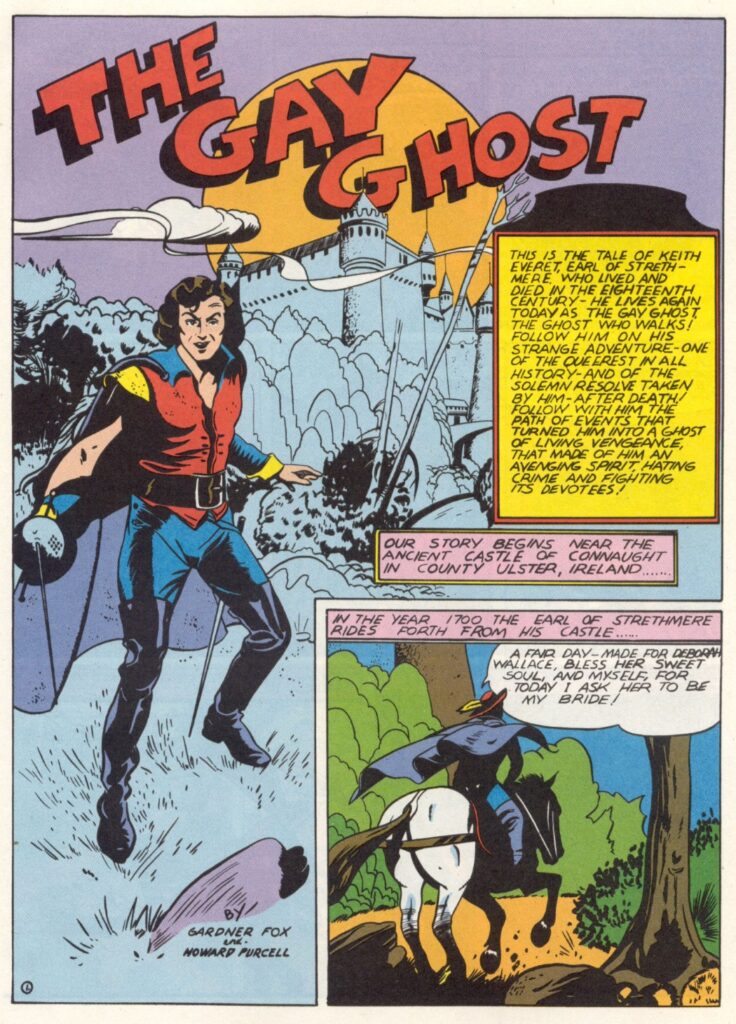
In 1941, Americans Charles Collins and Deborah Wallace visit the castle of Deborah’s ancestors. They are surprised at how well-kept the ancestral Deborah’s bedroom is. Meanwhile, “from the other side of the castle, three spies have escaped warring England” and we see three besuited men, one of whom is wearing a monocle. “Not a better place in the entire country to hide these plans for their counter invasions,” says one. The men intend to lie low in the castle, unaware that there are people there.
Keith’s ghost appears to Deborah, but at the same time, she sees the three intruders are going to attack Charles, who is shot and killed. As Charles dies, Keith sees good in him, and is able to take possession of his body, able to fight the spies. While doing so, he encounters Deborah, who is stunned by Charles’ sudden change in personality and bravery, just as Keith is stunned by how she is so like the Deborah Wallace he loved, a descendent of the woman of his affections.
Keith then leaves Charles’ body, and makes “the ectoplasmic construction of a ghostly body appear as a normal man.” He then takes on the final spy, and takes to the sky with him. On interrogating him, he learns the Nazis have stolen counter-invasion plans. Keith flies the spy to England and delivers him, and the plans, to a gathering of generals.
Returning to the castle and Deborah, Keith resumes his possession of Charles. The new Charles’ confident behaviour continues to surprise Deborah, but Keith, unfamiliar with the modern world, is also confounded by such things as how to drive a car.
The stories continue, and one can see the challenge here. Keith is utterly in love with Deborah who is not the same Deborah that he knew, but very similar. Also, he has animated the body of Charles Collins, and is deceiving her. The pair travel to America, where the Gay Ghost fights against gangsters and then fights as both pilot Charles Collins and the Gay Ghost to help with the war effort, even joining the RAF to assist.
The inherent duplicity of the relationship with Deborah is odd, and, rightly, presents a challenge to modern readers who would baulk at the appalling concept. Collins is not who he once was, and there is clearly an unease between the characters. While they occasionally kiss and plan a “date”, Deborah expresses an unsureness towards his propositions. Conversely, after she is rescued by the Gay Ghost in his spirit form, she comes to like him.
Deborah appears in less than half of the episodes, especially in earlier issues, but over time her role changes, from love interest to a supportive role, helping the Gay Ghost as she too is in the services. However, perhaps the complicated love triangle proved too hard to reconcile for the writers, and, while there could have been a nice reflective piece about the wrong that was being perpetrated here, maybe it was more expedient to ignore the relationship potential and focus on the adventure? I do not know, but, thankfully, we see this awkward aspect, to say the least, disappear.
In issue #6, with a cover date of June 1942, we see an explicit mention of a “concentration camp”, as The Gay Ghost effects an escape attack at the camp. At this stage during the war years, only 24 US comics had made reference to concentration camps, making this comic particularly notable.
Charles Collins joins the US Army Air Force and, as required, Keith leaves Collins’ body to be the Gay Ghost, to fight against Nazi spies, American renegades, helps rid an island of Japanese invaders, defeat a U-boat and spy team set up, and uncovers a secret Nazi base with a giant magnet acting as a tractor beam. A few stories are unrelated to the war, featuring gangsters and criminals with some addressing political corruption.
Issue #21 is set in a mine in Mexico, The Gay Ghost meets the ancient “El Espada”, who has uncovered the water of eternal life in the mine. Deploring violence, El Espada denies use of the mines’ resources to the United States. The Gay Ghost takes him on a tour, showing him civilians being executed by firing squad, a beating in a “Concentration Camp”, and starvation, and is convinced to help. A Nazi saboteur is uncovered, and El Espada is killed when the Eternal Life pool is blown up.
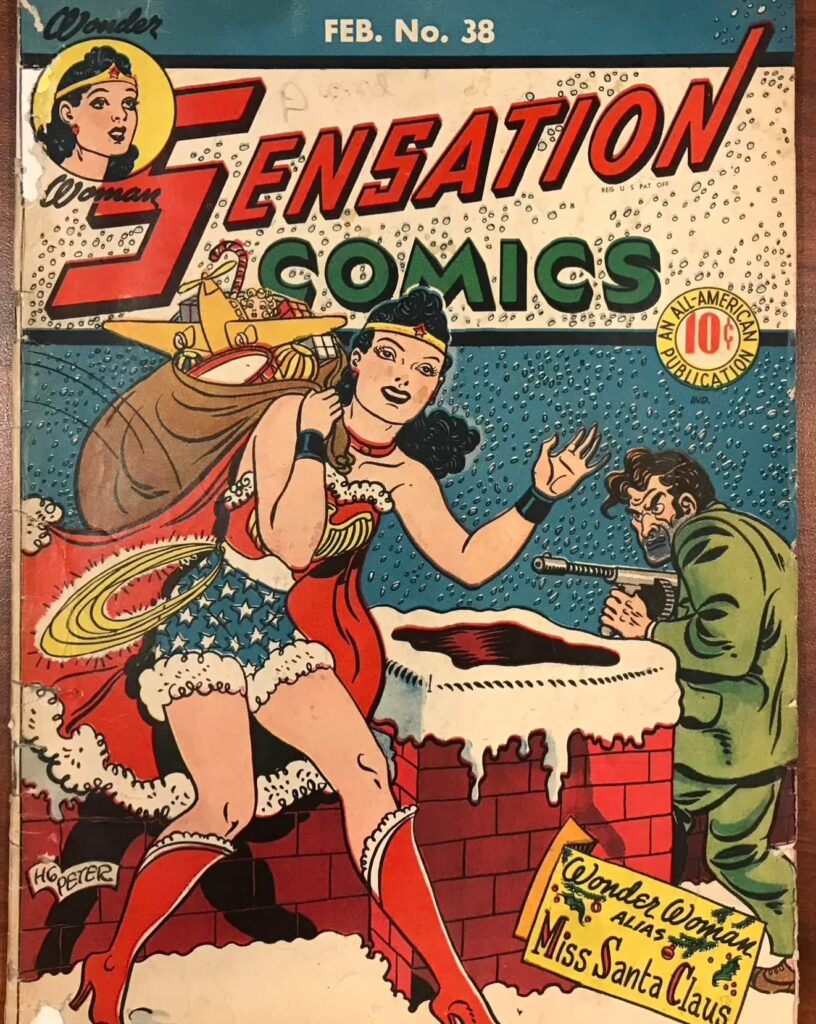
Sensation Comics #38, published in December 1944, marks the final appearance of the Gay Ghost in American Comics “Golden Age”. The creation of writer Gardner Fox and artist Howard Purcell, he would not be seen again until Secret Origins (Volume 2) #42 (July 1989). He later appeared in Animal Man #25 (July 1990).
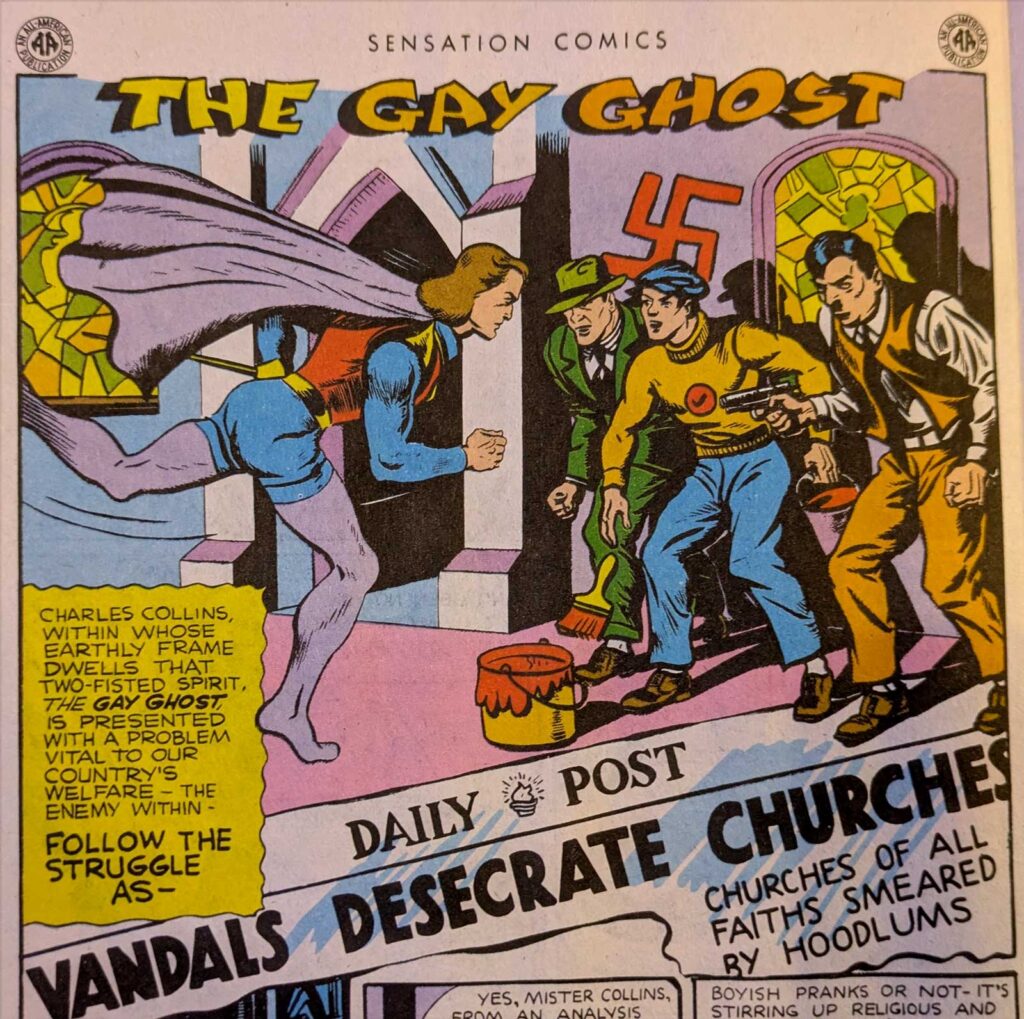
Titled “Vandals Desecrate Churches”, the story sees swastikas and a Star of David daubed onto churches. We see Charles Collins taking an interest in the situation, and a local police officer tells him, “Boyish pranks or not, it is stirring up religious and racial hatred” and continues “just like the Nazis and Fascists did in Europe.”
Collins starts to investigate, and we concurrently see “The Checker Club”, where boys are gathering, and one of the boys wears a tick symbol in a red circle, emblematic of Nazi symbolism. The boys are being encouraged by a man called Spike, who works for another man called “Mr. Haytler”, who has a small moustache.
Collins figures out the next target, and surprises Spike and four boys. Spike knocks out Collins, and as he disposes of the body, we see the Gay Ghost leave Collins’ body, and then reform among the boys, who are tearing up hymnals and desecrating the church.
The Gay Ghost catches one of the vandals, Larry, and transports him to a future where we see the tick symbol on armbands and elsewhere, and symbols being painted on house doors. The lad’s parents are traduced and rounded up, based on a false accusation of one of the armbanded thugs.
Then, a mob of the “Party Members” attack Larry’s parents, and even when the police are called “The cops are only laughing”, as we learn that the parents are “Anti-New Order! “They don’t worship the great “I AM”, we’re told, and we see that they are going to be chucked into a “Work Camp”.
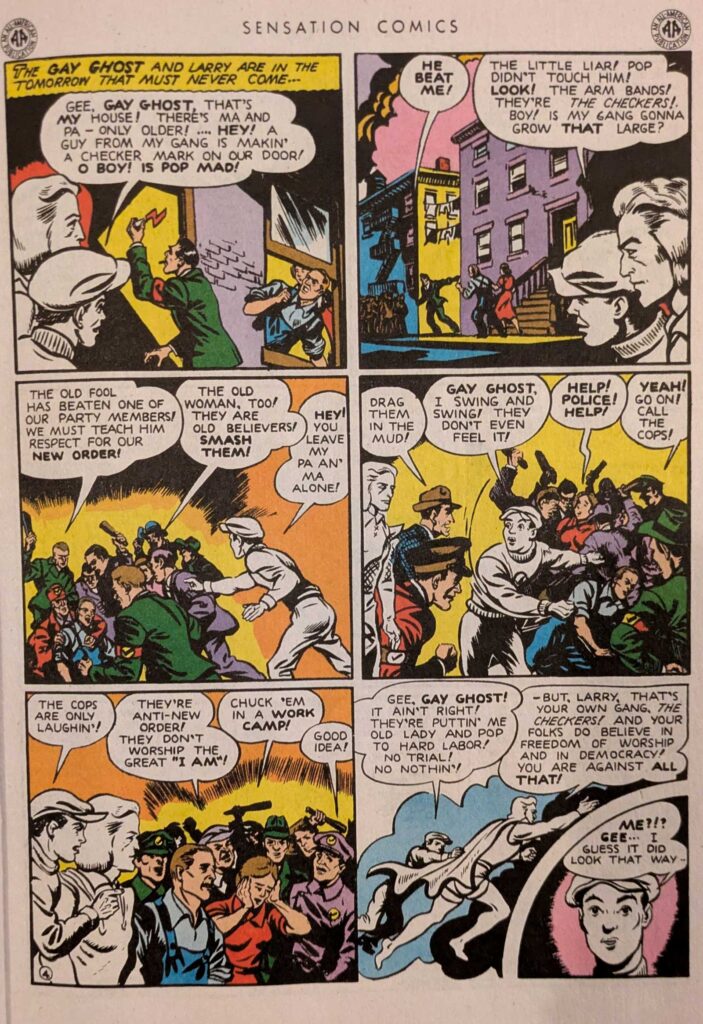
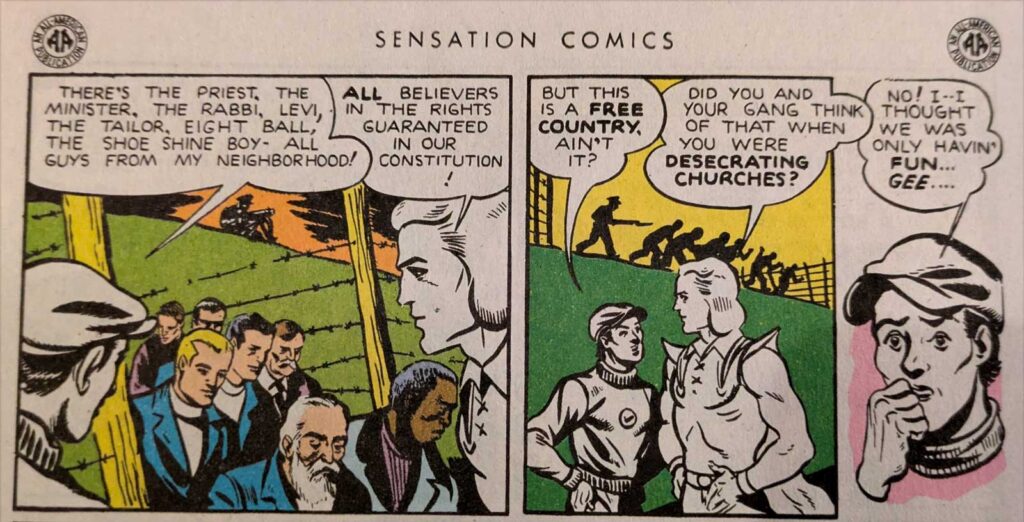
Larry is aghast, and cannot comprehend it, and the Gay Ghost tells him “But Larry, that’s your own gang, the Checkers! And your folks do believe in freedom of worship and democracy.”
We then see people being led into a barbed wire camp, and Larry recognises “the Priest, the minister, the Rabbi, Levi, the Tailor, Eightball’ as they go, and he realises, with the Gay Ghost’s help, the horrendous mistake he was making.
The Gay Ghost and Larry return in their spirit form to their now of 1944, and they see that Spike is painting a six-pointed star on the barrel that contains the hidden body of Charles Collins, “to stir up more racial hatred”. Then we see he betrays Larry, by leaving the paint in Larry’s locker for the police to find. But then, the tables turn on Spike, as we see that Haytler is very unhappy with him needing to escape the city to and shoots him. All the time, Larry is looking on, realising what kind of “rat whose dirty work I was doin’”.
Larry challenges the other lads, but they are not for turning, and a fight ensues, but small ghosts, souls of mobsters, miniaturised and with wings, called the “Nixies”, help Larry to defeat the boys, who follow his lead, and then they, as a group, take on Haytler and his henchmen, and Haytler is brought to court.
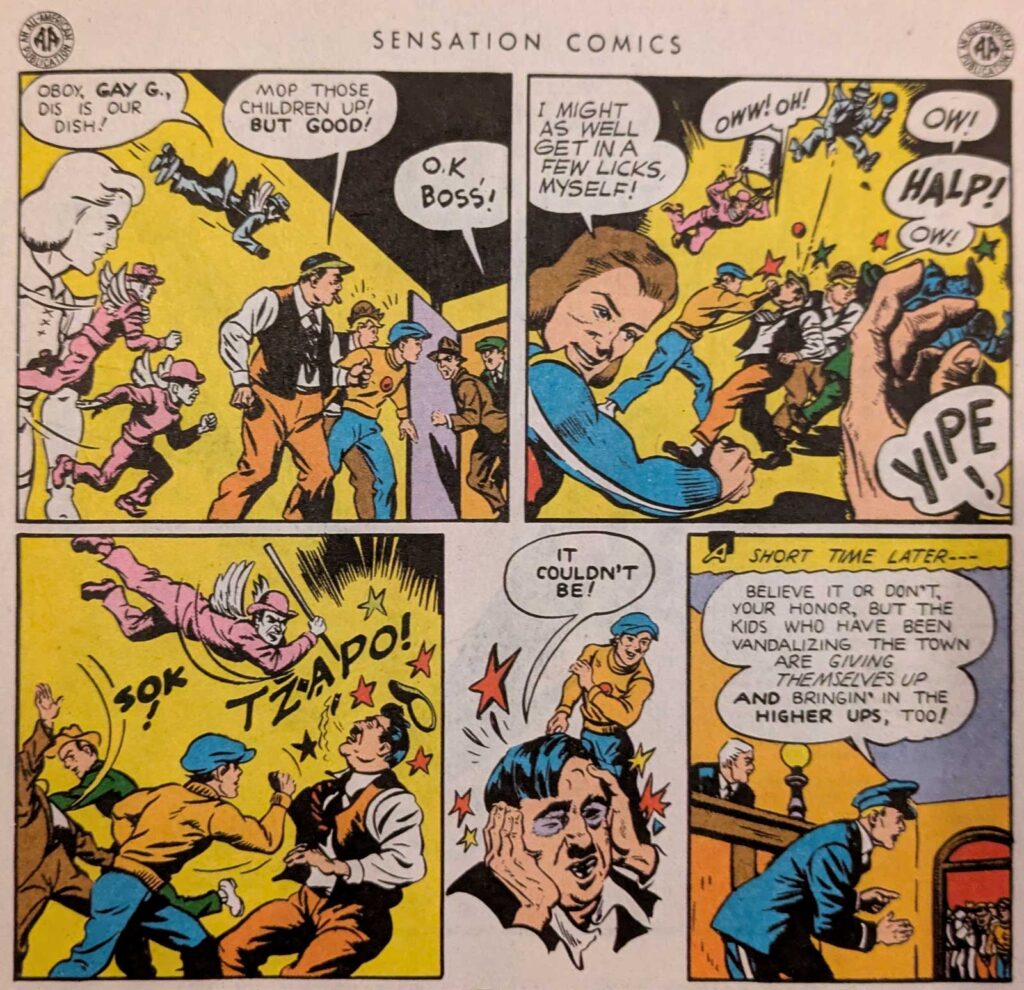
This was a very unusual but important story. The portrayal and discussion of domestic religious and racial hatred and what its portrayal of what is effectively a concentration camp was rare for the time. Indeed, concentration camps were only mentioned about forty times during the war period in American comics. But the concept of homegrown right wing Nazi-like behaviours was valid, given the activities of the German American Bund, a Nazi organisation with the Swastika on their flag.
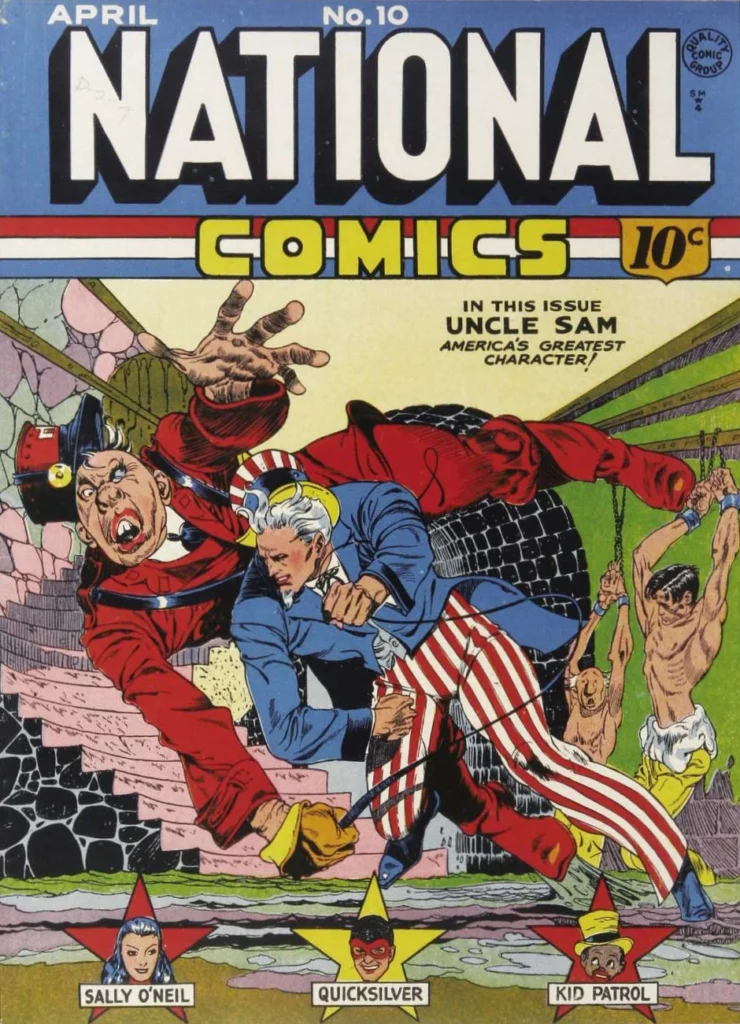
National Comics #10, in April 1941, for instance, saw Uncle Sam uncovering a plot featuring members of the Bund, and also featured a concentration camp: but “Vandals Desecrate Churches” offers fresh take on youths being encouraged by Nazis, making it notable.
Over the fictional life of The Gay Ghost, various writers and artists undertook duties on the comic, but there is no doubting that this was a very strong messaging. In December 1944, issues of Sensation Comics were edited by Sheldon Mayer and Julius Schwartz, who were both Jewish, with art by Jon L. Blummer, who was of Jewish-Romanian heritage.
The story took the opportunity to bring the spectre of concentration camps to readers, without calling them that, and I think it is very clever to use the Gay Ghost, an Irish character, as a vehicle for this concept. There would have been sympathy for the challenges that faced Ireland at the time, and so the messaging may have resonated strongly among some.
The Gay Ghost talks about the importance of “Freedom of Worship and Democracy”, and there is a clear warning about the prospect of “our most dangerous internal enemy” which is hatred of religion and race.
Who would have anticipated that DC comics would re-release such a prescient and topically current comic at this challenging time? Perhaps it is some element of synchronicity, but one which demonstrates the care and worries that are perennial to democracies, and which have been voiced in comics for decades.
To have such a message at this time, when hatred, persecution, religious and racial strife are at unbelievable levels, as the murdered innocent are being traduced as traitors is astonishing, and creates a sad parallel between fiction of 80 years ago and real-life occurrences now in the United States.
James Bacon
• Facsimile Edition: Sensation Comics #38 a one-shot with a cover date of February, 2026, was published by DC Comics on 17th December 2025 | Buy the Digital Edition (AmazonUK Affiliate Link)
Head downthetubes for…
• ComicTeams.com: The Gay Ghost
• Siskoid’s Blog of Geekery: The Grim Ghost
Further Reading…
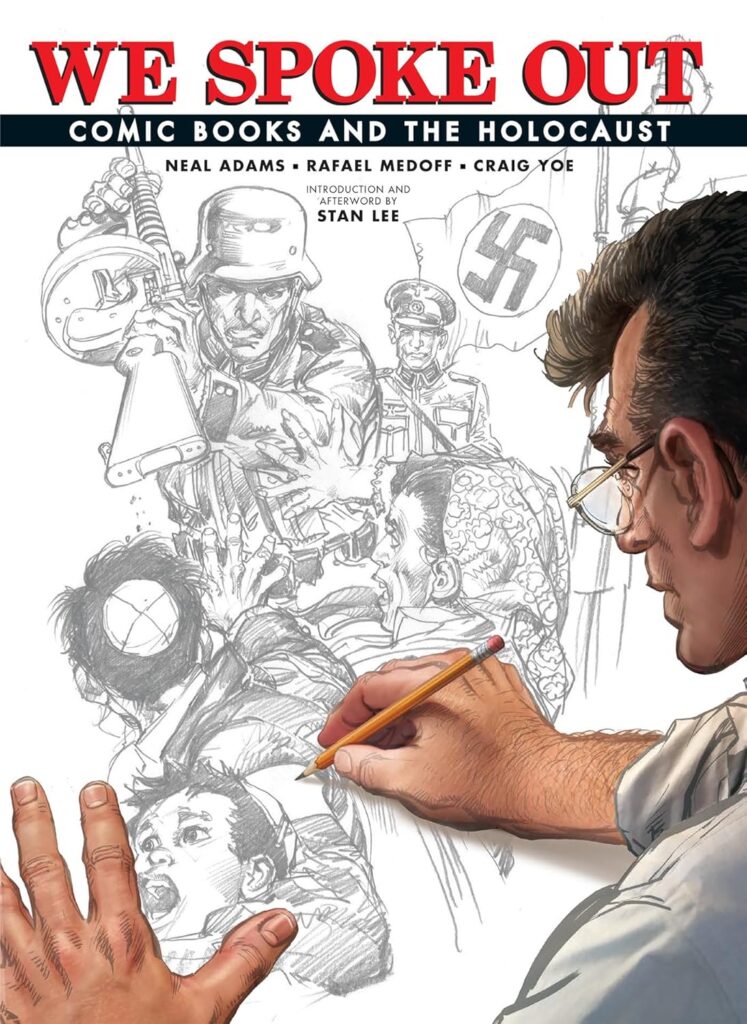
• We Spoke Out Comic Books and the Holocaust
Neal Adams, Rafael Medoof, Craig Yoe and Stan Lee
ISBN: 978-1631408885
Classic comic book stories about the Holocaust and interviews with their artists and writers, with a cover drawn especially for this book by Neal Adams.
An amazing but forgotten chapter in comics history! Long before the Holocaust was taught in schools or presented in films such as Schindler’s List, the youth of America was learning about the Nazi genocide from Batman, the X-Men, Captain America, and Sgt. Rock. Comics legend Neal Adams, Holocaust scholar Rafael Medoff, and comics historian Craig Yoe bring together a remarkable collection of comic book stories that introduced an entire generation to an engaging and important subject. We Spoke Out is an extraordinary journey into a compelling topic.
• Beyond Maus: The Legacy of Holocaust Comics
Ed. Ole Frahm, Hans-Joachim Hahn, and Markus Streb
ISBN: 978-3205210658
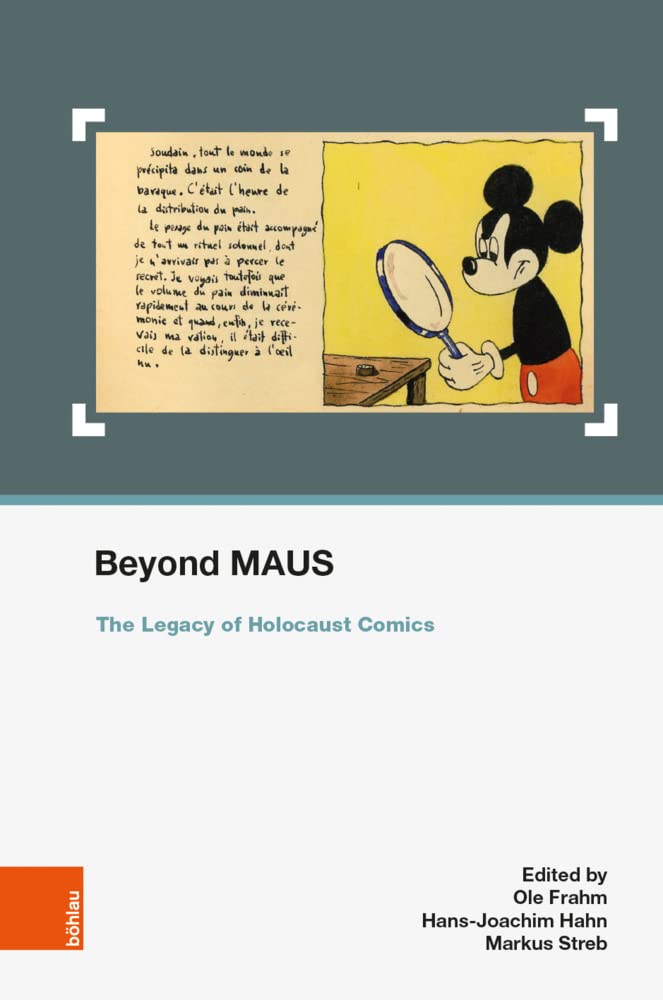
Beyond MAUS. The Legacy of Holocaust Comics collects 16 contributions that shed new light on the representation of the Holocaust. While MAUS by Art Spiegelman has changed the perspectives, other comics and series of drawings, some produced while the Holocaust happened, are often not recognised by a wider public.
A plethora of works still waits to be discovered, like early caricatures and comics referring to the extermination of the Jews, graphic series by survivors or horror stories from 1950s comic books.
The volume provides overviews about the depictions of Jews as animals, the representation of prisoner societies in comics as well as in depth studies about distorted traces of the Holocaust in Hergé’s Tintin and in Spirou, the Holocaust in Mangas, and Holocaust comics in Poland and Israel, recent graphic novels and the use of these comics in schools. With contributions from different disciplines, the volume also grants new perspectives on comic scholarship.
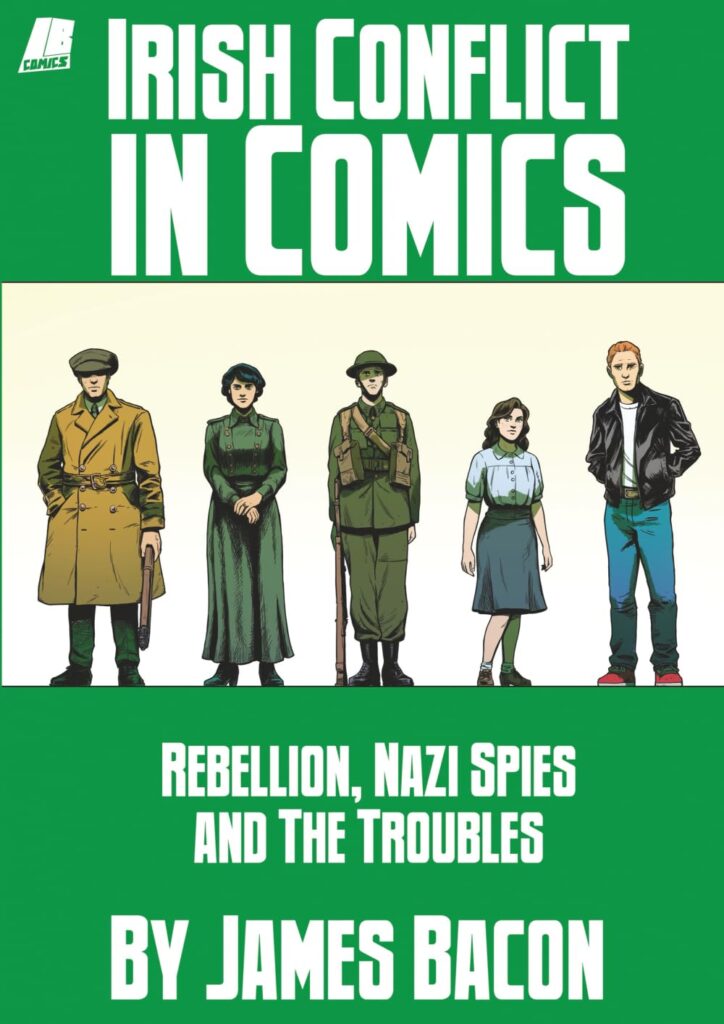
• Irish Conflict in Comics by James Bacon
This book is a unique catalogue of research, commentary, and discussion about Irish conflict and the portrayals of Irish characters in comics.
In 1943, Marvel’s Namor fought alongside the I.R.A to defeat Nazi spies in “The Green Island Menace” in Sub-Mariner #9. Even more surprising is a 1980s Spider-Man story featuring the I.R.A. resulting in a bomb threat against the Marvel New York offices, prompting their staff to evacuate onto the street.
The presence of Irish elements persists throughout comic book history. ‘Rookie’ in Red Ryder and ‘Minuteman’ in Master Comics also fought against Nazi Spies and infiltrators in Ireland during the Second World War. Discover Irish characters in a variety of historical portrayals, such as in Prince Valiant and The Thrilling Adventures of Robin Hood, as well as Eamon de Valera, Hero of Ireland.
In Ireland, Irish comics were produced to challenge the foreign imports in the 1950s. The Leprechaun, Sarsfields the Name, Sarsfields the Man, and Éire – Sean is Nua provided alternatives to the ‘avalanche of imported comic papers which are doing great harm to youth’.
American and European portrayals of Irish conflict expanded from the 1970s onward, mirroring contemporary interest and awareness of The Troubles occurring in Ireland, and this book examines these portrayals, speaking to the very strong and disappointing stories. It also considers the incredible underground works that came from Northern Ireland in the 1970s, such as The Hand by John Kindness, and then later seminal portrayals of the Troubles from Northern Ireland such as Troubled Souls and Holy Cross.
Looking at over 150 comic stories and over 300 individual comic books, this is an invaluable reference work for those interested in Ireland, Irish history, and comics.
The Gay Ghost
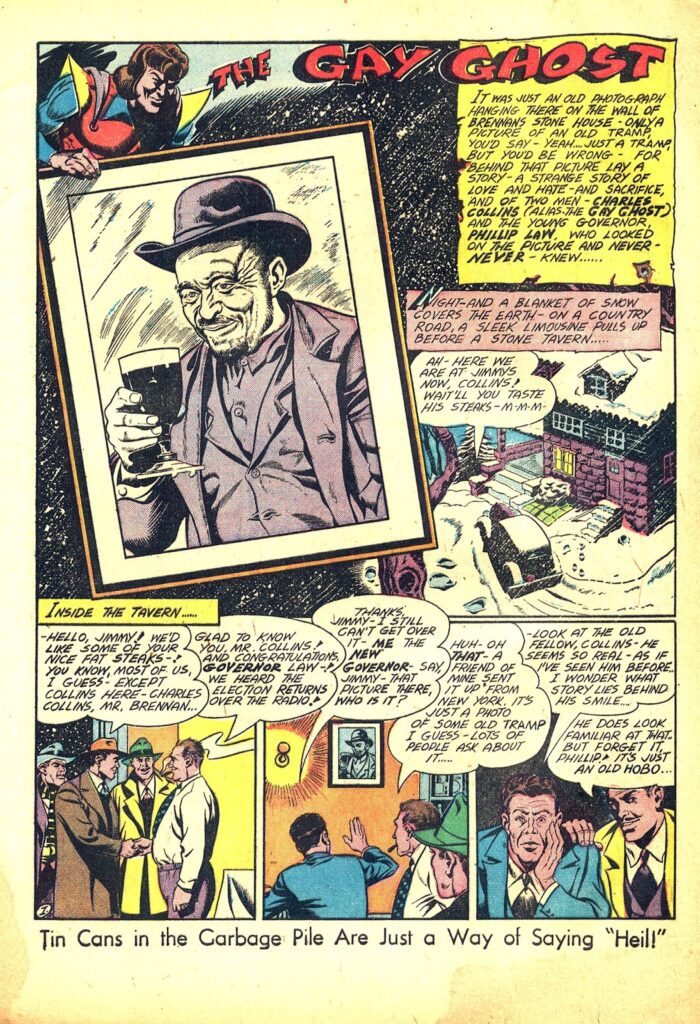
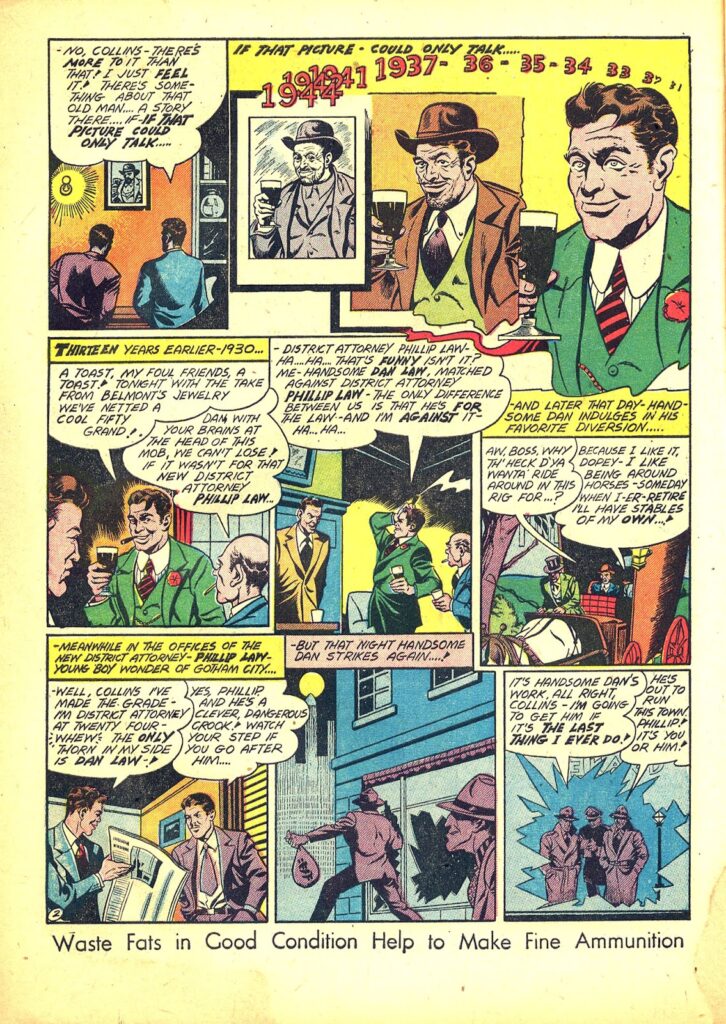
Keith Everett has appeared in 42 comics to date: Sensation Comics #1 to #13 and then #15 to #33, and then #38. There was also a Gay Ghost story in Comics Cavalcade #4 in September 1943, where we hear the story of a Nazi, a very nasty one at that, Otto Strossel, who was “born and reared a Nazi”. Hitler is quoted as saying “The strong must destroy the Weak” and The Gay Ghost shows up and defeats Strossel. Some of this story is set in Gotham, where we later hear, in DC’s Who’s Who, as being his base of operations.
The Gay Ghost story from Sensation Comics #8 was re-published in World’s Finest #212 in June 1972 but saw the story retitled as “The Grim Ghost: The Outland Pirates”. This was a clear change of language.
Sensation Comics has been reprinted a number of times: in 1974 Sensation Comics #1 was reprinted as an oversized Famous First Edition #C-30 and then in 2000, there was a Millennium Edition reprint ofSensation Comics #1.
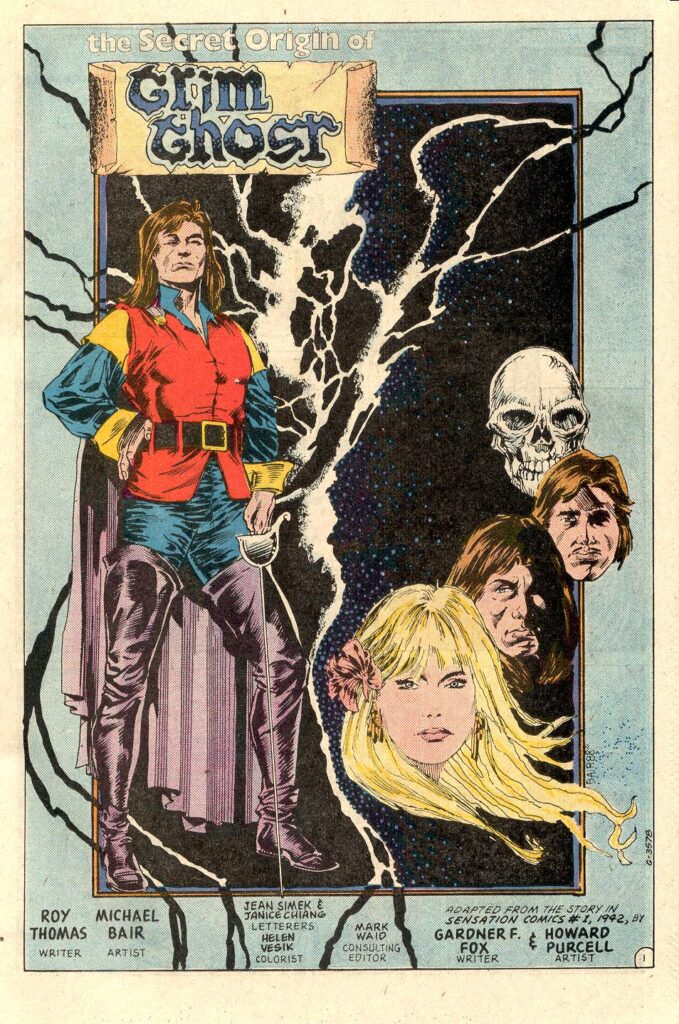
In November 1985 in DC’s Who’s Who Volume 1 #9 there is a full page entry for “The Grim Ghost”, beautifully illustrated by Bill Sienkiewicz. In The History of the DC Universe by Marv Wolfman and George Perez in 1987 we see a panel about Keith Everett who is called “The Grim Ghost”, bringing us neatly to the Secret Origins issue.
Two other comics had appearances of Keith Everett. Animal Man #25 by Grant Morrison and Chris Troug in July 1990 sees Animal Man enter “Comic Book Limbo”. A dashing looking Everett introduces himself: “They call me the Gay Ghost” and this causes Animal Man to be lost for words “… ah… Hi…” is all he can awkwardly manage. “Yes, I know. I just hope they don’t bring me back”, he responds, and we Animal Man continue on his journey.
“Who is the Grim Ghost?” ran in Secret Origins (July 1989, DC Comics), written by Roy Thomas drawn by Michael Bair, which gives a fulsome account of the history of the character.
In Starman #62 by James Robinson and Peter Snejbjerg, (December 1999) we see Ted Knight in the Opal City Starman Museum remembering previous times, and he recollects a fight, which is presented as a large splash image, and we see the figure of Keith Everett armed with a sword amongst twelve other heroes and villains. No words, or name is uttered. This was the last appearance of the character, back to Limbo for twenty-six years.
- About the Author
- Latest Posts

James Bacon (he/him) is an Irish fan, a train driver living in London and much appreciated contributor to downthetubes. A Hugo Award-winning editor of the fanzine Journey Planet, he is a comic fan and enjoys comic art, war comics, Star Wars, Irish aspects to comics and railways in comics or otherwise.
He has been writing about comics for over thirty years and is author of Irish Conflict in Comics in the 20th Century: Rebellion, Nazi Spies, and The Troubles (also available from AmazonUK, Affiliate Link), and A Sensual Cesspool of Iniquity, available from Limit Break Comics, as well as on Amazon.co.uk (Affiliate Link) | Amazon.com | Amazon.ie
Categories: Comics, Creating Comics, downthetubes Comics News, US Comics
 On This Day, in 1972, Britain welcomed the arrival of The Mighty World of Marvel
  In Memoriam: New Yorker Cartoonist P.C. Vey
  Tube Surfing: A Comic That Never Was, Corgi Comic Cars, UK Kickstarters and a Bendy Dalek!
  Wallace Wood Centennial Celebration Strange Worlds expanded edition announced
The Wonder Woman title Sensation Comics #38 isn’t available anymore even as a kindle format. Seems that they are even censoring comics now.
Hi Diego – we can still get the digital Sensation Comics #38 here in the UK via AmazonUK (Affiliate Link) – and this is definitely the official DC release. Sensation Comics Featuring Wonder Woman #38, released in 2015,
by Matthew Manning (Writer), Georges Jeanty (Penciller), Karl Story (Inker) is also available.