David Ferguson offers us reminder of five of British comics big names who will also be forever associated with their work on Doctor Who comics – working with several other creatives who are also considered legends, along the way…
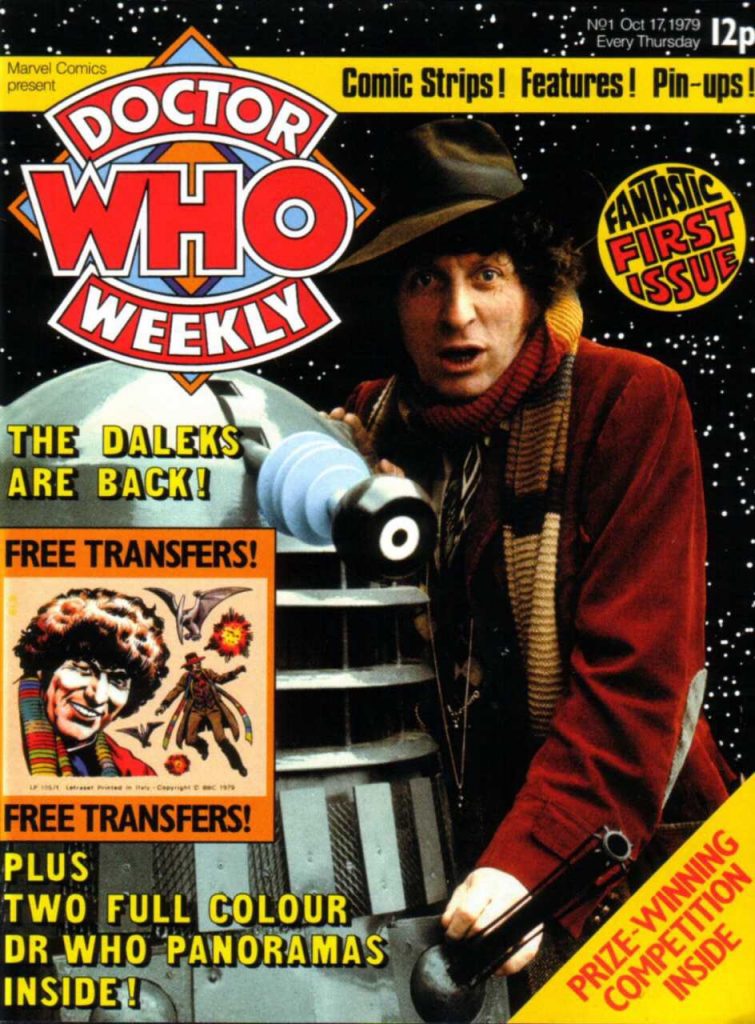
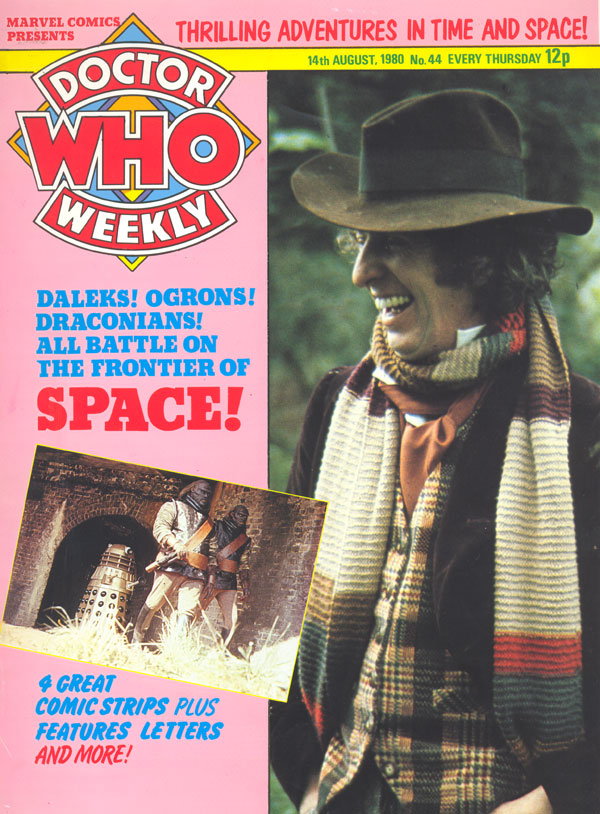
Doctor Who Magazine launched as Doctor Who Weekly with Issue One cover dated 17th October 1979 up to Issue 43, cover dated 7th August 1980, before going monthly – although a cover for Doctor Who Weekly No. 44 was designed before the change was decided. The title then became Doctor Who Monthly until Number 85 (February 1984), becoming Doctor Who Magazine, the name it has kept to the present day. I’ve largely used the abbreviation DWM in this piece. (The title’s eventual 13-issue a year frequency, beginning with Issue 164, edited by John Freeman, helped put paid to making “Monthly” a redundant description).
2000AD writer and comic archivist Michael Carroll offers a the history of the comic / magazine’s name and logo changes here on his indispensable Rusty Staples blog.
The collections listed – all links affiliates – are the first print dates or most recent, or those easiest to find (although some are more expensive than others depending on the seller – also try auction sites or your local charity shops for cheaper editions). Some early Doctor Who strips mentioned, such as “The Iron Legion”, have been reprinted multiple times.
John Wagner & Pat Mills
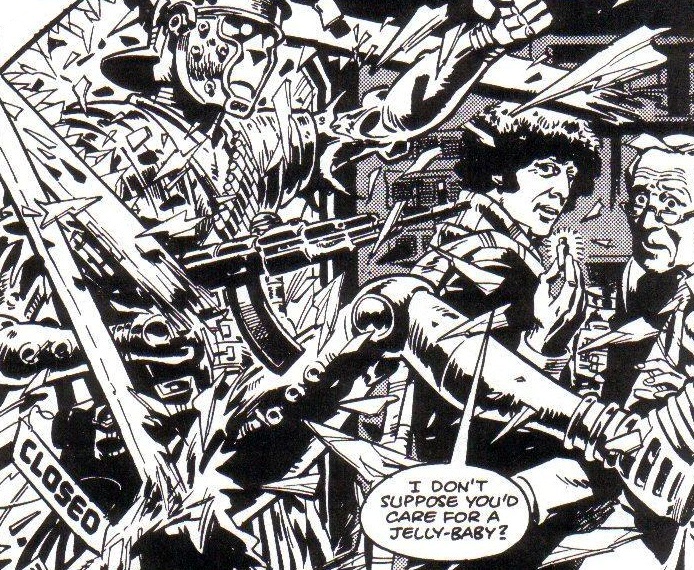
Issues: Doctor Who Weekly 1-16,19 – 34, with artist Dave Gibbons
Collection: Doctor Who: The Iron Legion (2004, 2013)
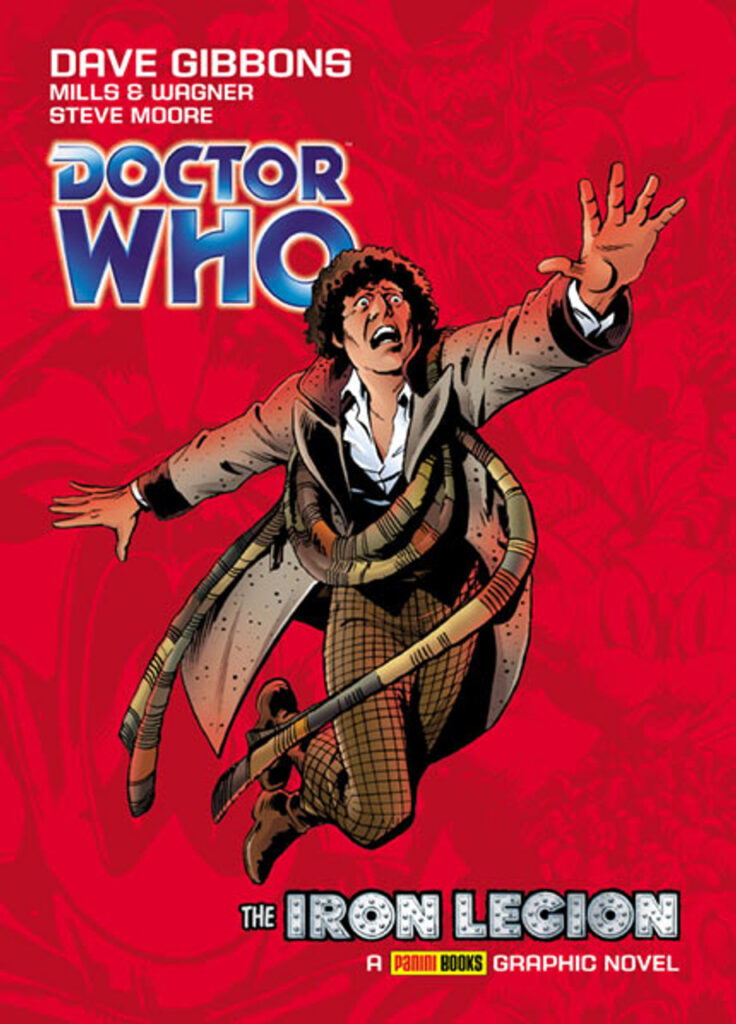
This first one counts as one and two for this list. The two 2000AD legends were working together at the time to obtain work, but would usually write alone. They pitched stories for the TV show and the magazine.
For the earliest issues of Doctor Who Weekly, the duo wrote alternate stories, “The Iron Legion” (#1–8) written by Pat Mills, “City of the Damned” (#9–16) and “Dogs of Doom” (#27–34) were written by John Wagner. The title’s best known early story, “The Star Beast” (#19–26), was by.
All four Mills and Wagner stories were collaborations to a greater or lesser extent as initial story ideas, and all the stories were drawn by legendary artist Dave Gibbons. Some have noted that Wagner’s stories are a bit darker, while Mills are a bit wackier.

“The Iron Legion” and “The Star Beast” were later adapted by DWM comic writer Alan Barnes into audio adventures by Big Finish, and Pat Mills has written several Doctor Who audio dramas, including “The Song of Megaptera”, a Sixth Doctor story.
The latter was originally a story, “Song of the Space Whale” that began life as an idea for the comic strip, but Mills and Wagner instead pitched it as a television story for the Fourth Doctor. In 1982 scripts were commissioned as a Fifth Doctor, Tegan and Nyssa story introducing Turlough for Season 20 but after running into script problems it was replaced by Mawdryn Undead. John Wagner dropped out around this time.
In 1984 the story was rewritten by Mills as “Space Whale”, a Sixth Doctor and Peri story scheduled for Season 22 but was again dropped, this time replaced by Vengeance on Varos.
“The Star Beast” also, of course, influenced the 60th anniversary TV story of the same name.
Dave Gibbons
Issues: 1-16, 19 – 57, 60 – 69, with writers Pat Mills, John Wagner, Steve Moore and Steve Parkhouse
Collections: Doctor Who: The Iron Legion (2004, 2013), Doctor Who: Dragon’s Claw (2005), Doctor Who: The Tides of Time (2005); Doctor Who: Dave Gibbons Collection HC (2011)
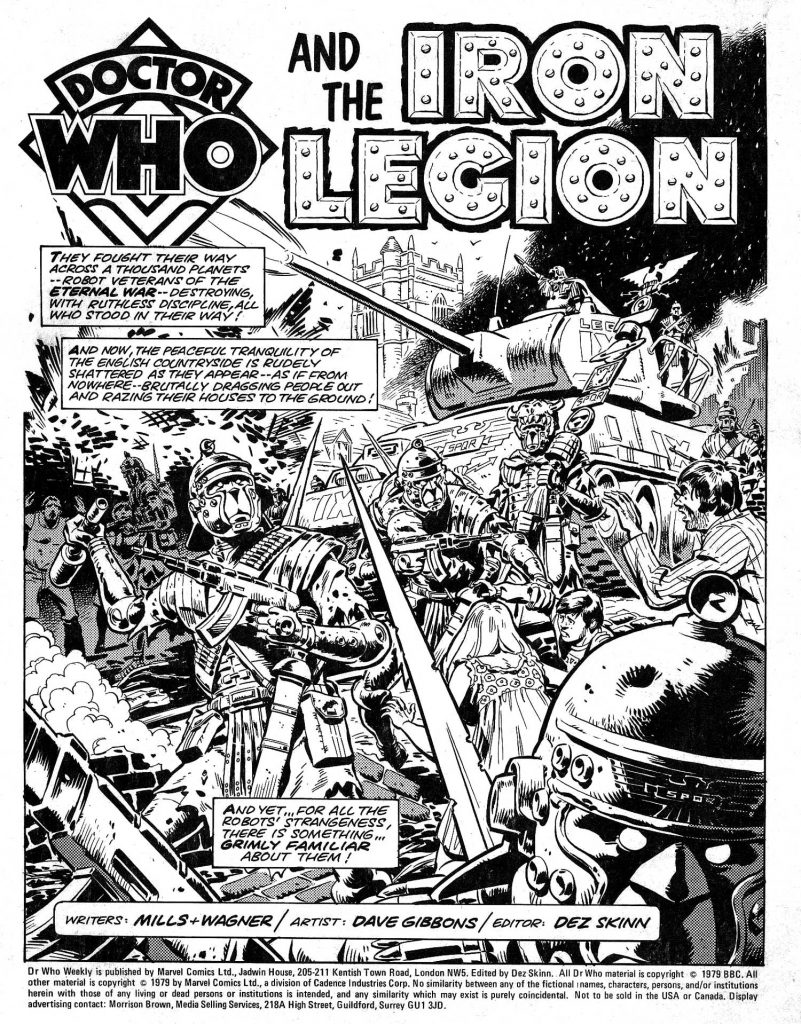
Dave Gibbons, as mentioned, started out drawing Doctor Who stories working with Pat Mills and John Wagner but would be the primary series artist until issue 69, missing out on only four issues along the way, providing sixteen stories in total. During his run, the lead actor of the TV series changed, from Tom Baker to Peter Davison and Mills and Wagner were replaced by Steve Moore, then by Steve Parkhouse. Gibbons finally departed in September 1982, to work for US publisher DC Comics.
Marvel US reprinted all his stories in colour and Gibbons drew new covers for the US format collections. Eventually, after licenses had transferred, IDW reprinted the old Marvel tales, with new colouring by Charlie Kirchoff. Collected multiples times, IDW finally collected his entire run in Doctor Who: Dave Gibbons Collection (2011).
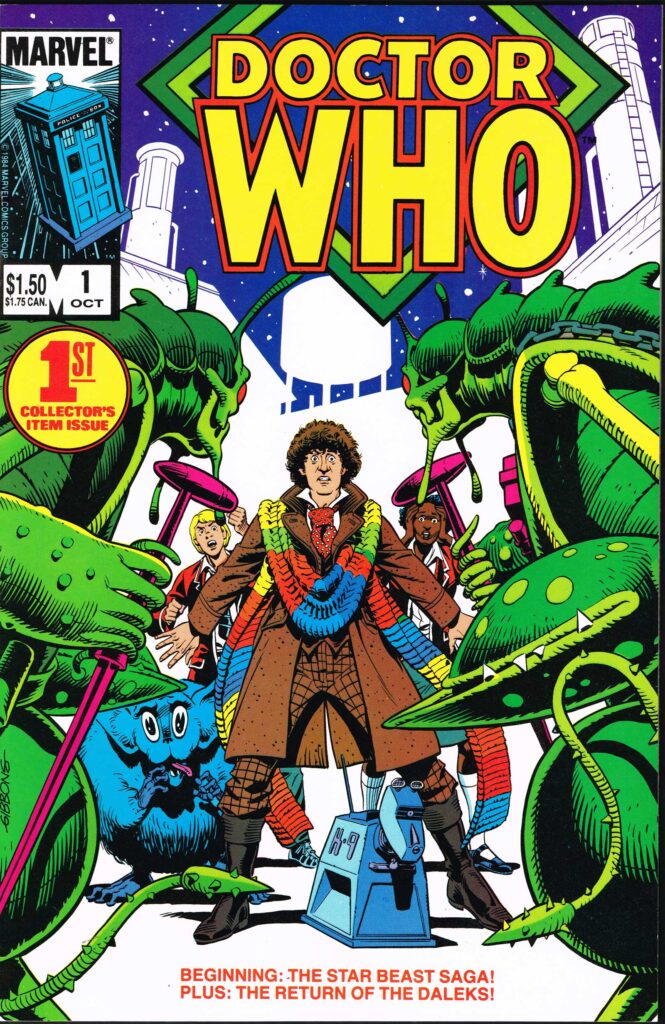
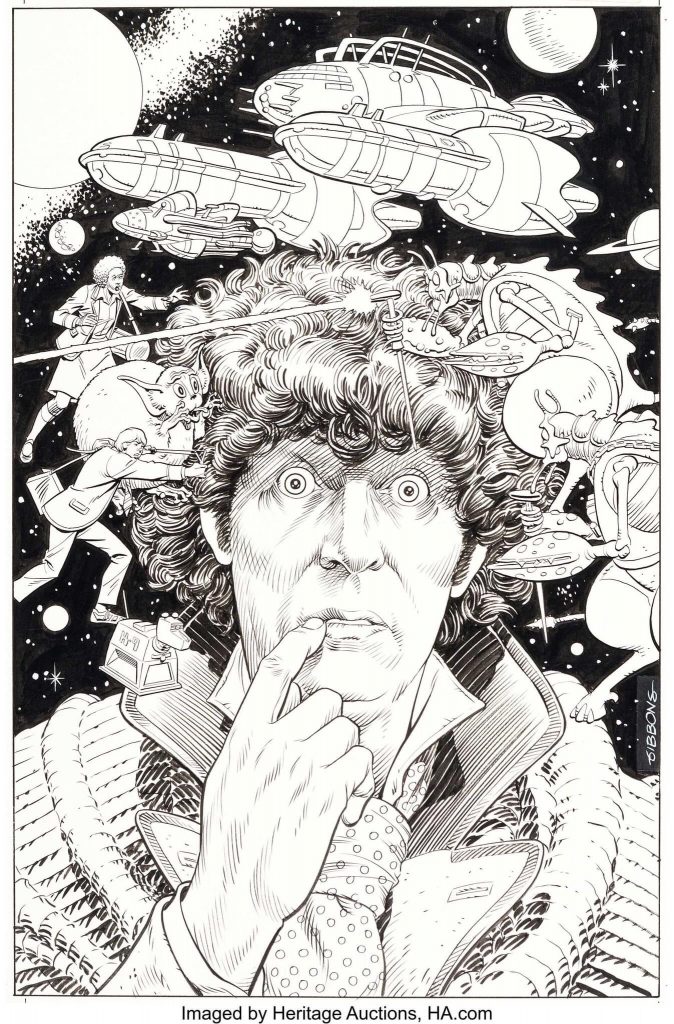
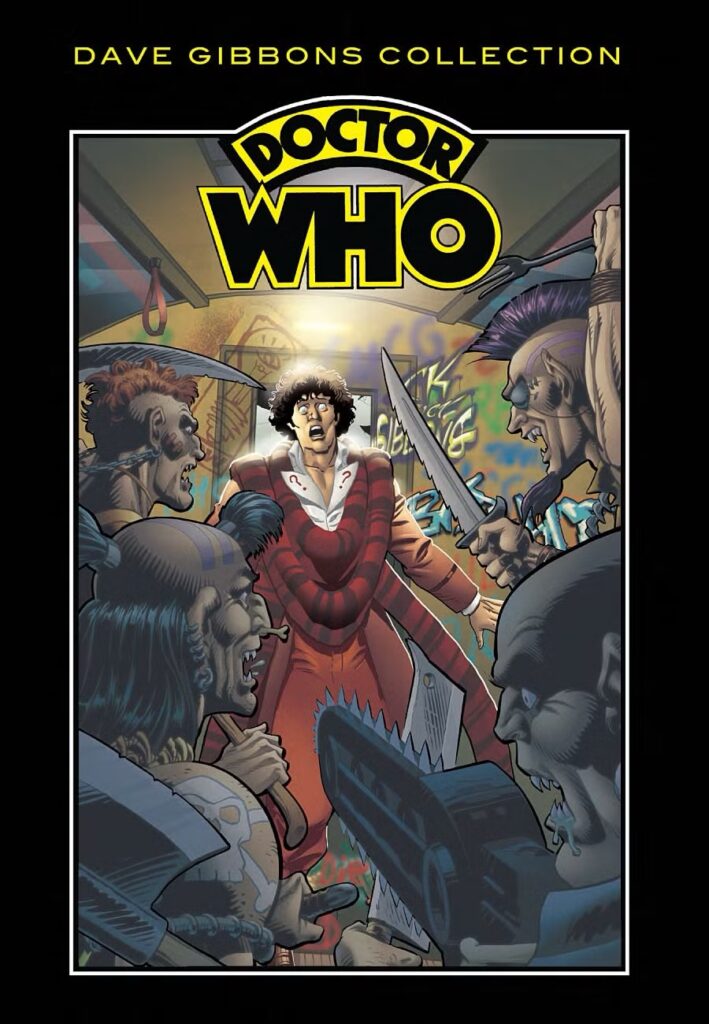
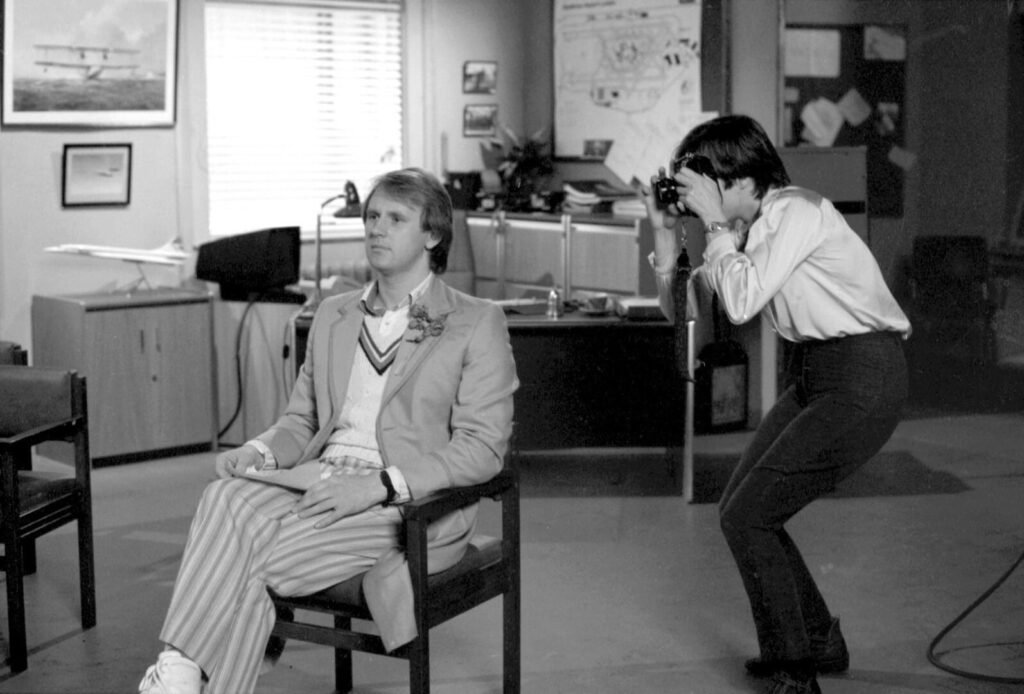
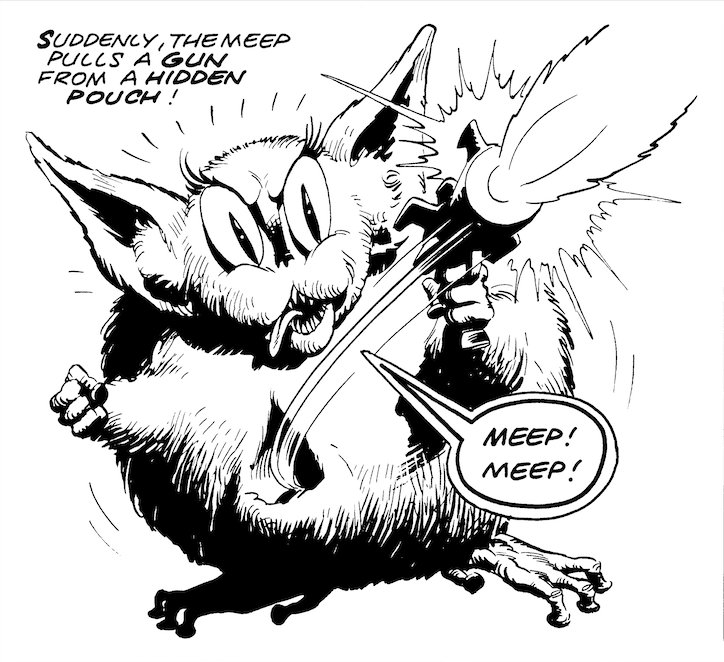
Gibbons would return to The Doctor for the 500th Issue of Doctor Who Magazine. Dave Gibbon’s art was brought to life on screen with the appearance of Beep The Meep, and his foes, the Wrarth Warriors, in “The Star Beast.”
Alan Moore
Issues: Doctor Who Weekly 35 – 38, 40 – 43, Doctor Who Monthly 47, 51, 57, with artists David Lloyd and John Stokes
Collection: Doctor Who: Black Sun Rising: The Complete Doctor Who Back-Up Tales Volume 2 (also includes back-up strips by creators including Steve Moore, David Lloyd, John Stokes, Paul Neary and Mick McMahon)
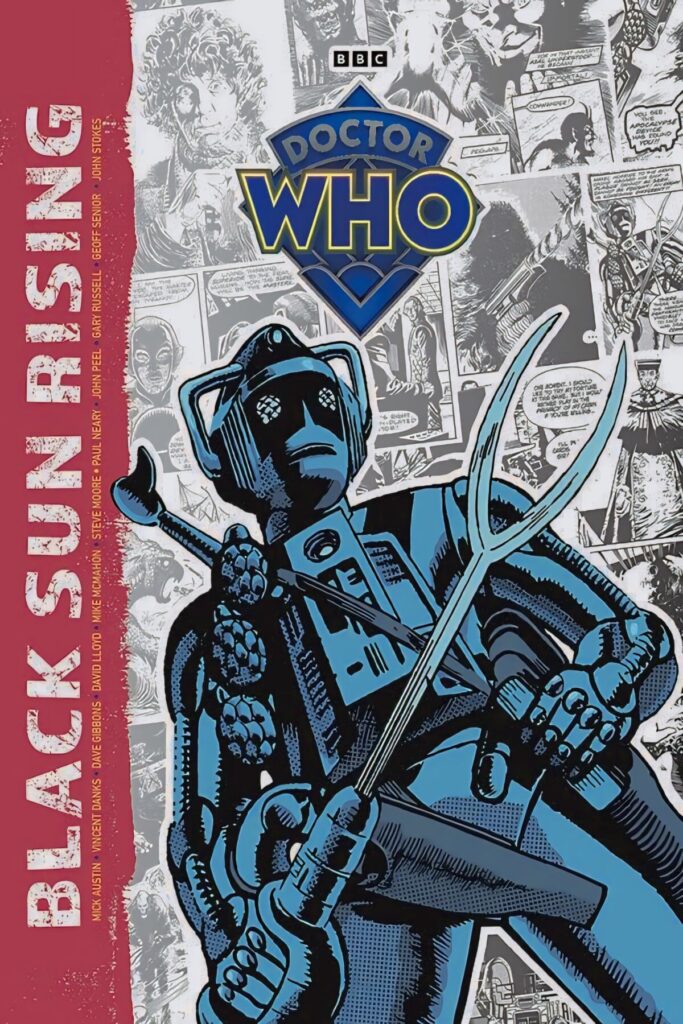
Alan Moore started writing for British underground and alternative titles, creating strips such as “The Stars My Degradation” for Sounds and “Maxwell the Magic Cat” for the Northants Post, before gaining work for both 2000AD and Marvel UK in 1980.
Moore freely admits that he was not as familiar with the TV show at the time he began to write the strip (He had watched it during the William Hartnell era). Unable to use the Daleks for one of his much-praised back up strips, he chose to start his run with a Cybermen tale, “Black Legacy”, which ran in DWW #35–38.
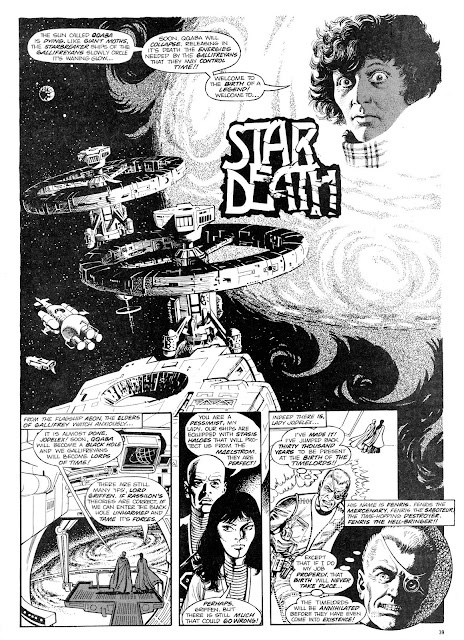
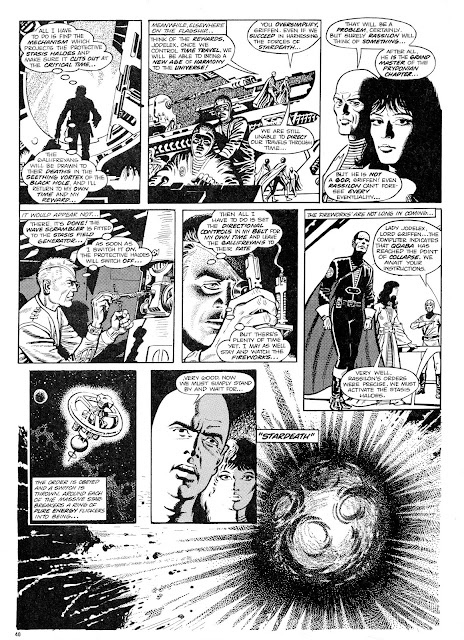
His run is most notable for his teaming up with future collaborator David Lloyd and introducing the idea of a Time War, something that would become a big part of the TV show continuity later on, featured in three stories: “Star Death” (issue 47) “4-D War” (issue 51) and “Black Sun Rising” (issue 57).
The idea of being attacked for crimes not yet committed is reminiscent of Philip K. Dick’s Minority Report.
“4-D War” is also notable for the first appearance of the Special Executive, a group of mercenaries that Moore would write into his Captain Britain run.
Rights issues and costs of reprinting the Doctor Who back up strips featuring monsters such as the Daleks, Cybermen, Silurians and many more has previously made such collections complicated, to say nothing of the restoration costs involved. But eventually Panini published them in two collections in 2024, Alan’s strips appearing in Doctor Who: Black Sun Rising: The Complete Doctor Who Back-Up Tales Volume 2.
See Also: Doctor Who Back Up Strips Checklist
Grant Morrison
Issues: DWM 118 – 119, 127 – 129, 139 (1986 – 1988), with artists John Ridgway and Bryan Hitch
Collections: Doctor Who: The World Shapers (2008), Doctor Who: A Cold Day In Hell (2009)
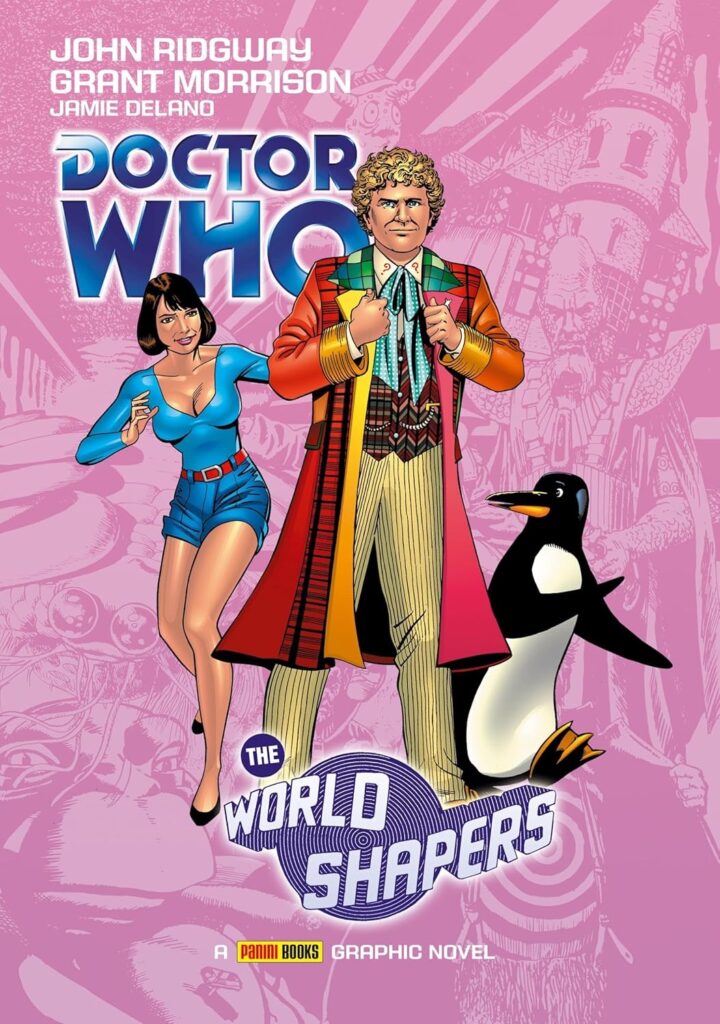
Grant Morrison started writing Doctor Who strips in the Sixth Doctor era and the most interesting of their three stories has to be “The World Shapers” (DWM #127–129). It is quite continuity heavy, with references to the TV stories The Keys of Marinus (1964), The Tenth Planet (1966), The Invasion (1968) and The War Games (1969), giving us his take on the origin for the Cybermen.
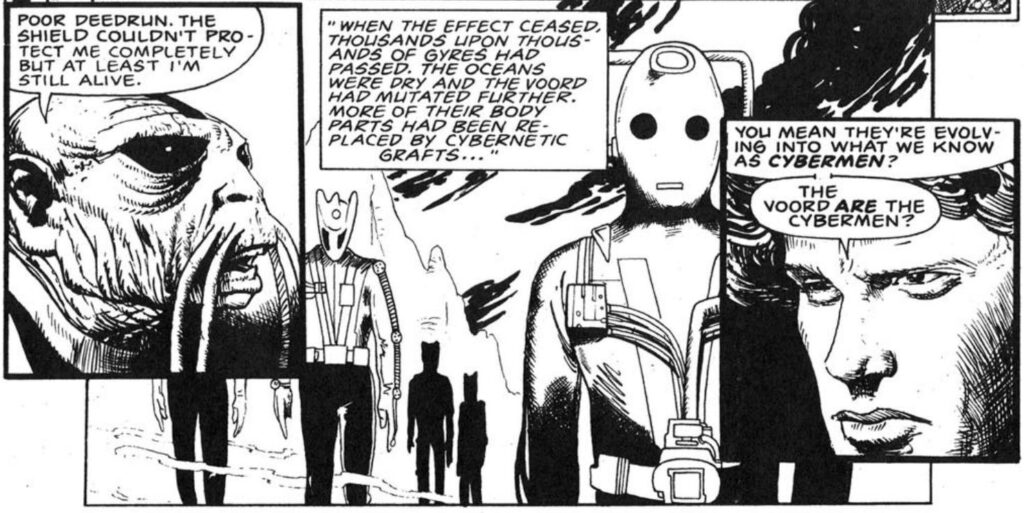
Despite their not getting all that TV continuity right, I enjoyed the return of a favourite companion, Jamie, and John Ridgway is such an underrated artist. The World Shapers collection is worth seeking out for his art alone.
John Ridgway drew the entire Sixth Doctor run, from “The Shape Shifter” to “The World Shapers”. The last two stories were collaborations with inker Tim Perkins. He also worked on stories during the Seventh Doctor’s run.
“The World Shapers” is referenced on screen in World Enough and Time by Steven Moffat, as one of the multiple Cyberman origins the Doctor has experienced.
David is a writer of stuff on comics and pop culture for GCN.ie. He is also a contributor and editor (Hugo nominated) for Journey Planet | Follow David on BlueSky
My thanks to Alan McKenzie for identifying the photographer snapping Peter Davison. Thanks also to Paul Scoones for corrections to the original version of this item
- About the Author
- Latest Posts

David is a writer of stuff on comics and pop culture for GCN.ie. He is also a contributor and editor (Hugo nominated) for Journey Planet
Categories: British Comics, British Comics - Graphic Novels, Comic Creator Spotlight, Comics, Creating Comics, Features
Yes, the photographer taking pictures of Peter Davison (as reference for Dave Gibbons) is Joyce Agee. She did quite a bit of the reportage photography for early DWM and Starburst.
Thanks very much, Alan! I’ve updated the caption