Feature by David Ferguson
It’s happened to all comic book fans. That favourite series of yours disappearing from the shelves never to return. Or that series never getting a sequel. For this instalment of my five comics, I look at five comic book stories that I would like to see return. Maybe they can be reinvented, maybe just give me that sequel or, perhaps, the creator can just tell me what was going to happen…
(Any collection links are AmazonUK Affiliate Links unless otherwise stated)
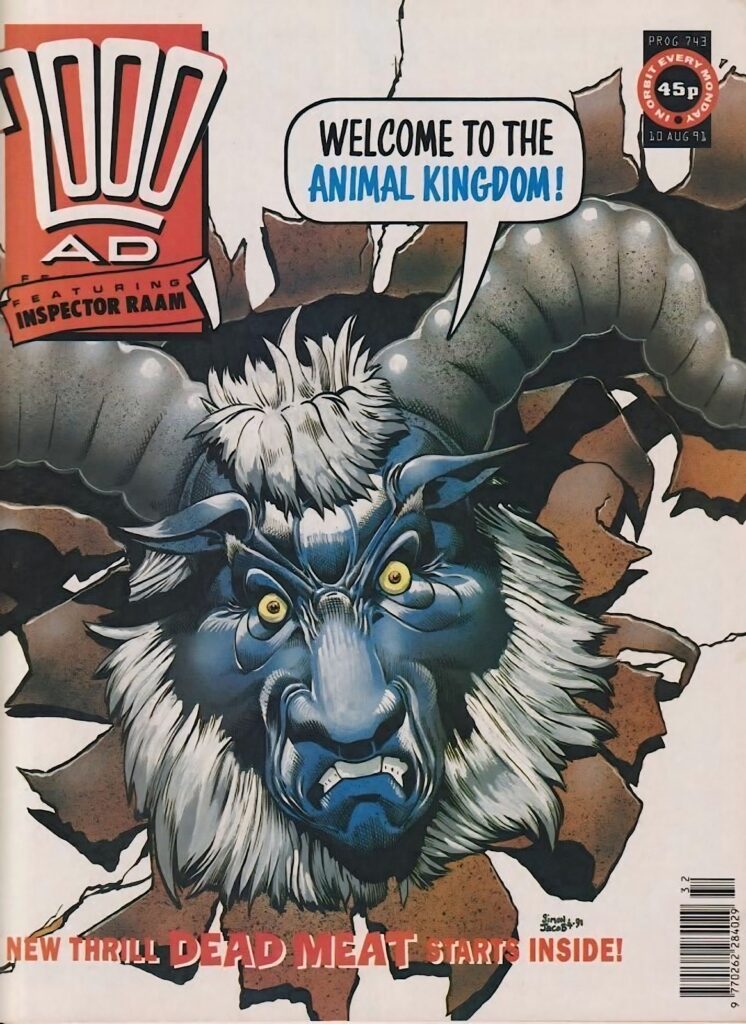
Dead Meat (1991 – 1993)
Created by Michael Cook and Simon Jacob
Originally published in 2000AD progs 742 to 748 (series one) and progs 812 to 820 (series two)
When I was younger, a local fete had someone who was selling old issues of 2000AD. Well, not that old at the time, now that I think about it. I was either taken in by Chris Weston’s cover to prog 735 or 741 or both. They featured characters from his and John Smith’s series “Indigo Prime: Killing Time”, one of the best series to appear in the pages of 2000AD.
The storyline covered progs 735 to 744, and I attempted to find as many of those progs as I could. I failed, and had to wait a decade or so to get the full story. As I leafed through the parts I did find at home, I noticed parts of another series. The first series of “Dead Meat”. (Although I may have also been enticed by the cover to prog 743, which featured the main character, the genetically engineered human sheep hybrid, Inspector Harry Raam).
It is kind of appropriate that the series was picked up while I was looking for something else, as it has been kind of forgotten. “Dead Meat” is set in 2047, where Great Britain is underwater after the melting of the polar ice caps. Vegetarianism is compulsory. The Police Undercover Livestock Special Enforcer patrol (P.U.L.S.E.) arrest anyone they suspect of eating or consuming flesh. In the series, Raam and human counterpart Vera Brett clash with British high society, Texan diplomats and one old lady whose cat ate a mouse.
The 2000AD Encyclopaedia called it “a clever parody of then-topical environmental concerns.” One of the reasons I think that the book could make a return is that the issues the series parodies are still a concern today. Actually, my main inspiration is the 2017 science fiction film, Okja. It was directed by Oscar winning director Bong Joon Ho, with a screenplay by Bong and Jon Ronson from a story by Bong. It tells the story about farmgirl Mija’s quest to rescue her giant genetically modified “super pig” friend, Okja, from a powerful meat corporation.
The film showcased Bong’s signature sharp social commentary and briefly turned me vegetarian. I think the approach of a new writer on “Dead Meat” might be able to apply the environmental concerns of today to create an equally compelling story.
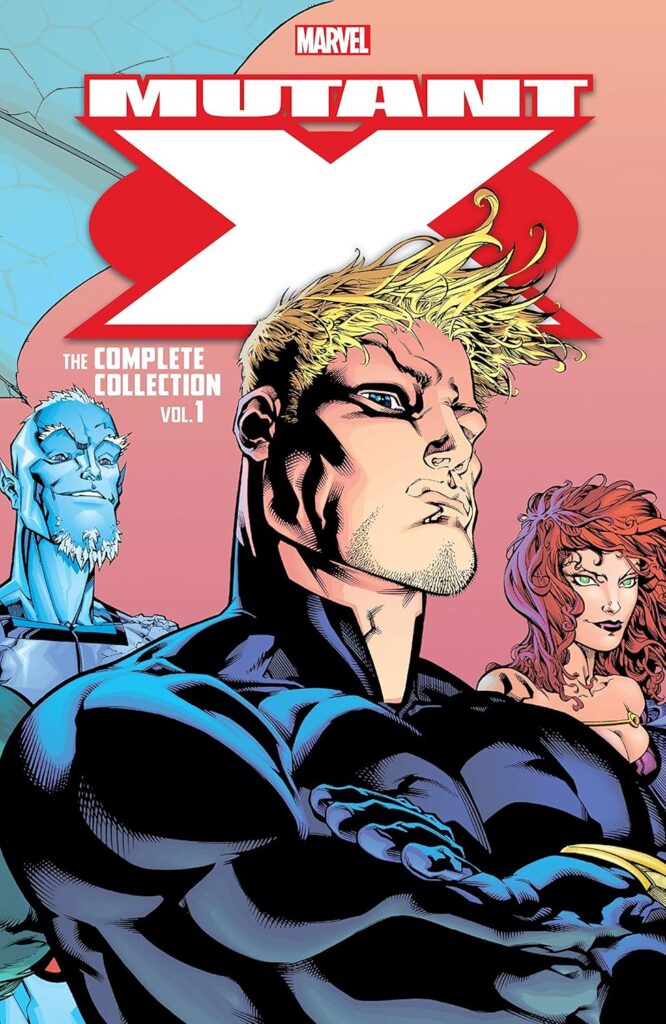
Mutant X (1998 – 2001)
Created by Howard Mackie, Tom Raney and Andrew Pepoy
Originally published in Mutant X #1–32, Annuals 1999 – 2001
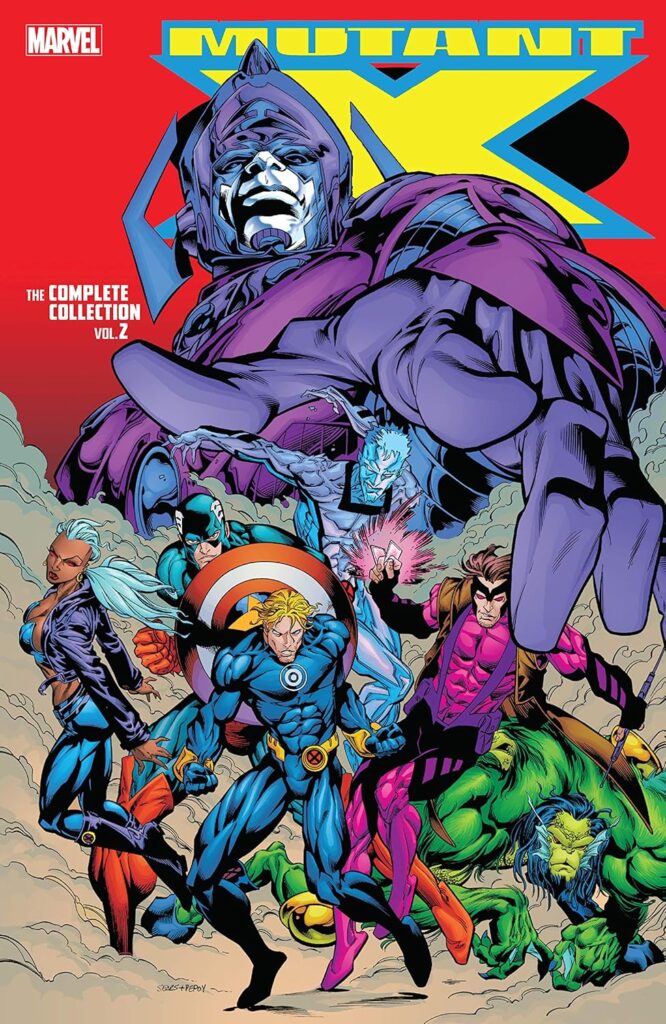
Collections: Mutant X: The Complete Collection Volume 1 (2018), Mutant X: The Complete Collection Volume 2 (2019)
OK. It got 35 issues, but hear me out on this one. Also, this is in no way related to that Mutant X TV show.
In X-Factor Volume 1 #149, Havok is seemingly killed in an explosion. At the same instant, the Havok of the Mutant X reality (Earth-1298) also dies and our Earth-616 Havok’s consciousness ends up in his body. That Havok is the leader of The Six.
The team includes:
• Madelyne Pryor (Havok’s wife and mother of his child Scotty Summers)
• Bloodstorm (In Uncanny X-Men #159 (1982), Storm was bitten by Dracula but she was not permanently transformed in the 616)
• Brute (Hank McCoy experiments on himself, which resulted in the blue Beast in the 616, gone to the extreme)
• The Fallen (Apocalypse’s transformation in this universe resulted in Warren Worthington gaining bat wings, pale skin, and the ability to breathe fire. Since betraying Apocalypse, he has insisted on being called The Fallen)
The main appeal of the book is the wonderfully weird changes that Howard Mackie makes to established characters, and the intriguing stories that result from it. Wait till you see what he does with some of the big name X-characters.
The book was originally only going to be 12 issues but impressive sales resulted in it becoming an ongoing. I wanted it to be ongoing for more. More, Howard Mackie, please.
Wildcats Version 3.0 (2002 – 2004)
Created by Joe Casey and Dustin Nguyen, Duncan Rouleau, Francisco Ruiz Velasco, Pascual Ferry, and Sean Phillips
Originally published in Wildcats Version 3.0 #1-24.
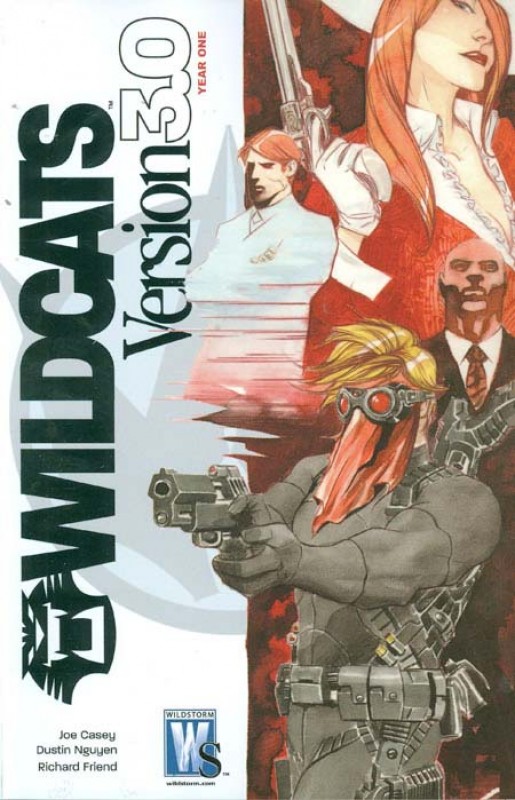
Collections: Wildcats Version 3.0 Year One (2010), Wildcats Version 3.0 Year Two (2011).
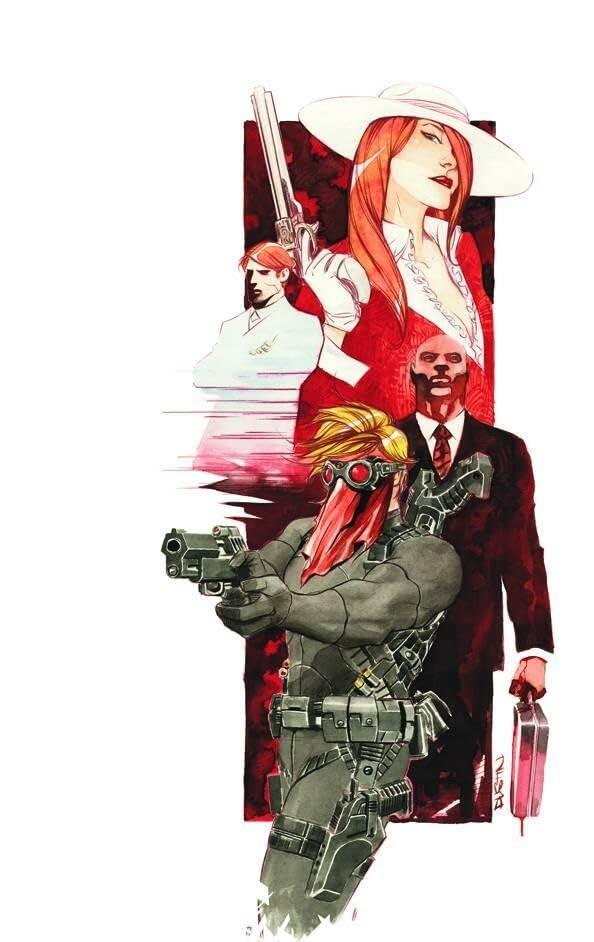
By the time Joe Casey and Sean Philips took over the Wildcats in volume 2, Alan Moore had killed off the original premise of the book, ending the alien war that it was set around. The book was dealing with the lives of the original members after the team’s breakup resulting from a mission going wrong, and team member Zealot apparently dying.Casey got rid of the villain Kenyan, as well as team members Emp and Void in Volume 2.
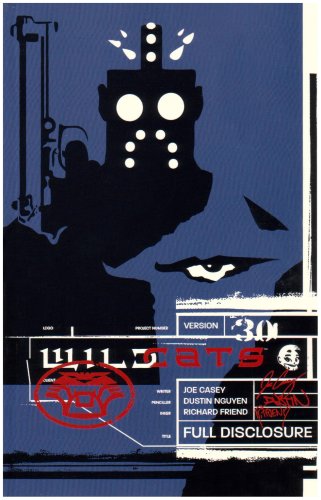
I had not read any of Volume 1 or 2. I got dragged into it in Volume 3 the old fashion way: the cover stood out on the shelves. The design work is impeccable and really made the book look different, fitting in with the plot and themes of the book, too.
By the time of the debut of Wildcats 3.0, the only originals left were Spartan (now a businessman named Jack Marlowe) and Grifter.
Casey said of the new volume: “I knew that Wildcats Version 3.0 should have a different agenda, one with more cultural scope. I’d touched on other aspects of corporate culture in some of my other work, but this was the perfect chance to bring what had been on the periphery of my work and place it centre stage. The power of corporations is something that our generation has lived with all our lives, so we rarely question it. But I think it’s a subject worth exploring, plus I don’t see too many creators tackling the issue, so I knew it was uncharted territory.”
The third volume centres on the business plans of Marlowe, who leads the Halo company and wishes to move away from super heroics. Grifter is set in his ways and continues on as a kind of hired gun / fixer for Marlowe. The book also includes new characters who debuted in Volume 2, including Agent Wax, who does some morally questionable things.
The big question is: what is Jack Marlowe really trying to achieve with all these moves? Sadly, we never do find that out. The book is full of corporate intrigue and covert dealings, actually keeping up the covert part of the original team name. I enjoyed all of Joe Casey’s contributions to Wildcats, picking up Volume 2 after reading this one.
I wonder if I could get Joe Casey to tell me where the story was going.
Star Trek: Assignment: Earth (2008)
Created by John Byrne
Originally published in Star Trek: Assignment: Earth #1-5
Collections: Star Trek: Assignment Earth (2008)
John Byrne created a lot of Star Trek for IDW in the late 2000s. This included his Romulan storyline in Star Trek: Alien Spotlight Romulans, Star Trek: Romulans – The Hollow Crown #1–2, and Star Trek: Romulans – Schism #1–3. He also completed another mini-series that I would have loved to have seen more of: Star Trek: Leonard McCoy, Frontier Doctor, which is set before Star Trek: The Motion Picture. If this does not show how much of a Star Trek fan he is, he gave us Star iTrek: Crew, focusing on the character of “Number One” from Christopher Pike-era. Equally obscure to casual fans would be my favourite: Star Trek: Assignment Earth.
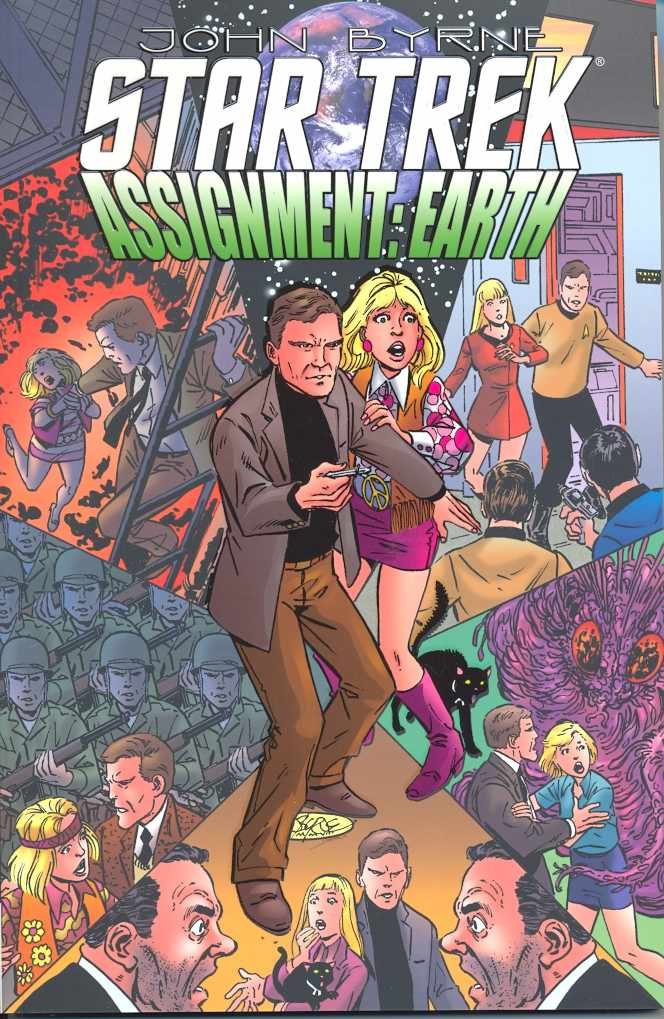
In the final episode of season two of Star Trek: The Original Series, “Assignment: Earth”, the USS Enterprise is engaged in “historical research” and travels back to 1968 Earth. The crew encounter a man named Gary Seven (Robert Lansing), who is accompanied by a black cat he calls Isis. He is an interstellar agent with access to technology beyond that of 1960s Earth. The episode also introduces Roberta Lincoln (Teri Garr), who becomes his assistant, and was a back door pilot for a spin-off that never happened.
Well, not until John Byrne did the comic book version. The series covers Seven and Lincoln’s lives from 1968 to 1974, and includes a story set during the season one TV episode “Tomorrow Is Yesterday.” Not only does the series set up some interesting continuity, there is a tantalising epilogue set in 2008 featuring Roberta and Isis.
Byrne had been keen to do more. “As I finished up the first one, I mentioned to Chris Ryall that I almost wished it was ongoing. He said ‘We can always do another one!’
“That was immediately appealing. As it stands, if I do more Assignment: Earth, I will take the same approach I did with my Generations series at DC, with the second series taking place over the same span of time covered by the first.”
Chris Ryall noted at the time, “John Byrne is dying to do more Assignment: Earth but has many, many Star Trek and other ideas he’s anxious to get out as well.” Which ended up being the case.
Punisher: Noir (2009 – 2010)
Created by Frank Tieri and Paul Azaceta
Originally published in Punisher Noir #1-4
Collections: Punisher Noir Premiere HC (2010)
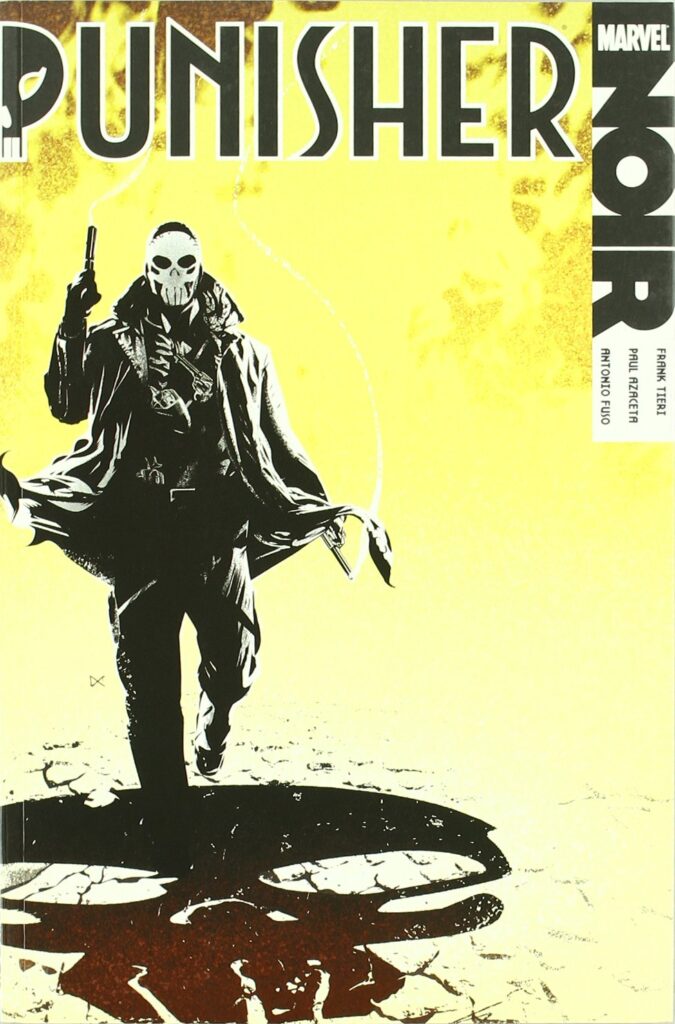
Marvel’s Noir continuity started with, probably its most famous character, with Spider-man: Noir, a character famously voiced by Nicholas Cage in Spider-Man: Into the Spider-Verse. The comics would do on to see the likes of X-men Noir and Daredevil Noir. However, for me, the most impactful was Frank Tieri and Paul Azaceta’s Punisher Noir.
In the Noir universe (Earth-90214), the costumed crimefighters and superheroes of the Marvel universe debuted in the 1930s. The Punisher series follows Frank Castle, a vigilante who is out for revenge for the murder of his family. Yeah. Same guy. Just different era.
Frank Tieri said of this, “For me, there had to be some elements intact. We have a version of The Russian and a version of Jigsaw and Barracuda and so forth. The thing that had to remain intact was what I consider to be the main mantra of the Punisher. Punisher has always been about loss and a man’s response to that loss. That maintains the core of what the story is still about.”
His primary target in this era is the mob boss, Dutch Schultz.Punisher is perfect for this era.
Frank Tieri is the perfect writer for this book. The man who also brought us Space Punisher, comes up with interesting versions of some of the few notable villains the Punisher has, in the aforementioned Jigsaw and, two of Garth Ennis’ creations, The Russian and Barracuda. The book has some twists and turns and has Tieri’s “over the top but works” style with some dark humour to go along with the violence. Paul Azaceta’s art is perfect for the story, and I love Punisher’s Noir costume.
This is another series with a tantalising ending which for me, by itself, merits the series inclusion on this list. When Punisher is wondering what to do at the end of the story, the answer gets blown into his face. A newspaper with an article about Adolf Hitler. Punisher vs. Hitler in volume 2? Come on!
David is a writer of stuff on comics and pop culture for GCN.ie. He is also a contributor and editor (Hugo nominated) for Journey Planet | Follow David on BlueSky
- About the Author
- Latest Posts

David is a writer of stuff on comics and pop culture for GCN.ie. He is also a contributor and editor (Hugo nominated) for Journey Planet
Categories: 2000AD, British Comics, Comics, downthetubes News, Features, Reviews, US Comics