Long before the Green Cross Man, played on screen by Dave (“Darth Vader”) Prowse and brought to life in comics by artists including Dave Gibbons, both government and local councils employed various methods to encourage road safety – including, in Sunderland, The Beacon, publishing the area’s very own road safety comic.
Sunderland launched its “Beacon” comic and mascot, “Bobby Beacon” in April 1948, publishing at least three comics over the following two years, the third released in November 1949. Produced by Sunderland Safety Organisation Committee with the primary object of underlining the importance of exercising care on the roads, the publication was the idea of that of Road Safety Organiser, F. P. Robson.
Sadly, we haven’t been able to track down a copy of any issues of The Beacon, but from contemporary descriptions, we know the first issue incorporated several attractive features in its eight pages: an illustrated three-page story of the adventures of three boys who unearth a smuggler’s plot, a crossword puzzle, quiz and other puzzles.
Ten thousand copies of the first issue of The Beacon were printed and arrangements made with the Director of Education to circulate them to schools, sold at two pence each. The cover price didn’t cover all costs, but the SSOC felt the project one of the most effective means of stimulating interest in road safety.
“Comics are difficult to obtain these days,” Robson to,d the Sunderland Echo, “and I thought if one were printed here in Sunderland it would help to relieve the shortage and also bring home the lessons of road safety.”
Despite some concerns over cost, the project was a great success, and councils elsewhere in Britain quickly sought out copies of the first issue. By the time the third issue was published, Sunderland had earned plaudits for the campaign, and other safety committees across Britain used it as a model.
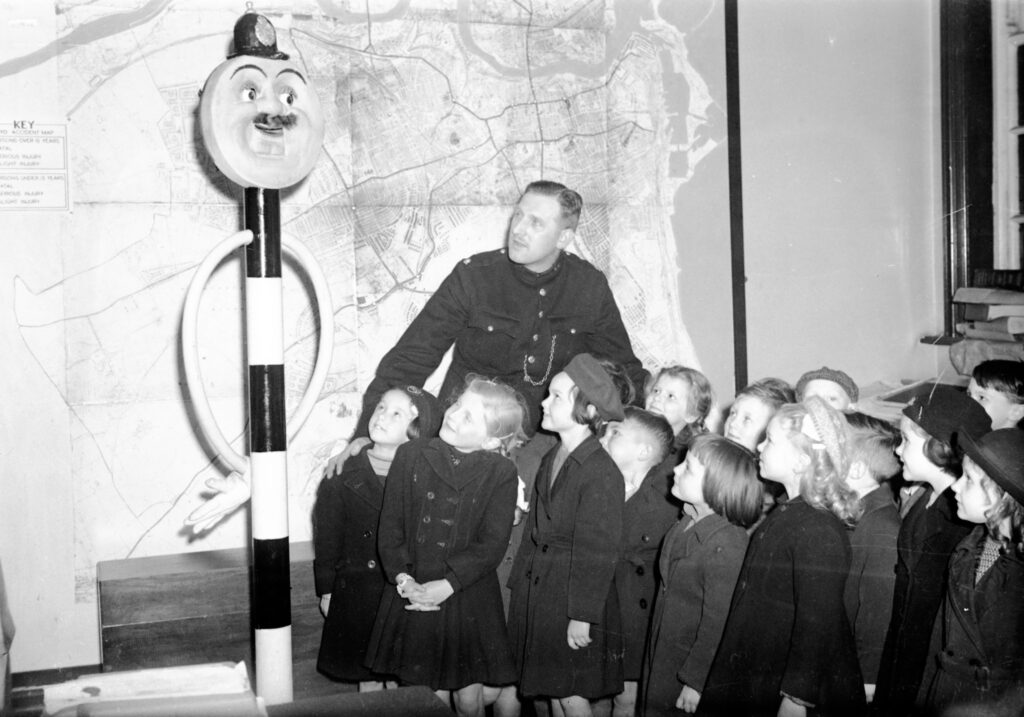
Bobby Beacon, Sunderland’s Talking Belisha Beacon, was, apparently, created in 1937, the creation of PC Jack Aynsley of the Sunderland Police Traffic Department, who first developed as lantern slides then a model, his face carved from a block of wood.
His appearances to deliver Road Safety Lectures complemented the publication of The Beacon comic in the late 1940s and 50s, playing a starring role at events during the national Pedestrian Crossing Week in the area. The character was copied by other police authorities across the north, with requests for visits from the original even from afar as Kent!
The character was retired in 1953, presumably because of the launch of the Tufty Squirrel road safety campaign – or, perhaps, PC Aynsley…
By November 1950, the Royal Society for the Prevention of Accidents was circulating its own comics to promote road safety, utilised by local councils to prevent road deaths in the winter months; a time when, sadly, Christmas Eve was the most “blackest” day of the year. Many road victims were due to people dashing about at the last minute to do their Christmas shopping.
National Road Safety Campaigns of Yesteryear
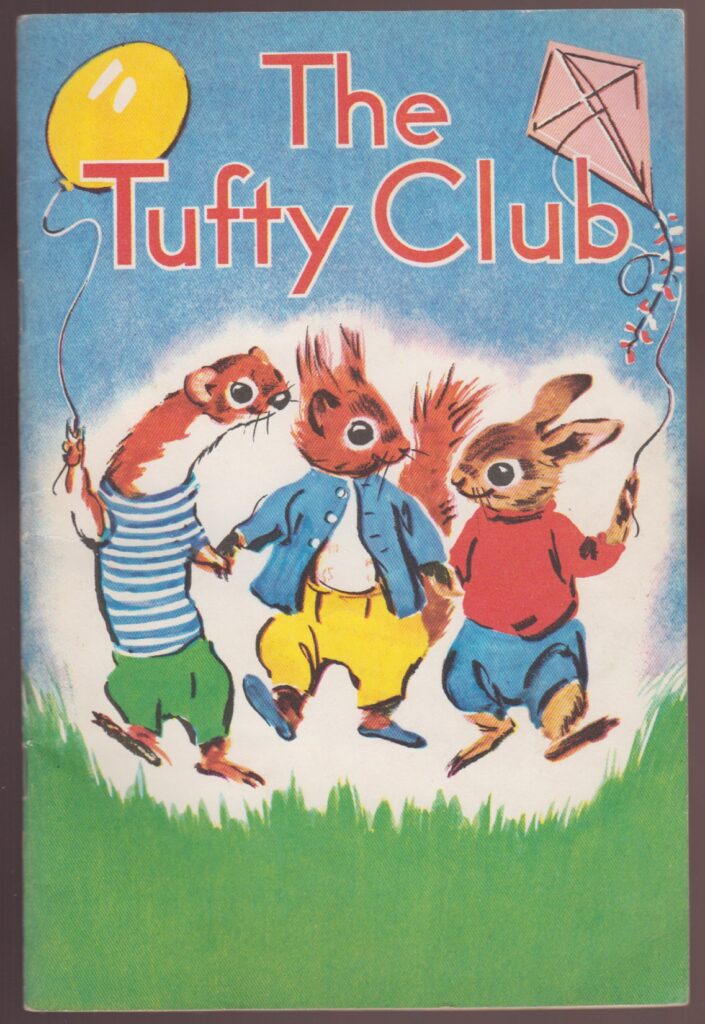
Concerned by the rising number of road traffic accidents involving children as car use grew nationally, Elsie Mills, an employee of the Royal Society for the Prevention of Accidents, created Tufty Fluffytail in 1953, as the star of a series of short books to convey clear and simple road-safety messages to children.
Right from the get go, Tufty, Bobby Brown Rabbit, Harry Hare and Willy Weasel proved central to one of the UK’s most successful road-safety initiatives and credited with helping safeguard the lives of thousands of children.
ROSPA notes that, in 1961, his influence was cemented through the formation of The Tufty Club for under-fives – a nationwide network of local road safety groups for children. At its peak, there were 24,500 registered Tufty Clubs, with membership passing two million children in 1972.
More than 30,000 books featuring the characters were issued and, more importantly, the club’s impact was immediate – the number of road deaths among under-fives dropping from 305 in 1961 to 255 a year later.
In 1971, Tufty’s popularity grew still further after the now defunct Central Office of Information commissioned Stop Motion, a small animation studio jointly owned by veteran puppeteers John Hardwick and Bob Bura, to make a series of short films starring Tufty and friends – including less-than-road-savvy Willy Weasel — narrated by Bernard Cribbins, that ran on television for a quarter of a century.
Tufty’s image was changed to keep up with the times in 1979 and again in 1993, before the launch of The Green Cross Code – a new method of helping children to learn about road safety. But Tufty is still around: in 2018, his image was incorporated on to RoSPA’s Keeping Kids Safe packs which provided accident prevention tips and tools to help thousands of families with under-fives, and he was also the subject of some safety activities for children at an exhibition to mark RoSPA’s centenary in 2017.
One further Tufty “comics connection”, of sorts: Back when he worked for The Royal Society for the Prevention of Accidents, 2000AD writer Ian Edginton was editor of the Tufty Club magazine, The Tufty Times!
“There was usually a one page picture story,” Ian tells us, six panels a page, very much in the vein of Rupert the Bear with the text under each panel.”
Coco the Clown
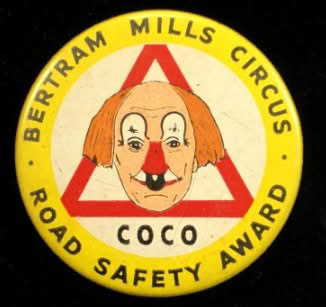
Coco the Clown (Nicolai Polakovs) promoted road safety in schools, with his Kerb Drill being the predecessor to the Green Cross Code. In 1963, the Queen awarded him an OBE for his efforts.
“I remember the day in 1960 that Coco the Clown turned up at my school to make sure we looked left, looked right and looked left again whenever crossing the road,” recalls comic writer and editor Tim Quinn.
“He was appearing in TV Comic at the time and it was at that moment that I realised all comic book characters were real.”
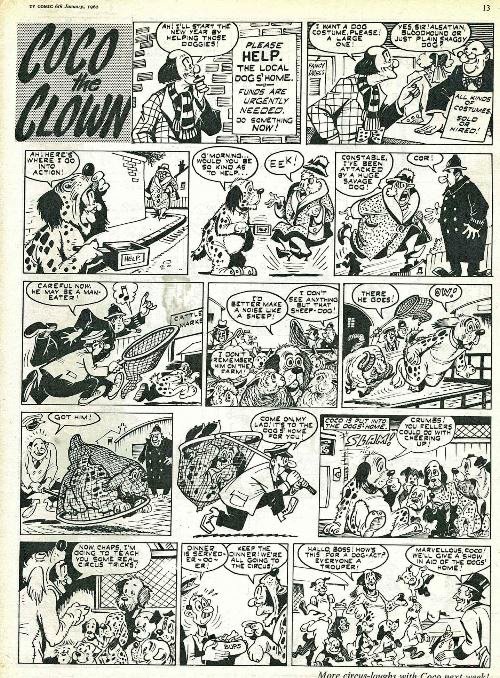
Artist Adam Bagley believes there was also a comic ad of sorts for his school visits, sponsored by J. Lyons & Co.
Green Cross Code, Green Cross Man! – – and Doctor Who, too!
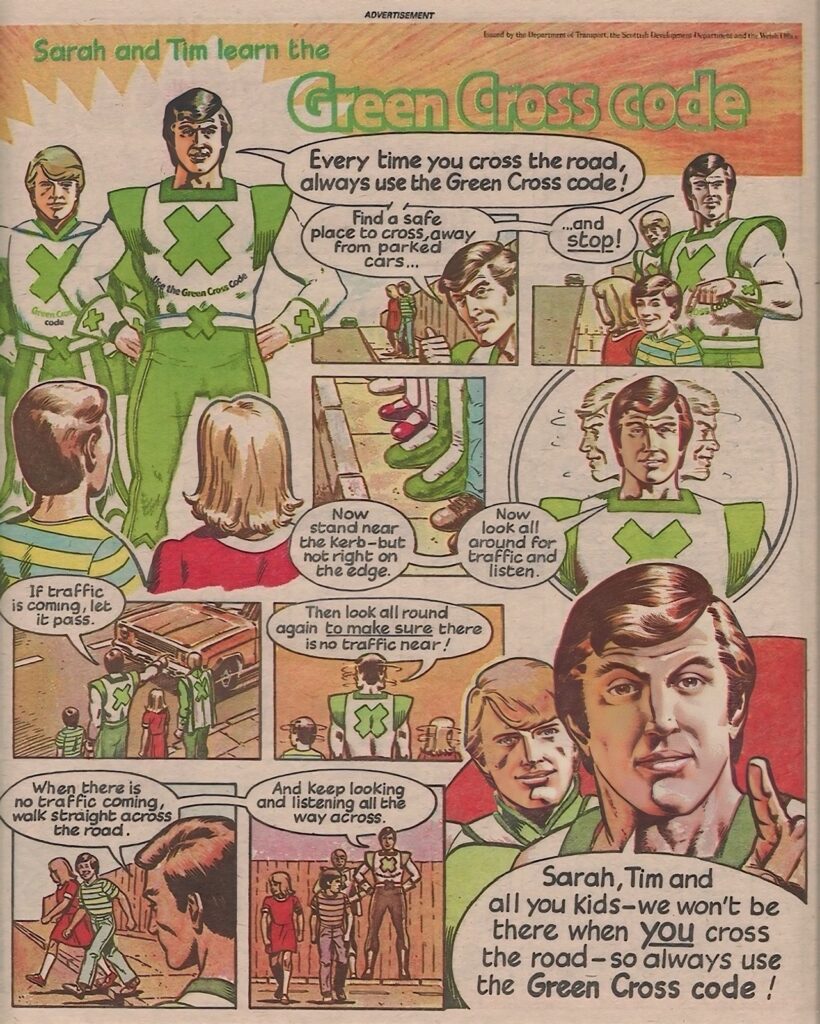
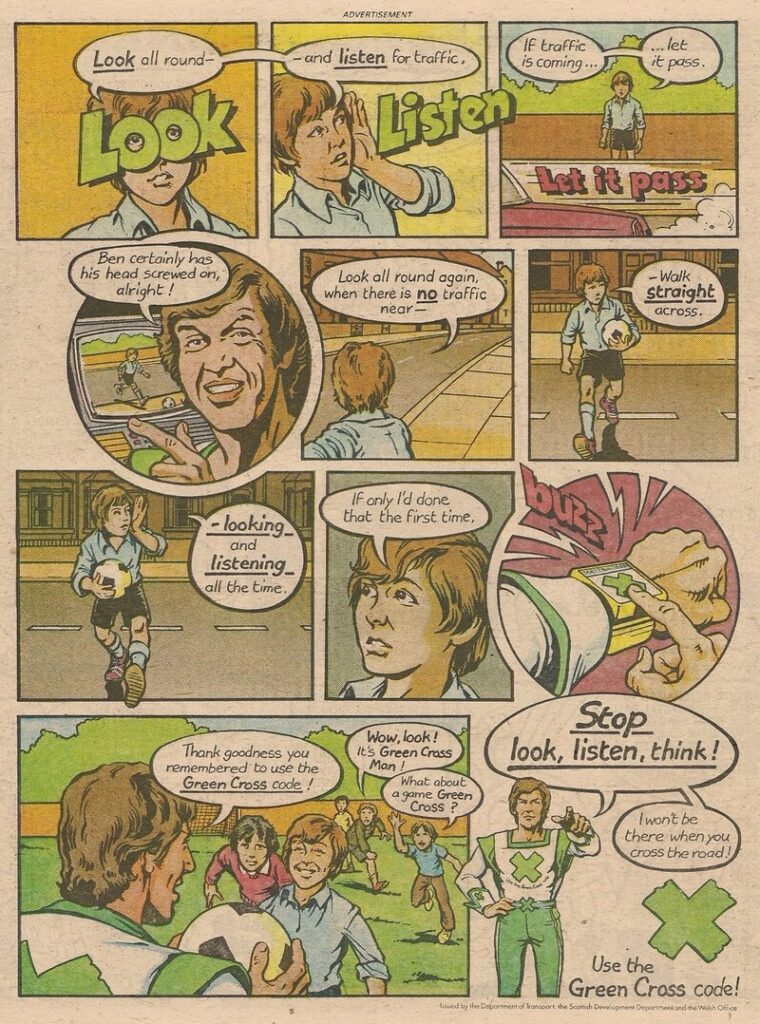
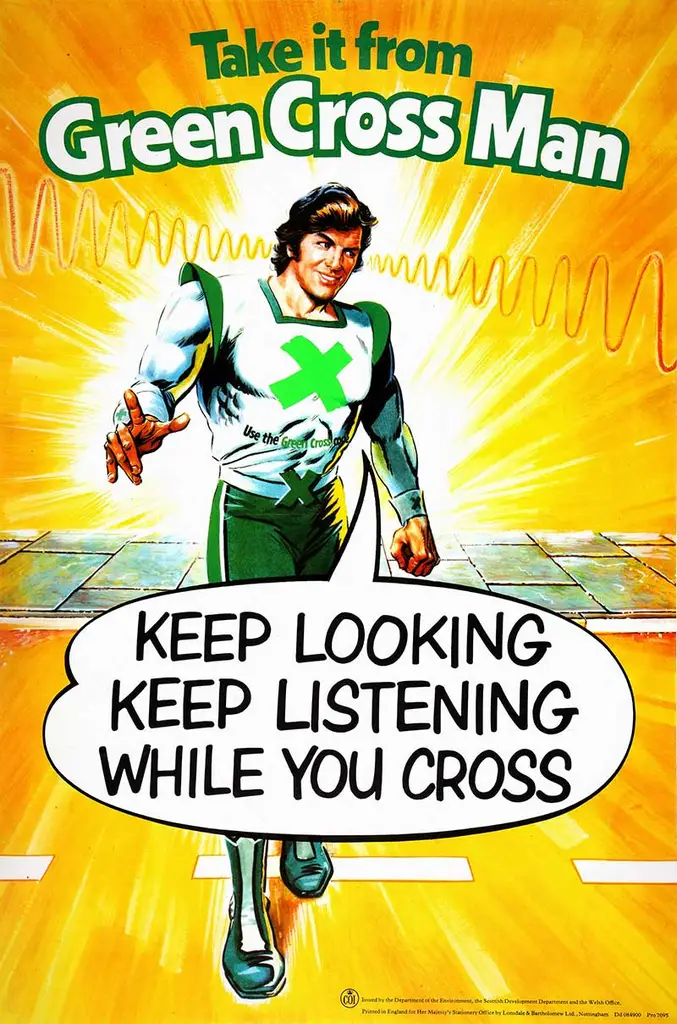
The Green Cross Code was created to raise awareness of pedestrian road safety in the United Kingdom sponsored by the British Government’s Central Office of Information for the Department of the Environment.
The initial campaign ran from 1971-1990 as a series of Public Information Films (PIFs) including one helmed by Jon Pertwee, then BBC TV’s Doctor Who, but, more famously Dave Prowse, portraying the superhero Green Cross Man; work that eventually earned him an MBE (Most Excellent Order of the British Empire) from the Queen in 2000.
It’s believed the various campaigns had an impact on accident figures. In 1975 the number of children reported killed on the roads had fallen to 505, the lowest since the 1950s. By 2003 the figure was as low as 171 children.
But with as many as 3929 children being seriously injured on the roads each year, the work of road safety campaigns is far from done.
Head downthetubes for…
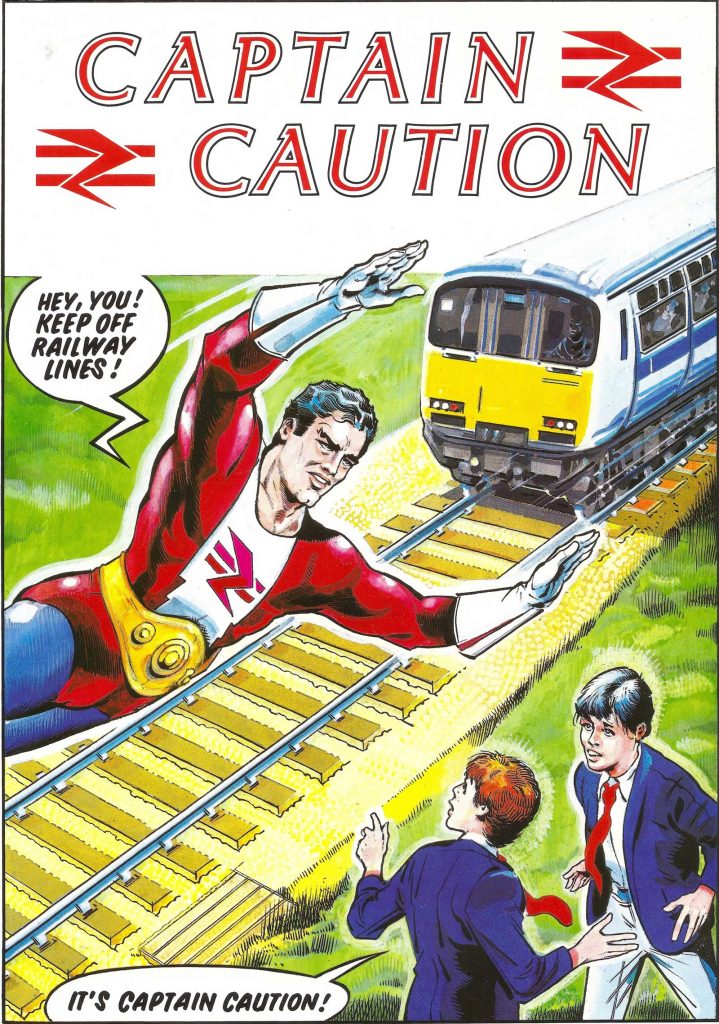
• downthetubes: British Custom Comics: Captain Caution, Rail Safety Hero!
2000AD artist Ron Smith drew some of the advertisements for this public safety campaign
• The National Archive: Public Safety Films Timeline
• Skywalking Network: The Man Behind the Green Cross Code, Dave Prowseb
- About the Author
- Latest Posts

John is the founder of downthetubes, launched in 1998. He is a comics and magazine editor, writer, and Press Officer for the Lakes International Comic Art Festival. He also runs Crucible Comic Press.
Working in British comics publishing since the 1980s, his credits include editor of titles such as Doctor Who Magazine and Overkill for Marvel UK, Babylon 5 Magazine, Star Trek Magazine, and its successor, Star Trek Explorer, and more. He also edited the comics anthology STRIP Magazine and edited several audio comics for ROK Comics; and has edited several comic collections and graphic novels, including volumes of “Charley’s War” and “Dan Dare”, and Hancock: The Lad Himself, by Stephen Walsh and Keith Page.
He’s the writer of comics such as Pilgrim: Secrets and Lies for B7 Comics; “Crucible”, a creator-owned project with 2000AD artist Smuzz; and “Death Duty” and “Skow Dogs”, with Dave Hailwood.
Categories: British Comics, Comics, Features, Other Worlds
 Frank Bellamy, Denis Gifford, Alan Class, and “Ally Sloper”, too!
  New Battling Britons spotlights art of Victor del Fuente and Harry Farrugia
  Creating Comics: Kate Ashwin, creator of “Widdershins”
  downthetubes Exclusive Interview: Author and Comic Writer Rik Hoskin