Writer Ian Winterton, best known to downthetubes for his Cutaway Comics work, had his first story for DC Thomson’s Commando hit the shelves this week. But this debut is more than just the realisation of a childhood dream. For Ian, there’s a deeply personal angle, with his story drawing deeply from his own grandfather’s wartime experiences. Here, he recounts how he took the real-life story and adapted it to fit the distinctive tone of Commando…
Our thanks to the Commando editorial team for providing some of the pages featured here, published with permission. Commando 5985 A Different Kind of Courage is on sale in TG Jones, select newsagents and available digitally on Magzter and from AmazonUK (Affiliate Link)
SPOILER ALERT – DO NOT READ FURTHER IF YOU WANT TO READ THE STORY FIRST!
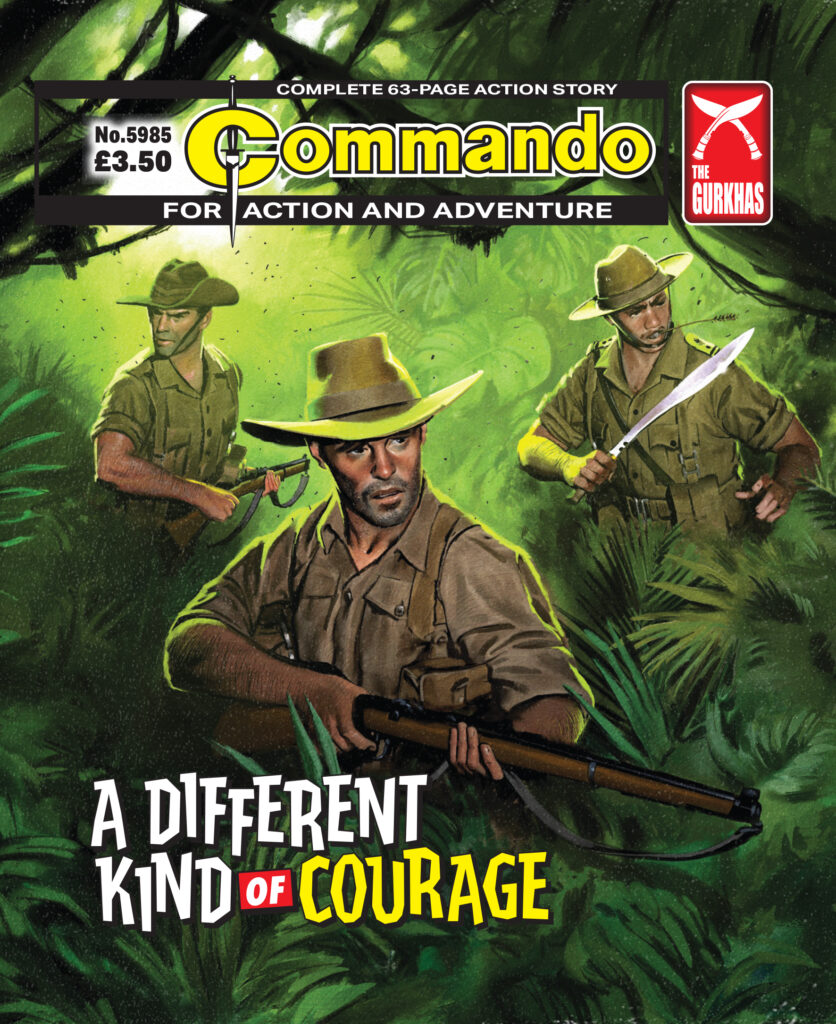
Commando 5985 (For Action and Adventure): A Different Kind of Courage
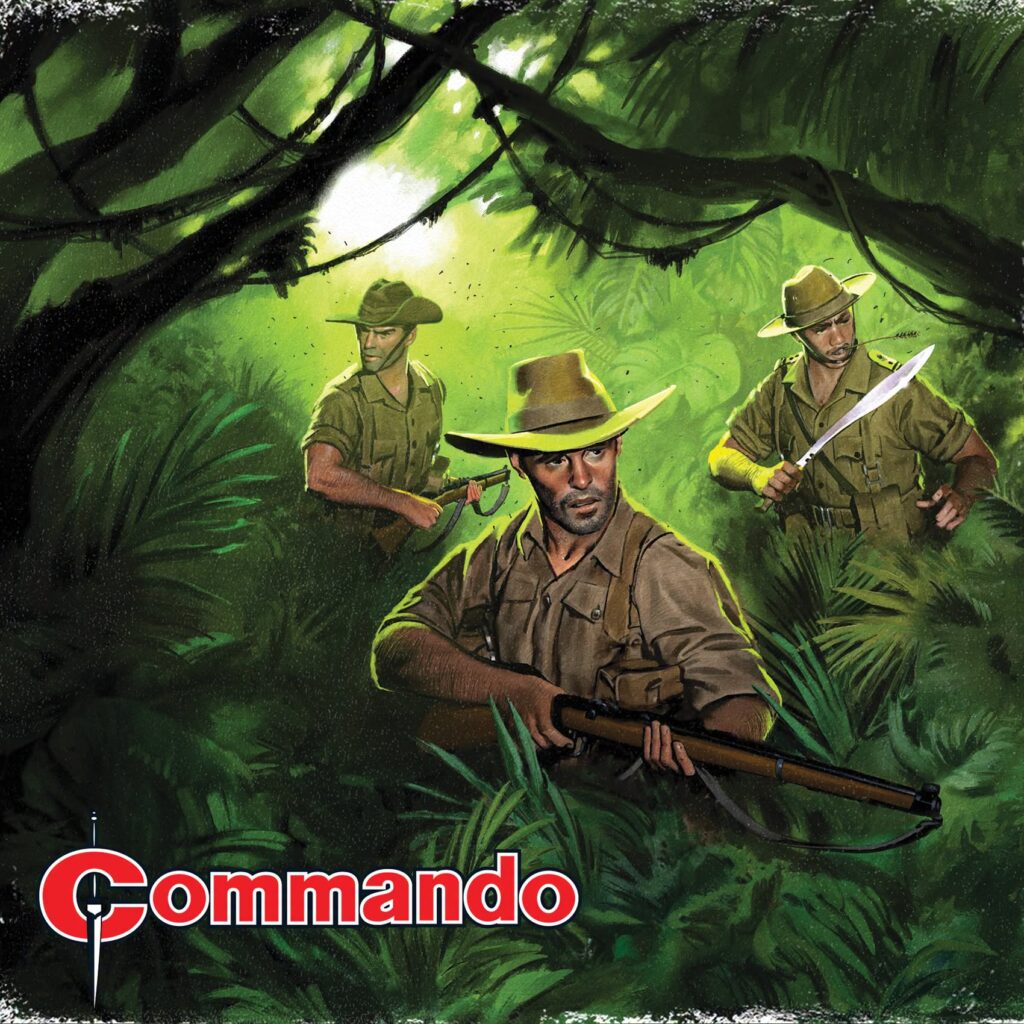
Story: Ian Winterton | Internal art: Alberto Saichann |Cover: Neil Roberts
Burma, 1944. Assigned to a Royal Artillery forward obs base deep in the jungle, traumatised and scared Private Henry Lovelock is only able to carry on due to the reassuring protection of a squad of Gurkhas, led by the kindly Bibek. But, when the Gurkhas are killed by the enemy, save for Bibek, who is captured, can Henry find the courage to rescue his Nepalese friend?
A family story – Creating “A Different Kind of Courage”
When I first decided to pitch story ideas to Commando, it seemed only natural that I would start with the real-life tale of my own maternal grandfather, Steve Andrew (1911-1997). Born and bred in Derby, he worked for Rolls Royce and, as World War Two broke out, was part of the management team making Merlin engines for Spitfires and other British aeroplanes. Then, in autumn 1943, out of the blue, he received his call-up papers and was enlisted into the Royal Artillery. After training in Northampton and on the beaches of Cromer in Norfolk, he and his regiment were sent to India in April, 1944. He was 31 – older than most of his comrades – and was leaving behind a wife and two daughters.
Arriving in Bombay just before the catastrophic Bombay Dock Explosion in April 1944, he and his comrades found himself on clean-up duty; with over a thousand casualties, this was a grisly job, and something that haunted my grandfather until the end of his days.
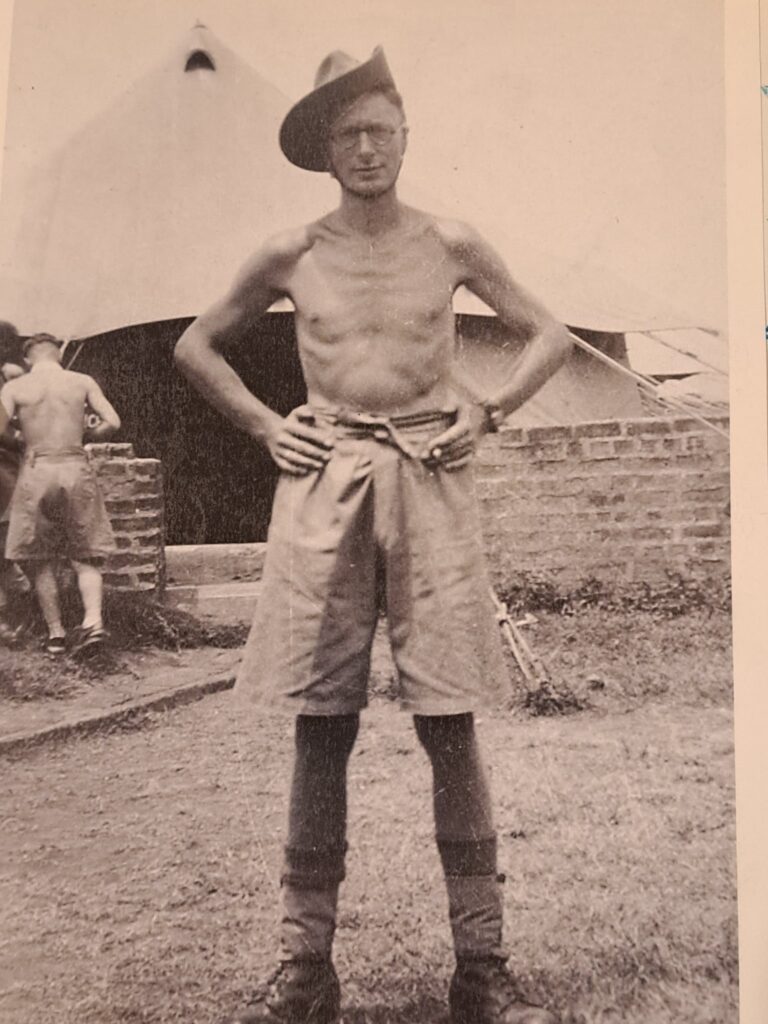
Following that, Steve was dispatched to the jungles of Burma (modern day Myanmar) where he acted as a spotter on a forward observation post for an artillery battery. It was here that he came to love and admire the Gurkhas, the Nepalese warriors who have fought for Britain from the earliest days of the Empire right up to the present day. After being wounded, and contracting both malaria and dysentery, his health was downgraded and he was transferred to British Intelligence, not returning to civvy street until 1946.
As well as growing up hearing my grandfather’s tales, I also interviewed him on video for a school project back in the 1980s, and so have had a detailed account of Steve’s war in my head for several decades. But, now that Commando had commissioned me to use this as a basis for a 61-page comic-book, I found myself wondering if I now had too much material. There was also, as I discovered when I started my research, many things my grandfather hadn’t explained in full (like, what exactly did he do at his forward observation post), and a few details he had misremembered. And, as you’ll see at the close of the commentary that follows, some secrets he took to his grave.
In addition, I had to be wary not to fall into the trap as so many writers do when trying to tell a ‘true story’, especially one that is so personal to them. There’s a tendency to just tell it as it happened, and to get defensive when told the story’s structure doesn’t work or that there are too many unnecessary characters or plot points. The key is to write a piece of fiction that draws on real life events, captures the essence of what it felt like to live through those times, but – above everything else – everything is subservient to the needs of the story.
Where this was made, in some respects, easier, is that writing for Commando meant more rigid guidelines in terms of tone and storytelling than might otherwise be the case. The DC Thomson imprint has been telling stories of men (and occasionally women) at war since 1961, and for those who only vaguely recall them from their youth, it’s all Germans saying “Achtung!” and screaming “Aiiiieeee!” when they get shot. And, yes, there is some truth to that, but there’s also a surprisingly wide range of story modes to Commando comics; some are rollicking, gung-ho adventures, while a few even feature aliens or zombies. But there’s room, too, for a more socially realist approach, and it was this tone that I chose for my own story.
Commando can be accused by detractors of being pro-war, which I dispute. What it is, and always has been, is pro-soldier – which is entirely different. They sometimes tell stories of legendary fighting units, and these can make for remarkable tales. But they more often tell stories of everyday men (and women) who, caught up in history, who find themselves facing the most gruelling challenges imaginable. The reasons for fighting are always up for debate, but, in highlighting the soldiers caught up in those conflicts, comics like Commando honour them.
My own grandfather was one such ordinary man – and I hope I’ve done his memory justice.
The Commentary
If you’ve not read the comic yet, now’s the time to bookmark this page for later. I’m about to get into spoiler territory, as I explore the complexities of adapting my grandfather’s story as a comic. I won’t comment on every single page, but will concentrate on the different aspects of the story as they arise.
Page 3
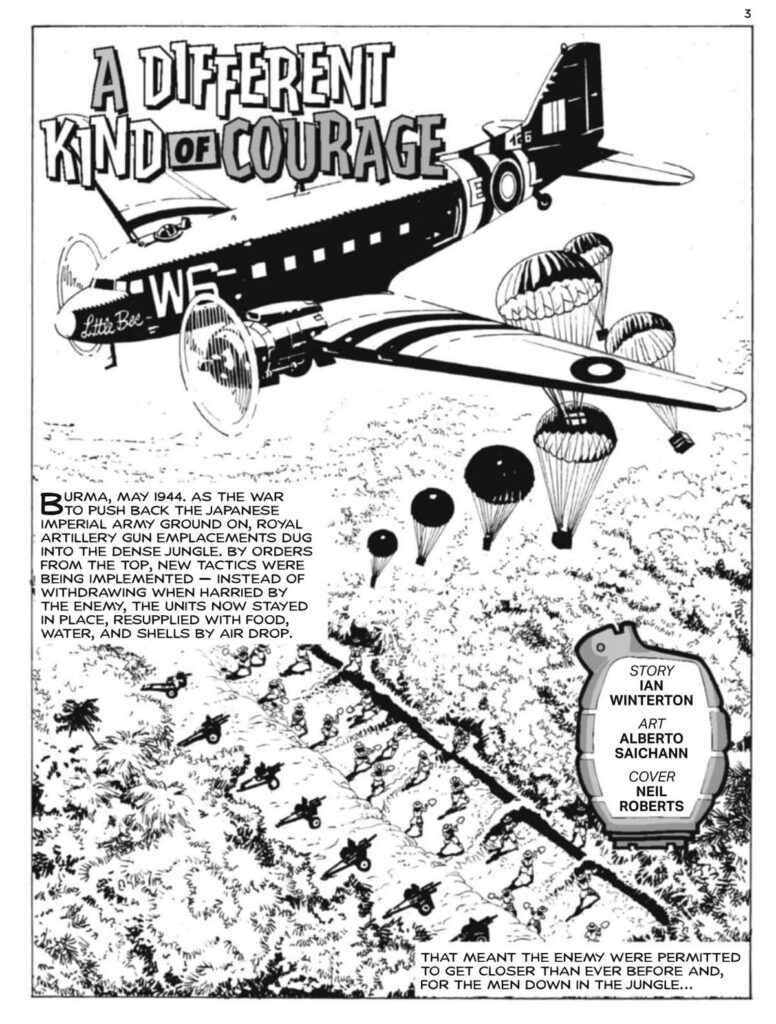
With the cover being Page 1, and inside right being Page 2, every Commando story starts on Page 3, usually with a full-page splash – which is the option I chose. The situation I describe here is not one I got from my grandfather, but came from my research; however, the new directives from command, that gun batteries had to remain in place, would have come in just as Steve was arriving in the Burmese jungles. The inclusion of air-drops gave the opportunity to show the battery being dug in from above. Also, I’ll say here – and this goes for the whole strip – that Alberto’s artwork is just perfect.
Page 4
My protagonist is called Henry Lovelock and, while he is not my grandfather, a lot of his biographical details are the same – age, place of birth, wife, children etc. Steve’s full name was John Henry Stephen Andrew, with Andrew being his surname. He always went by Steve, except at Rolls Royce where he was addressed as John. Anyway, Henry seemed like a good name for my protagonist, and for his surname I went for Lovelock – which was the maiden name of Steve’s wife, my grandmother, Nancy.
But showing Henry on the edge of the jungle, wondering how close the Japanese snipers were, comes directly from Steve describing how it felt; he wasn’t shy of telling me he found it frightening, because of course it was; what makes ordinary men like my grandfather brave is that they got on with anyway.
The subsequent picture introduces the Gurkhas, a major component of the story – soldiers my grandfather admired intensely.
Page 6
When we first meet Henry he’s suffering from what we’d now call PTSD. I didn’t want to suggest for a minute that Steve lacked bravery, but the man I knew for 25 years was definitely someone who, though proud to have served, was forever haunted by his years at war. And I wanted, as I mentioned earlier, to tell a story in Commando’s tradition of highlighting the valour of the ordinary soldier. When one mentions World War Two Burma, people invariably suggest the Chindits, and while those extraordinary men do inspire remarkable tales, they are not typical soldiers of the time.
Here, though, at the beginning of this story, is the first instance of letting story structure dictate the plot – Henry needs to start at a low point because he has a starting point from which to build towards redemption. It’s better for the story that Henry is displaying overt symptoms of PTSD, although I’ll never know if Steve did while at war, and I couldn’t entertain any precious concern that I might be besmirching his memory. I did wrestle with this a little at the outset, but then found myself remembering all the fictionalised accounts of war that my grandfather enjoyed himself; he was a particular fan of films and TV that showed the theatre of war that he had experienced directly – he loved The Bridge Over the River Kwai, and his favourite sitcom was It Ain’t Half ‘Ot, Mum which, though a bawdy, studio-bound 1970s BBC sitcom, Steve said captured perfectly how it felt to be a soldier out in India.
Pic 2 here introduces the villain of the piece – Lieutenant Broadstairs – who’s there to represent the more negative aspects of life in the British Army; not only does he dismiss Henry’s trauma as cowardice, but he’s a racist, too. More on that later.
On the art, I love the unscripted detail Alberto’s added – of Broadstairs carelessly waving his pistol in the face of an unnamed – and amusingly alarmed – private.
Page 7
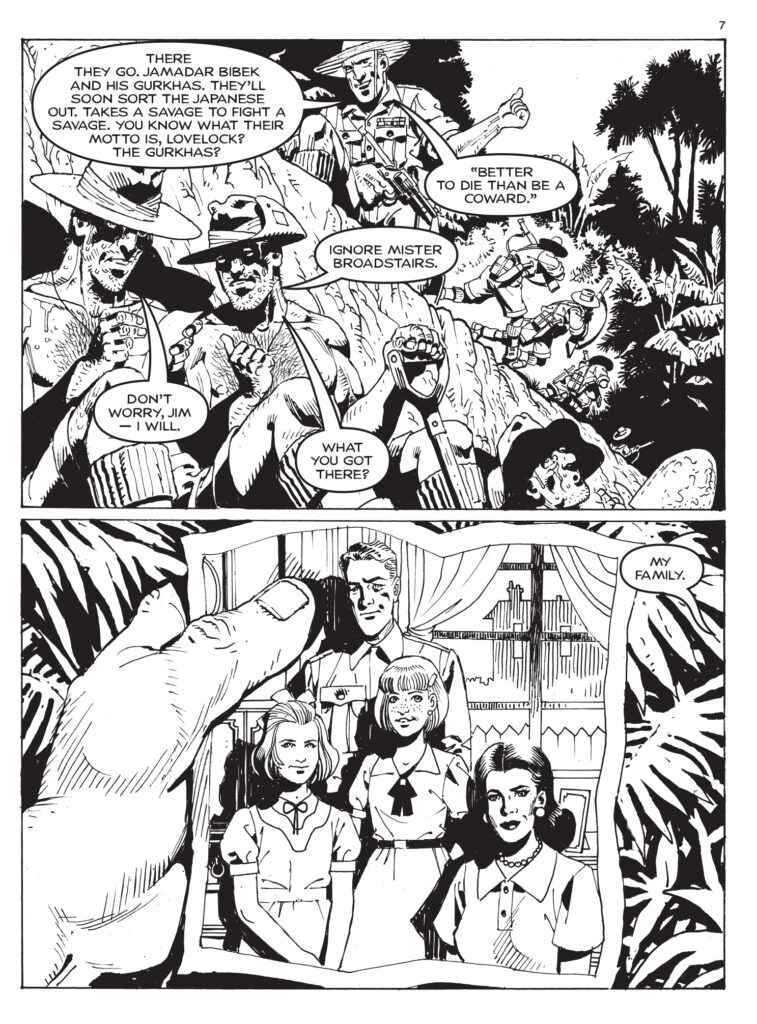
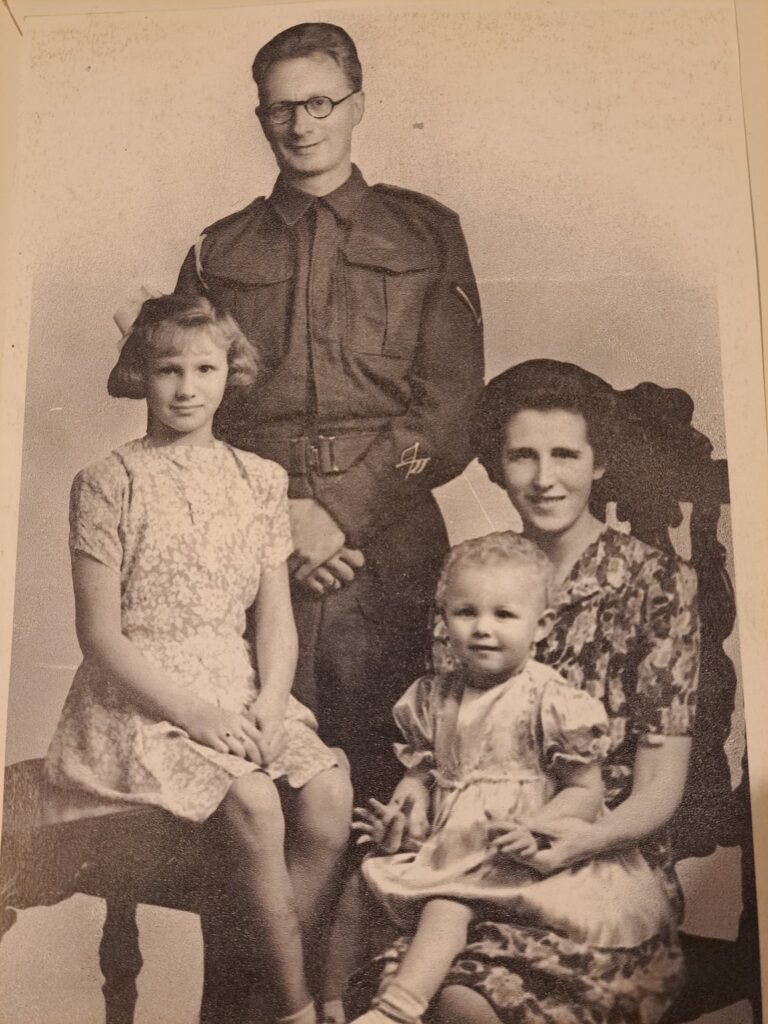
Part of the job when writing a Commando story is to provide reference images for the artist. This includes every element that will feature in the story: uniforms, weapons, tanks, jeeps, aeroplanes, artillery, as well as locations. “A Different Kind Of Courage”, with its multiple locations, had an unusually high number of reference pics, but even stranger is that I provided Alberto with photos from my own family album. The photo Henry keeps with him is based on the photo of my grandfather with his family, taken just before he was shipped out.
Page 8
I love the composition Alberto’s gone for here, with the boots in the close foreground. Story-wise, the caption here is taken directly from my grandfather: the Gurkhas would leave camp, silently, and return wiping blood from their kukris. It chilled me hearing this as a child, and chills me still.
Page 9
Another biographical detail for Henry mirrored by Steve’s real life – he did work at Rolls Royce, both before and after the War, and was part of the team responsible for manufacturing the famous Merlin engine that powered planes like the Hurricane and the Spitfire. I’ve taken some artistic liberties for the sake of the story by indicating that Henry is more involved on the technical side than Steve was; my grandfather was a very clever man, but his work was more on the managerial side. But he was an excellent spotter, and his Morse rate was very high. This probably explains why he was recruited into Intelligence after his time in Burma.
Page 10
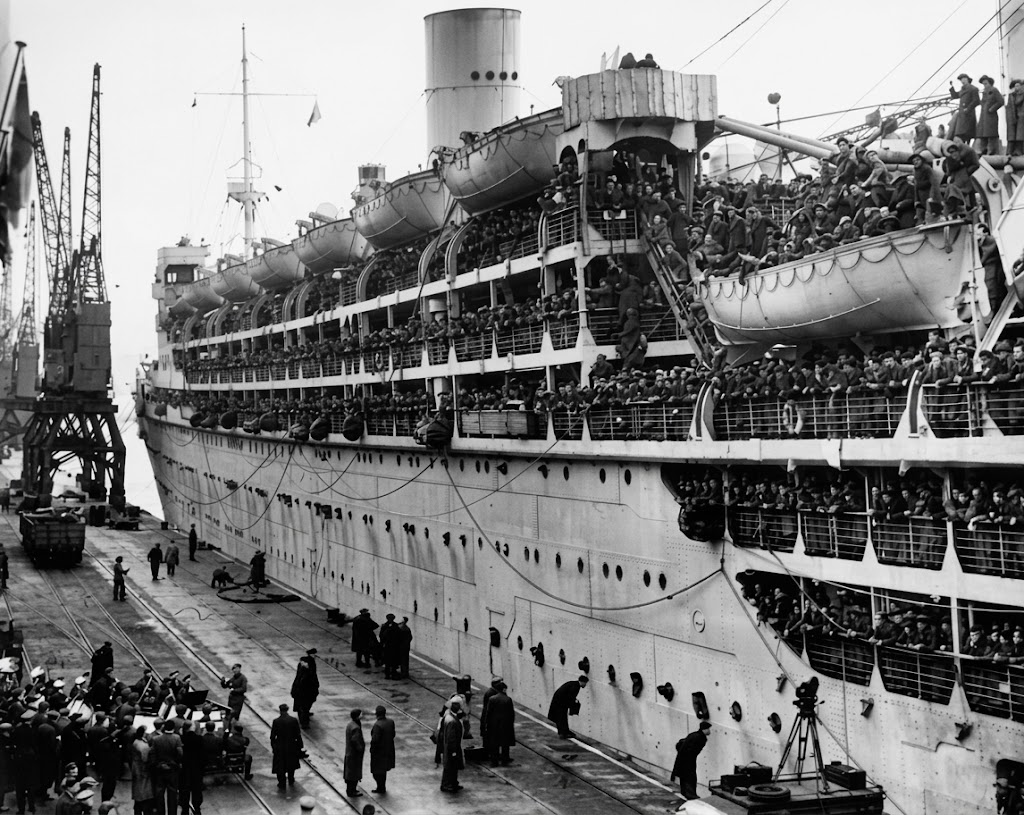
Again, this part of the story is almost beat-for-beat how Steve experienced it in real life. He did arrive into Bombay on the RMS Strathmore (part of a fleet that got heavily bombed while passing through the Mediterranean, one of the first chapters in his story that had to be excised, both for space, and because it wasn’t germaine to the main thrust of the story).
Another unscripted addition by Alberto is the presence of the “highly flammable” gasoline; it was chaos on those docks which, as we’ll see, had disastrous results.
• There is a model of the Strathmore, built by Vickers Armstrong Ltd Barrow-in-Furness for Peninsular and Oriental Steam Navigation Company, launched in 1934, scrapped in 1969, at Royal Museums Greenwich
Page 11-12
The section with the Indian porters comes from Steve, though he just mentioned, in a rather un-PC manner, that they were sleeping on the docks and he and the rest of the soldiers had to just kick them awake. He had a lot of affection for India and its people and wasn’t racist in real life, but the real reason I didn’t have Henry act in this way was because it would skew the story. Far better to have Broadstairs reveal himself as a bully, with his disdain for non-British people also carrying over to his attitude to the Gurkhas.
Page 13
This isn’t directly from Steve’s account of arriving in Bombay, but he – and his comrades – experienced numerous food poisoning incidents and it was contracting dysentery that really sent his health spiralling. Also, having been to India myself several times, spells of ‘Delhi belly’ are just par for the course, and during World War Two food poisoning and disease was a major threat to British soldiers.
From a story point of view, this mistrust of the Indians Broadstairs exhibits was going to play a slightly larger role – of which more shortly – although it still speaks to the Lieutenant’s racism. In addition, having Jim hospitalised due to food poisoning was necessary so he wouldn’t go through the trauma that Henry does.
Page 14
As in the caption, Deolali Transit Camp has been notorious amongst the British armed forces since the 19th Century, and it’s still present in our vocabulary as “doolally”, meaning to go mad from boredom; something akin to cabin fever. Steve loathed Deolali, as all other soldiers did – and was glad when he got moved on. At least at first…
I love this panel, by the way – the expression on Jim’s face as he rushes to the latrines is brilliant.
Page 15
Seeing the imprisoned Indian collaborators at Deolali was something Steve told me. As with the theme of mistrust established earlier, it doesn’t have as much impact as it was originally intended to, although it still reinforces in the reader the sense that Broadstairs is a wring ‘un.
Page 16-17
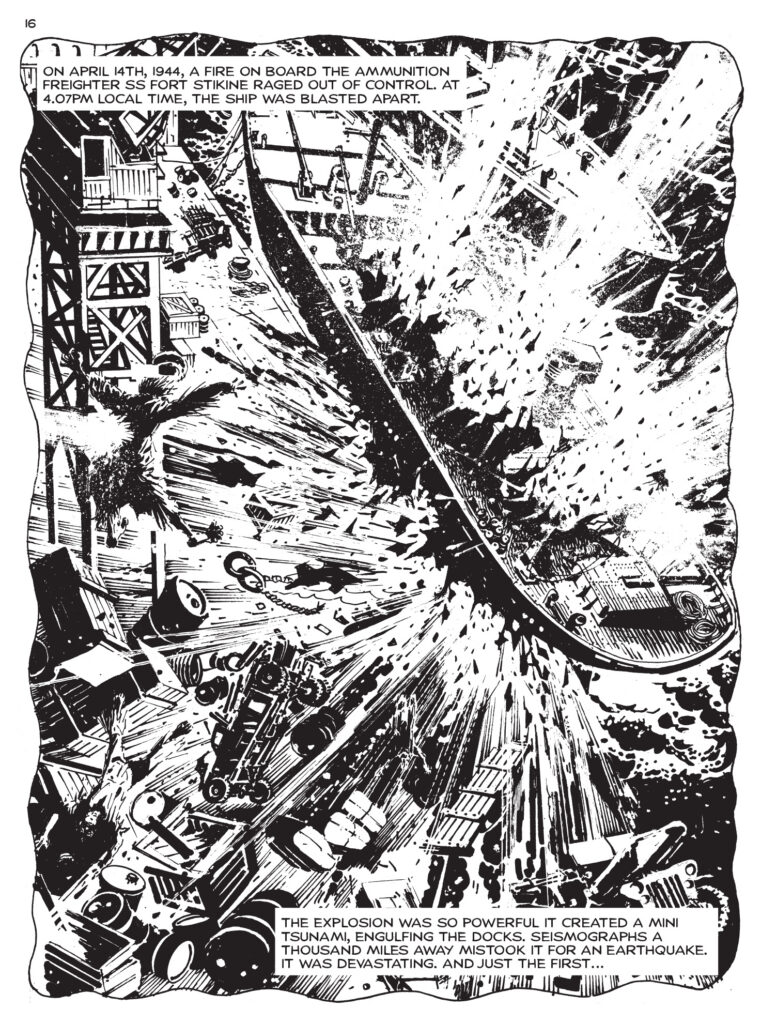
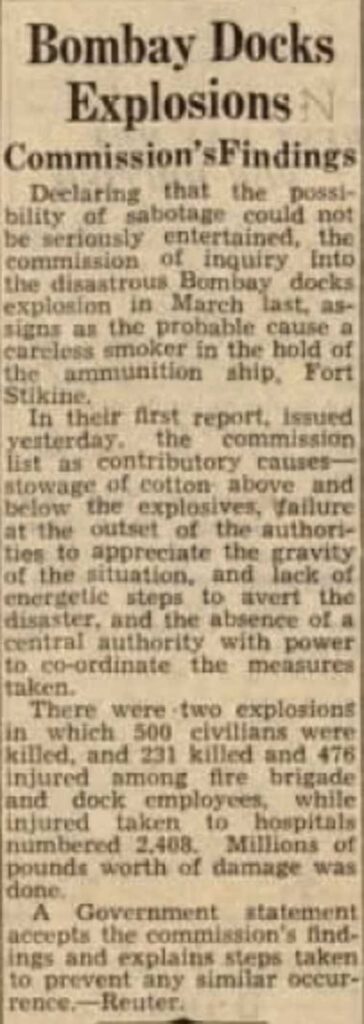
The Bombay Dock explosion happened exactly as depicted. And, in real life as in the story, Steve was at Deolali when it occurred. I did consider having him present in Bombay to witness it but, as well as meaning it would be harder to keep Jim out of it, the notion didn’t quite strike true to the tone of the story – that this was an ordinary man’s war – and so sticking to the truth was the best decision in service of the story.
Page 18
Henry and the others return to Bombay for the clear-up, just as Steve did. The reference here to it being blamed on Indian Nationalists is the ghost of something that was bigger in my initial outline: my grandfather always told us that the explosion had been set off by a terrorist bomb, because that’s what everyone assumed back then. But, researching when I started my script, I discovered that this theory had been scotched almost immediately. The SS Fort Stikine was carrying a dangerous mixture of cargoes and its captain, complaining just days before the explosion, said his ship was loaded with “just about everything that will either burn or blow up”.
To make matters worse, because the Stikine was carrying ammunition and would, ironically, be a target for terrorists, the decision was taken not to display a red B-flag, which would indicate “dangerous cargo on board”. This meant the Bombay fire department did not respond with sufficient numbers initially, resulting in the fire spreading, a secondary explosion, and a greater loss of life – including the Stikine’s captain.
In terms of the script, this meant I could only hint that some people – especially Broadstairs – would assume it was terrorism, and that Henry spares a thought for the dead civilians is a good character moment.
Page 19
Again, these events come directly from Steve. He and his comrades were tasked with fishing cotton bales out of the harbour, and he spoke occasionally – in a quiet voice – about how bodies came bobbing up to the surface from beneath them. Him finding the dead Wren is also true – though I didn’t know that until, starting to put the initial pitch together, I chatted about it with my mum, Steve’s youngest daughter in the family photograph, now in her 80s. She said what had really haunted him was a dead Wren, a young woman, who reminded him of his own daughters. It sems strange looking back that I didn’t know this detail before, but it provided a powerful moment for the story to coalesce around.
Page 21
This is based closely on the series of events that Steve was convinced got him called up. He did butt heads with a pencil-pusher who, Steve discovered, had connections higher up. My script originally had Henry blame “the funny handshake brigade” – the Masons – which is how Steve put it. Editorial opted to change this to the less contentious version you see here.
Having Henry outside burning leaves with his daughters is pure invention – and came about as I was trying to decide how Henry could use his brain to defeat the Japanese. But what is accurate to real life, is that Steve’s call-up papers came in the autumn of ‘43. By April ’44 he’d been through training and arrived in Bombay.
Page 23
The term Broadstairs uses here – “mountain goat mercenary” – I discovered during my research; this was one of many slurs the British deployed against the Gurkhas, some of them not suitable for Commando. The same goes for the common use of the word “Jap” for the Japanese. I included it – in dialogue only – as that is how people spoke during this time, but editorial excised them – probably quite rightly; the word’s absence is not notable.
Page 24-25
Here we up the ante, with an unwelcome reminder that the Gurkhas, though formidable, can be killed, which comes with the news that the Japanese now know the battery’s exact position.
Page 24 also sees Bibek espousing that Henry most likely possesses a “different kind of courage” – something Henry doesn’t yet believe.
I also like Alberto adding non-scripted wildlife to the piece – a snake on Page 25, for instance, to further illustrate Henry’s fear and shame in his belief that he is a coward. Later on we see spiders, pangolins and even a crocodile.
Page 27
As we head towards the midpoint, I thought it important that we start to see Henry re-asserting himself; he’s still scared but he responds to Broadstairs’ bullying my volunteering.
Page 28-35
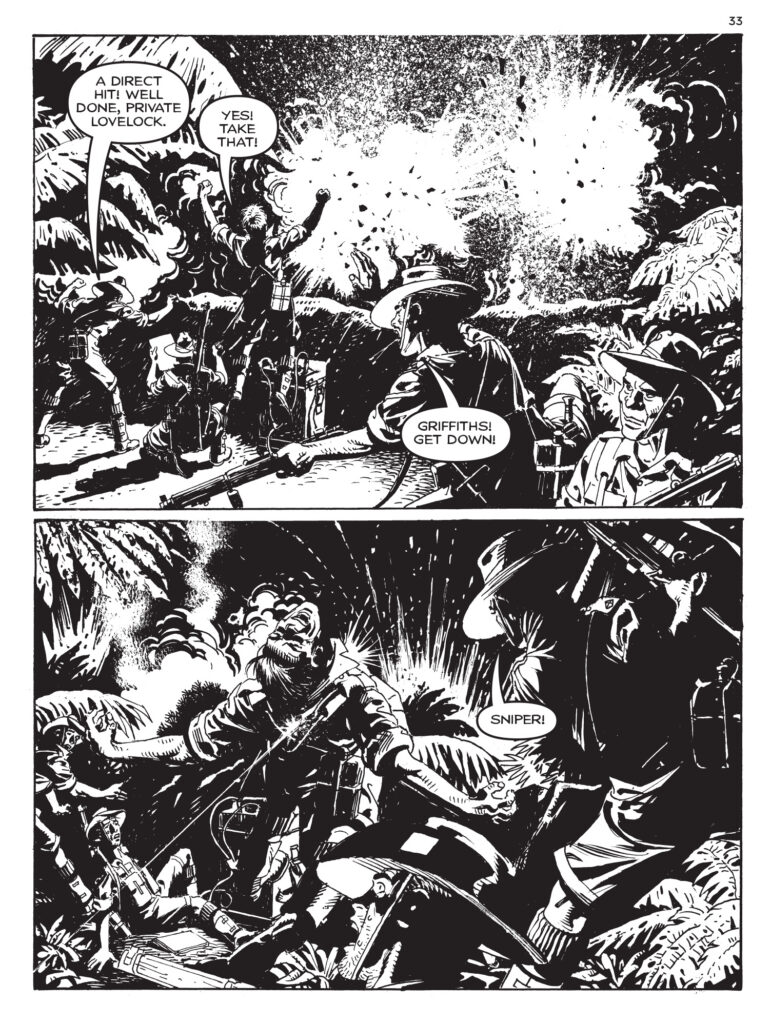
My grandfather had always talked about his time at the forward observation post, as that was where he spent most of his time when in the jungles of Burma. He never went into great detail, just said he made calculations and radio’d back to the battery to, in his words, “tell ‘em where to lob the shells”. In the story outline this was simple enough, but when I got to the script proper I discovered I didn’t really know what Steve’s job entailed. A deep-dive on the internet really brought home what a tricky matter it was – and all done in the stifling heat of the jungle, with the enemy all around.
In terms of story, Henry destroying the Japanese guns is obviously more positive development for him – which comes just in time for his relapse in the face of Griffiths’ death, and just before disaster strikes at the midpoint with the Japanese attack on the battery.
Page 36-37
This is where the needs of the story, specifically one written for Commando, overrides reality. My grandfather did experience limited firefights, and he was shot in the leg, but nothing on the scale depicted here. But action is a key component of the Commando brand, and skirmishes such as the this happened frequently in the Burmese campaign. From here on in, though, we’re heading into purely fictional territory.
A major character point is Henry being the one to insist they move out to help the battery – the beginning of him proving that Bibek was right to see him capable of valour.
Page 38
As they make their plans, Bibek’s suggestion that they attack with “speed, aggression, ferocity” so as to appear a larger force than they are, is a set-up for later in the story.
Page 40
Lt. Arnold’s death is a poignant moment, serving in terms of story structure as what they call in TV “the worst point” for the protagonist. Henry is at an even lower ebb than ever before, ashamed that such a fine soldier should “squander his last words on a man as unworthy as him”.
It’s also important for logistical reasons that Arnold is killed because he’s an officer, and, ultimately, we need Lt. Broadstairs to assume command. In addition, in the grand tradition of narrative structure, we need our protagonist to lose his allies so he has to act on his own wits for the final battle.
Page 43-46
This reaches its ultimate expression when the Japanese attack and kill the Gurkhas, save for Bibek, whom they capture – thus taking away all of Henry’s protection. It’s a further humiliation that he and Jim are forced to hide in a bush during the attack.
Page 47-49
The final scene with Lt. Broadstairs as, now in charge of the entire battery, he refuses to help rescue Bibek. In the outline I did have Broadstairs appear with other soldiers in the nick of time to save Henry, Jim and Bibek but that felt false; as well as robbing Jim of his hero moment, it was much truer to Broadstairs as a character that he denied himself redemption.
Page 50
Henry tells Jim he’s going to rescue Bibek, or die trying. It was important that he not expect Jim to come with him; but, that Jim volunteers is touching and also, in structural terms, means he has volunteered and so the reader, on a subconscious level, now knows he is vulnerable to being killed (it’s often a tell-tale sign if a secondary character puts themselves in harm’s way, against the wishes of the protagonist.)
Page 51
The pedant in me has to point out that my script contained the correct pluralisation of “court martial” – “courts martial”!
Page 52
Yes, it’s a but unlikely that the Japanese wouldn’t take Bibek’s kukri, but it’s not impossible, and this moment has power. My grandfather came home from India with a kukri he’d bought off a market, and kept it as a constant reminder of his admiration of the Gurkhas.
Page 56
Having Henry use the lense on his field glasses to start a diversionary fire is perhaps a little on the corny side – but it is possible, demonstrates Henry’s brains, and ties in with his memories of his daughters so I can live with it.
Page 58
It wouldn’t have fitted the tone of the piece if Henry had gone from suffering from PTSD to single-handedly defeating the Japanese platoon and so, after his display of immense bravery, I had him take a bullet. As well as this having parallels with Steve (though he was shot in the leg), I also needed this to be the moment Henry was forced to leave the jungles. This happened to Steve, though in a more complicated and less dramatically pleasing why: after getting shot he returned to the jungles, but it was malaria and dysentery that almost killed him and wrecked his health.
Page 60
The family photo appears again – unscripted. It’s another good addition by Alberto (or the editorial team), especially as it’s upside down so not too big a deal is made of it (it’s coming later).
Page 62-63
I toyed with killing Jim, but thought better of it – it’s a bittersweet ending as it is, and both Jim and Bibek being alive at the end strikes just the right hopeful tone. As does the final exchange between Henry and Bibek – that Henry getting to save the Gurkha is “the honour” of his life.
The field hospital in Cox’s Bazaar is where my grandfather spent some of his time. He was also in Kolkata, at the Loreto Convent (which would later become famous as the base of Mother Teresa’s charitable works).
Page 64-65
Henry is sent to Abbottabad, as Steve was. It’s been part of Pakistan since Partition, and became globally famous in 2011 when Osama bin Laden was killed there by US Navy Seals.
On the final page we have a last appearance of the family photo (this time it was scripted – I checked!)
Steve never went into much detail about Abbottabad, and we were always more interested in his time with Gurkhas in Burma. He merely said he was monitoring transmissions, especially from the Soviets as the War came to an end.
Steve died in 1997 and, on a visit to the museum at Bletchley Park almost a decade later, we saw on a map that there was far more to it than merely listening in; there, on a map showing the Allies’ global network of radio stations, was Abbottabad, the Wireless Experimental Depot – and small but essential part of the work that went on at Bletchley Park.
We discovered in that moment that Steve had been one of many in the Intelligence Corps who’d taken their secrets to the grave. They were, as Winston Churchill described them: “The geese that never cackled.”
It’s a shame the reference to Bletchley got omitted, by accident, but nevertheless I’m proud that this little comic book can, in some small way, honour my grandfather, and all the ordinary – but simultaneously extraordinary – men who fought in India and Burma.
• Commando Comics are online at commandocomics.com | DC Thomson – Subscriptions | Commando Comics on AmazonUK | Commando Comics on Magzter | Follow Commando Comics on Facebook | X | YouTube |
Head downthetubes for…
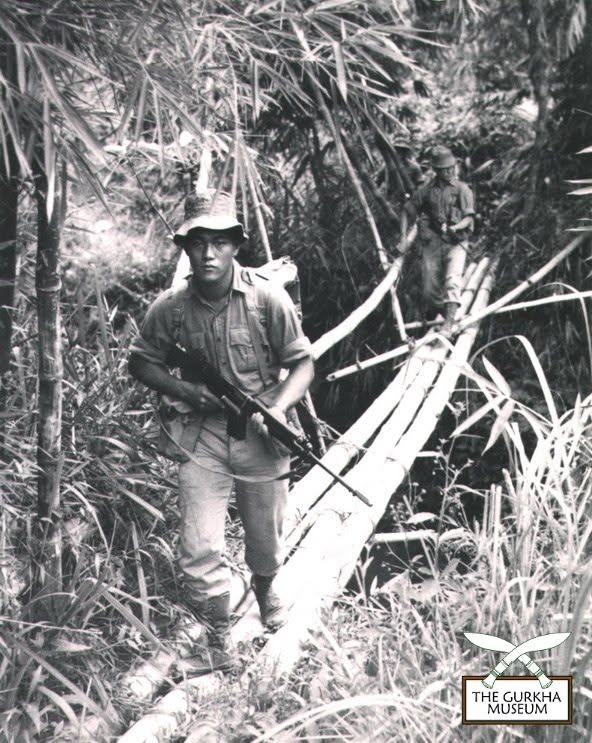
The Ghurka Museum honours and promotes the heritage and culture of the Gurkha Soldier and his continuing service to Britain.
Located in Peninsula Barracks in Winchester The Gurkha Museum takes you on a journey through Gurkha history, beginning with their origins in Nepal and the moment in 1815 when Gurkhas were first enlisted to fight for Britain. The extraordinary stories on display and housed in our archives cover not only the battles and campaigns but the culture and religion of the homeland of this unique fighting force. We see them locked in battle with mutinous sepoys in 1857, then standing guard in India’s North West and North East frontiers before being sent half a world away to the trenches of the Western Front in 1914 and The Falkland Islands in the early 1980s.
Through its collections and archives the Museum represents over 200 years of a unique and historic relationship, one that continues to this day, with the annual recruitment of Gurkhas from Nepal continuing to be vital for Britain’s Armed Forces.
Located in Peninsula Barracks in Winchester the Museum takes you on a journey through Gurkha history, beginning with their origins in Nepal and the moment in 1815 when Gurkhas were first enlisted to fight for Britain. The extraordinary stories on display and housed in our archives cover not only the battles and campaigns but the culture and religion of the homeland of this unique fighting force. We see them locked in battle with mutinous sepoys in 1857, then standing guard in India’s North West and North East frontiers before being sent half a world away to the trenches of the Western Front in 1914 and The Falkland Islands in the early 1980s.
Through its collections and archives the Museum represents over 200 years of a unique and historic relationship, one that continues to this day, with the annual recruitment of Gurkhas from Nepal continuing to be vital for Britain’s Armed Forces.
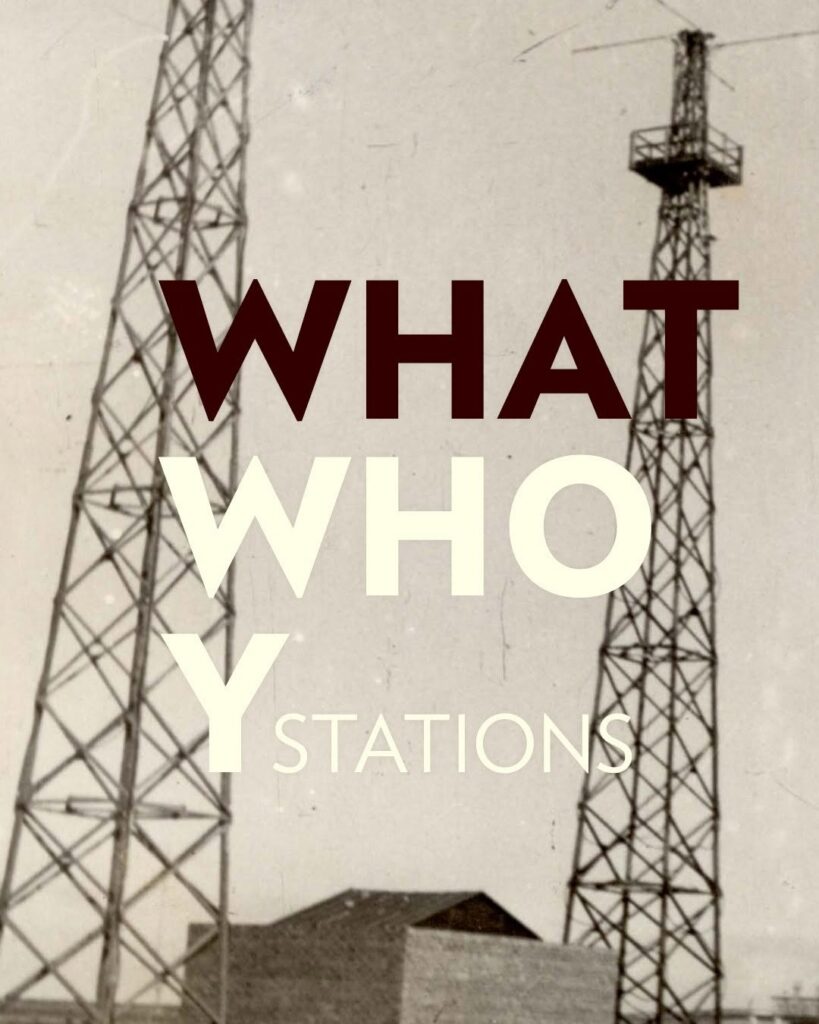
• Bletchley Park: The Y-Stations
These British radio listening posts played a crucial role during World War Two, intercepting encrypted enemy messages that were sent on to Bletchley Park to be broken.
Discover their story in an online deep dive, exploring how Y Stations powered wartime intelligence behind the scenes.
The Army overseas Y network focussed on India, where major stations had been set up at Delhi (known as the Wireless Experimental Centre or WEC) and Abbottabad (Wireless Experimental Depot or WED) before the war, largely to monitor Soviet traffic. During the war these were the site of a large proportion of British breaking and analysis of Japanese army and air force communications.
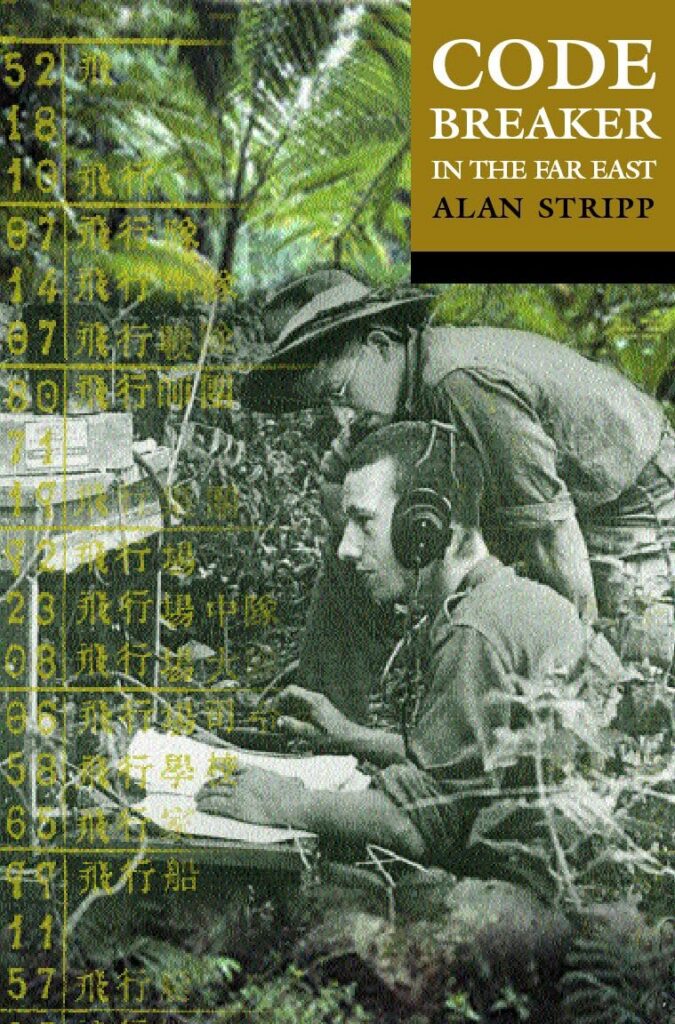
• Codebreaker In The Far East by Alan Stripp (AmazonUK Affiliate Link)
Codebreaker in the Far East is the first book to describe how Bletchley Park and its Indian and Far Eastern outposts broke a series of Japanese codes and cipher systems of dazzling variety and complexity. Their achievements made a major contribution to the Allied victory in Burma, and probably helped to shorten and win the war, perhaps by two or three years. Alan Stripp gives his first-hand account of the excitement of reading the enemy’s mind, of working against the clock, hampered by one of the world’s most daunting languages and the knowledge that they were facing an unyielding and resourceful enemy who had never known defeat.
• The Code Snatch by Alan Stripp (AmazonUK Affiliate Link)
A novel by codebreaker Alan Stripp, based on one of the most daring exploits of World War Two ever undertaken by British Intelligence Officers, including the author.
“Operation Paperchase” was a clever, colourful, and hair-raising affair; to steal the Japanese military codebook about to be used throughout South-East Asia – a jungle area of savage fighting set in appalling conditions.
A study of espionage in the Far East between the wars based on official intelligence material released in the 1980s. Issues explored include Britain’s appeasement policy towards Japan, and the conspiracy theories which claim Churchill and Roosevelt had prior knowledge of the attack on Pearl Harbour.
Creator Profile: Ian Winterton

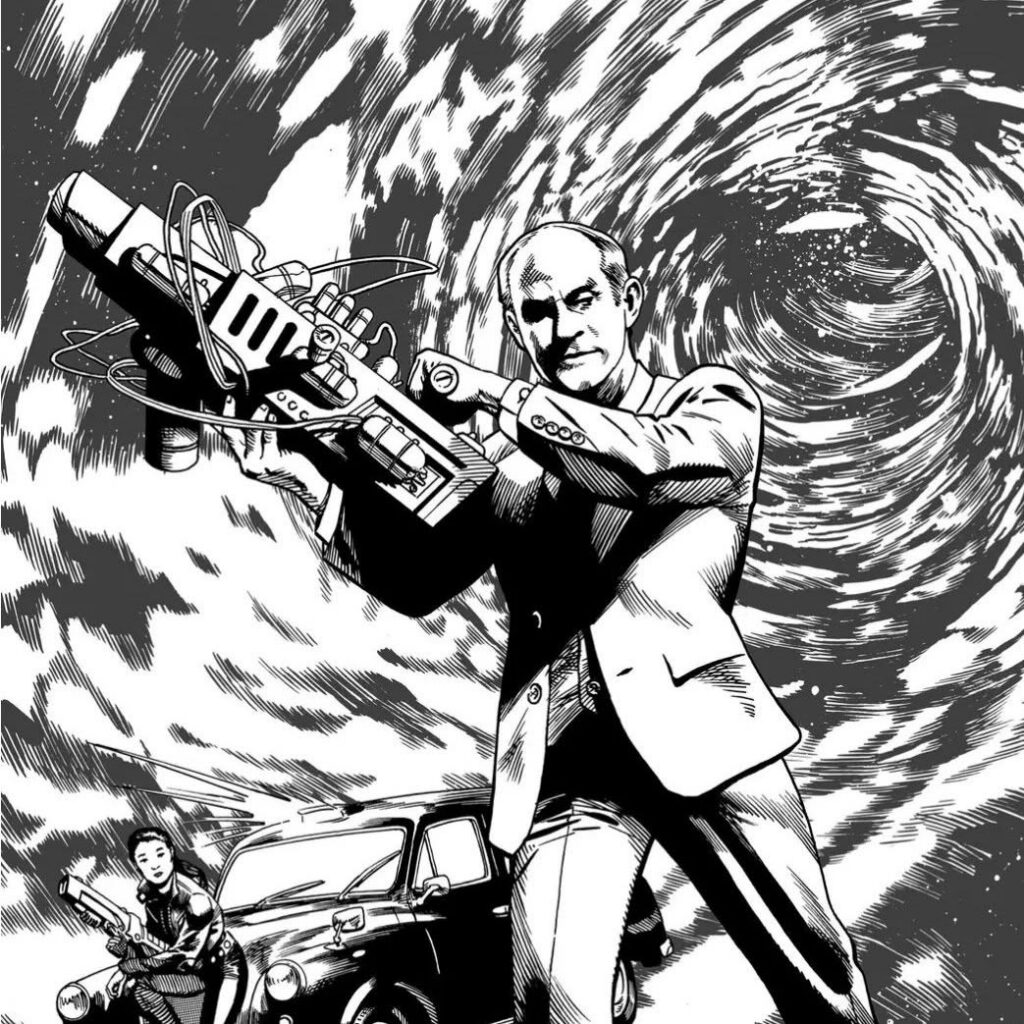
Based in Cheshire, Ian Winterton worked as a film journalist, interviewing many big Hollywood names, before starting to write for theatre in 2009. His play, Sherica, was short-listed for the BBC’s Alfred Bradley Bursary Award, and his stage adaptation of The Best, an unfilmed Jack Rosenthal screenplay about George Best, won a Manchester Theatre Award in 2013.
For the screen, Ian written has several TV and film scripts in development with various production companies including BLURRED for Saffron-Cherry Productions.
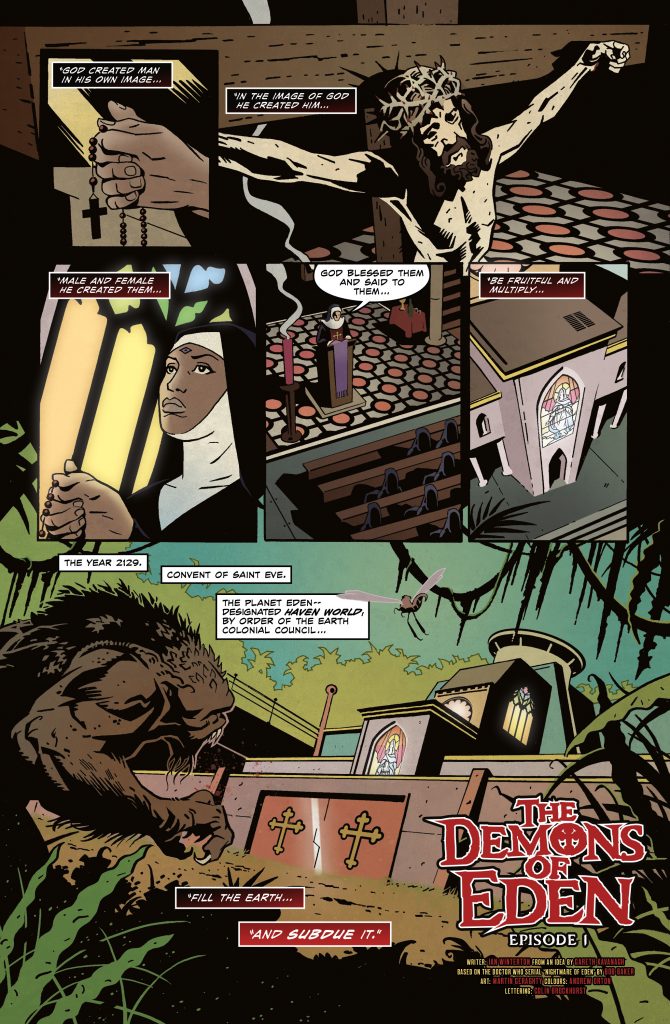
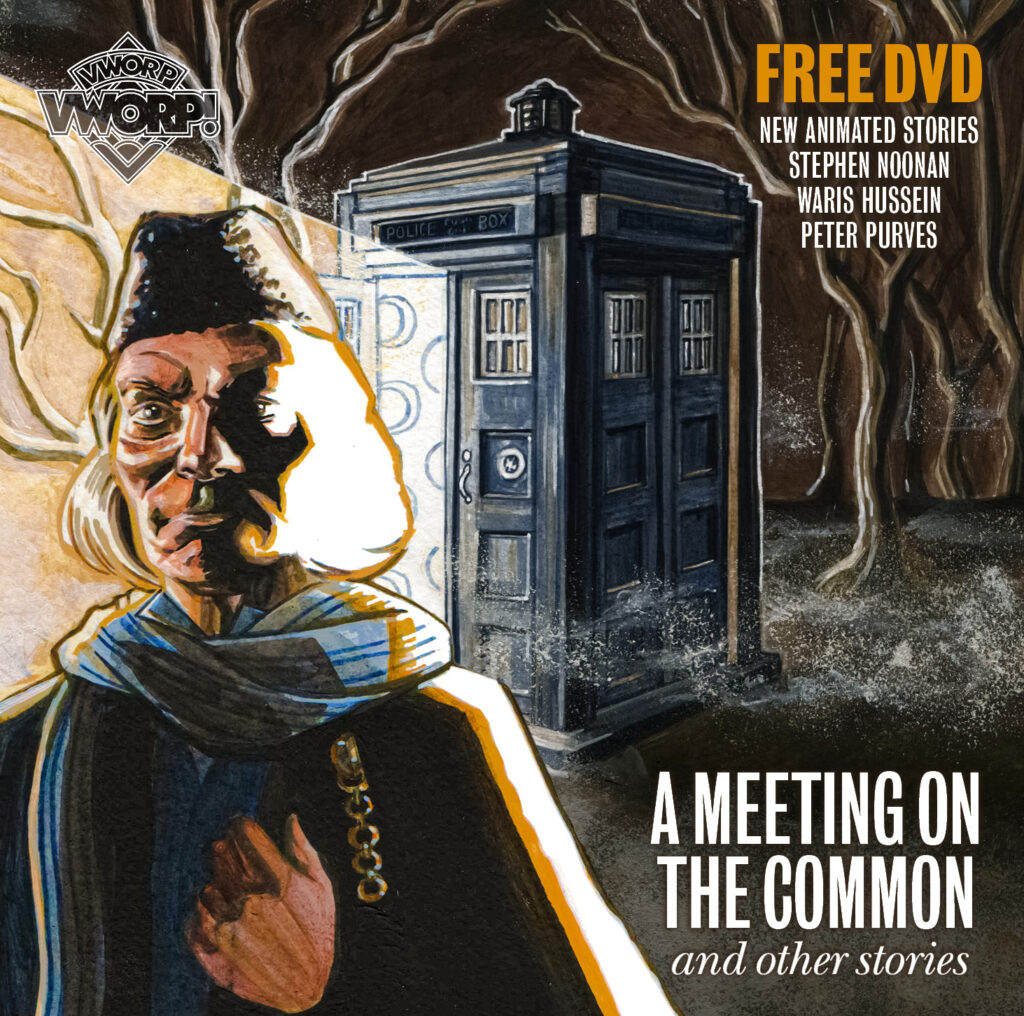
He is a writer and editor at Cutaway Comics, and has written a variety of titles for the company including Demons of Eden, Sutekh and Drax: London Calling and Drax: LA Woman. For Cutaway’s sister-company, Vworp Vworp, a brilliant Doctor Who fanzine, Ian wrote and directed A Meeting On The Common, distributed on DVD with Issue 6; an animated adaptation of the opening of the 1964 novel Doctor Who In An Exciting Adventure With The Daleks by David Whittaker.
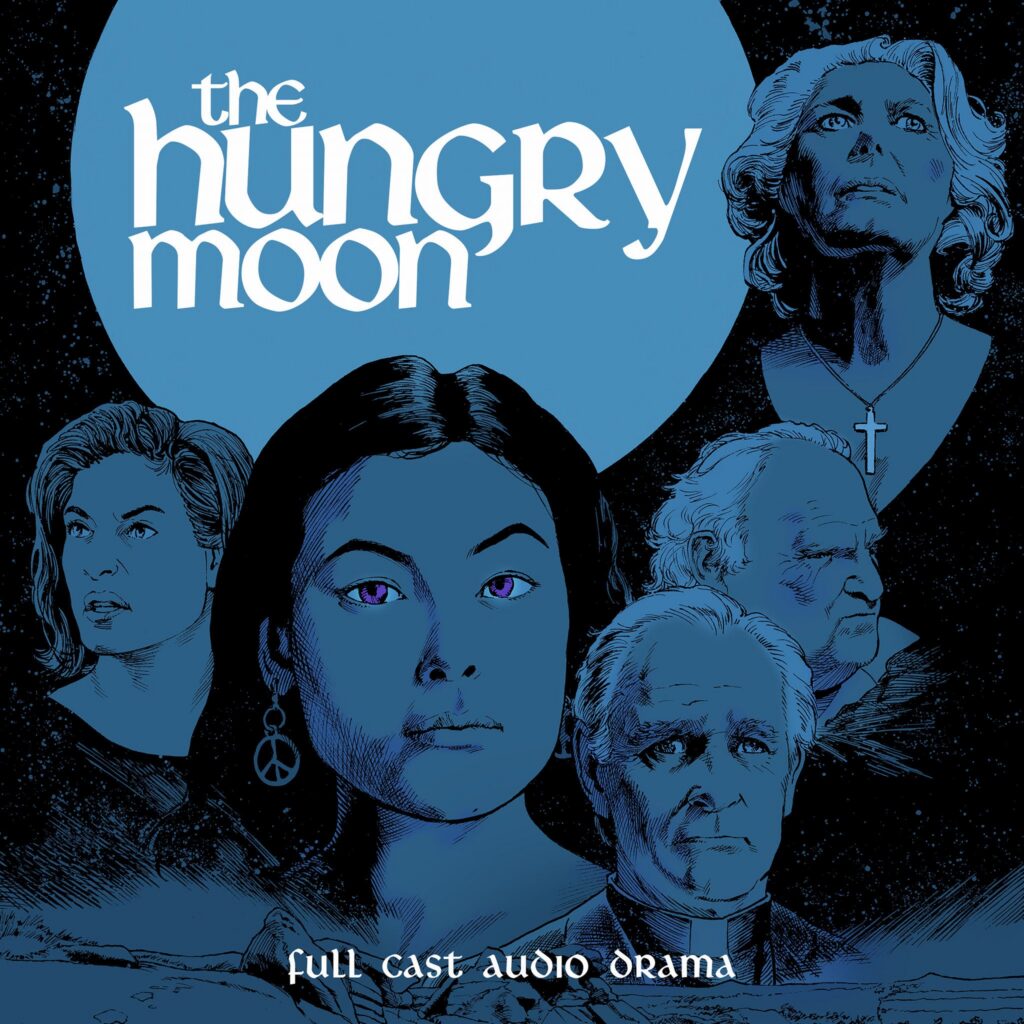
Earlier this year, Room 5064 Productions released The Hungry Moon, a folk horror based on the cult classic 1986 novel by Ramsey Campbell, adapted for audio by Ian, directed by Anthony DP Mann. It stars Colin Baker, Peter Davison, Louise Jameson, Mina Anwar and Jemma Moore and includes two hours of interview extras and a couple of folk songs from the piece.
Ian is also host of Cutaway Comics’ The Bunker, a Doctor Who interview podcast produced by Bamalam Productions CIC, a company at which Ian is Associate Producer and Trustee. Its guests have included Robert Shearman, Stephen Gallagher, Stephen Wyatt and Gary Russell.
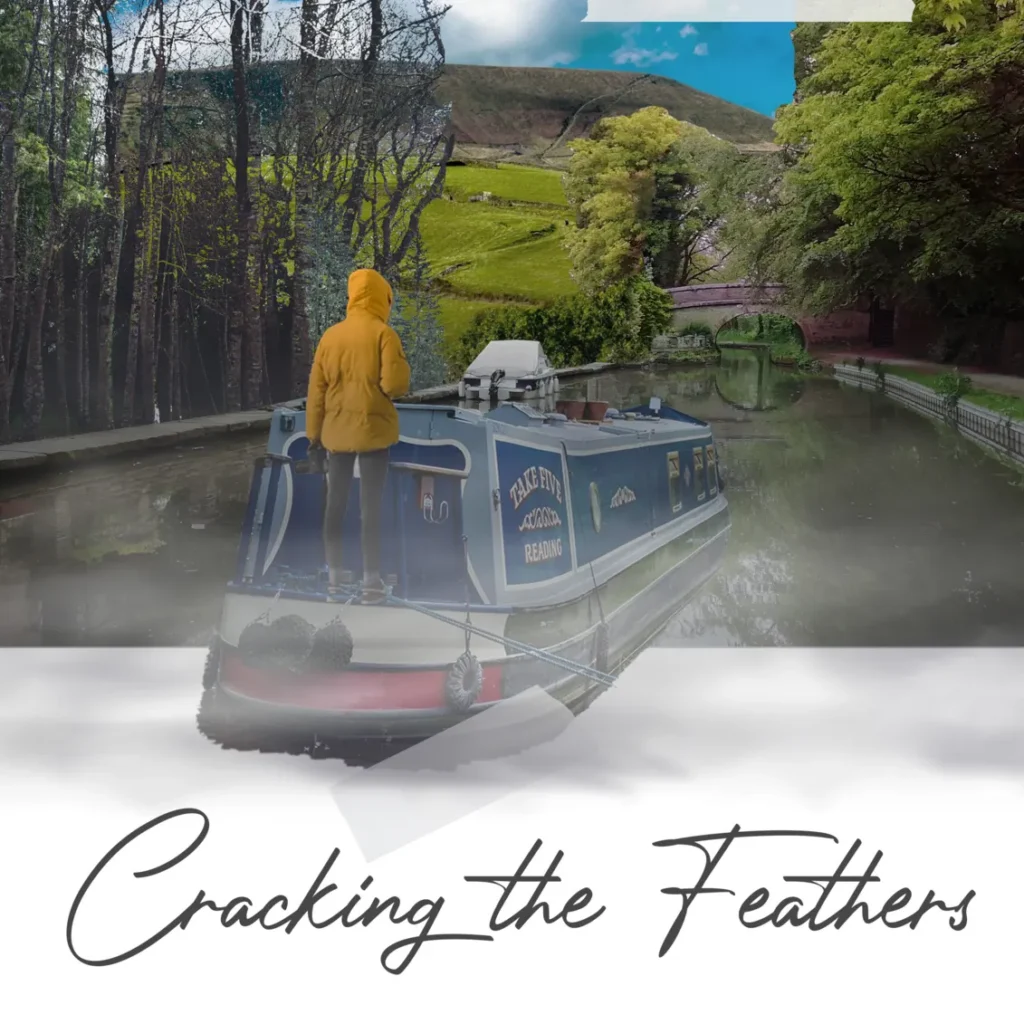

For Bamalam, Ian has written and produced several audio dramas, including Cracking The Feathers (starring Robert Glenister and Julie Hesmondhalgh), All The Bens (starring Nathaniel Curtis) and, in partnership with the MOLA (Museum of London Archaeology), Scuttled (starring Christopher Eccleston and Joyce Branagh).
Ian continues to work as a freelance journalist, mainly on film, and has written for a wide variety of publications and websites including Empire, Hotdog, SFX, FilmFour, Musicweek, The North Guide, The Leeds Guide, The Big Issue and is a regular contributor to Video On Demand site VODzilla.co.
Ian also works as a visiting lecturer at the University of Chester, delivering modules on Scriptwriting and Film Studies.
• Ian Winterton is online at ianwinterton.co.uk | He is represented by Madeleine Cotter at WGM Atlantic
• Ian on IMDB | Ian on X | Ian on Facebook
- About the Author
- Latest Posts

John is the founder of downthetubes, launched in 1998. He is a comics and magazine editor, writer, and Press Officer for the Lakes International Comic Art Festival. He also runs Crucible Comic Press.
Working in British comics publishing since the 1980s, his credits include editor of titles such as Doctor Who Magazine and Overkill for Marvel UK, Babylon 5 Magazine, Star Trek Magazine, and its successor, Star Trek Explorer, and more. He also edited the comics anthology STRIP Magazine and edited several audio comics for ROK Comics; and has edited several comic collections and graphic novels, including volumes of “Charley’s War” and “Dan Dare”, and Hancock: The Lad Himself, by Stephen Walsh and Keith Page.
He’s the writer of comics such as Pilgrim: Secrets and Lies for B7 Comics; “Crucible”, a creator-owned project with 2000AD artist Smuzz; and “Death Duty” and “Skow Dogs”, with Dave Hailwood.
Categories: British Comics, British Comics - Current British Publishers, Comics, Creating Comics, downthetubes Comics News, downthetubes News, Features
 6000 Not Out: A Chat with Commando writer Bill Graham
  6000 Not Out: A Chat with Commando cover artist Graeme Neil Reid
  6000 Not Out: A Chat with Commando Editor Kate McAuliffe
  5 Non-Fiction Books About Comics