I recently came across copies of a 1960s promotional comic, Gibbs Ivory Castle Arrow, which had a roster of creators that’s as impressive as regular comics of the period such as Eagle – including Captain Pugwash creator John Ryan and John Michael Burns.
Gibbs Ivory Castle Arrow – called simply Arrow in its editorial – ran for just 11 issuesfrom 1963 to 1966) and was commissioned by Unliver, the proprietors of Gibbs toothpaste (today known as Mentadent SR), through their advertising agency, Lintas.
The Gibbs Ivory Castle Display offered to participating shops selling the toothpaste
Gibbs SR was the first product to be promoted on UK television back in 1955 and Lintas clearly had an impressive budget to promote the brand. It seems no expense was spared producing the eight-page comic, published using photogravure, just like Eagle, Girl and TV Century 21 and as well as being offered on purchase of the toothpaste, was also distributed to dentists surgeries.
The Ivory Castle Arrow comic was just one product of what was originally the Gibb’s Ivory Castle League, established in 1923 and which continued after the Second World War as the Ivory Castle Childrens’ Club.
The British Dental Association notes the League was the first large scale dental health campaign, with teachers joining it and encouraging their pupils to become Crusaders to defend their teeth, ‘the ivory castles’.
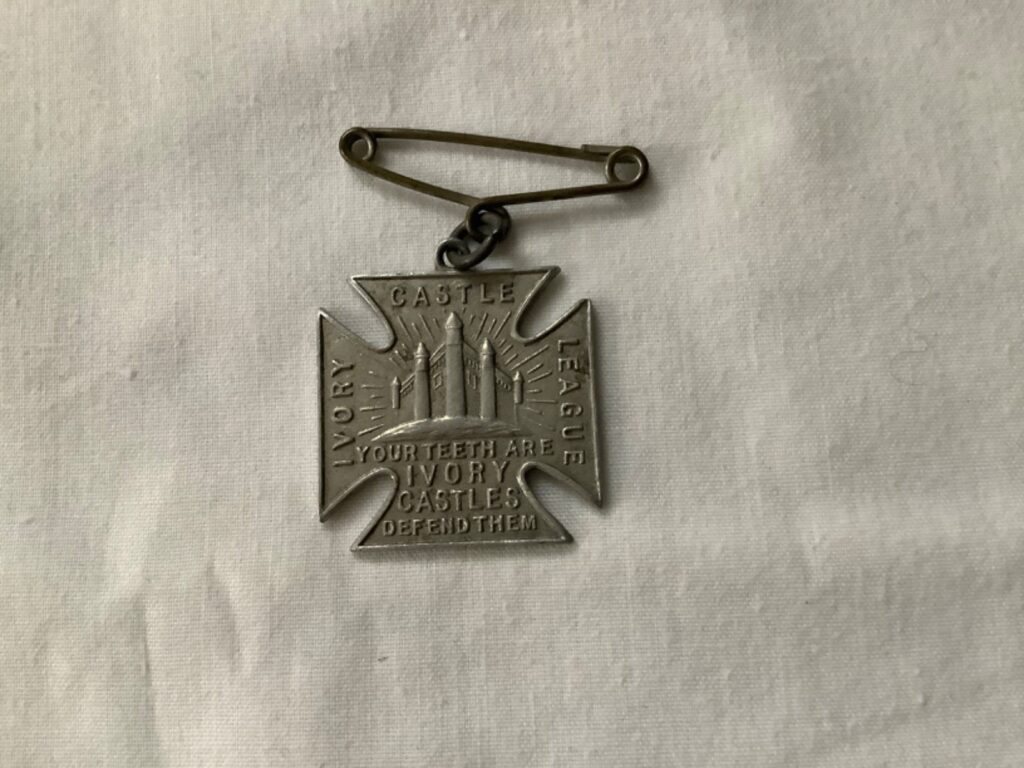
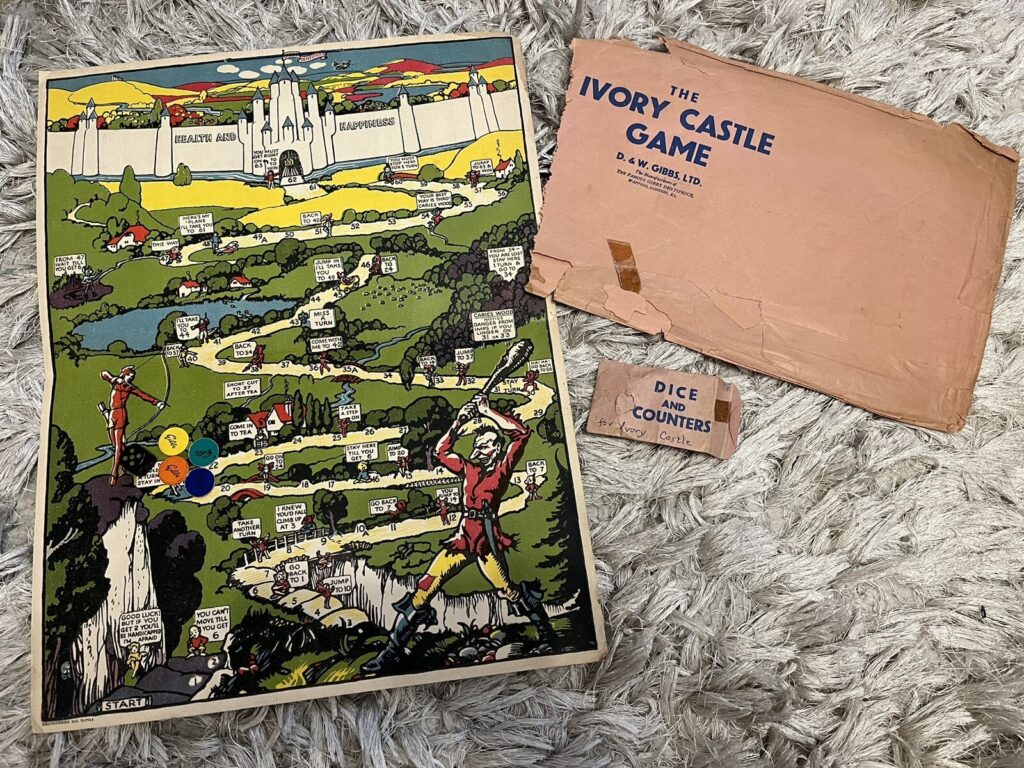
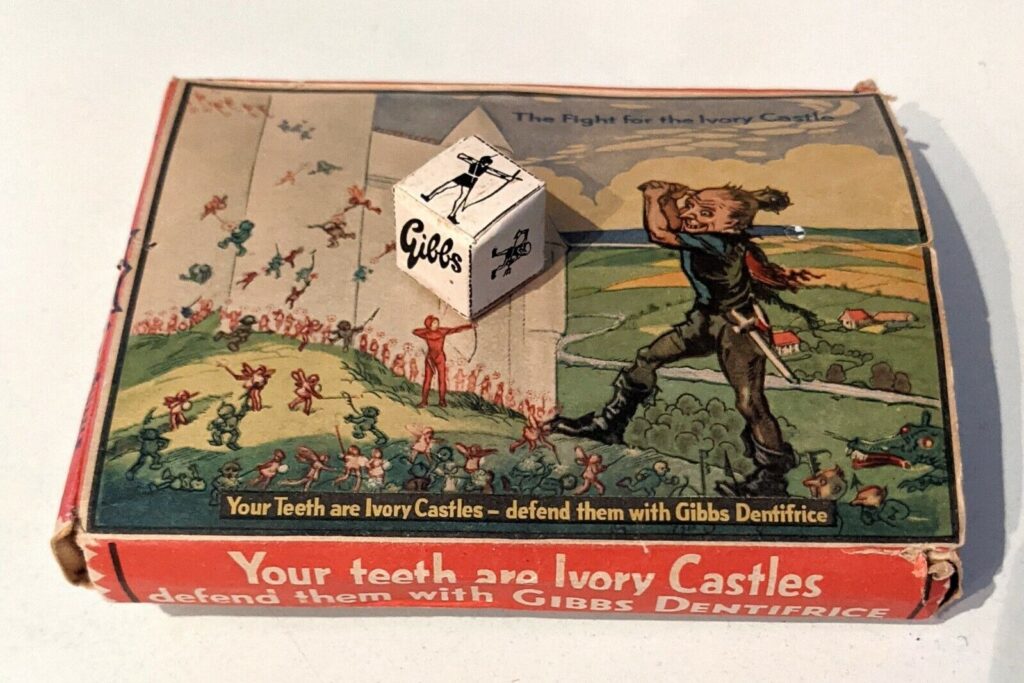
Members received journals, leaflets and posters. Other promotional activities included a Gibbs Ivory Castle Rhyme & Painting Book, published in 1928 and the League its own medal and also offered fancy dress costumes, jigsaws, games, including the The Ivory Castle Game, and competitions. By 1932, the League claimed to have over 100,000 Crusaders, both in the UK and abroad.
Gibbs Toothpaste Ivory Castle League Medal | Image via eBay
The The Ivory Castle Game produced by D & W Gibbs Ltd, manufacturers of Dentrifrice, in the 1930s | Image via eBay
A copy of the Gibbs Dentifrice jigsaw No 3 – “Building the Ivory Castle”, complete with dice | Image via eBay
The post war Club also had a club badge and other items to offer – and again, an issue of The Chemist and Druggist suggests that like the League before it, the Club was very popular, with some 7000 sign ups at the 1963 Boys and Girls Exhibition held in Birmingham.
Most of the strips in the 1960s Arrow comic had some kind of encouragement to readers to look after their teeth. However, he cover strip on later issues, “Steve and Susan“, is more of a straightforward adventure tale. It was written by Keith Chapman (better known today as western novelist Chap O’Keefe) and initially drawn by “Dan Dare” artist Don Harley, then John Michael Burns (who was also then drawing “Kelpie the Boy Wizard” in Wham! and various strips for DC Thomson’s Diana).
Cover by John Ryan
A page from the “Steve and Susan” adventure strip for Gibbs Ivory Castle Arrow Issue 7
The cover of Arrow comic Issue 10 featuring “Steve and Susan” drawn by John M. Burns
Strips inside the short run of comics included “Look After Your Teeth”, a humour strip titled “Lord Stoney de Broke” drawn by either Stan McMurtry (better known as the recently retired Daily Mail cartoonist Mac, then drawing strips for comics such as Buster and Wham!), or, possibly “Mighty Moth” artist, the late Dick Millington ‘ghosting’ Stan; “The Siege of the Ivory Castle” drawn by Gordon “Pop” Hogg (the artist whose credits include Wham!‘s “The Wacks”), an allegory about protecting your teeth from decay; “Hamlet the Happy Hamster”, drawn by one of Treasure‘s artists, Philip Mendoza, and “Toothy” drawn by the brilliant Reg Parlett (whose credits include “Billy Bunter” and “Mowser”).
Like other comics of the time there were text features and stories in each issue, too.
Gibbs wasn’t of course the only company to use the comics medium in this way to promote their brand in the 1960s. Lew Stringer documents Wonder comic here on his Blimey! blog – published and sold only in Esso garages – and a one-shot comic, Princess of Asgaard, was published to promote Danish bacon in 1970.
In the 1980s, Marvel UK packaged a series of Doctor Who comics, edited by Sheila Cranna for Golden Wonder – and we’re sure there are many other examples of this advertising method readers may know of, and not just in the UK.
The Graphic Medicine team, for example, continue the work using comics as means to promote healthcare in many ways, and the British Medical Journal has published articles supporting their use, including this one.
• Do you remember this comic or the Ivory Castle Childrens’ Club? Why not comment below or drop us a line?
Do you know more about Signal, Ivory Castle Arrow comic and The Signal Club? Do you have copies? Did you work on the comic, or Ivory Castle Arrow? Do you recall similar comics promoting leading brands? Let us know!




 Tube Surfing: Happy Birthday, Batman, new Daredevil launches Wednesday – no fooling!
  Crowdfunding Spotlight: Oak, Ash, and Thorn
  J. H. Williams III boards B7 Media’s Dan Dare: First Contact comic project
  Small Press Day returns on Saturday 25th July