Plenty of animated characters have made the jump from the small screen and into British comics, including “Deputy Dawg”, who enjoyed a long life in Polystyle’s TV Comic. But who drew the strips?
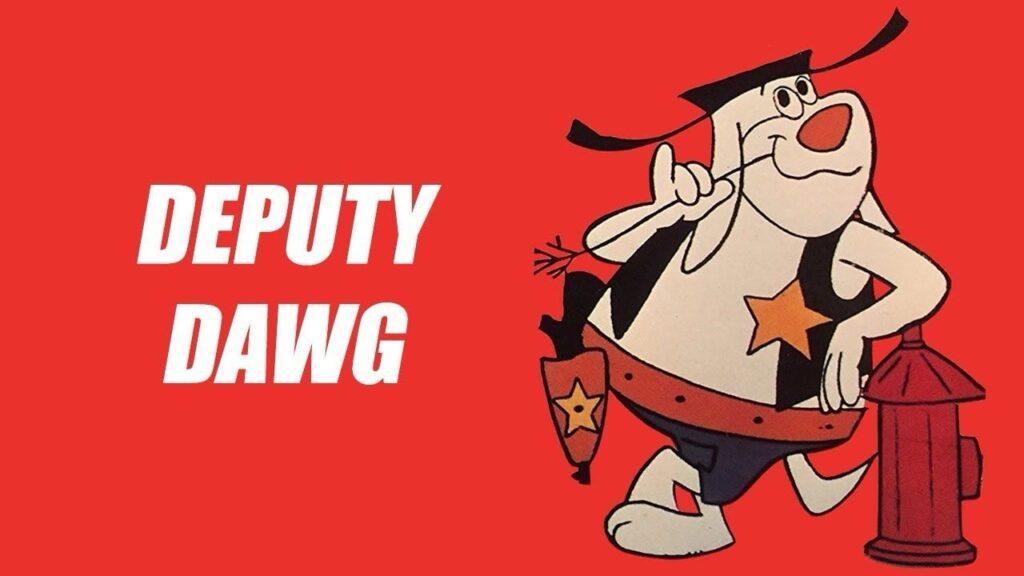
Recently, prompted by a BlueSky post by “Comics Guy” Mike Sterling, we went on a brief and unsuccessful “rabbit hole” mission here at downthetubes, to try and identify one of the artists who dew know who drew episodes of “Deputy Dawg” for Britain’s TV Comic in the early 1970s.
The Terrytoon animated character, voiced by comedian Dayton Allen, whose shows first aired on CBS in the United States in 1960 to 1964, enjoyed a much longer and slightly later life in the UK. The show was produced by CBS and marked the professional animation debut of Ralph Bakshi as animator, whose later credits include the adult animated film Fritz the Cat and Lord of the Rings.
First broadcast on BBC Television on Saturday 31st August 1963, making its debut straight after Grandstand, with episodes still being broadcast up until 1980 on the BBC. It proved an extremely popular show on both sides of the Atlantic, spinning off into various merchandise, from colouring books to lunchboxes, and enjoyed long success in comics as well as on screen.
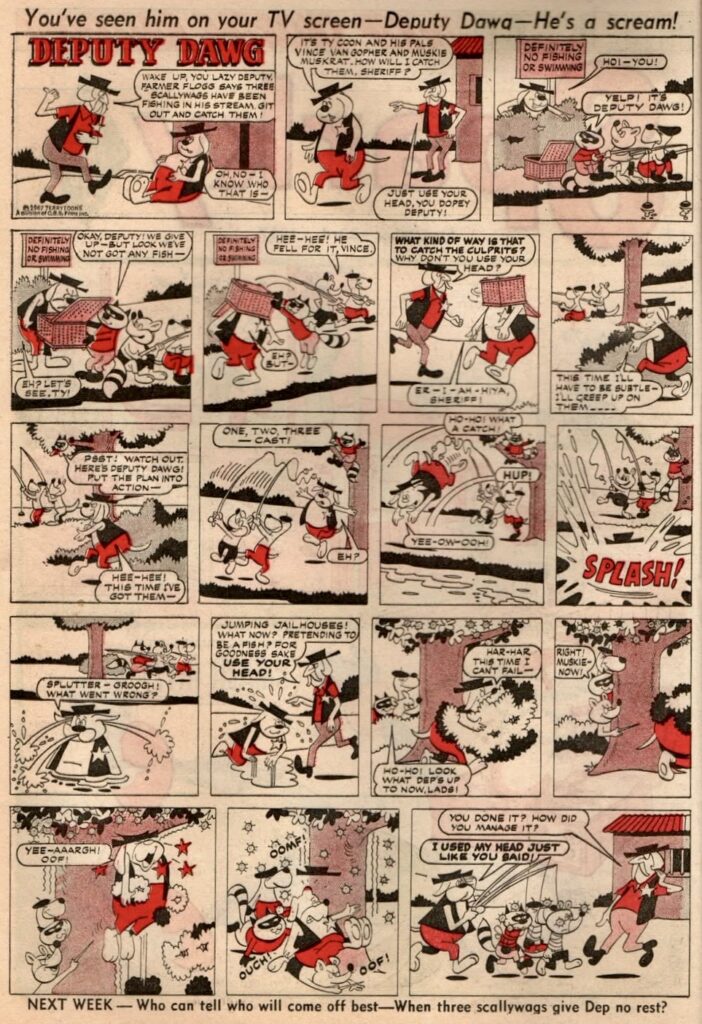
“Deputy Dawg” and pals Musky and Vincent Van Gopher first featured in a British comic, albeit briefly, in DC Thomson’s Sparky comic, writer unknown, all 26 episodes apparently drawn by James Malcolm, who also drew “Charlie Chutney”, “Harry Carry”, “Meddlesome Matty” (a character first seen in The Dandy, revamped), and was one of the artists who drew the brilliantly surreal “Dreamy Dave and Dozy Dora”, as did Pamela Chapeau, Ian Judge, Iain Mackay and George Ramsbottom. “Dep” was on duty from Sparky Issue 140, cover dated 23rd September 1967 through Issue 165, 16th March 1968.
(The “Dep” was replaced by “The Snooks”, a translation of a Belgian strip drawn by Willy Vandersteen, published on the continent as “Familie De Snoek” and the “Pike Family” . First published just after World War Two, it ran in Sparky until December 1968).
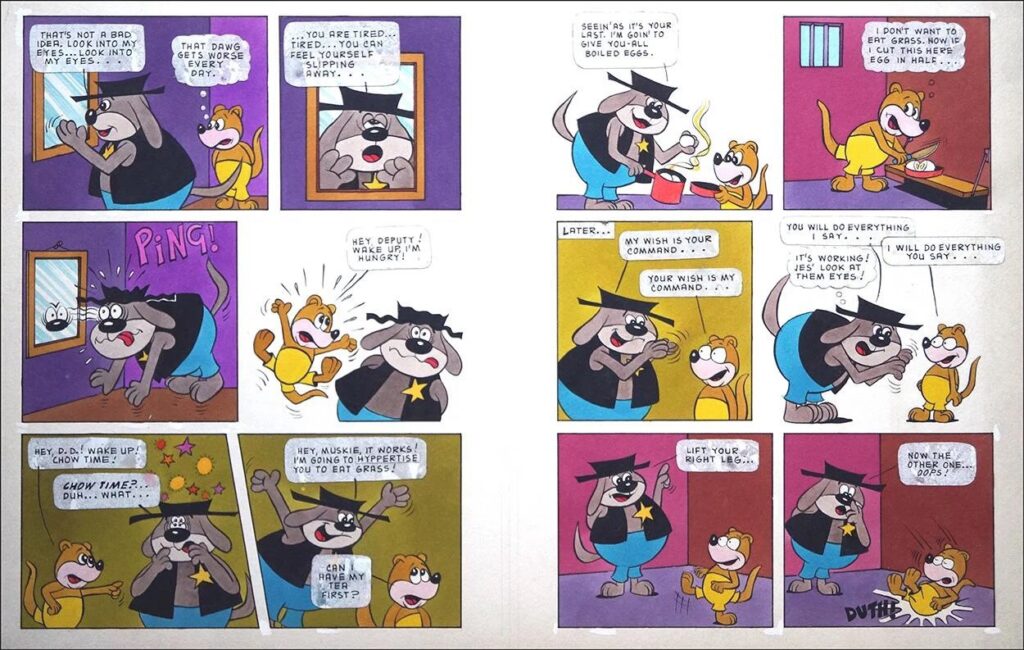
The strip was then licensed to Polystyle, appearing in TV Comic from 1969 onwards, first appearing in issue 937, cover dated 29th November 1969 and last appearing in issue 1050, dated 29th January 1972, just over a two year run. “Deputy Dawg” replaced the “Doctor Who” strip, when it took a break following the end of the Second Doctor stories, and was itself replaced by “Wacko!”
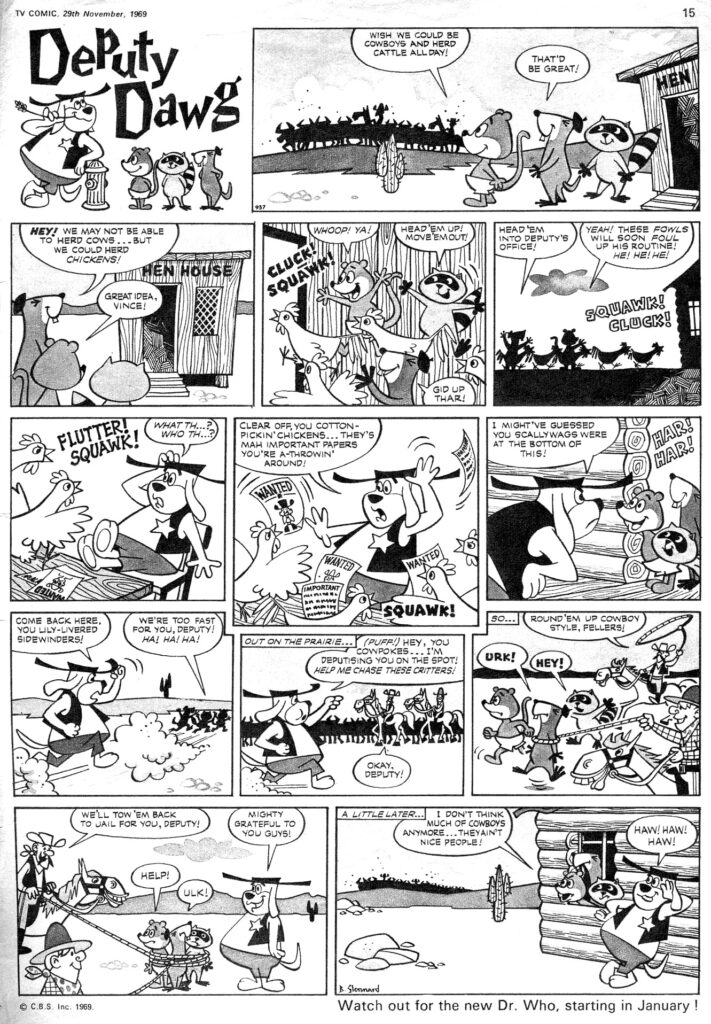
Joining “Deputy Dawg” in the same issue was a short adaptation of the MGM film, “Goodbye Mr. Chips“, drawn by “Doctor Who” artist John Canning. The two one-page strips filled the gap left by “Doctor Who”, which returned to the title in No. 944, cover dated 17th January 1970, with the comic’s first Third Doctor tale, written by Roger Noel Cook and drawn by John Canning.
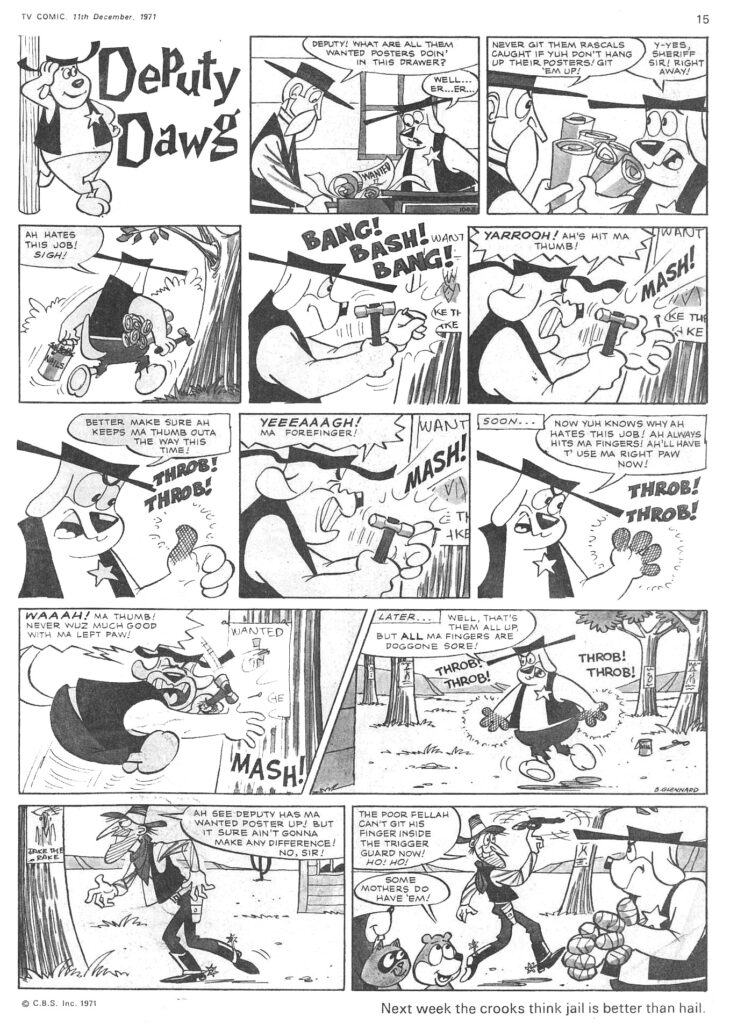
Some episodes of “Deputy Dawg” were drawn by Barry Glennard, a regular contributor to the title, whose credits for TV Comic also include “Supercar”, and who went on to draw episodes of “Bugs Bunny”, as well as providing feature illustrations for its Holiday Specials.
His other comic credits include “Gnasher’s Tale”, “Pansy Potter” and “The Numskulls” for DC Thomson, and strips such as “Mustapha Million” for Fleetway’s Cheeky title, and, along with Sid Burgon, “Bookworm” for Whoopee!, that strip surviving the merger with Whizzer and Chips. He was also one of the artists on “Sweet Tooth” for the same title.
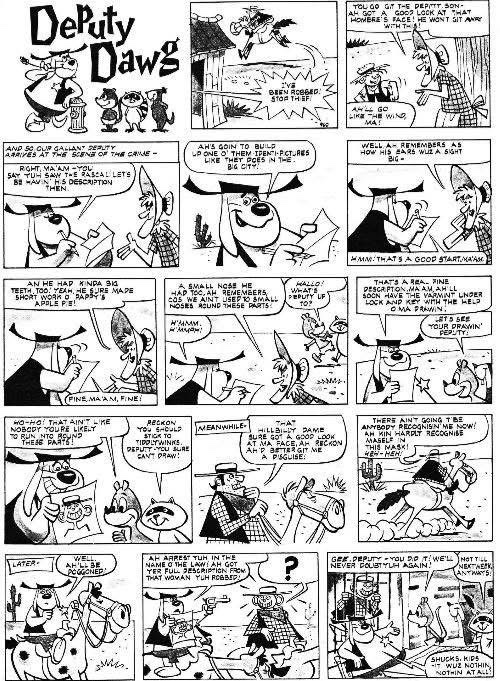
Later episodes of “Deputy Dawg” were drawn by Chas Sinclair, who also drew the Sparky cover strip, “Some Mummies do ‘Ave ‘Em” and “Basil Brush” for TV Comic when it moved to the comic’s centre spread. He was also a regular contributor to Fleetway’s fondly-remembered Oink!, and provided art for Quick on the Draw book by Denis Gifford, and the cover for another of his books, Melvin’s Money Fun.
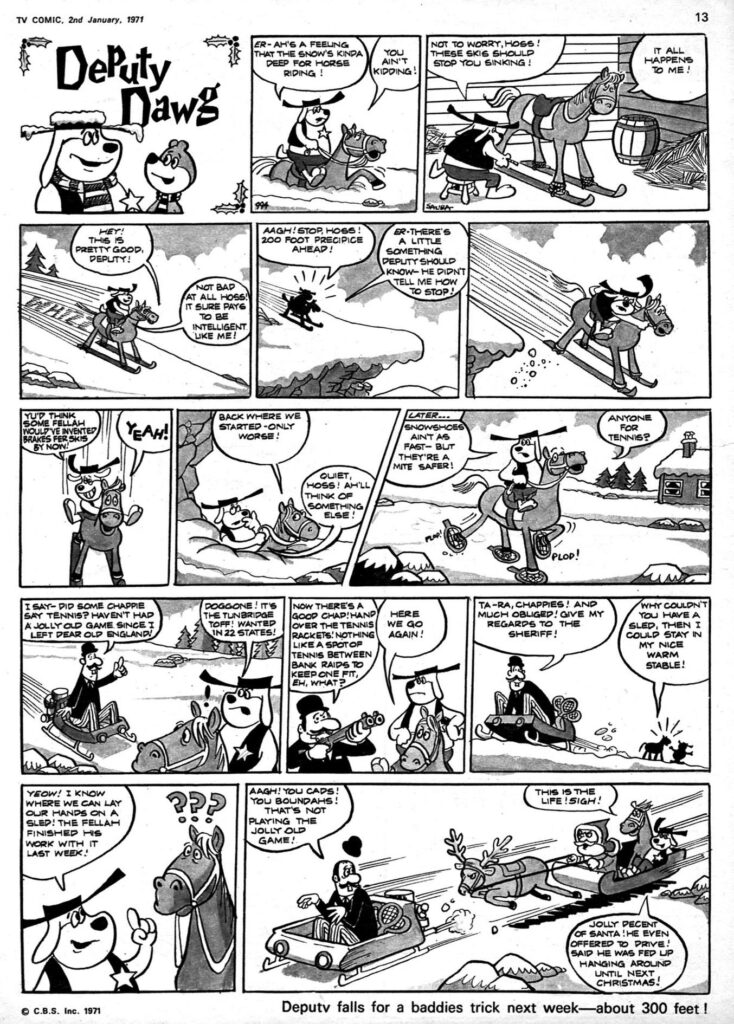
But there’s a mystery artist who worked on “Deputy Dawg”, too, whose signature survived editorial excise, but spotted by Lew Stringer. But is that signature “Salibat”, “Sal’Bat”, or “Saubat”? And who are they, because it’s a name we’re unfamiliar with. Were they an overseas hire, perhaps, through an agency?
Whoever they were, they helped give “Deputy Dawg” a long life in comics here in the UK!
UPDATE, Tuesday 23rd January 2026: Thanks to downthetubes reader “Hackney Steve”, we now know our mystery artist is John Saliba, a Polystyle studio artist, now in his seventies, who also drew “Astronut”, based on another Terry Toons cartoon, The Astronut Show (1964-66), and numerous puzzle pages. He also did lettering jobs for IPC. See comments below! Thanks, Steve!
“Astronut” ran in TV Comic in 1970, making his debut in No. 942, cover dated 3rd January 1970, running until No. 989, cover dated 28th November 1970. The one page black and white strip was replaced by “The Perils of Penelope Pitstop”.
Head downthetubes for…
• Facebook: Peter Gray’s Sparky comic fansite
• The Oink! Blog: Chas Sinclair
Our thanks to archivist Paul Scoones, author of The Comic Strip Companion: the Unofficial and Unauthorised Guide to Doctor Who in Comics: 1964 – 1979, for providing details of the length of the “Deputy Dawg” and “Astronut” runs in TV Comic!
• Cartoon Research: The “Dawg” Days: Looking Back at “Deputy Dawg” by Michael Lyons
• Cartoon Research: The Secret Origin of Deputy Dawg
• Cartoon Research: A Deputy Dawg Follow-Up
• Cartoon Research: Segregation and the Selling of “Deputy Dawg” by Christopher P. Lehman
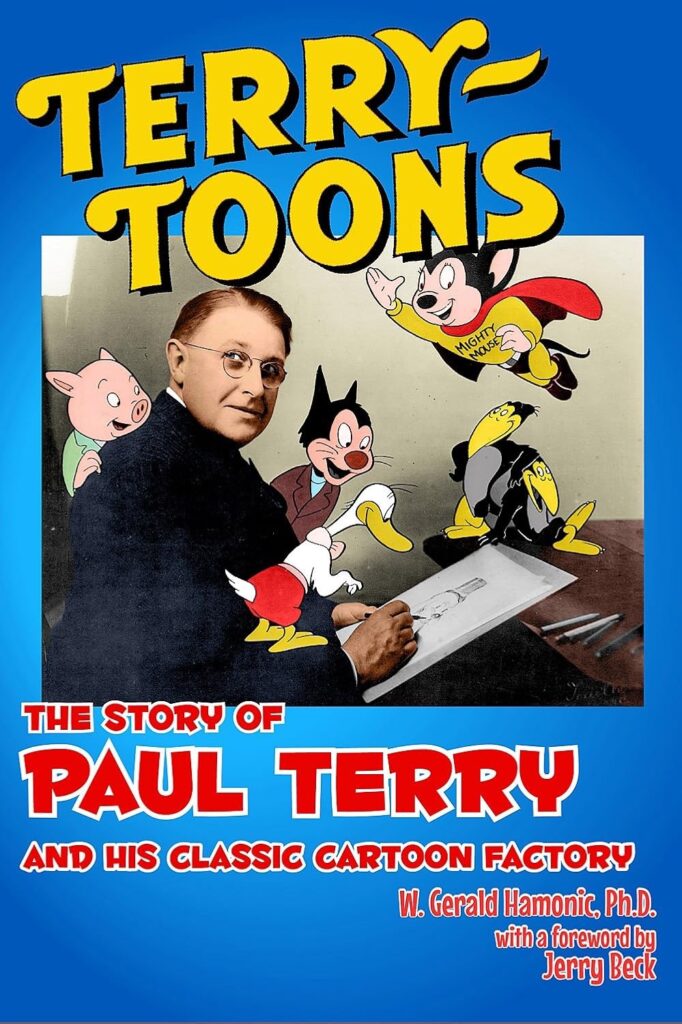
• Terrytoons: The Story of Paul Terry and His Classic Cartoon Factory by Gerald Hamonic (AmazonUK Affiliate Link)
During his forty-year career in animation, Paul Terry animated, directed, and produced over 1100 cartoons. Yet despite his prodigious output he remains one of animation’s unsung legends. ‘Terrytoons’ chronicles the fascinating life of one of the animation industry’s cartoon giants, from his humble beginnings on a family farm in San Mateo, California, to his rise as one of the leading super producers of cartoon shorts during the golden age of American animation. Walt Disney admitted that one of his earliest ambitions was to produce cartoons of comparable quality to Paul Terry.
Terry’s story is one of survival in the face of natural disasters, economic collapse and bitter rivalries. With biographies on all of the key Terrytoons staff and hundreds of lavish illustrations and photographs, many of which are in color, this biography is a long overdue homage to the legendary producer and invaluable addition to any cartoon lover’s book collection.
• Don Markstein’s Toonpedia: Deputy Dawg
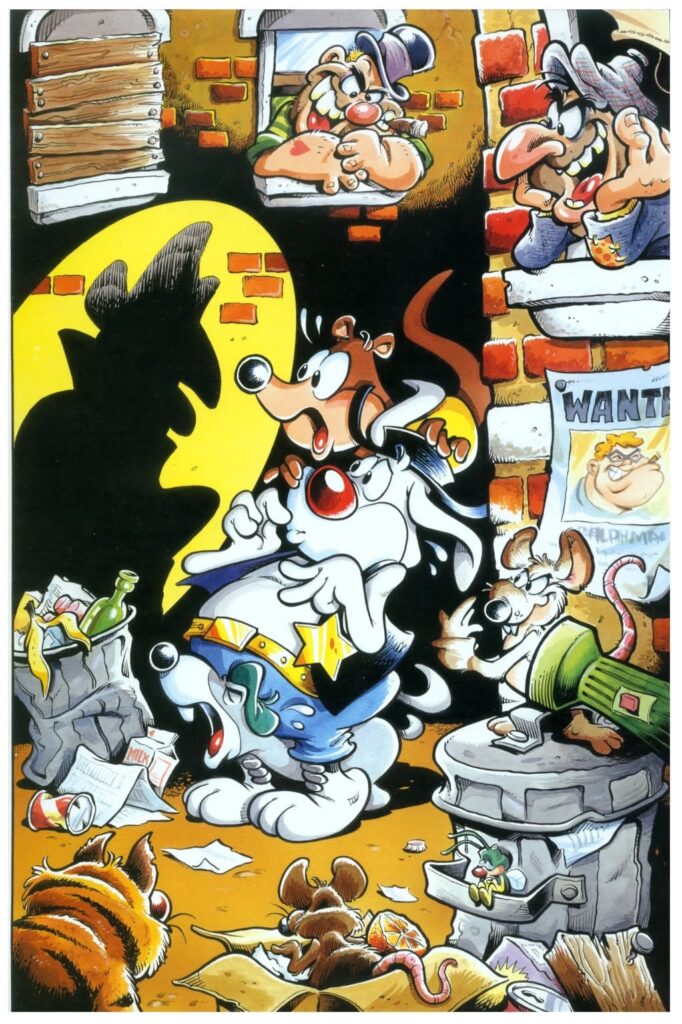
Deputy Dawg Comics Connections
• Comic Vine: International Deputy Dawg Comics (including New Terrytoons)
• Ludicrously Niche: Numskull Valley by Chris Whickam
• Chas Sinclair – Oink! Blog Entries
With thanks to Mike Sterling, who started this on BlueSky, and Simon Coward, Peter Gray and Lew Stringer, who helped put me down a rabbit hole!
- About the Author
- Latest Posts

John is the founder of downthetubes, launched in 1998. He is a comics and magazine editor, writer, and Press Officer for the Lakes International Comic Art Festival. He also runs Crucible Comic Press.
Working in British comics publishing since the 1980s, his credits include editor of titles such as Doctor Who Magazine and Overkill for Marvel UK, Babylon 5 Magazine, Star Trek Magazine, and its successor, Star Trek Explorer, and more. He also edited the comics anthology STRIP Magazine and edited several audio comics for ROK Comics; and has edited several comic collections and graphic novels, including volumes of “Charley’s War” and “Dan Dare”, and Hancock: The Lad Himself, by Stephen Walsh and Keith Page.
He’s the writer of comics such as Pilgrim: Secrets and Lies for B7 Comics; “Crucible”, a creator-owned project with 2000AD artist Smuzz; and “Death Duty” and “Skow Dogs”, with Dave Hailwood.
Categories: Animation, British Comics, Comics, Creating Comics, downthetubes News, Features, Other Worlds, Television
The guy you’re after is John Saliba. He was a Polystyle studio artist who also drew “Astronut”, and numerous puzzle pages. He also did lettering jobs for IPC. I worked with him after he’d left comics. He’s in his 70’s now and still in London. I’ve texted him to let him know about your post so he can contact you if he wants to give more detail. All the best…
Thanks, Steve! Appreciated!
The 2-page black and white Second Doctor Who strip on pages 14 and 15 of TV Comic was directly replaced by the John Canning illustrated adaptation of the musical film version of Goodbye Mr Chips.
Thanks Gordon. Checking my copy, I’ve amended the article to reflect that both “Goodbye Mr Chips” and “Deputy Dawg” made their debut in the same issue as one-page strips. I suspect the confusion has arisen because only the “Deputy Dawg” page, now added above, promotes the imminent return of “Doctor Who” to the title.