The latest B7 Media audio drama for BBC Radio 4, The Truth About Phyllis Twigg, is something of a Christmas treat and a bit of a BBC origin story too. Airing on BBC Radio 4 on Christmas Eve, it’s a charming, perfect tale to listen to while you’re roasting your chestnuts – and the background to the story is fascinating.

In 1924, the world’s first radio drama, written by Richard Hughes, was broadcast by the BBC. But was it really the first?
It’s definitely not the first time a woman’s contribution to history has gone awry. The Truth About Phyllis Twigg is a light-hearted Christmas drama about giving credit where credit’s due – even if it takes 100 years to get it!
1922: It may only be six weeks old, but the brand-new British Broadcasting Company is already desperate for content. Arthur Burrows, its first on-air voice and Director of Programmes is accosted by children’s author Phyllis Twigg outside Marconi House with a pitch: could they put a play on the radio? Phyllis has already written for gramophone; broadcasting is the natural next step.
Apart from Twigg’s ‘Father Christmas’ story, the first play to be broadcast from a BBC studio that was not Shakespeare was Gertrude Jennings’s one act farce, Five Birds in a Cage, broadcast on 29th November 1923.

The Truth About Phyllis Twigg, which will be available to hear after broadcast here, features Tamsin Greig, Rory Kinnear, Amit Shah, Will Harrison-Wallace and Aja Dodd, with a lovely whimsical script by Paul Kerensa. Directed by B7 Media – Audio Drama’s very own Helen Quigley and produced by Andrew Mark Sewell.
Special mention must also go to Eloise Whitmore for designing a soundscape that really does take you back to 1922, with pitch perfect music from Neil Brand. Also listen out for a lovely Christmas song “Dear Santa” written and performed by Hannah Brine, especially for the drama.
B7 Media is multi award-winning UK indie with an international track record in developing and producing content and formats for radio (BBC Radio 4, BBC Radio 4 Extra, Audible), theatre, film and television (SKY, BBC, UKTV, SPACE, Eastlink TV and Syfy Channel), and comics (Hancock: The Lad Himself, Dan Dare, Pilgrim: Secrets and Lies).
Who Was Phyllis Twigg?

In recent years, research by archivists such as award winning BBC radio playwright Tina Pepler, Tim Crook and Paul Kerensa have uncovered more of Phyllis Twigg’s fascinating life story, assisted by her family.
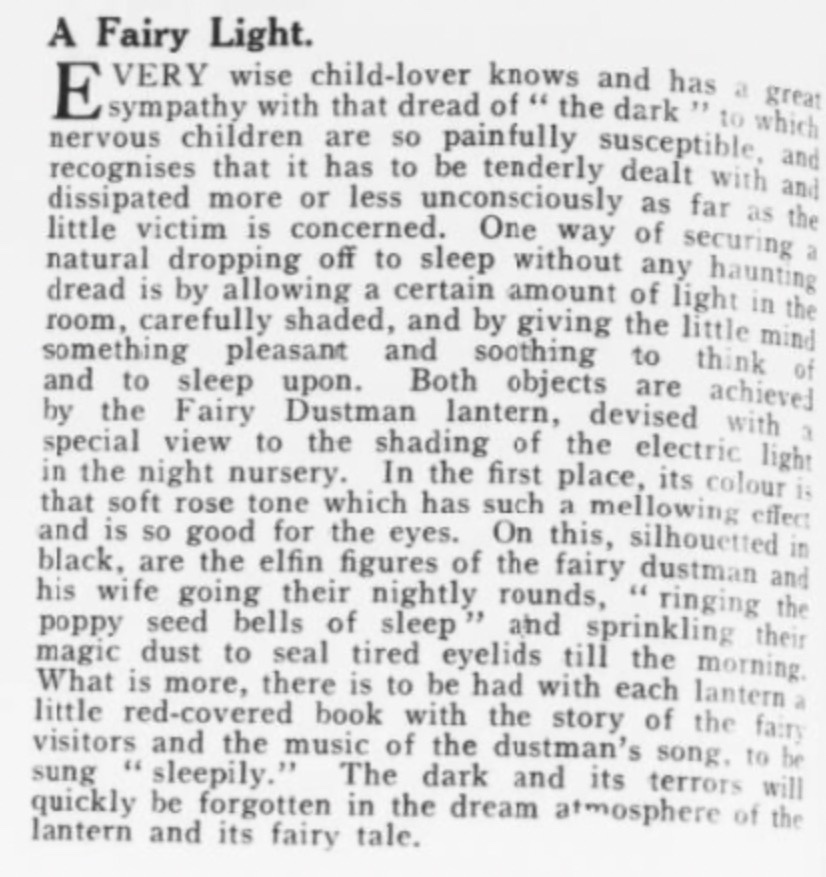
The True Story of Father Christmas as told by ‘The Fairy Dustman’, based on Phyllis Twigg’s “Fairy Dustman” tales, was broadcast on Christmas Eve, 1922. It appears the Fairy Dustman was a popular fantasy figure of the time, the character mentioned in newspaper references to village stage plays in 1917, and music performances at the revived Glastonbury Festival in 1919.
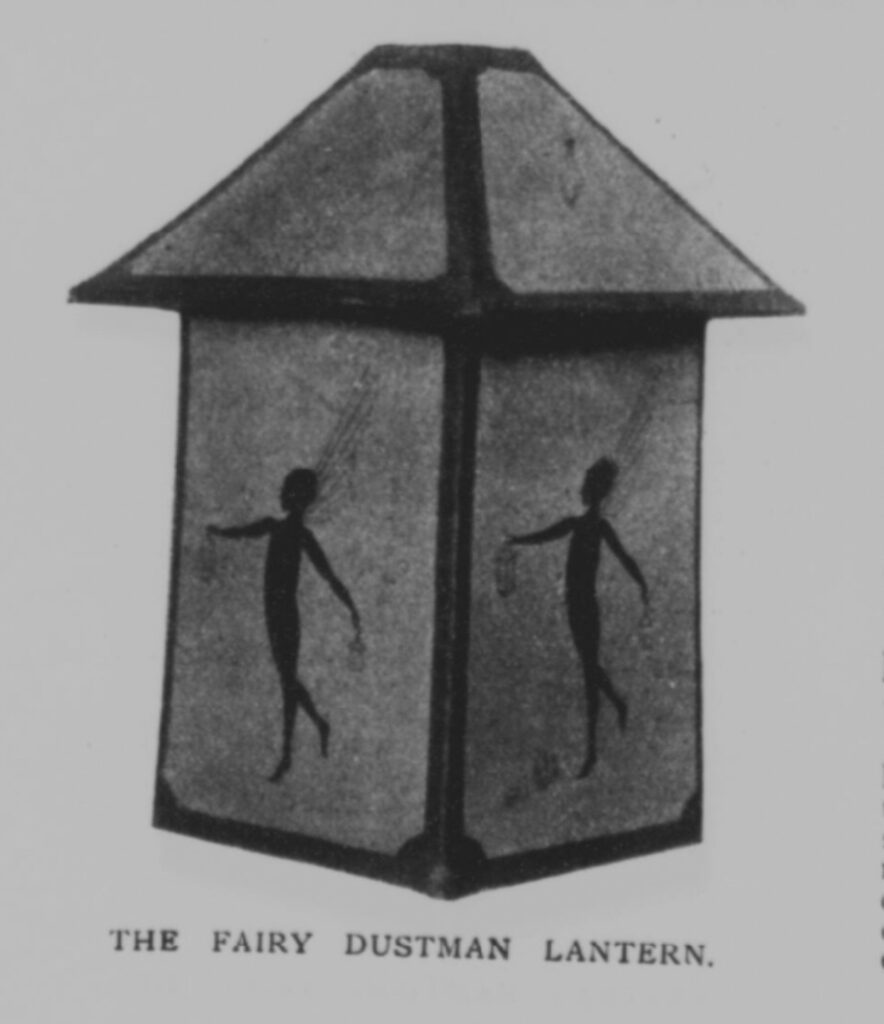
The first direct reference to the Fairy Dustman in a newspaper item aimed at children is in the “Puck the Painter” column for the Daily News, dated 3rd February 1920, by Hilda MK Nield (British Newspaper Archive subscription required); the Fairy Dustman akin to The Sandman, his dust sending people to sleep and into the Land of Dreams. “Fairy Dustman” lanterns were launched for children in 1921.
“Tales of the Fairy Dustman” stories written by Phyllis Twigg, narrated by Marjorie Montefiore with Walter Glynne performing, for example “The Bunny’s Lullaby”, feature on His Masters Voice records released later in the year, widely advertised in time for Christmas “For the Children” in both local and national newspapers, favourably reviewed in The Queen, for example, in the issue dated 24th December 1921.
The article notes the popularity of JM Barrie’s “Peter Pan” but argues the tales of the Fairy Dustman have more educational value, encouraging play acting, for example.
(It seems Phyllis Twigg wasn’t adverse to singing herself, described in a June 1923 issue of the Norwood Press and Dulwich Advertiser as ” a popular soprano” at one appearance).
By early 1922, Phyllis Twigg is working with Harold Burrows O.B.S., F.R.C.S., who provides a preface to The Tales of the Fairy Dustman a book “entirely novel in its conception” credited to Puck the Painter and Pan the Piper, published by Laurence Wright Publishing, who were based in Denmark Street, London. (Surely there might perhaps be some connection between Harold Burrows and Arthur Burrows of the BBC?).
The Dustman’s Song
“I am your dustman, fairy friend; fix your eyes on me. I bring you dream fun without end; Quick, come to sleep and see.”
Above: Rhyme published in the Sunday Express for 6th February 1921, in a feature about the new “Fairy Dustman” lanterns
In a lengthy feature by author Tim Crook on the Kultura Press website charting her life, it’s noted Phyllis Twigg has in some respects been hidden in plain sight, in part because the formal retention and cataloguing of BBC papers and play scripts did not become systematic until the late 1920s, and at least some BBC documentation of her work may have been lost during the World War Two Blitz in London with direct bombing hits on Broadcasting House in Portland Place.


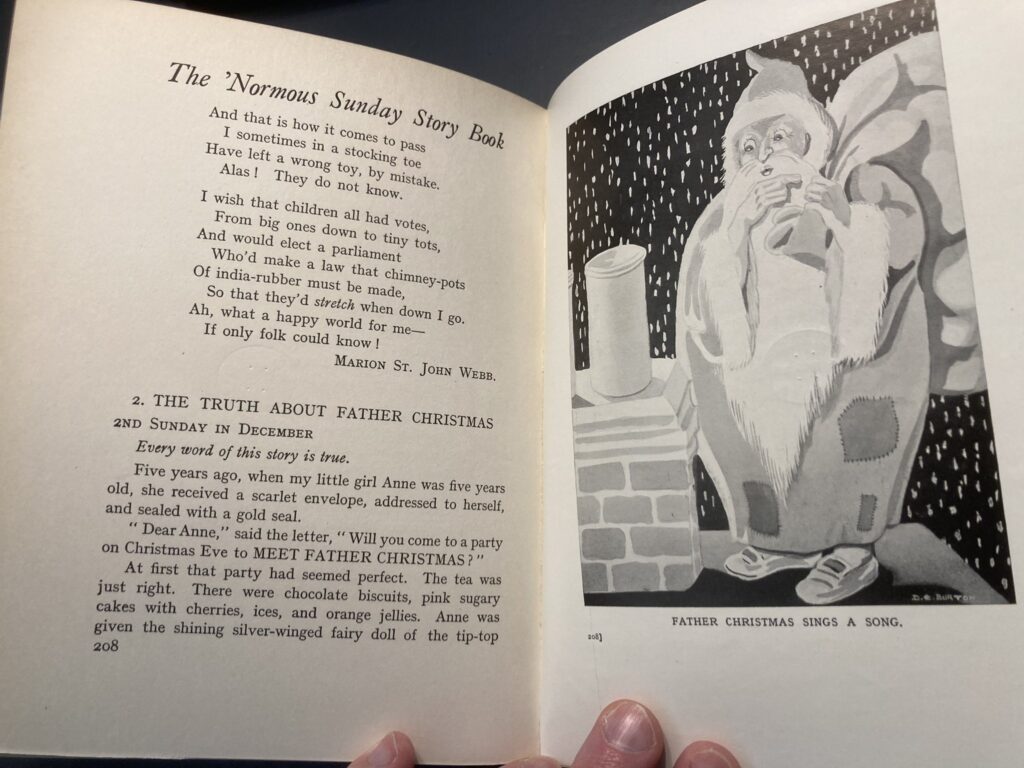
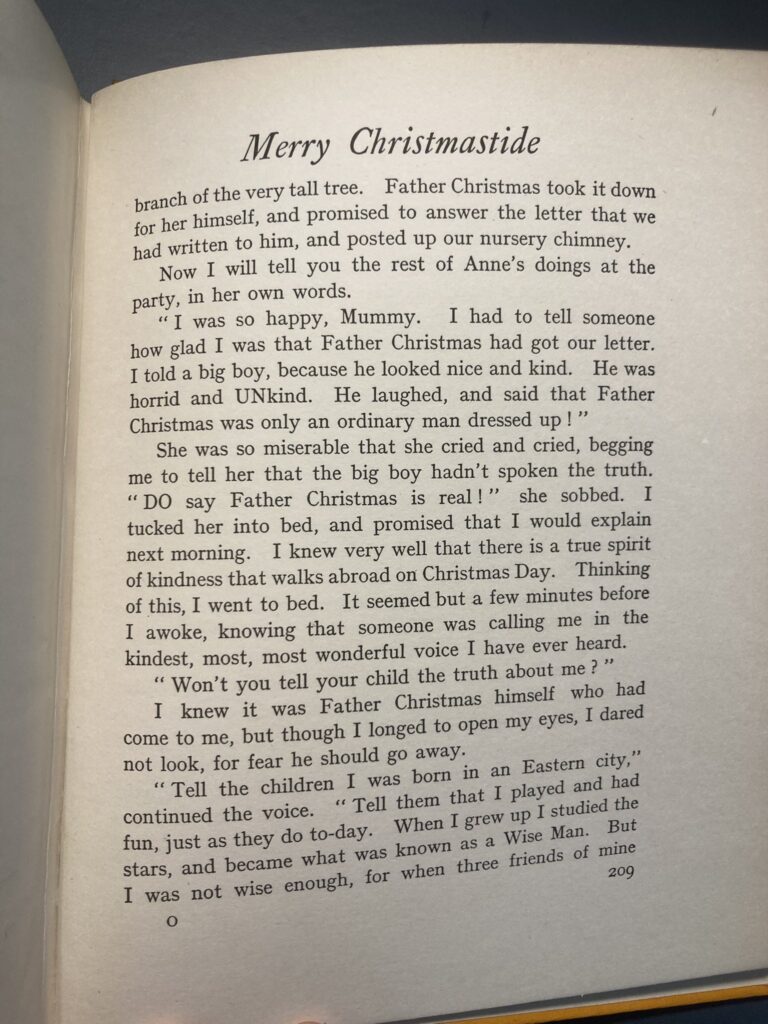
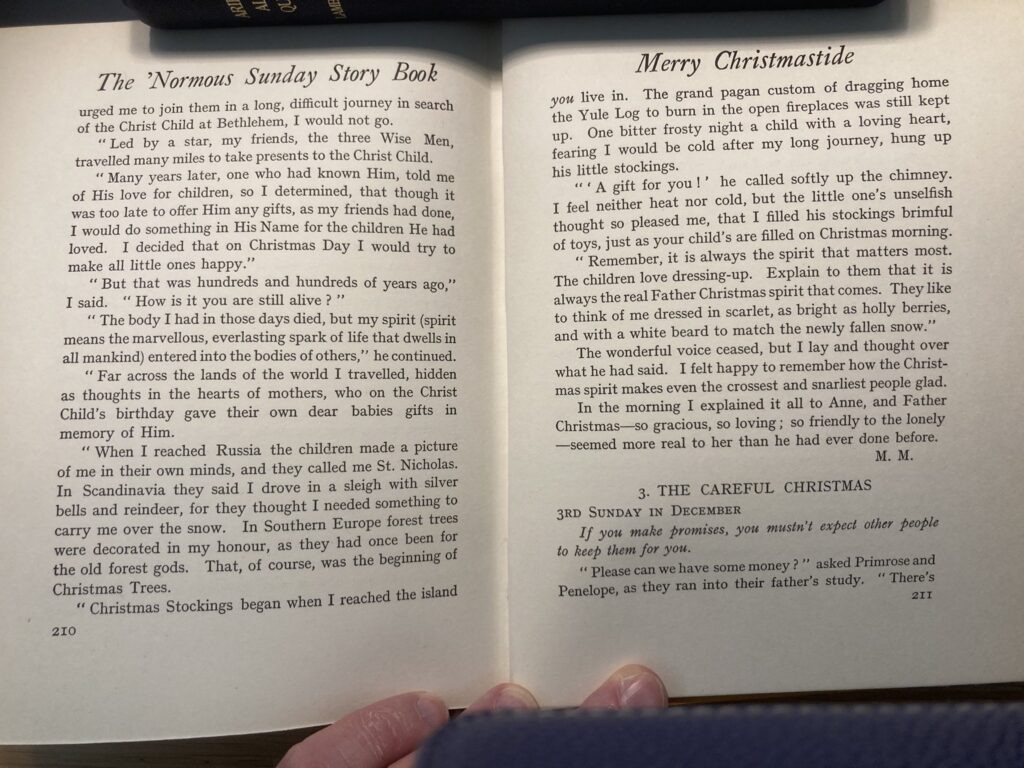
No recordings or copies of the script for “The True Story of Father Christmas” survive, but Phyllis also wrote short stories under a pen name, Moira Meighn, and a version of her script, illustrated by Doris Burton, features in The ‘Normous Sunday Story Book, published by Stanley Paul & Co. in 1924, a copy held in the British Library and well received on initial release.
A companion title to The ‘Normous Saturday Fairy Book, its contributors are listed as writers Marjory Royce, Barbara Euphan Todd and Moira Meighn, with illustrations by Doris Burton, May Stella Edwards and Esther B. Mackinnon.
An imaginative and entrepreneurial woman, the fact she wrote the first original radio play for the BBC was published by Arthur Burrows in his book, The Story of Broadcasting, in 1924.
“The True Story of Father Christmas” was first broadcast at 5.30pm on Christmas Eve, the “playlet” part of wider Christmas programming, followed by an address from “Peter Pan” (played by Miss Edna Best); “Programmes that will interest all“, the Nottingham Journal, for one, declared, on Friday 22nd December 1922.

“Tales of the Fairy Dustman”, aimed at small children, continued to be broadcast from Marconi House through 1923, Phyllis Twigg clearly associated with their creation. The stories continued to serve an educational purpose, as an article in the Westminster Gazette about doctor’s visits, published in July 1923, noted.
By late 1923, in another merchandising spin-off, shops were selling “The Bunny’s Lullabye Gown“, offered in blue and pink, designed by the “Fairy Dustman” and named after his “Bunnies Lulllabye Song so familiar to owners of wireless sets”.
By 1925, “Fairy Dustman” stories feature in “The Children’s Hour” column that was published by various local cal newspapers, including The Hampshire Advertiser.
Phyllis was also involved in a “Mass Telepathy” experiment by the BBC in November 1925, re-enacted last year, with assistance from B7 Media’s Helen Quigley.
The BBC’s first television cook
Phyllis Twigg also, went on to become, perhaps, the BBC’s first television cook in 1936, a role she was commissioned to perform in a Ministry of Information documentary film, Bampton Shows The Way, made in 1941, appearing in several scenes.
“Phyllis created a multimedia Fairy Dustman franchise of illustrated songbook, published 78 rpm records, and newspaper syndication,” Crook notes. “The merchandising even extended to Fairy Dustman lampshades to help children get to sleep more easily.
“In 1926 she also designed and patented a ‘Pussyfoot’ range of ceramic cats and crockery.
“Phyllis was an exceptionally talented writer, illustrator, journalist, broadcaster, imaginative story-teller, researcher, cookery writer and multimedia entrepreneur. And according to her family, she was a really good cook. Going to visit her meant the enjoyment of a truly good meal.”
• The Truth About Phyllis Twigg airs at 2.15pm on 24th December on BBC Radio 4
The festive special of The British Broadcasting Century podcast, The Truth About The Truth About Phyllis Twigg is a companion to this drama, and will feature chats with cast, director, composer and descendants of the characters in the original 1922 radio drama
• B7 Media is online at b7media.com
Head downthetubes for…
• Peter Grimaldi, Phyllis Twigg’s grandson, brings tales from the family archive. Watch the full video of Peter’s interview with us here on Youtube
• Paul Kerensa – Comedian, Writer: The origin story of British broadcasting…
The BBC celebrated its 100th birthday in 2022. But the story doesn’t stop there. It doesn’t even start there.
• The British Broadcasting Century Podcast is Paul Kerensa’ project telling the origin story of the BBC, radio and life as we know it – the very slow way
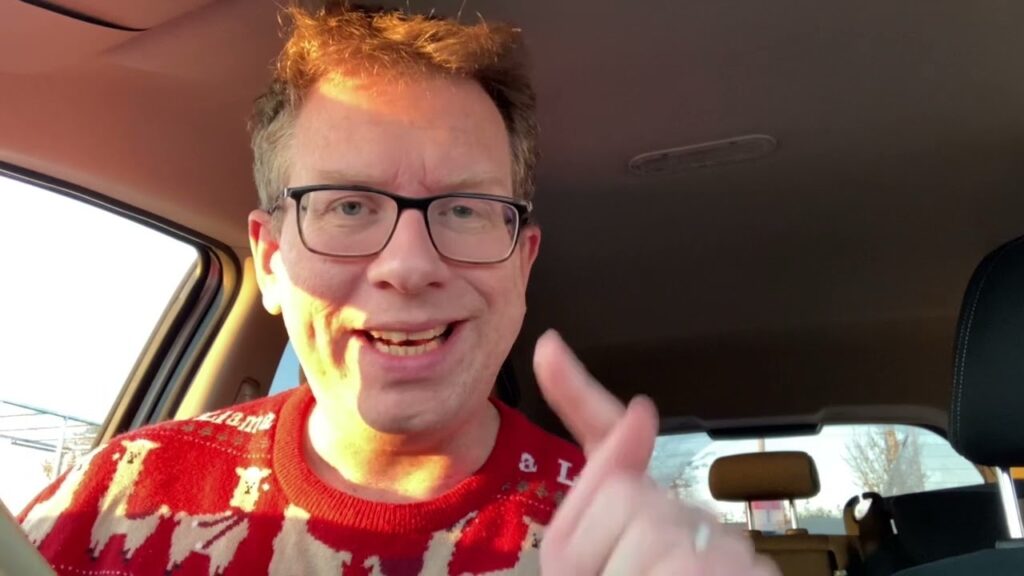
• Patreon: Who is Phyllis Twigg? The truth about The Truth About Father Christmas by Paul Kerensa
• BBC Century Podcast: The First Radio Dramatist – The Truth about Phyllis Twigg
“Britain’s first writer for radio was Phyllis M Twigg. An unusual name, and yet… she seemed to pretty much vanish after her debut broadcast play, ‘The Truth About Father Christmas’ on 24th December 1922.
“So much so, that the official record – in history books, on various BBC sites, in broadcasting legend – wrongly credits Richard Hughes’ A Comedy of Danger in 1924 as the first original radioplay.
“So is it because Twigg was writing for children? Or because her script didn’t survive? Or because she’s female? All and more?
“On episode 72, the timeline brings us to 23rd April 1923 – Shakespeare’s birthday – so as good a time as any to glance back, and forwards, to set the record straight about this forgotten female pioneer.”
• Kultura Press: Phyllis M Twigg – The BBC’s First Original Radio Dramatist by Tim Crook
• BBC Century on Patreon | Facebook
• Tina Pepler: Discovering the art of wireless : A critical history of radio drama at the BBC, 1922–1928 | PDF here
• The BBC’s Mass Telepathy Broadcast of 1925: Re-enacted in 2025
- About the Author
- Latest Posts

John is the founder of downthetubes, launched in 1998. He is a comics and magazine editor, writer, and Press Officer for the Lakes International Comic Art Festival. He also runs Crucible Comic Press.
Working in British comics publishing since the 1980s, his credits include editor of titles such as Doctor Who Magazine and Overkill for Marvel UK, Babylon 5 Magazine, Star Trek Magazine, and its successor, Star Trek Explorer, and more. He also edited the comics anthology STRIP Magazine and edited several audio comics for ROK Comics; and has edited several comic collections and graphic novels, including volumes of “Charley’s War” and “Dan Dare”, and Hancock: The Lad Himself, by Stephen Walsh and Keith Page.
He’s the writer of comics such as Pilgrim: Secrets and Lies for B7 Comics; “Crucible”, a creator-owned project with 2000AD artist Smuzz; and “Death Duty” and “Skow Dogs”, with Dave Hailwood.
Categories: Audio, Digital Media, downthetubes News, Other Worlds
 Five Places To Start Listening to Doctor Who Audio Adventures
  Panel Borders celebrates Women’s History Month
  Big Finish Doctor Who Audio Adventures get renewal until 2035
  New UNIT: Eras and Eleventh Doctor audio adventures in the spotlight