With the launch of Adrian Tchaikovsky’s first graphic novel, Salvation’s Child, this week, published by Cosmic Lighthouse, downthetubes had the opportunity to ask the award-winning author some questions about his working practice, how the material collaborations developed, his influences and plans for the future.
You can find our review of Salvation’s Child here
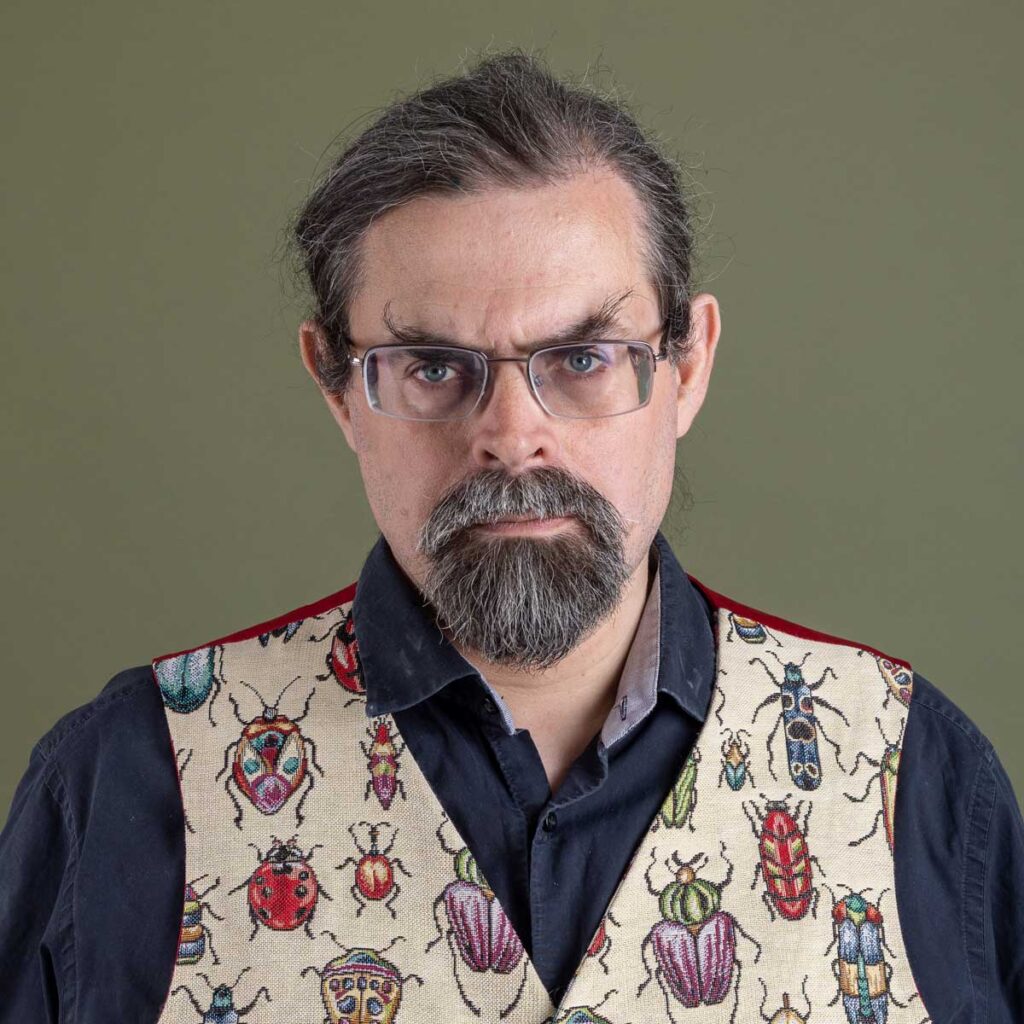
What prompted you to write Salvation’s Child as a graphic novel, rather than a novel?
AT: Honestly the process happened entirely the other way around. I had vague thoughts that I might want to return to the setting at some point, but nothing more concrete than that. The story of Xavi gets mentioned in the novels, and was always in the DNA of the series waiting to be unpacked, but most likely if Cosmic Lighthouse hadn’t tapped me for the project I wouldn’t have done anything about it yet. So having the chance to create a graphic novel in this setting is the only reason the story’s being told at all.

Have you had a longtime interest in the comic form and, if so, are there particular comics, graphic novels or creatives that have most shaped that interest?
AT: Writing for comics is one of the few other media I have wanted to have a go at. Over the years I’ve written a variety of scripts, both for practice and in serious attempts to break into the industry. I even had a go at a BPRD/Hellboy script at one point! I think there are certain emotional beats, moods and moments that comics are uniquely suited to deliver. I still remember work like Alan Moore’s Captain Britain run having a huge impact on me, or Morrison’s We3.
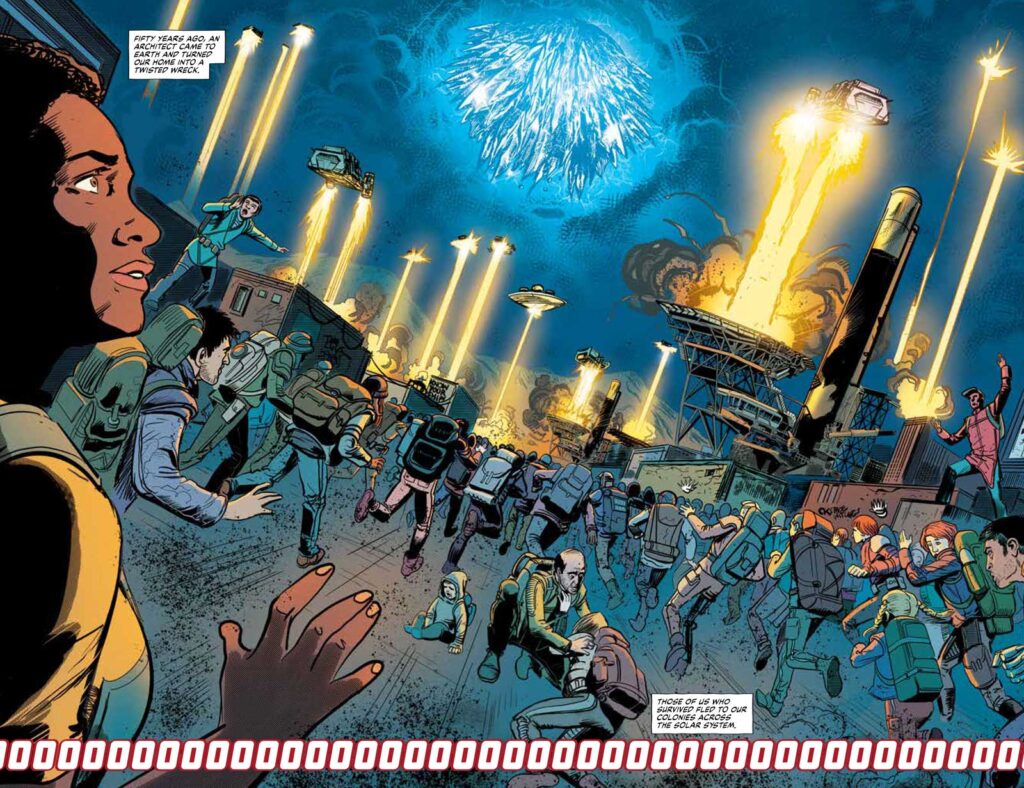
Be it Ants, Jellyfish, Corvids, Worms, Crabs or Spiders, you have a passion for the hive mind and distributed intelligence. Did you feel that connection with the larger team and the visualisation for this graphic novel? And did you find it additive or reductive/limiting in your overall vision of Salvation’s Child?
AT: I am not sure that Mike, Simon, Pippa and company particularly want to be a part of my hive mind! Even working as a novelist you’re not an island, of course. I’m used to working alongside my agent and various editors, and taking their suggestions and critiques. However, comics writing involves far more give and take between the various people involved. Along with writing so much less dialogue/description, the big thing to get used to is that all those other people also have an artistic hand in the finished project. They’re going to add things that you, as writer, would never have thought about. It’s definitely an additive experience, once you understand that you can relax into it and rely on everyone in the team.
The Corvids, Gothi and Gethli would disassemble and reassemble to learn. Did you approach the process like this when creating a graphic novel?
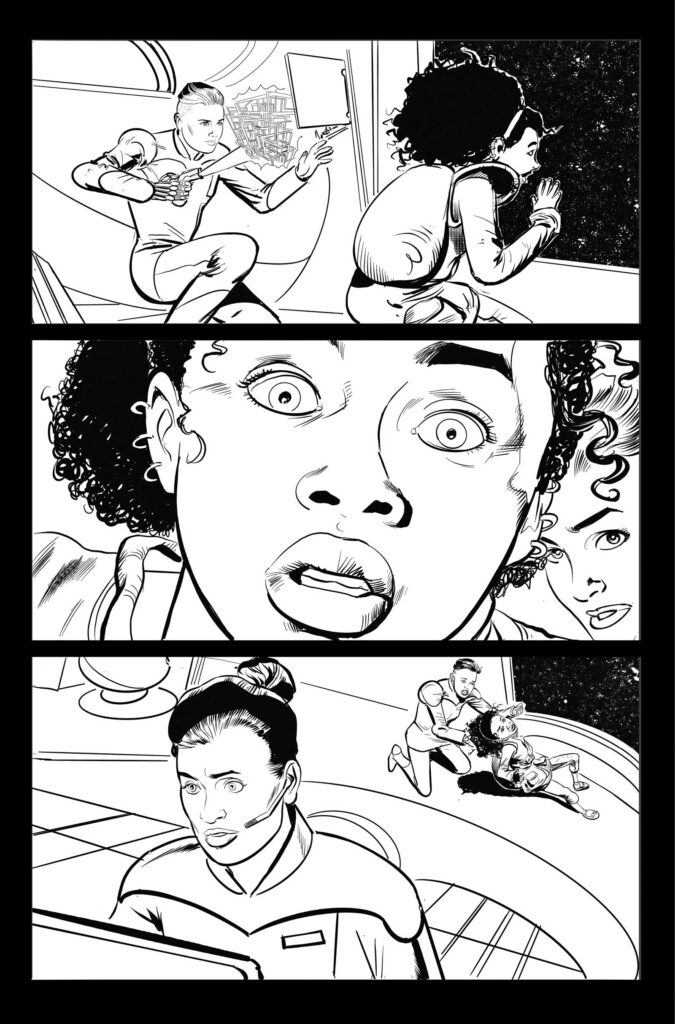
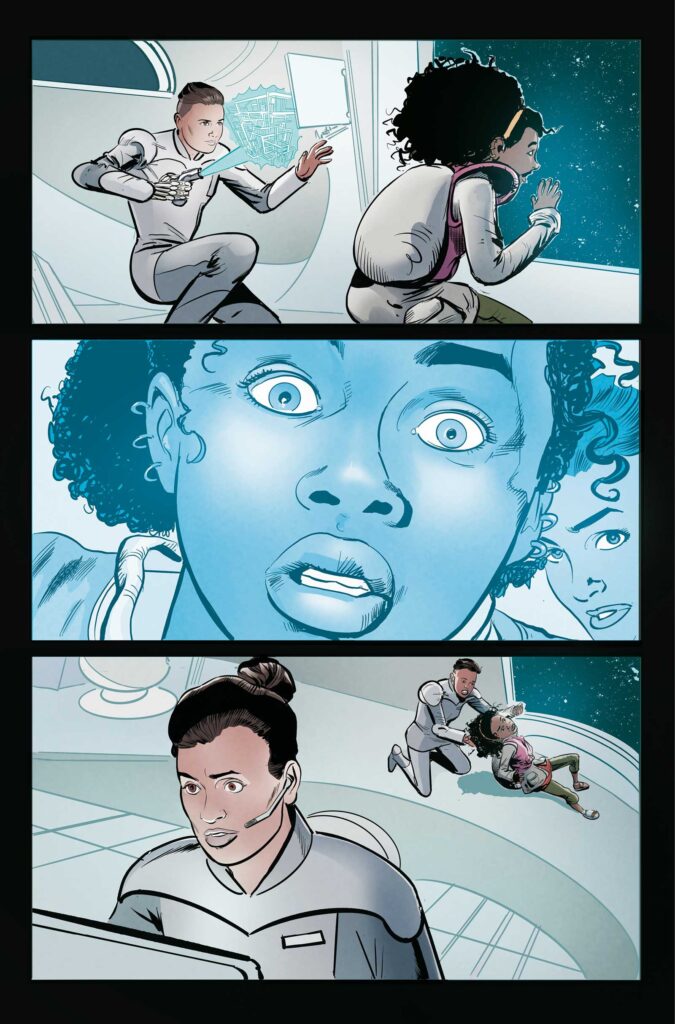
AT: I think a lot of what the corvids are trying to explain when they talk about their own thought (or “thought”) processes is the relationship between conscious and subconscious mind. So composition in any medium is always rooted in that liminal space. With a comics script, I think the subconscious has an extra toolkit – whilst the artistic team will determine how things will actually look, I’m still at least putting together a potential composition for each page, so I know that what I’m writing can exist in that potential space.
For Salvation’s Child, did you want or feel a need to deliver the script specifically for the visual format, and if so, what did you consciously moderate to assemble in your mind, so that the story would work as a graphic novel?
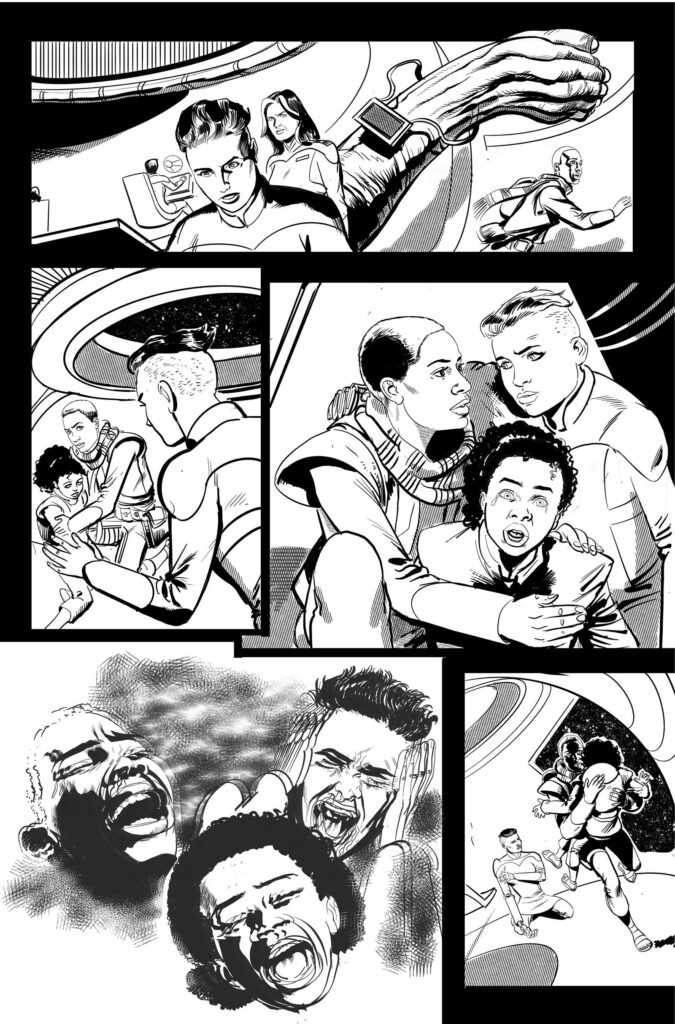
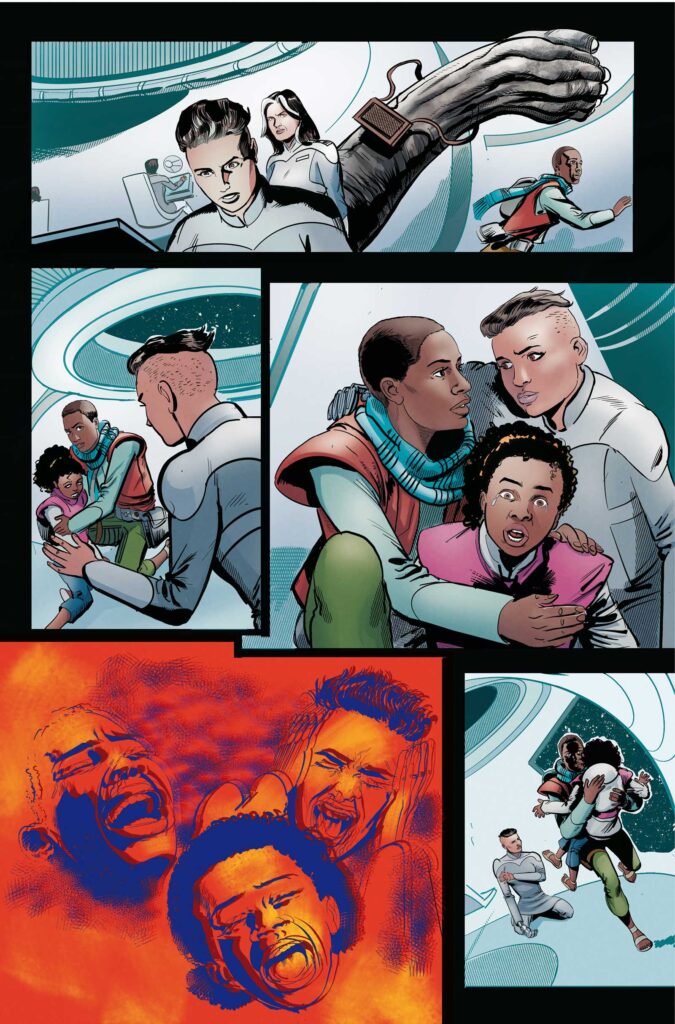
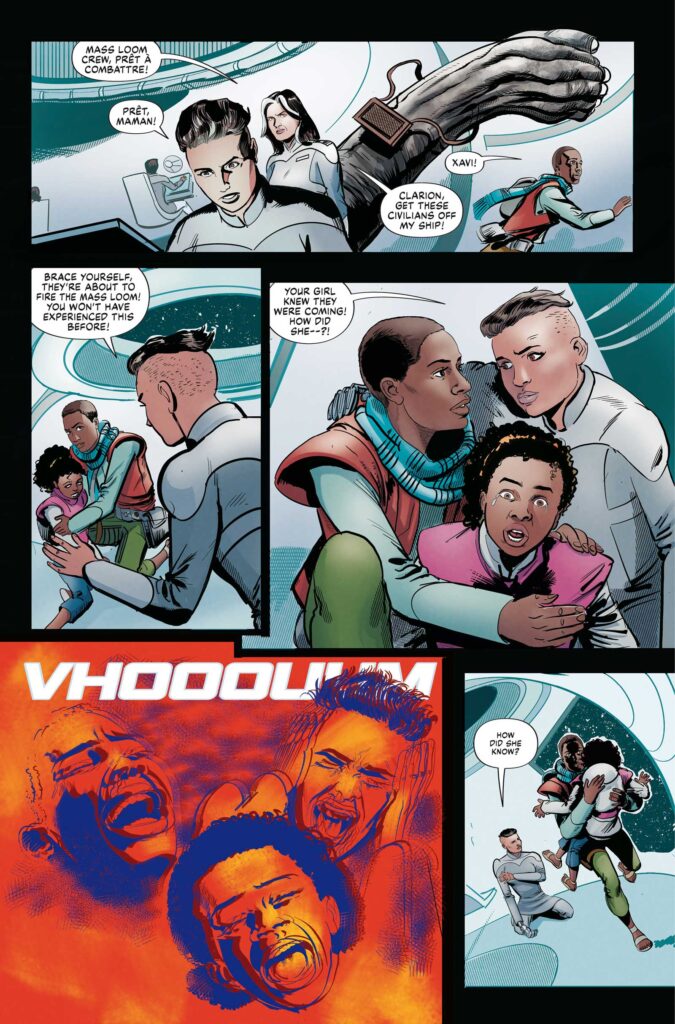
AT: The process I’ve come to, for writing comics scripts, involves a lot of storyboarding and rough work – as above, I need to know that what I’m writing is actually possible, even if it ends up looking quite different when actual artists have got hold of it. There’s also the matter of being too wordy. My books tend to be long, and one of the services my editors provide is telling me to cut stuff out. With comics, overwriting is a far bigger issue, so a lot of my process is working out how the story can be told visually with as few words on the page as possible. I suspect this is a fairly common transition for prose writers who come to the comics medium.
When writing novels, do you tend to write first and foremost as a visual person, or as an analytical literary person?
AT: I have a few different modes depending on the sort of scene I’m presenting – sometimes the emphasis is “look at this cool stuff” and so I’ m on a more visual level. Other times the emphasis is the action, or the characters’ internal emotional progress, and so I’ll be working more in the sense of a series of successive events, or else feeling the inner lives of the protagonists. It’s useful to be versatile.
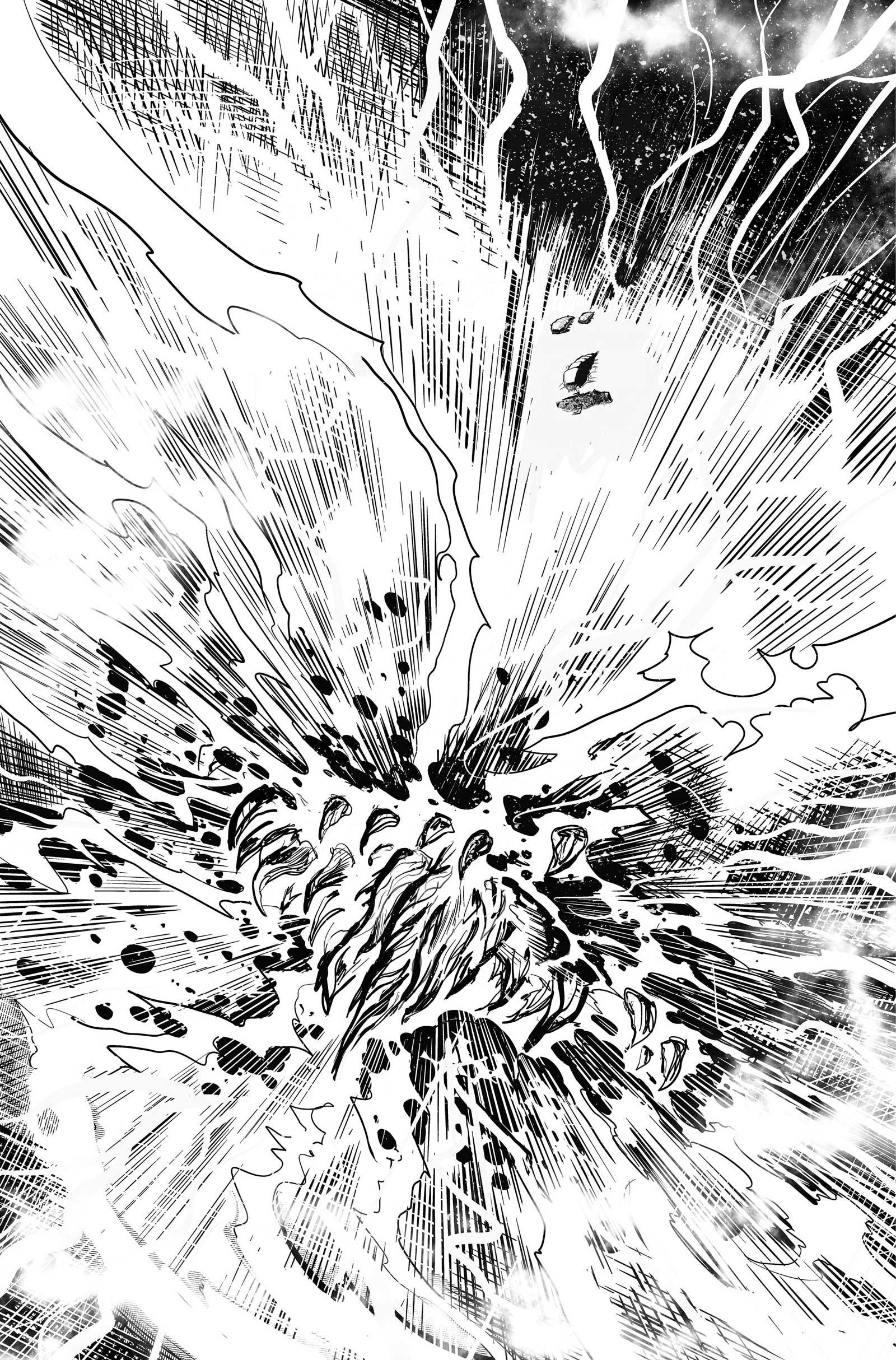
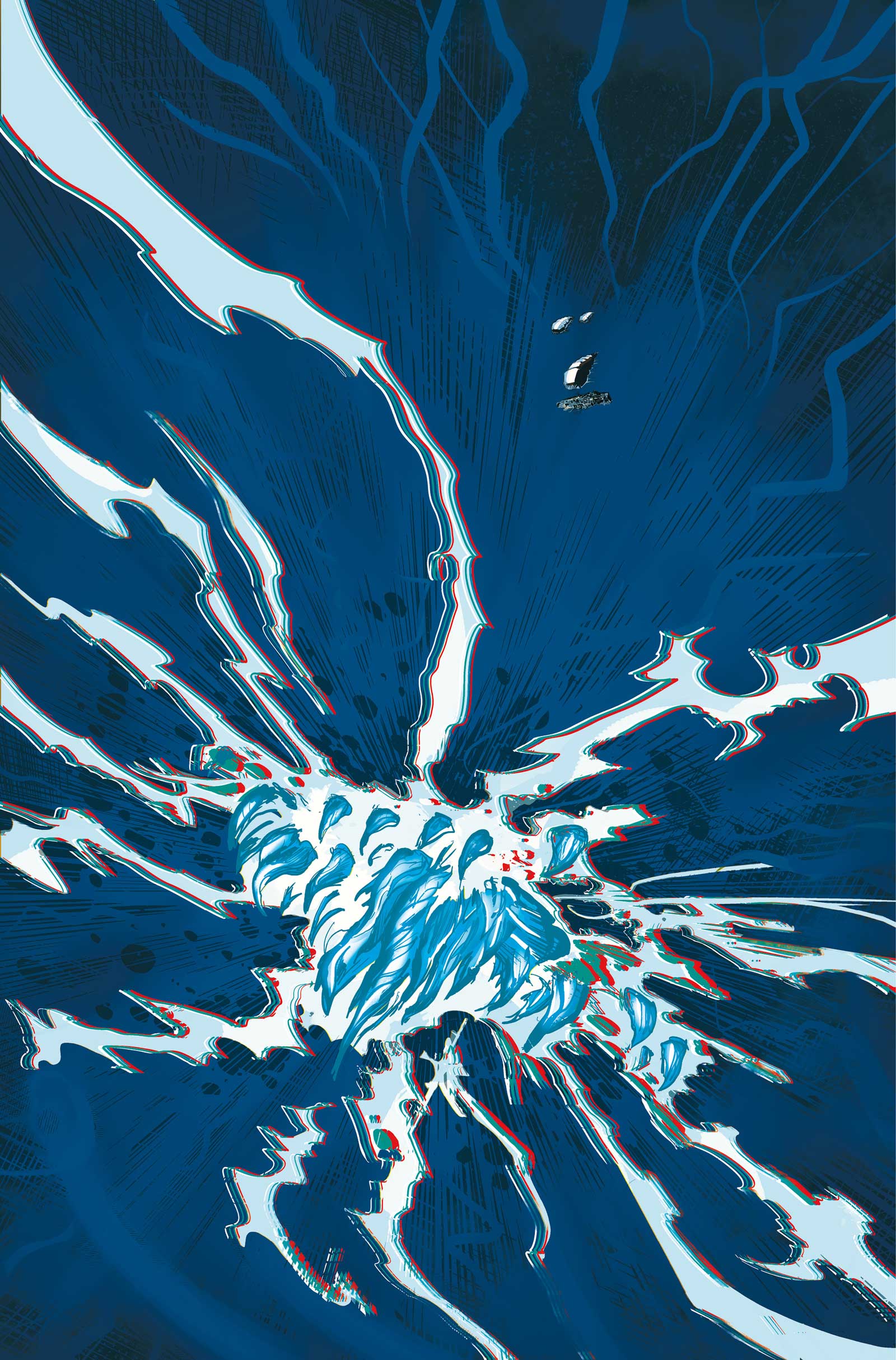
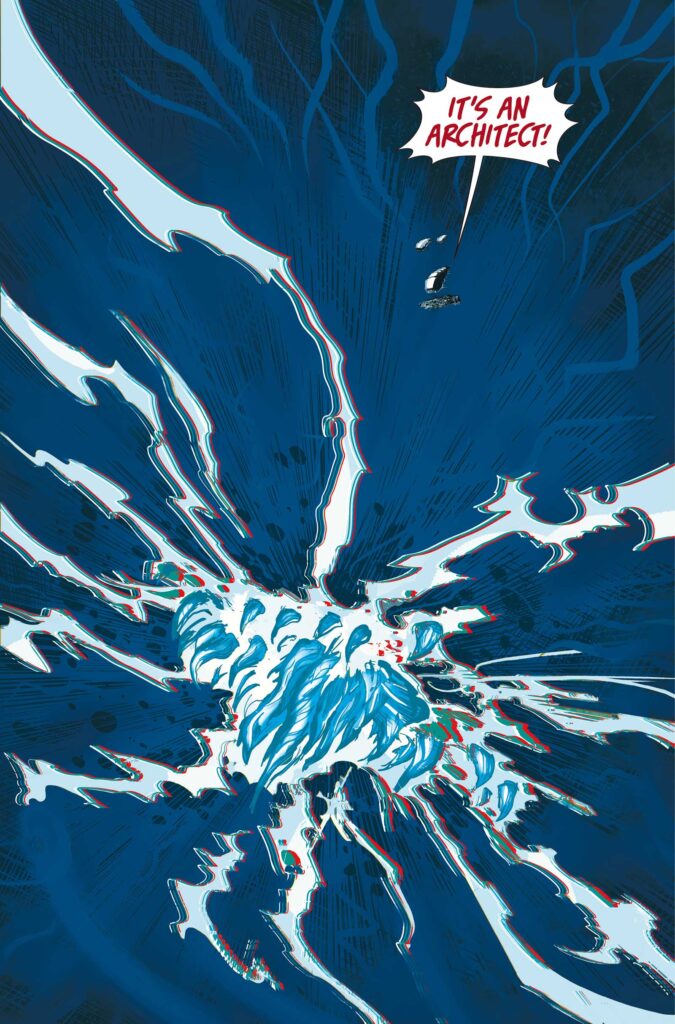
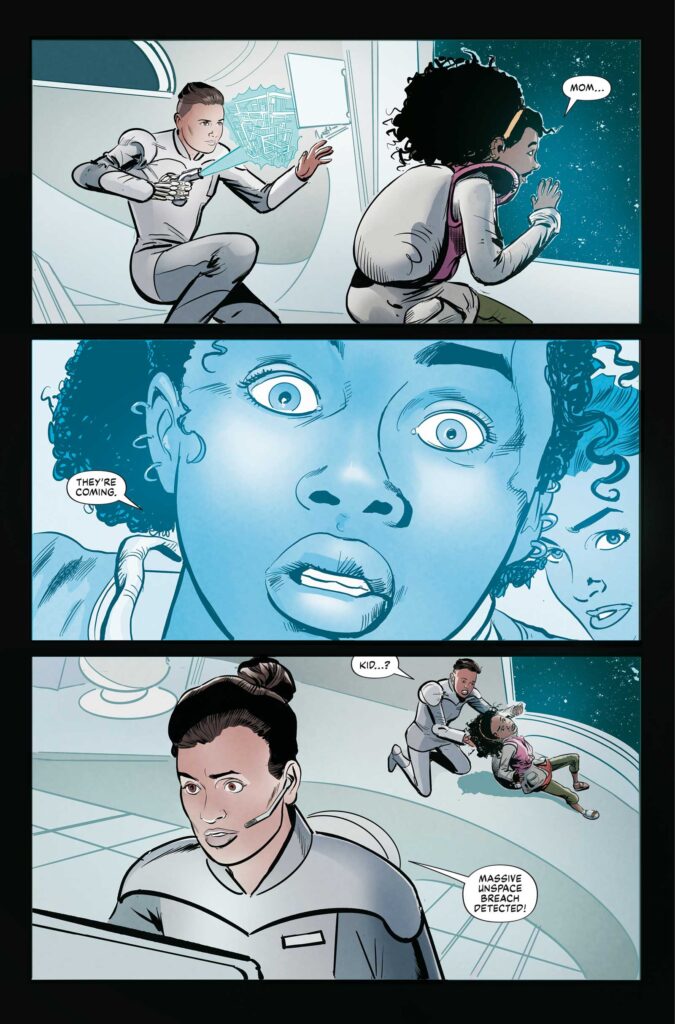
How did you visualise Salvation Child’s creations, characters and locations? Are they based purely on your descriptions, or is the look the result of collaboration with artist Mike Collins?
AT: It was an interesting “left wall” problem. There’s generally a left wall when writing – sometimes it’s “this is the science” or “this is the historical period” or just the fantastical worldbuilding you’ve put in, but any project will come with a part of its world already fixed, and you build out from that. In this case, the “left wall” was “whatever has already been written in the novels” – so we have some idea of what Partheni ships look like, or the Hannilambra, and we have some scraps of Xavi’s story, and of the period in which she lives. The task is to work out what is “known” (in the entirely fictional universe) and then see where the gaps are that I can expand into.
With zoology and psychology providing not just an academic backdrop but an obvious lifelong interrogation into the minds of the ‘other’ alongside the human mind; do you foster a position of equivalence for all life-forms rather than placing humanity at the hierarchical apex?
AT: The idea of human-as-apex has zero science to it. It’s a profoundly comforting thing for humans to believe about themselves, naturally, and has led to a lot of philosophical gymnastics to try and justify it, but we’re just one species with a particular gift for widespread destruction of our environment. I grew up with a lot of SF stories about square-jawed human heroes going out and showing aliens how things were done, and even as a kid I liked the aliens more. I think the genre needs a few books where humans aren’t the be-all and end-all of being good at stuff in space. Hence we have the Castigar and Hanni and especially the Essiel just out there being a bit (or a lot) better at things than the humans.
This is your first foray into the visual worlds. Are we likely to see film and/or serialised shows based on your work in the near future? And, if so, how active would you wish your role to be in that multimedia led process?
AT: Well the film and TV business is always within someone else’s gift. I’ve certainly had books optioned, but nothing’s come close yet. I’d love to see it, obviously, and we do seem to be in a bit of a SF renaissance at the moment with Project Hail Mary and Murderbot being adapted. As for my role in such a project, I’m not sure. I’m not a screenwriter, and I think I’d be more interested in seeing someone with the relevant skills having fun with the project.
Any plans to hive-mind your brain into a distributed AI or chat-bot…?
AT: I think we need to reclaim the term “AI” from its current ignominy first…
Interview questions by Graham Baines. Read Graham’s review of Salvation’s Child here
• Salvation’s Child is available as a digital release from AmazonUK (Affiliate Link) | Amazon.com
Salvation’s Child is written by Adrian Tchaikovsky with art by Mike Collins, features colours by Pippa Bowland, letters by Simon Bowland, a cover by Steve Stone and is edited by Cosmic Lighthouse Editor-in-Chief Paul Cornell
• Find out more about Cosmic Lighthouse at cosmiclighthouse.co.uk | Follow Cosmic Lighthouse on: Instagram and Bluesky
Salvation’s Child: About the Creators
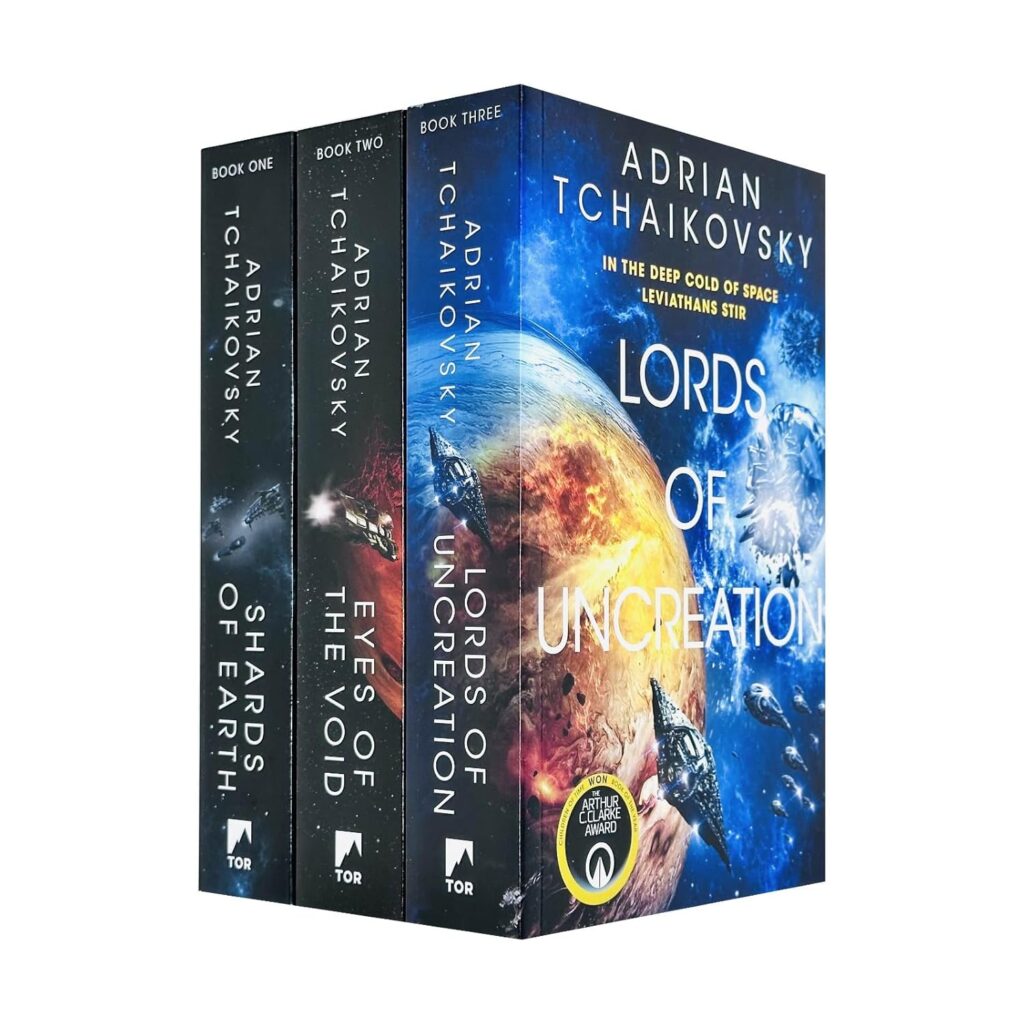
Adrian Tchaikovsky is a British science-fiction and fantasy writer known for a wide-variety of work including the Children of Time, Final Architecture, Dogs of War, Tyrant Philosophers and Shadows of the Apt series, as well as a number of standalone books. His work has been nominated for and/or won a large number of awards, including the Hugo Award (for Best Novel, Best Novella and Best Series), the Locus Award (for Best Science Fiction Novel and Best Fantasy Novel), the Ursula K. Le Guin Prize, the Arthur C. Clarke Award, and multiple British Fantasy Awards, British Science Fiction Awards, Philip K. Dick Awards, and many more.
Mike Collins is an artist who has, over four decades, drawn nearly every major superhero character in US and UK comics. Although he’s best known for his comics work on Doctor Whoand Star Trek, which he’s written and drawn for Marvel, DC Comics, IDW and Panini. He’s been the main storyboard artist on the Doctor Who TV show for the last decade and has worked on many high-profile genre shows including His Dark Materials, The Witcher and Good Omens.
Cosmic Lighthouse is the brainchild of Paul Cornell and Lee Harris, a new comics company devoted to publishing original graphic novels by the greatest modern Science Fiction and Fantasy writers, paired with the world’s best artists.
• Find out more about Cosmic Lighthouse at cosmiclighthouse.co.uk | Follow Cosmic Lighthouse on: Instagram and Bluesky
- About the Author
- Latest Posts

Categories: Books, British Comics, British Comics - Graphic Novels, Comic Creator Interviews, Comics, Creating Comics, downthetubes Comics News, downthetubes News, Features, Other Worlds
 Cy Dethan’s new novel, “Bad Sector” in the spotlight
Anyone who enjoyed Morrison’s We3 should check out Tchaikovsky’s Dogs of War and its sequels.