It has been just over two years now since David Thorpe, an award-winning writer of scripts, novels and non-fiction passed away, and it is with a certain sadness that this passing was not noted at the time on downthetubes. We had covered David’s work, both his autobiography and his work on Captain Britain extensively here, and so a small reflection on his passing is certainly needed.
Our thanks to James Bacon for gathering this tribute together…

There is an inevitable briefness to life, and as we pass through it, one can barely contemplate the vast array of tasks, jobs and hobbies that we undertake, and it’s hard to fathom the moments of family and friends, the pleasures and joy that life offers.
David Thorpe (aka Dave Thorpe) made a real difference in his world of understanding and promoting sustainability, caring for the world we live in, publishing a vast amount with the Centre for Alternative Technology, writing and talking about how there is a need and a way to have sustainable development with a focus on carbon-free energy. Plus, providing information and platforms for discussion and development especially among those who were prescient about the climate crisis we now face. He worked for decades in this vital area, that has, to our detriment, been purposely sidelined by people in power – but he was a diffident and determined challenger who worked and strived to bring the literature, understanding and knowledge of this field to people who welcomed it.
It’s quite a body of work, but that’s not what comic fans will remember him for. There’s an inherent focus that is not altogether unique, but notable about the community of comic readers, collectors, professionals and fans, and that focus is memory, and they, we remember. Favourite moments are enshrined memories that, in many regards, we seek to retain or recover as they hold onto that moment of delight and discovery, that can be rekindled with rereading or excited by a sketch.
There is also something unique about Marvel UK, a catch all for a wide variety of publications, that includes an original body of work, and contributions by some of the greatest comic book creatives. I was delighted recently to see original Star Wars artwork by John Stokes, and original “Nick Fury” art for Hulk Weekly by Steve Dillon, both stories written by the great Steve Moore. There is something lovely about this work, as there is when one sees Alan Davis utter brilliance on Captain Britain.
Captain Britain is one of those characters that hold a special place, I feel, among British comic fans, more widely appreciated due to some superb storytelling and incredible art, although it is of course another one of those unique Marvel UK elements of which there are many.
There is something quite different about Captain Britain, though. One sees it among many fans: a passion for the character. What was it that David Thorpe felt when he was reading the first volume, as a fan?
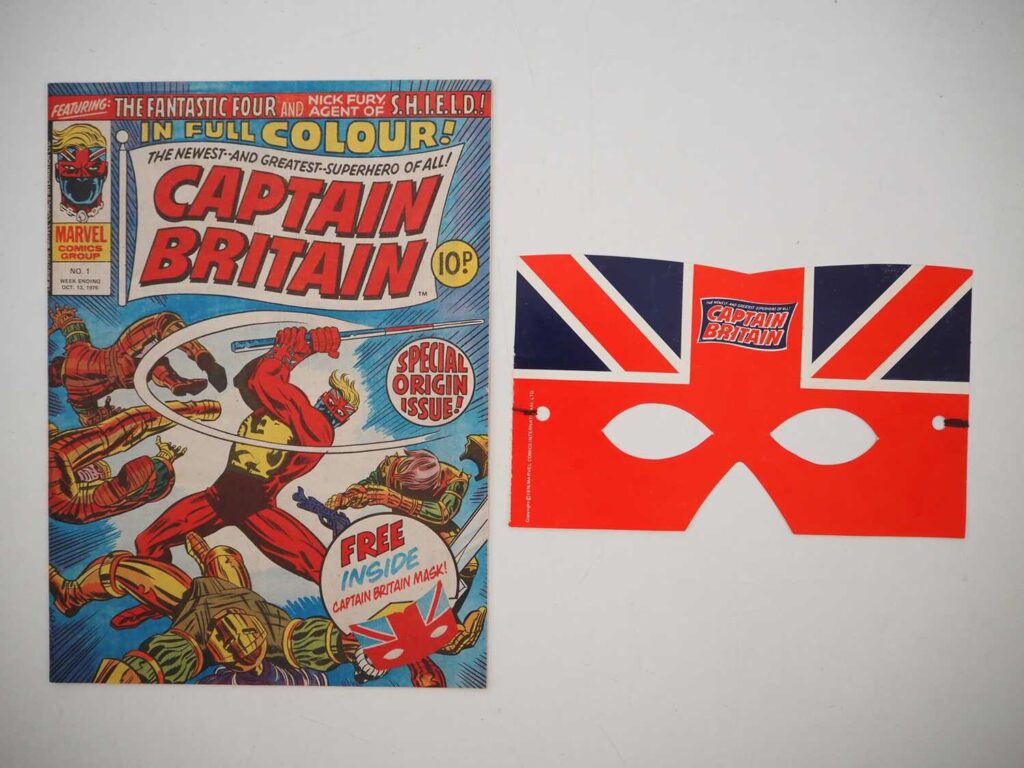
I wondered how that was, with a certainty that many readers may have felt the same way. Fan David Brazier said “And then I saw it advertised in Spider-man Weekly – ‘Captain Britain’.” and continued:
“Indeed, I was so excited that I couldn’t wait to get home and pick up my issue, which mum had kindly asked the newsagent to reserve for me, so at school I made myself ill and my mum had to get a taxi (she couldn’t drive) and pick me up at lunchtime. She was irritated by this imposition on her time.
“Once home, the poorly me retreated to my room to devour this new comic character. I can still recall the smell of the paper and how I delicately turned the pages as if it were a valuable manuscript.
“I want to evoke a little context; British Comics never featured superheroes; these were an American idea, but we had warriors, space men daring as they could be, historical figures and sportsmen. A few months earlier, a British wartime hero, Union Jack, had been introduced in The Invaders, a Marvel wartime comic that featured Captain America and some other early heroes, written by Stan Lee’s prodigy, Roy Thomas.
“Captain Britain was conceived in America. The comic script was produced in New York by two creators who had vague connections to Britain: writer Chris Claremont (who subsequently went on to glory with the new X-Men), who had emigrated to America as a youngster, and also Herb Trimpe, who happened to be living in Cornwall at the time.”
What was it about Captain Britain that appealed?
Brazier noted that the character was a “terrible amalgam of Spider-Man and Captain America. He seemed as British as Dick Van Dyke’s accent in Mary Poppins.” Comics certainly lean into tropes and shortcutting nuance, the visual medium needing bluntness, but there was an appeal
“I did like the fact that his origin seemed to be connected in some way to Arthurian mythology, which has always been an interest of mine. You also got as a gift a Captain Britain mask, which I duly put on and careered around my bedroom.
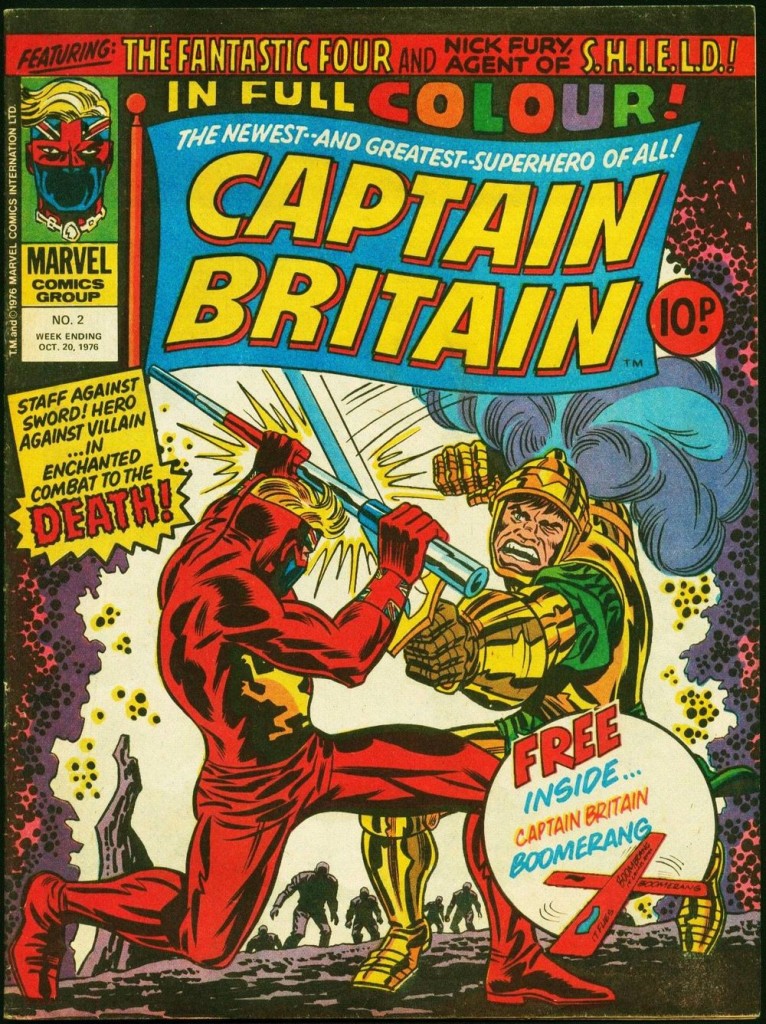
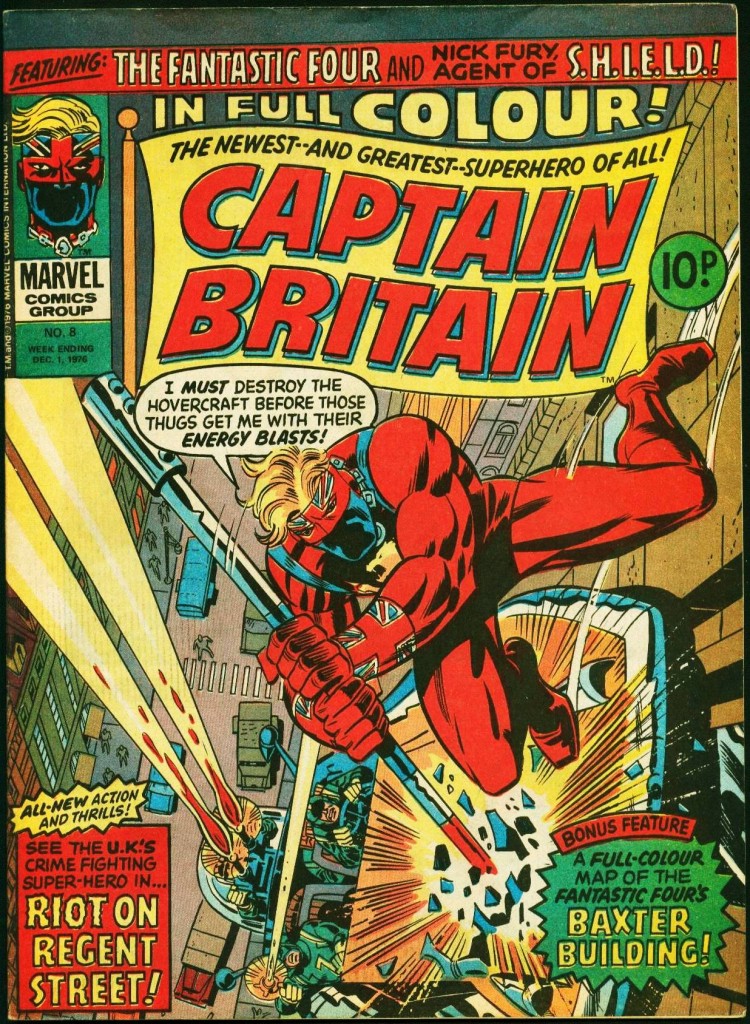
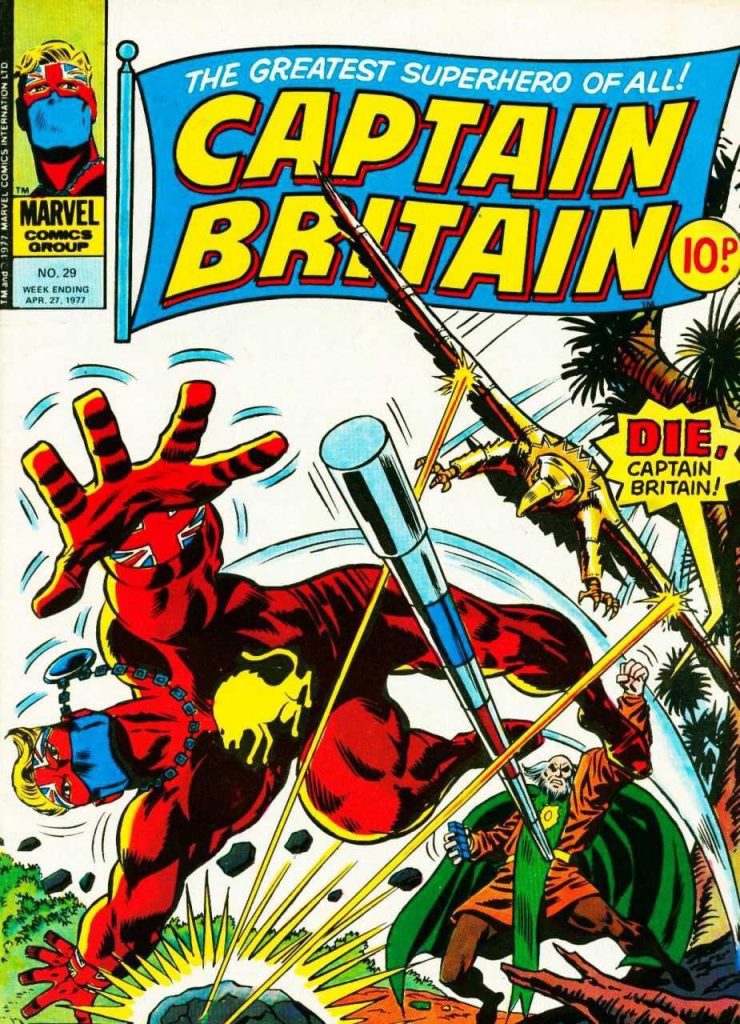
“In the comic, I discovered that Brian Braddock (Marvel loved alliterative names) was a physics student from Thames University. He was getting some work experience at a secret laboratory on Darkmoor, and he smoked a pipe, which was rather antiquated and odd. So far, so good; then all hell broke loose, and the base was under attack from Joshua Stragg, the Reaver. Who curiously looked like Labour MP John Prescott.
“Our hero, Brian, escapes on a motorbike and is intercepted by Stragg’s strange UFO-like aircraft from The X-Files and forced off the road. He awakens some time later, and finds himself in an ancient stone circle, overlooked by Merlin and the Lady of the Northern Skies, who offer him a desperate choice of either the Amulet of Right or the Sword of Might. Rejecting the sword as a symbol of violence, Brian chooses the amulet and is transformed into… Captain Britain!
“This breakneck adventure was manna from heaven to my young imagination. I must have read it hundreds of times. As each weekly instalment was delivered, I would read back again and retrace the story. The good Captain had a staff as a weapon with three mysterious buttons on the handle. Many evenings, I lay in bed wondering what they did? The Reaver chose the sword when he arrived, but Captain Britain defeated him! This all took place in 14 pages, some even in colour!
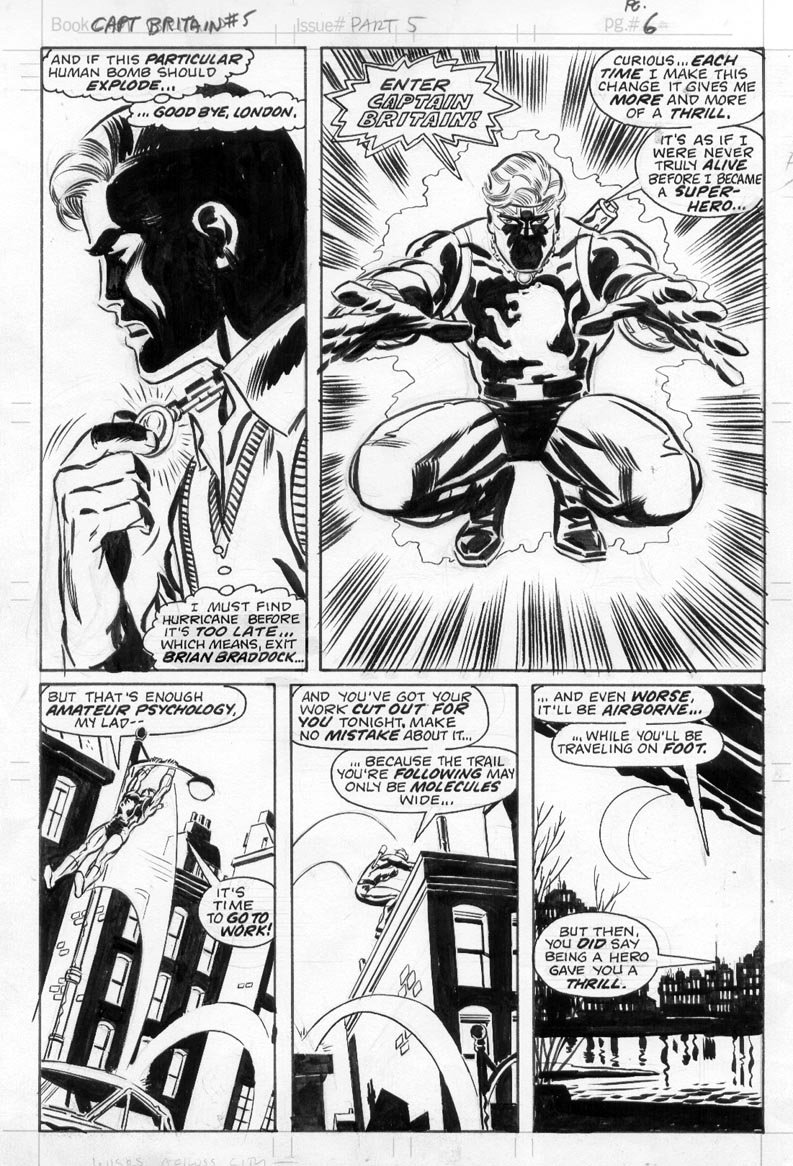
“At this point in his early evolution, Captain Britain lacked a nemesis and villains of the week like Hurricane, the Highwayman and some old guy with a mechanical hawk were easily forgotten.
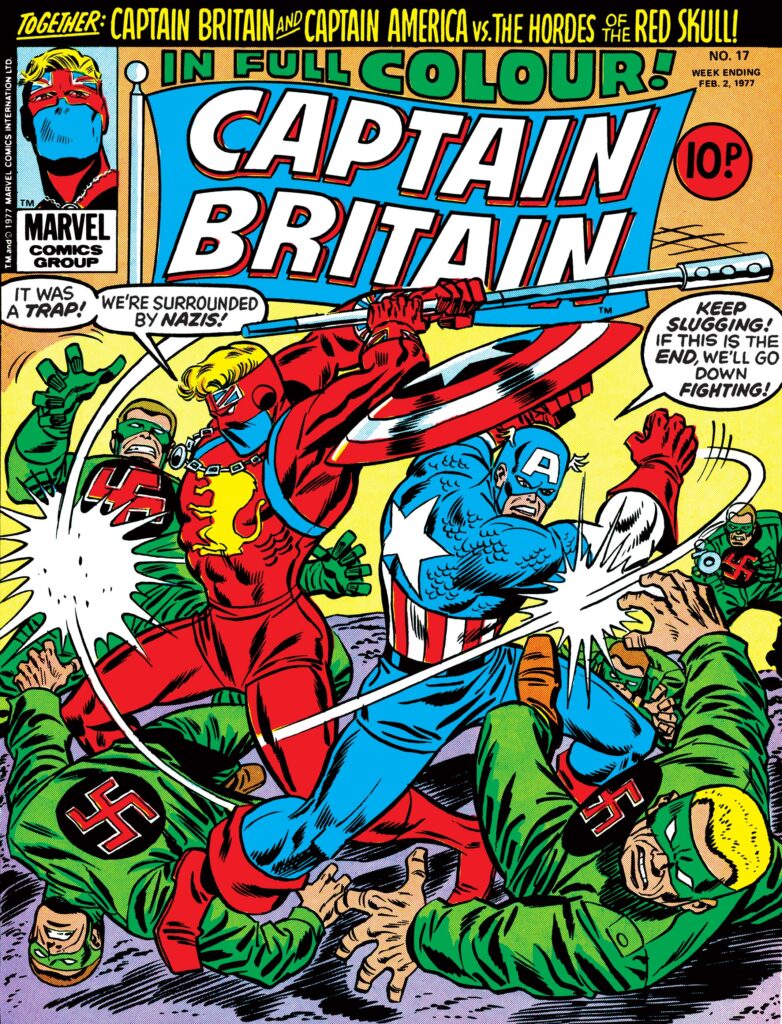
“Not even an inevitable crossover with Captain America and his arch enemy, the Red Skull, could save the good captain and eventually his comic was amalgamated with Spider-man Weekly. Disappointed, I still retained some love for the character in my childish heart, storing and re-reading my back issues, but now reading American comics that I bought in a haphazard way from a market stall in Bracknell.”
There is a certain excitement in the appreciation of Captain Britain there, and that must have captured the imagination of young readers at the time and later. Marvel Indexer and comic expert Stuart Vandal noted that “I was just a little too young to pick up Captain Britain’s first title when it came out. I first met Brian Braddock when he co-starred in Incredible Hulk Weekly’s “Black Knight” strip. However, with the Captain sharing the spotlight with an ensemble cast and often absent for weeks at a time, it wasn’t until he regained a strip of his own in Marvel Super-Heroes that he really got a chance to stand out.”
David Thorpe, wanted to be a comic book writer, a desire many fans hold – and he was, briefly. David wrote about his experience, and his autobiography was a fascinating piece of work, “a very readable and personal exploration of a comic fans desires, aspirations and progression to be a writer “. He faced challenges, and then he chose different paths, studying Dada and Surrealism, and he was himself challenging. That is probably what made him such a success in regards to his climate activism.
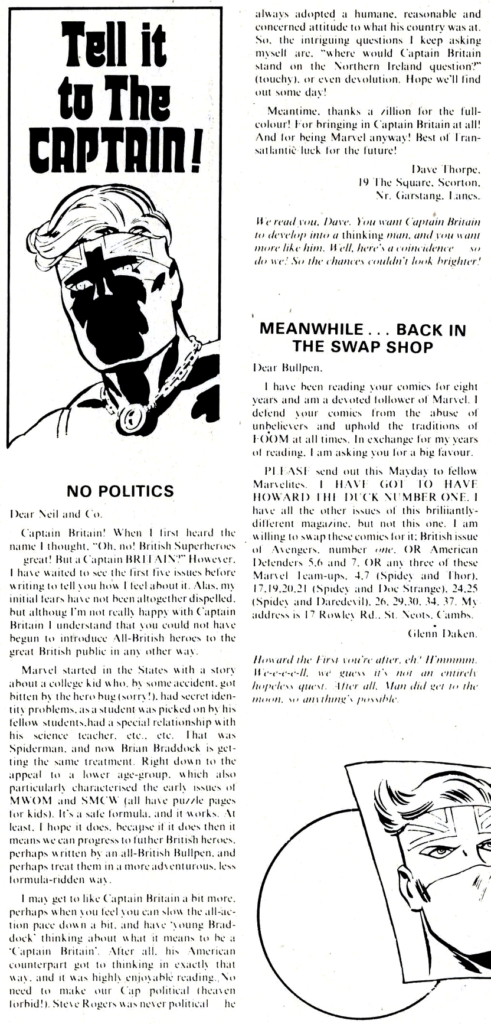
As a fan, David wrote to Marvel UK, his letter appearing in Captain Britain #17, February 1977 seeking a political element to the comics.
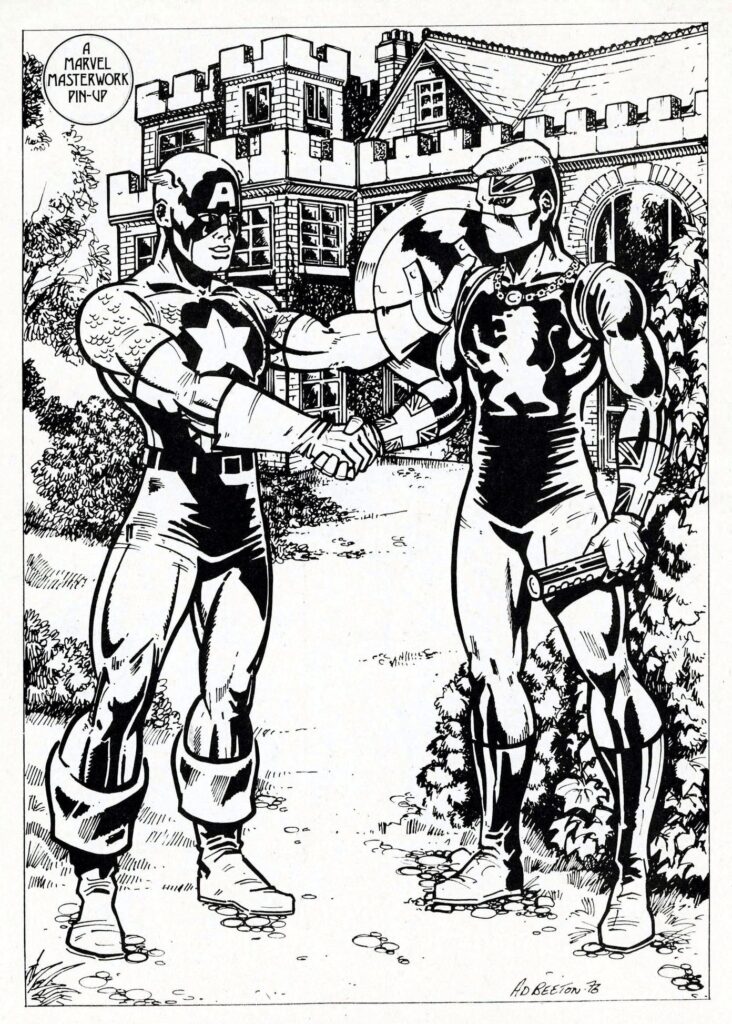
The same David Thorpe went from fan to pro, seeking work first for Marvel in New York and then gaining employment working in 1981 for Paul Neary at Marvel UK, as an art and editorial assistant. After a time, Paul Neary informed him that he would be writing Captain Britain.
The return of Captain Britain, the new uniform and the incredible cover of Marvel Super-Heroes issue #377, ushered in an amazing moment for the character, and it was immediately popular with readers and fans. There was engagement, and letters, and that, of course in some ways, encouraged David Thorpe. How many fans were excited and enthused for comics in September 1981, with that stunning image of a new Captain Britain by Alan Davis?
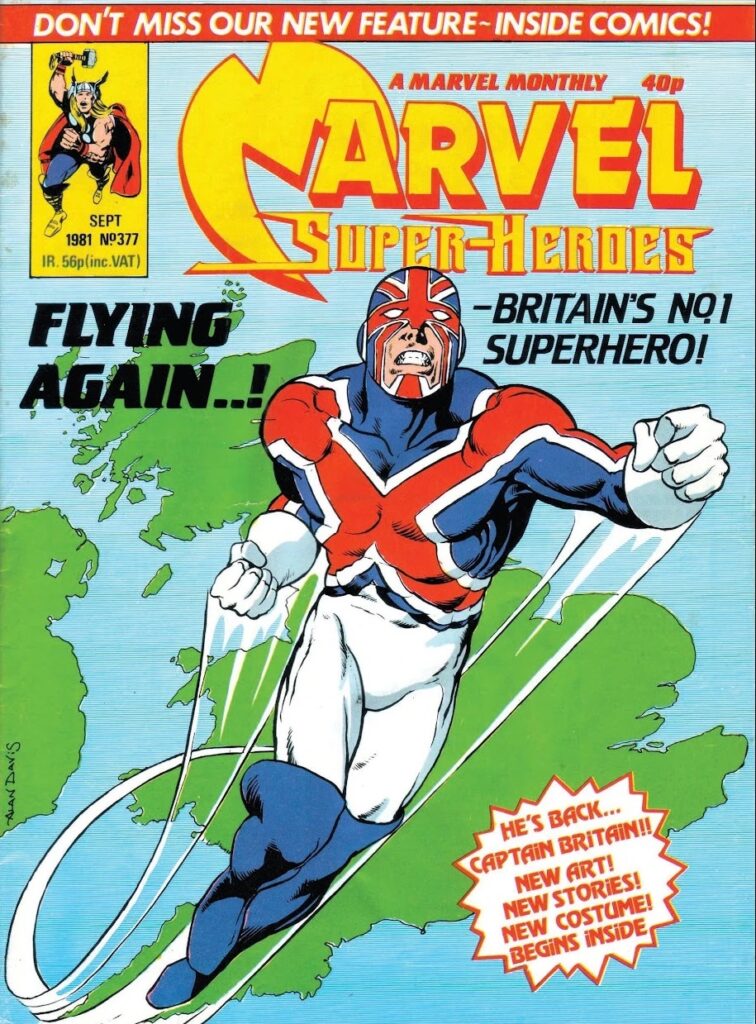
There was certainly a lot of interest in the new character and with art by Alan Davis, on the monthly Marvel Super-Heroes. This was a big break, and a genuinely fortuitous moment. David Brazier noted, when he fell into the hands of David Thorpe and Alan Davis.
“This is where Captain Britain came of age,” he feels, “suffused with surrealism and myth and made something unique and different from American superheroes.
There was certainly something different about the comic at this time, and it was a departure compared to the stories at that time in Marvel Super-Heroes. Stuart Vandal notes that “As such, David Thorpe was the writer who truly introduced Captain Britain to me. Alan Moore’s run consolidated my passion for the character, but it was under Thorpe’s direction that love affair began. His stories were fast paced, fun, and full of intriguing characters and concepts. And though he only penned a small number of issues, without them the iconic Crooked World saga that Moore created might never have happened; at the very least, it would have been radically different.
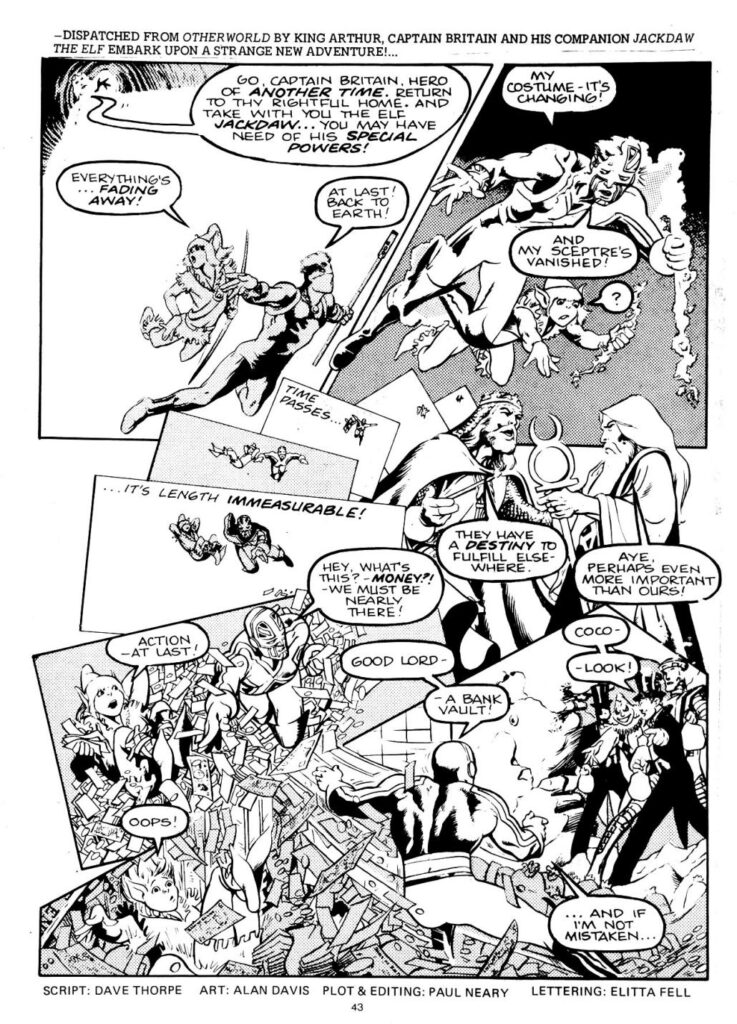
“Although later writers, not just Moore, would reinvent and redefine them, it was Thorpe, in conjunction of course with Alan Davis, who initially brought in the multiversal component and name-dropped Captain U.K., leading to Moore and Davis’ creating the Captain Britain Corps and Claremont and Davis’ subsequent “Cross-Time Caper” in Excalibur. Thorpe also gave us Saturnyne, who continues to complicate Brian’s life to this day, and the Crazy Gang led by the insane hatter Mad Jim Jaspers, whom Moore subsequently transformed into his run’s terrifying main antagonist.
“And then there’s the ripple effect from Thorpe’s tenure. Both the comics and the MCU have become obsessed with all things multiversal; though he wasn’t the first person to tell stories set in other realities, all of that really kicked off with David Thorpe’s run. Would we have Spider-verse and its army of variant Spider-Men without the Captain Britain Corps? Thorpe’s time on Captain Britain was brief, but it sowed some mighty seeds.
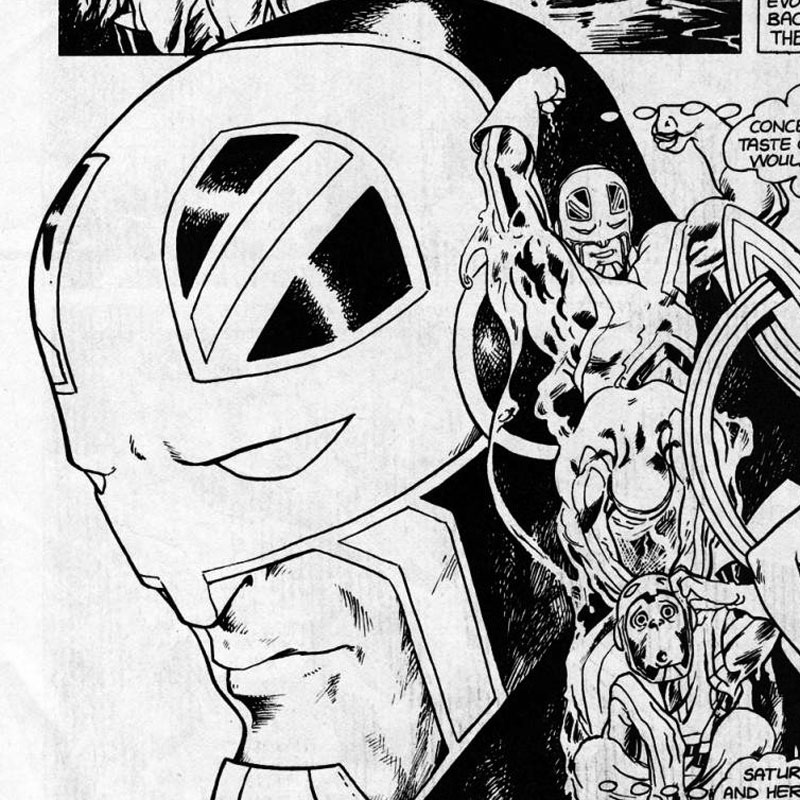
“It was those stories that sewed so many seeds,” John Freeman, downthetubes publisher and former Marvel UK editor partly during Paul Neary’s second term at the MUK editorial helm, when he brought in the Genesis 1992 Universe, notes. “I don’t think there were many MUK editors who weren’t aware of those early Captain Britain stories, and who hoped some of the work we curated could emulate its influence.”
David’s tenure on Captain Britain was not to last. Disagreement occurred, there was a desire by David to push too far into the area of politics, whichwas challenging for those at Marvel UK at the time. This was part of that difficult and challenging characteristics that David had, a strength one might say, but within that strength there is a weakness. There was a need to work as part of and within a team and of course working for others who have expectations that need to be met.
Trying to draw in political aspects is not new in comics, but sometimes, one has to accept that this is not what is required or desired.
David shared a later awareness in his own book, as he noted how he read a preview copy of Rob Kirby’s Marvel UK book, From Pence To Cents, and that “Paul Neary had been told quite categorically by Brian Babani [the publisher] that there should be no politics, or heads would roll”.
There was a preparedness to face a regrettable past in his book, and in a subsequent interview, I felt that he recognised that he had not gone about matters in the best way. He was very proud of the Multiverse aspect that he wrote about in his book which is reviewed here on downthetubes of course, and there is something of the missed moment, but his career as a comic writer was not to be.
In the world we live in, being a comic writer or artist is a precarious and challenging profession, we see that it can lack certainty and security, while it can also have moments of reward and popularity. It must be very hard to go from job to job, and there has to be a level of cohesion, co-operation and understanding about what the publisher and editor wants.
There is great appreciation for those in the business, because it is hard work, and delivering entertaining stories is not easy at all, and it is a real gift when it occurs.
Paul Neary, Bernie Jaye and the many creatives who wrote and drew at Marvel UK stewarded in many amazing comic stories, their work was very productive, and there is much brilliance to the comics that came from the offices, and many of the Marvel UK comics are worth a reread, seeking out the works by the locals.
David only wrote nine episodes of “Captain Britain”, starting in issue #377 of Marvel Marvel Super-Heroes in cover dated September 1981, through to issue #384 cover dated April 1982. Paul Neary wrote the story in Issue #385 and then David had his final issue #386 in June 1982. It is such a small body of work, and as David Thorpe exited, it allowed Alan Moore the chance to enter, and write some great Captain Britain stories. Alan Davis continued, and continues his brilliant artwork for Marvel.
Nine episodes of “Captain Britain”, but that is how we know him, know of him, for his short time as a comic writer has garnered fascination and interest.
James Bacon
David Thorpe, 2nd December 1954 to 25th April 2024
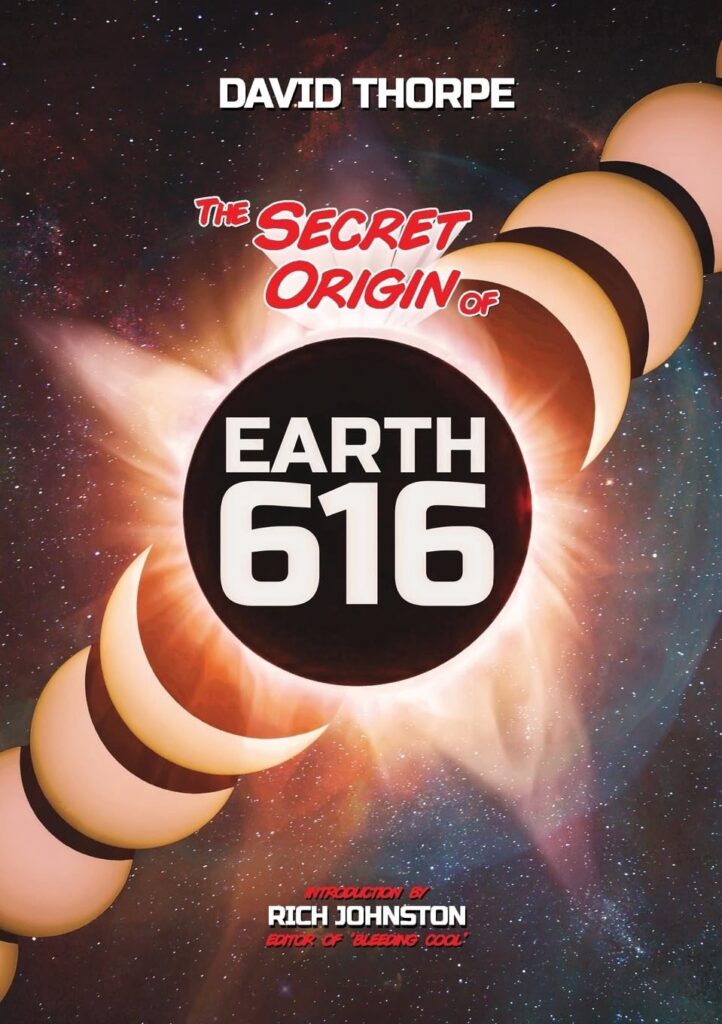
• The Secret Origin of Earth 616 by David Thorpe is available from AmazonUK here (Affiliate Link) | 242 Pages | Published by Cambria Books | ISBN 978-0993086281
Our thanks to David Brazier and Stuart Vandal for their contributions to this tribute
“With imagination we can change the world!”

David Thorpe was a Marvel comics writer whose prize-winning YA novel Hybrids, published in 2007, was called “stunningly clever” by The Times. Also a film/tv scriptwriter, and a co-founder of the London Screenwriters Workshop, he taught a writing course online, based on his book, Making Readers Care.
Creative and practical, and he had a unique set of skills that made things happen.
Stormteller, published in 2014, led to his presence on the first two Hay Literature Festival climate fiction panels. As the Director of the One Planet Centre, he wrote over a dozen titles on environmental protection and renewable energy, including One Planet Cities: sustaining humanity within planetary limits (Routledge, 2019) and The One Planet Life (Routledge, 2015). He also wrote hundreds of articles on sustainability.
Battling from cerebral palsy, he fought relentlessly through childhood to be able to walk, then to cycle and to swim. He regularly took a stand for disability rights.
Head downthetubes for…
• On David Thorpe’s still open Official Site: David Thorpe, 2nd December 1954 to 25th April 2024
Author and environmentalist David Thorpe died peacefully in his sleep early on Thursday 25th April 2024 in Barcelona.
Be warned that David’s final posts may be a difficult read, charting the end of his writing career as his illness worsened
• In Review: The Secret Origin of Earth 616 by David Thorpe
• The Secret Origin of Earth 616 by David Thorpe is available from AmazonUK here (Affiliate Link)
• Captain Britain in Trouble! by James Bacon
• Check out and follow A Distant Beacon, Rob Kirby’s web journal
• Marvel.com: Captain Britain Weekly
• In Memoriam: Comic Artist, Writer, Inspiration: Paul Neary
• The mystery of Adrian D. Beeton
• Read our “Marvel UK: “Genesis ’92” – Looking Back and What Might Have Been” resource
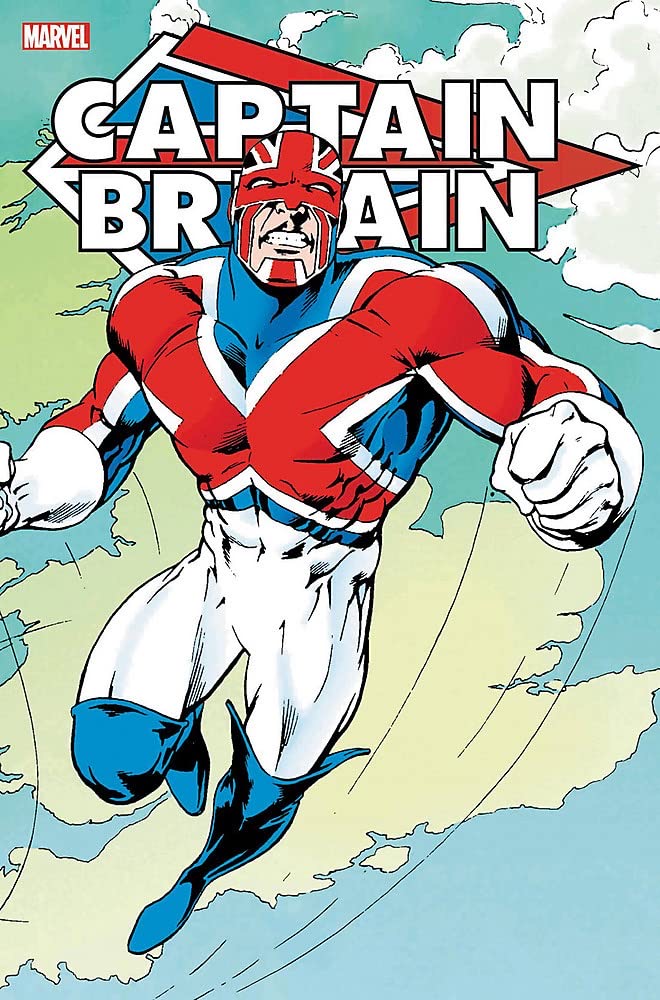
Captain Britain Omnibus
• Available here from AmazonUK (Affiliate Link)
ISBN: 978-1302932268
Follow the United Kingdom’s greatest champion from the streets of London to the mystic realm of Otherworld! Brian Braddock, hand-picked for greatness by the sorcerer Merlyn, has made the fateful choice between the sword of might and the amulet of right – and become a hero! Now, thrill to a complete collection of Captain Britain’s iconic UK adventures – from questing alongside the Black Knight, to battling Jim Jaspers and the Fury to prevent Earth from becoming a crooked world! But when Brian suffers a crisis of faith, will his sister Betsy inherit the mantle? Featuring the Special Executive, the Warpies, the Captain Britain Corps, Meggan and more!
Collecting: Material from Captain Britain (1976) 1-39; Super Spider-Man & Captain Britain (1977) 231-247; Hulk Comic(1979) 1, 3-46; Incredible Hulk Weekly (1980) 47-55, 57-63; Marvel Super-Heroes (1972) 377-388; Daredevils (1983) 1-11; Mighty World of Marvel (1983) 7-16; Captain Britain (1985) 1-14; Marvel Tales (1964) 131-133; Marvel Team-Up (1972) 65-66; New Mutants Annual (1984) 2; X-Men Annual (1970) 11
- About the Author
- Latest Posts

John is the founder of downthetubes, launched in 1998. He is a comics and magazine editor, writer, and Press Officer for the Lakes International Comic Art Festival. He also runs Crucible Comic Press.
Working in British comics publishing since the 1980s, his credits include editor of titles such as Doctor Who Magazine and Overkill for Marvel UK, Babylon 5 Magazine, Star Trek Magazine, and its successor, Star Trek Explorer, and more. He also edited the comics anthology STRIP Magazine and edited several audio comics for ROK Comics; and has edited several comic collections and graphic novels, including volumes of “Charley’s War” and “Dan Dare”, and Hancock: The Lad Himself, by Stephen Walsh and Keith Page.
He’s the writer of comics such as Pilgrim: Secrets and Lies for B7 Comics; “Crucible”, a creator-owned project with 2000AD artist Smuzz; and “Death Duty” and “Skow Dogs”, with Dave Hailwood.
Categories: British Comics, Comic Creator Spotlight, Comics, Creating Comics, downthetubes Comics News, downthetubes News, Features, Obituaries
 Remembering Jon Haward: A Tribute by Tim Perkins
  The Inimitable Ian Kennedy: A Tribute by Calum Laird