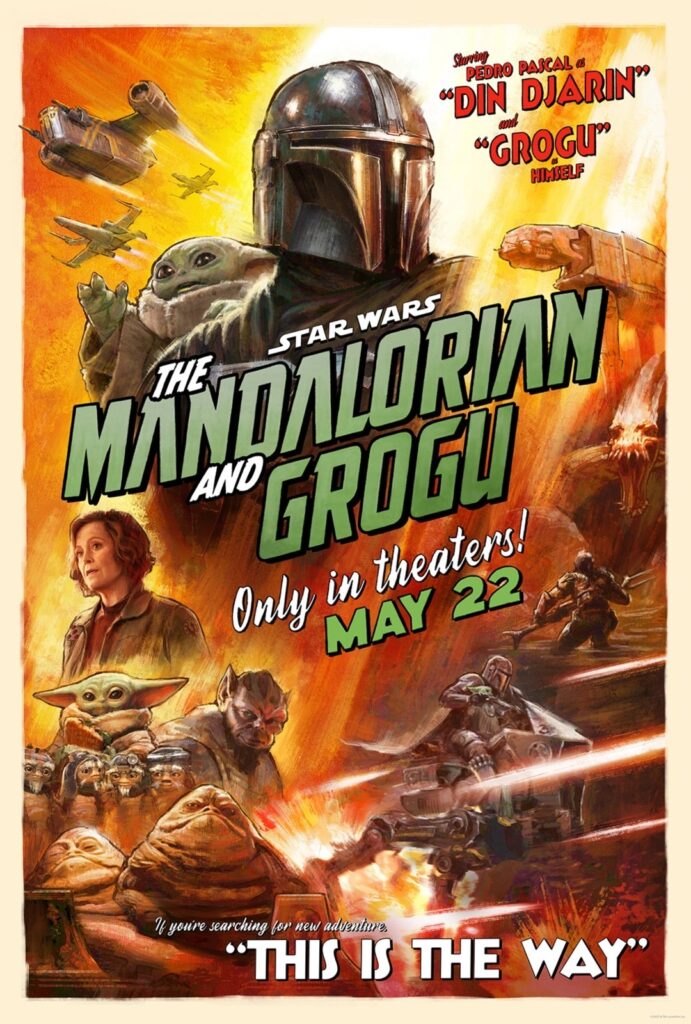
The evil Empire has fallen, but Imperial warlords remain scattered throughout the galaxy. As the fledgling New Republic works to protect everything the Rebellion fought for, they enlist the help of legendary Mandalorian bounty hunter Din Djarin and his young apprentice, Grogu…
Review by Tim Robins
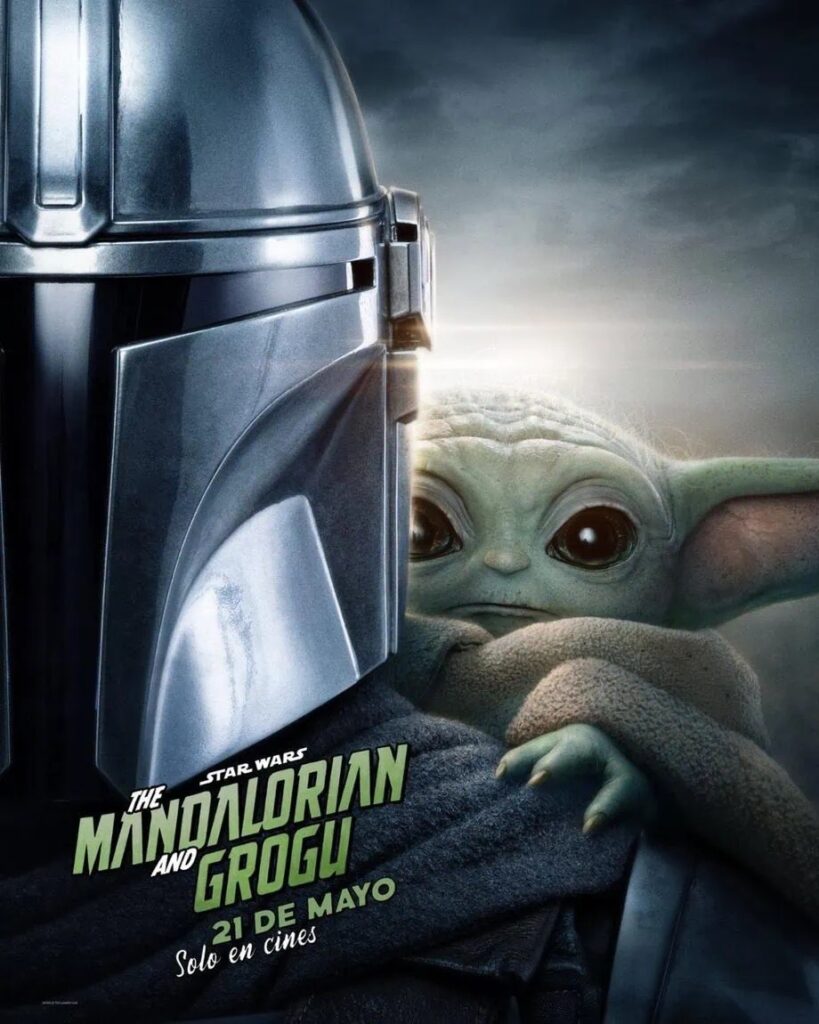
Somehow The Mandalorian and Grogu have returned but this time on the big screen. And somehow, despite the disappointing opening weekend box office, the movie is good fun, and child friendly if, in the UK your child is 12 or over.
I’ll be up front and admit that what got me to see the film at my local Picturehouse was the prospect of spending the evening in an almost empty cinema with functioning air conditioning. Believe me, if you are struggling with the current heat wave, this is the way!
Despite receiving a lukewarm reception from critics, the film is entertaining, funny and exciting, even if the suspicion is that we are just seeing a warmed over version of the abandoned fourth season of the TV series.
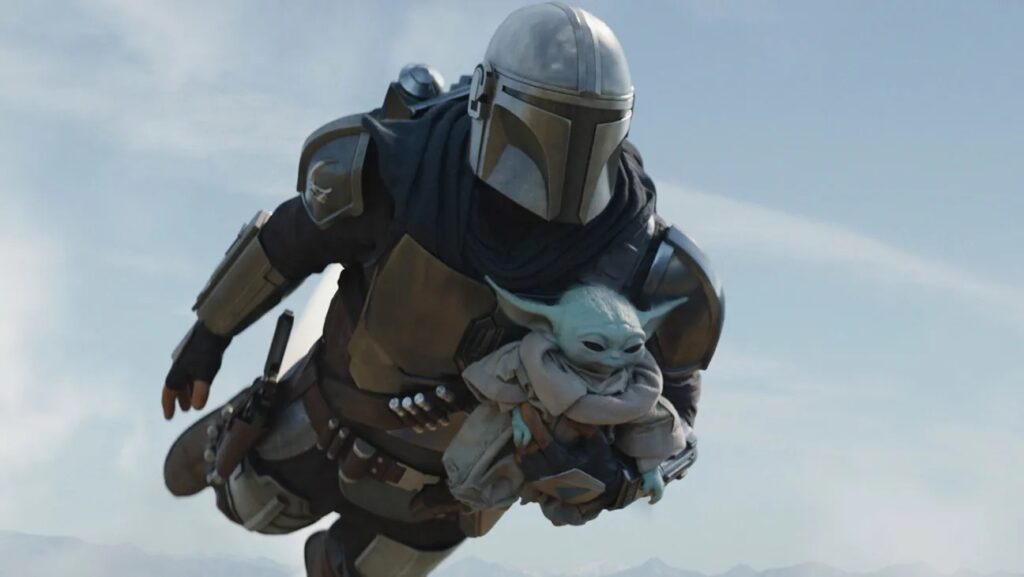
Events are certainly episodic, but that provides a constant supply of new locations and characters. One thing leads to another when The Mandalorian is sent on a mission by Sigourney Weaver of the New Republic to free Jabba the Hutt’s son, Rotta the (hench) Hut, return him to the Hutt twins and, in return, be given the location of Colonel Coin, a dastardly remnant of the old Empire.
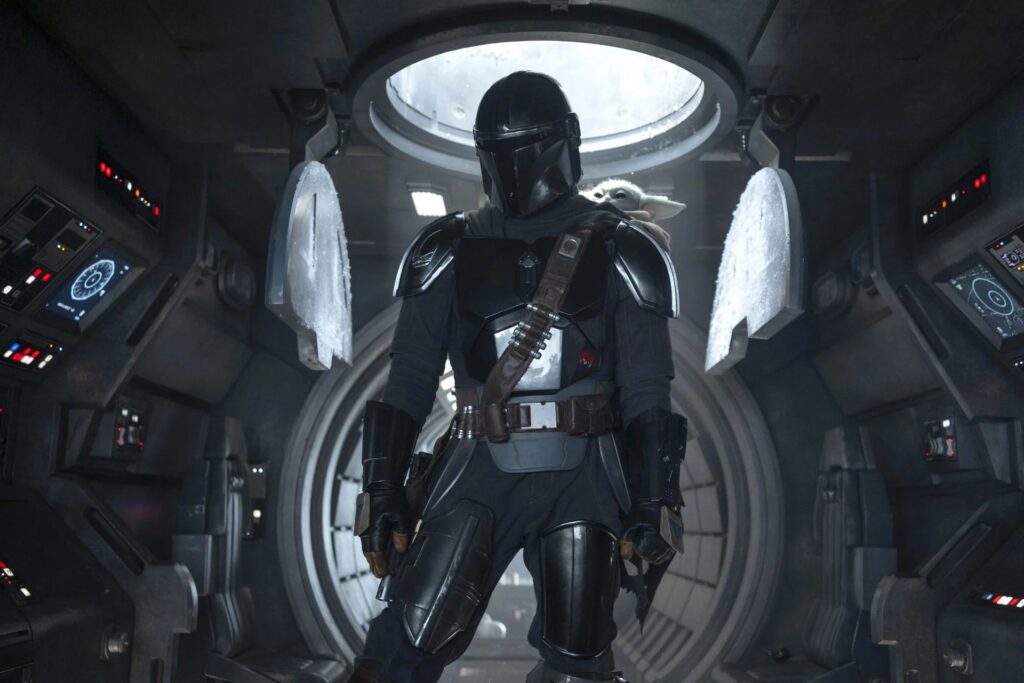
The Mandalorian himself is played by the mostly unseen Pedro Pascal. We briefly get to see his face in a few scenes with the twin Hutts (who I nicknamed Upper and Lower Hutt, because I was feeling nostalgic for the Hutt valley, New Zealand). Who actually plays The Mandalorian beneath his shiny, shiny armour might as well be anybody or two other somebodies: Brendan Wayne, an expert gunslinger, and Lateef Crowder, a stunt co-ordinator and martial artist.
If you’re unfamiliar with the TV show, The Mandalorian, aka ‘Mando’, is a member of a cult of warriors with a strict honour code called ‘The Creed’. This involves, for instance, never removing your helmet and letting people see your face. So that happens.
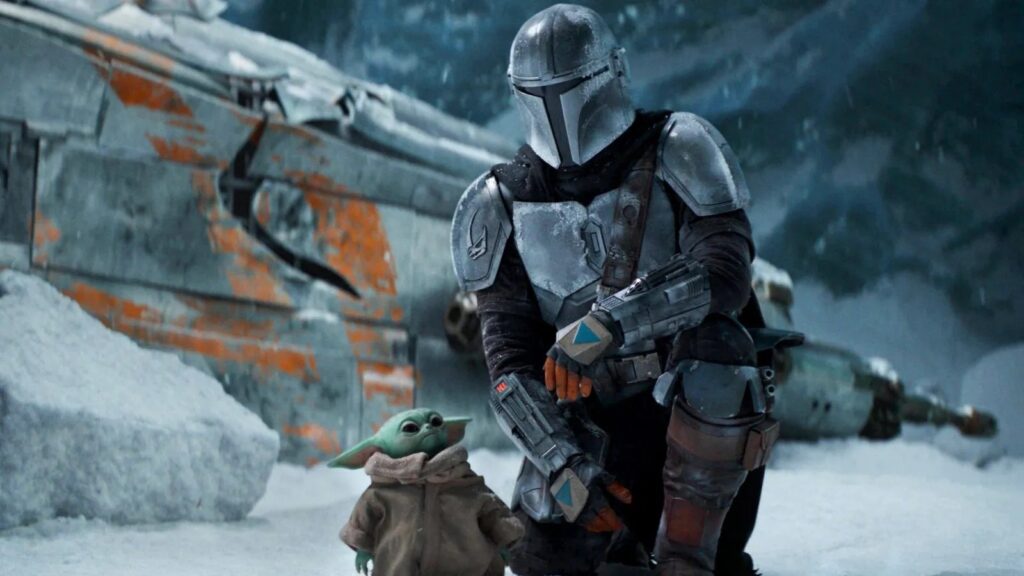
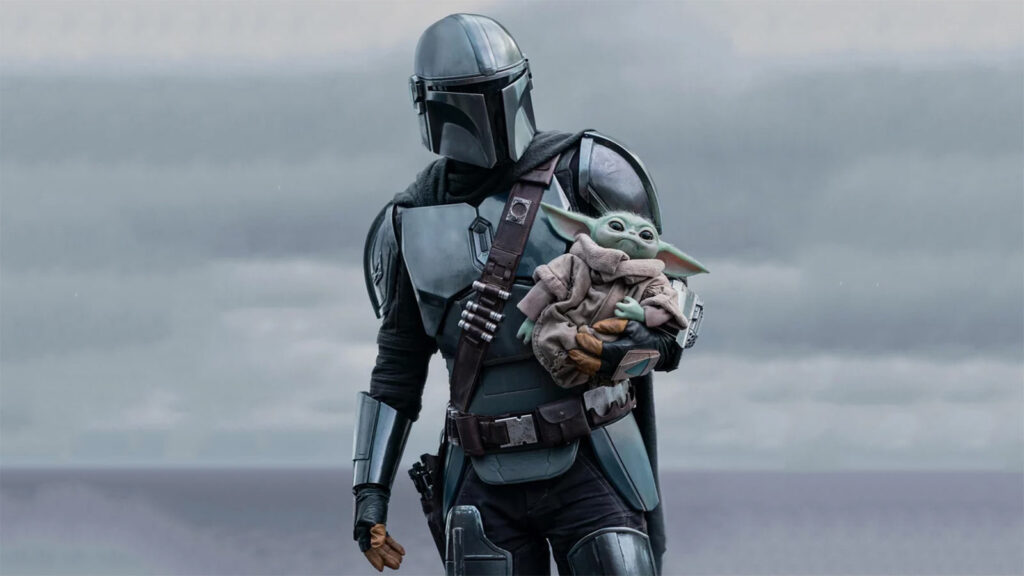
The Mandalorian is accompanied by his ‘apprentice’ , Grogu aka ‘Baby Yoda’ aka ‘Groglet’ ( © Mr Sunday Movies). Grogu is a force sensitive member of Yoda’s mysterious (i.e. still unnamed) species. ‘Mando’ has taken Grogu under his wing because: Lone Wolf and Cub. It’s a macho, brotherly love, that dare not speak its name.
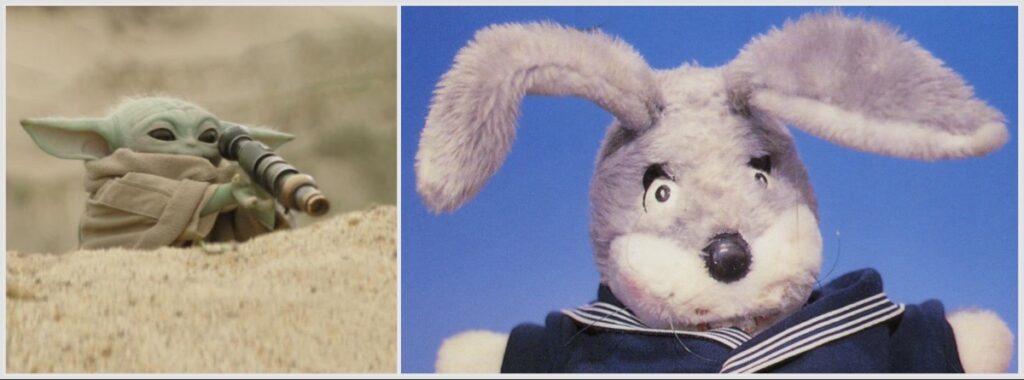
Grogu’s endearing features include big, winsome eyes, large, pixi-like ears, a voracious aptitude and a tendency to make squeaky noises while dribbling green bile. He reminded me of those hosts for children’s television on ITV in the 1970s – a kind of intergalactic Gus Honeybun, the puppet star of birthday greeting shows on Westward Television, recently returned to the limelight in partnership with TV presenter Judi Spiers and Children’s Hospice South West.
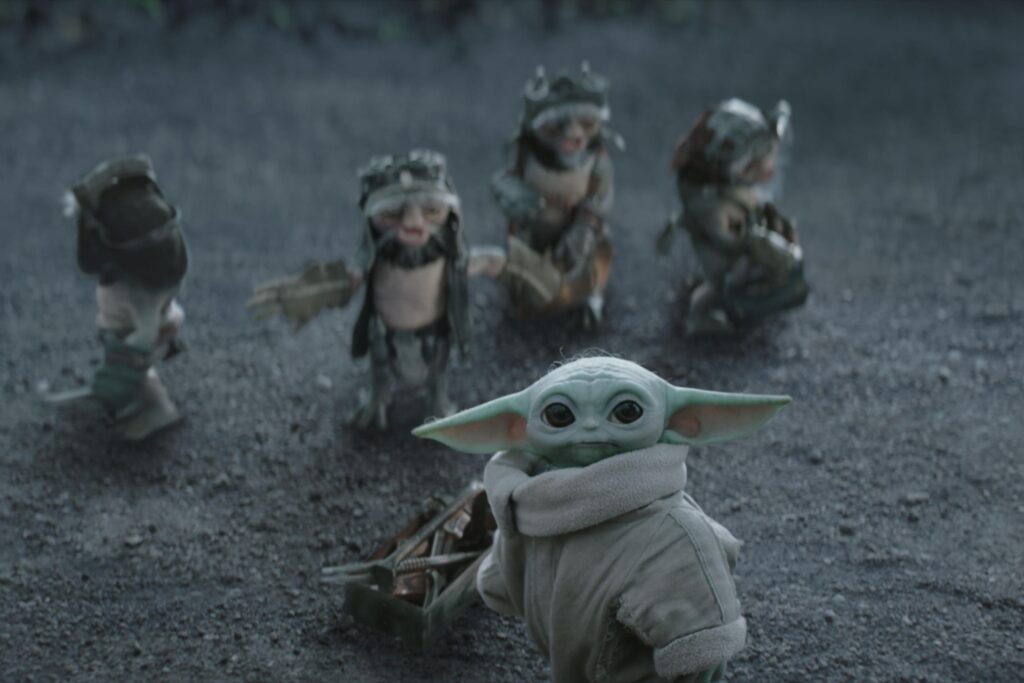
For this adventure, ‘Mando’ is assisted by Garazeb Orrelios, from Star Wars Legends animated series and a group of tiny Anzellian mechanics who become close buddies with Yoda. You can bet that they get up to all kinds of antics while demonstrating that even the smallest critters can have big hearts and be extraordinarily brave in the face of the usual Star Wars’ creatures.
The fauna are well realised, particularly Gatori (voiced by Stephen McKinley Henderson), a fisherman hanging out in the bayous of the planet of the Hutts (Nal Hutta). But the stand out ‘monsters’ are two big robots, who move in a satisfyingly jerky style that imitates stop-motion.
The show stopper is a hugely unpleasant white snake, with a mouth that drips poison and is the Hutt twins’ answer to Jabba’s Rancour. The creature first appeared in the 1980 film Star Wars Episode V: The Empire Strikes Back. It was later identified as “Dragonsnake” in an episode guide.
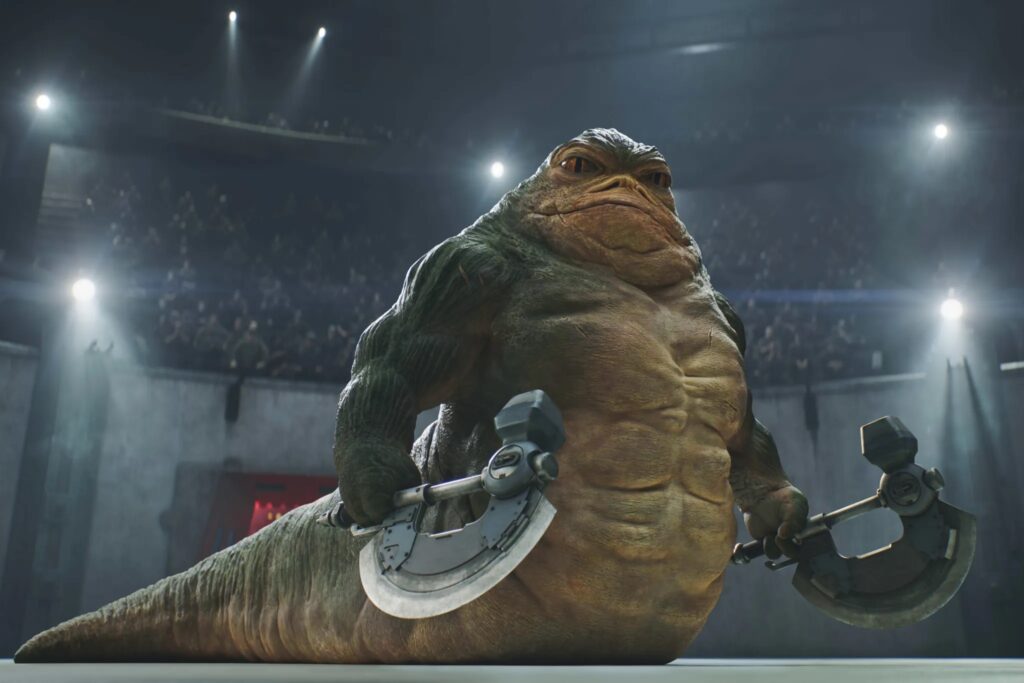
You’ll spot a few in-jokes if your memory of the Star Wars lore is up to snuff. There’s a funny moment when they showed ‘Mando’ a picture of Rotta. That’s how Rotta looked the last time we saw him in the Clone Wars animations, when Anakin Skywalker and Ahsoka Tano traveled to Teth to rescue him.
When trapped in an arena, The Mandalorian and Rotta battle a bunch of creatures last seen as holographic, hyper-active chess pieces in Star Wars. I forgot the name of the game so I cheated and did a search for “Star Wars monster fighting holograph game”. It’s called Dejarik. A shot of a large creature smashing another into the ground is a homage to Chewbacca’s finishing holochess move.
Despite being set in the Star Wars universe, The Mandalorian and Grogu doesn’t have the ‘feel’ of a Star Wars movie. The usual physicality of the sets, props and characters seems lost behind a murky, glossy, post production, sheen. At times, it looks like we are watching events as if through the laminated pages of a fairy tale. But maybe that’s what Director John Favreau was going for.
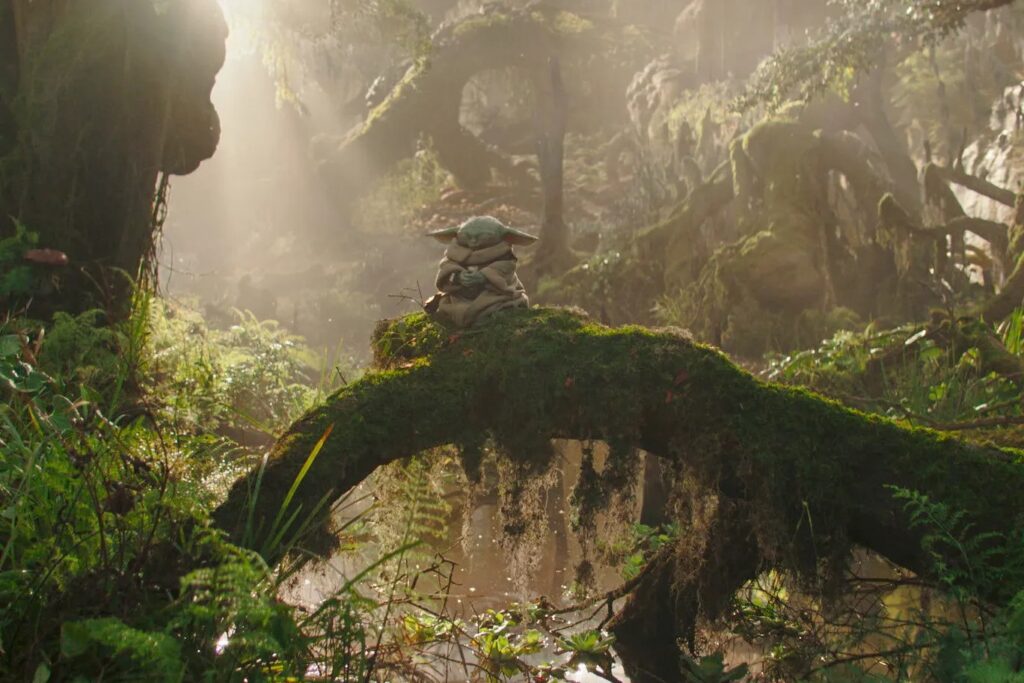
Ludwig Göransson’s score makes even the most familiar scenes feel fresh. The music picks up on the fairy tale feel of scenes with Grogu struggling to save Mando’s life while braving various swamp nasties. This turn of events seem to have been inspired the Lone Wolf chapter Baby Cart at the River Styx, when Ogami Itto gets gravely injured, and his son is forced to hide him and nurse him back to health.
The city of Shikari is definitely more Edward Hopper than George Lucas. I associate the Star Wars universe with being grim and gritty. This film is set only five years (or maybe eight) after the Empire was defeated, so shouldn’t things look a bit more battered? After all, in 1970s’ London you could still see areas of bomb damage from the last World War.
Star Wars’ fan-critics have complained that the story is too low stakes. Wake up! The entire Star Wars saga has become low stakes. Characters don’t die, they return as ‘Force Ghosts’, even without Jedi training. The ‘“big-bad” Emperor was chucked into the seething inferno at the heart of a Death Star and somehow came back. How can anyone be a stakeholder in a world where, as Luke tells Leia in Star Wars: The Last Jedi, “No one’s ever really gone.”?
There are stakes in The Mandalorian and Grogu. Even if Grogu doesn’t exactly have a story arc, and despite looking like a glove puppet, we actually end up caring about his fate. And we care about the fate of Rotta, although hearing him speak English was jarring. I want my Star Wars characters to need subtitles.
This is by far the most fun from the Star Wars’ Universe I have had in a long time. The film is fun. There’s always something on the screen to enjoy with the added bonus that seeing it in the cinema is really, really cool.
Tim Robins
Star Wars: The Mandalorian and Grogu is in cinemas now
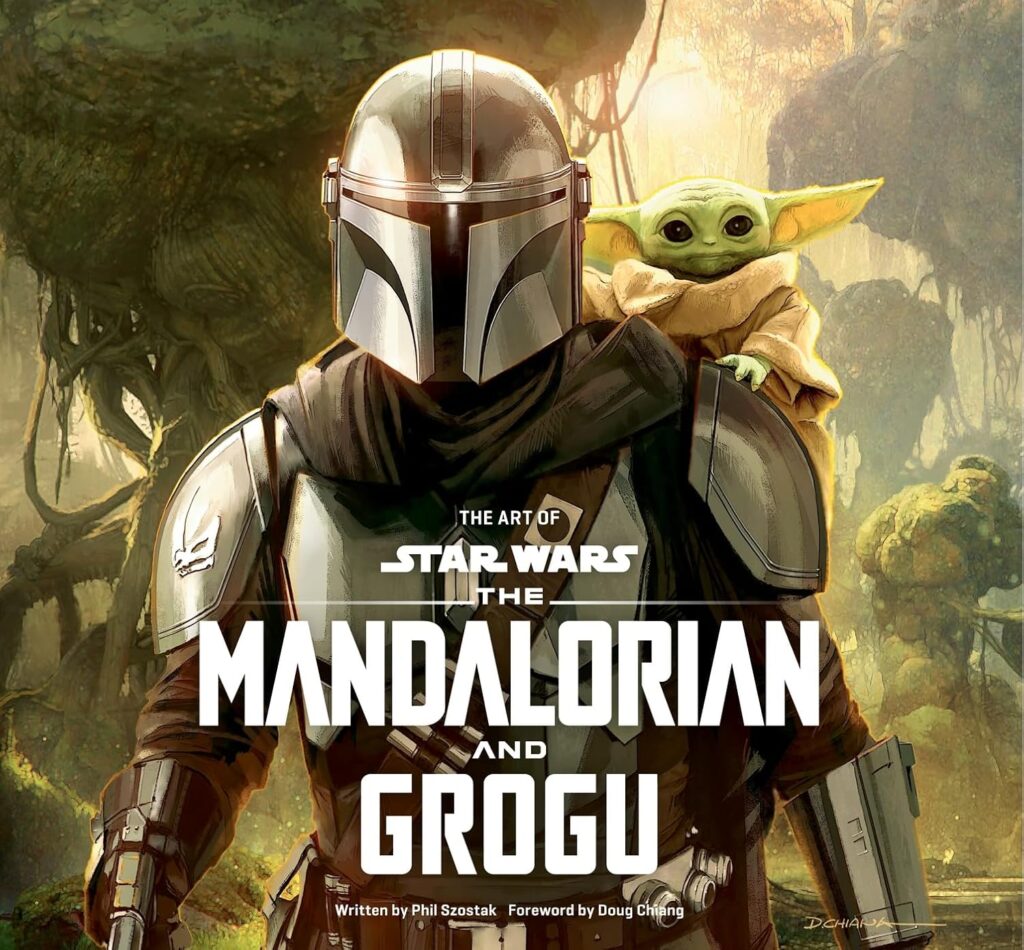
Public by Abrams, this official behind-the-scenes companion to the film, by Phil Szostak, The Art of Star Wars: The Mandalorian and Grogu takes fans behind the scenes of the first Star Wars theatrical release in seven years. It features concept art, sketches, and interviews with key cast, crew, and creatives, it provides readers with an exclusive look at the art created for the newest Star Wars film and the stories behind its characters, locations, and vehicles.
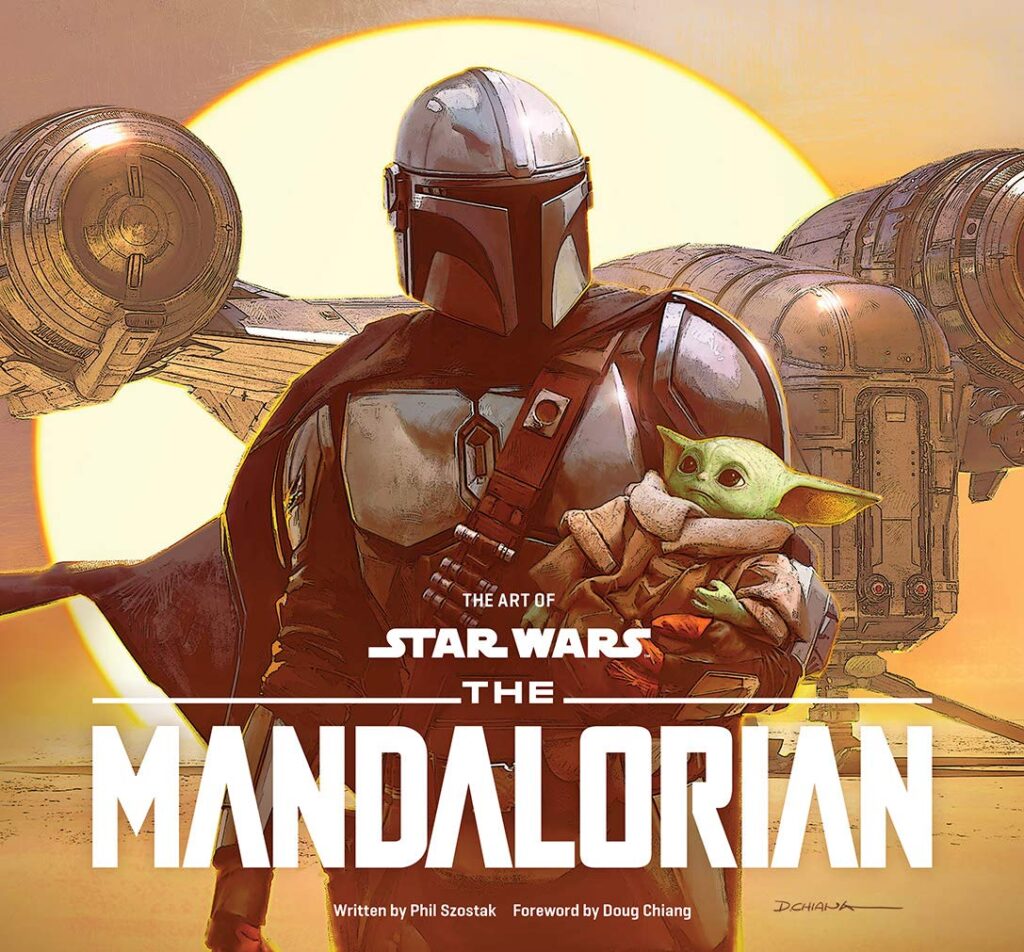
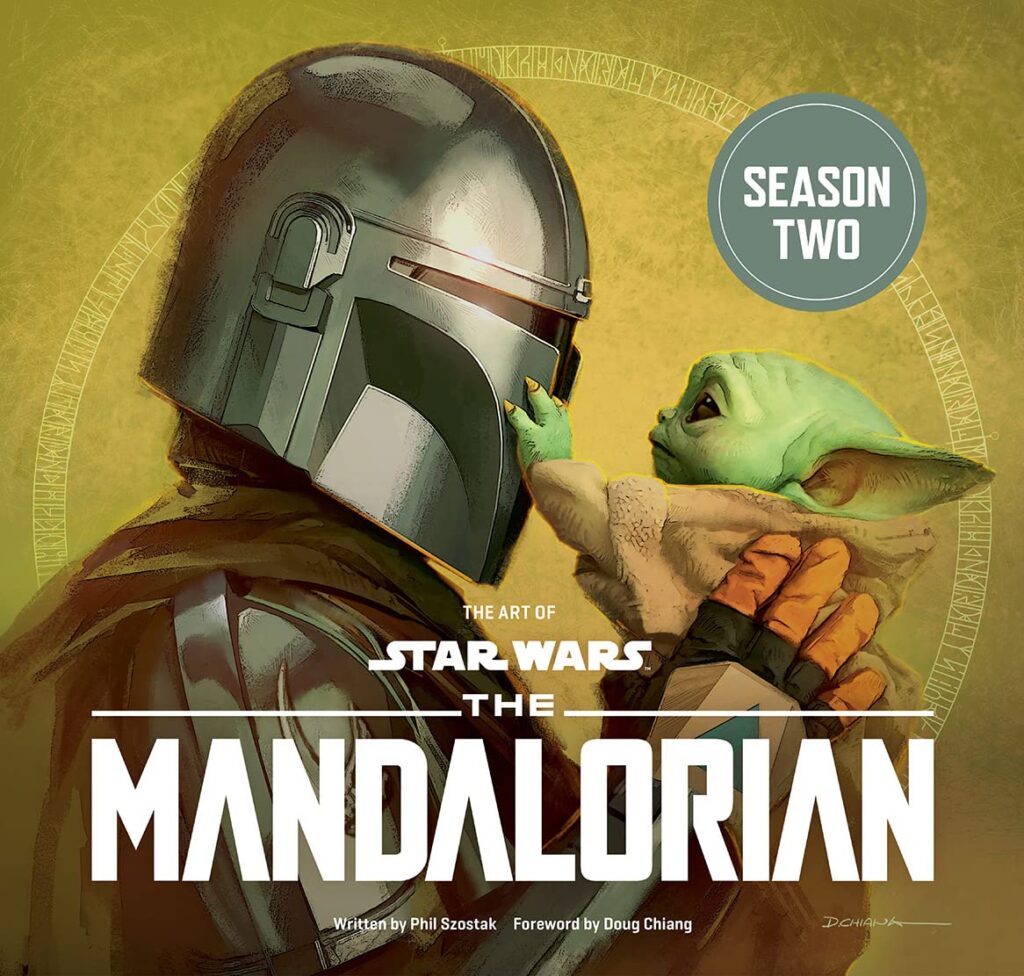
Lucasfilm creative art manager Phil Szostak has worked in conjunction with Star Wars art departments since 2008. A graduate of the School of Visual Arts in New York, Szostak ran the JAK Films Art Department on Skywalker Ranch for more than three years before joining the narrative design team on LucasArts’ Star Wars: 1313. He is also the author of The Art of Star Wars: The Rise of Skywalker (Abrams, 2019), The Art of Star Wars: Andor ( The Complete Series), The Art of Star Wars: The Mandalorian (Season One) (Abrams, 2020), and The Art of Star Wars: The Mandalorian (Season Two) (Abrams, 2022)
- About the Author
- Latest Posts

A freelance journalist and Doctor Who fanzine editor since 1978, Tim Robins has written on comics, films, books and TV programmes for a wide range of publications including Starburst, Interzone, Primetime and TV Guide.
His brief flirtation with comics includes ghost inking a 2000AD strip and co-writing a Doctor Who strip with Mike Collins. Since 1990 he worked at the University of Glamorgan where he was a Senior Lecturer in Cultural and Media Studies and the social sciences. Academically, he has published on the animation industry in Wales and approaches to social memory. He claims to be a card carrying member of the Politically Correct, a secret cadre bent on ruling the entire world and all human thought.
Categories: Features, Film, Other Worlds, Reviews, Star Wars
 Terrific Thessaloniki! A Special Report by James Bacon
  In Review: Star Wars: The Rise of Skywalker (Spoiler Warning!)
 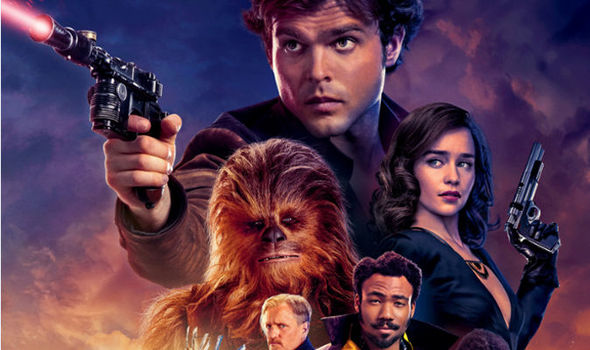 In Review: Solo – A Star Wars Story
Hmm. Not sure that’s what low stakes means, Tim. Alderaan never got “un-blown-up”, for instance–that’s the stakes people hoped for, I guess.