In an essay by Ignacio Fernández Sarasola, originally intended as a centrepiece for IJOCA 27-2, now online on the International Journal of Comic Art blog, has delivered a deep-dive into post World War Two British newspapers and microfilms, revealing how the press strengthened public opinion against “American” or “horror” comics.
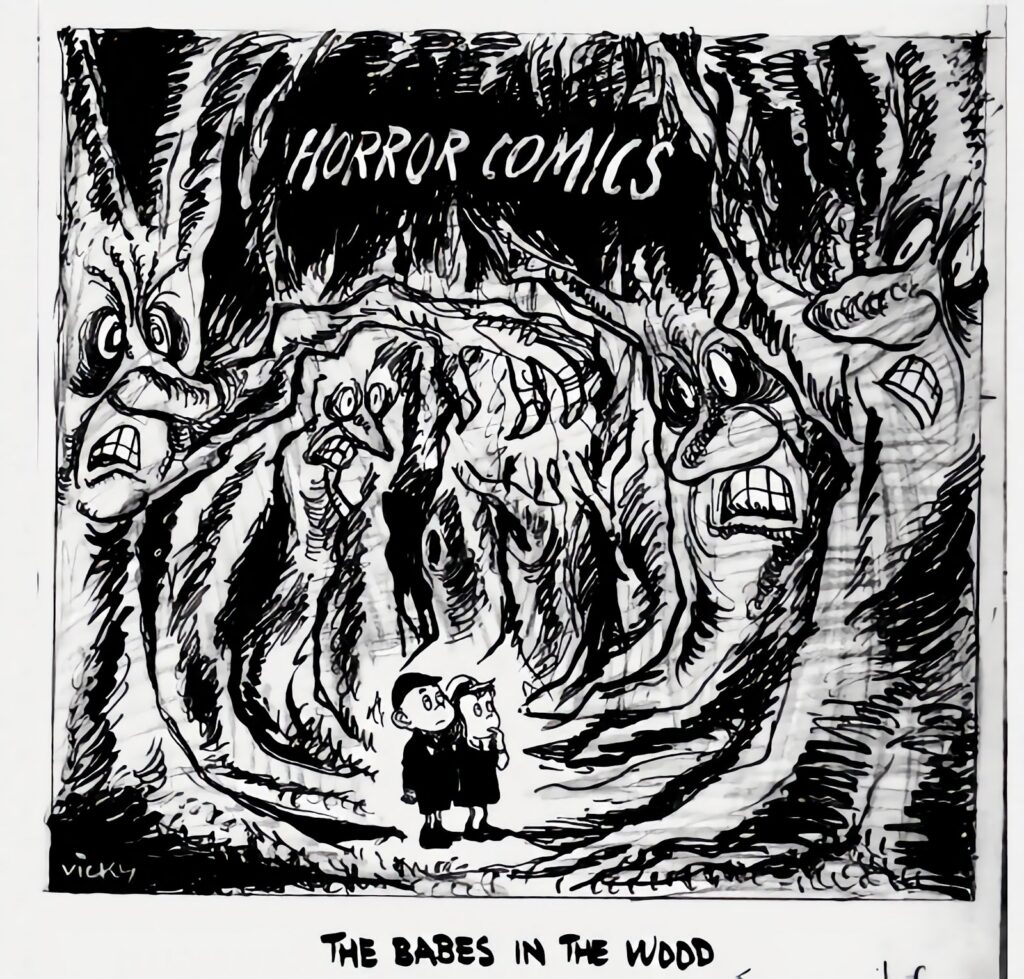
The essay, titled “The Role of the British Press in the Anti-Comic Campaign”, includes plenty of rarely seen examples of editorial and cartoon critiques of the comics, and plenty of suggestions for further reading, too.

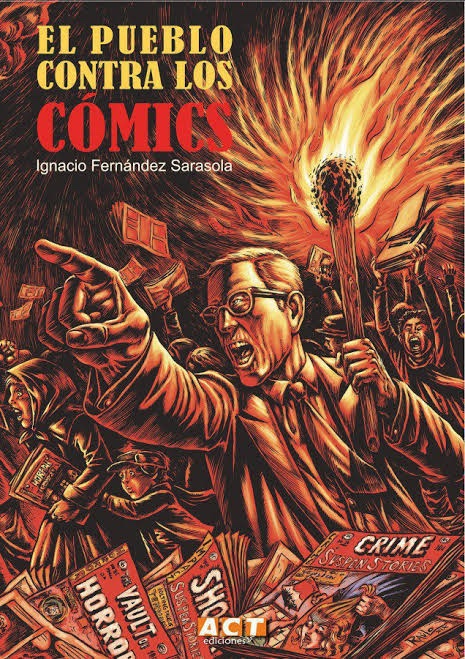
Ignacio Fernández Sarasola is a Spanish comics researcher and a Professor of Constitutional Law at the University of Oviedo, author of El pueblo contra los cómics: Historia de las campañas anticómic de Norteamérica a Europa (“The Public Against Comics: A History of Anti-Comic Campaigns From North America to Europe”), published in Spanish in 2019 by Tebeosfera, with a cover by Raúlo Cáceres. Copies are scarce in the UK, you can find copies on Spanish bookshop web stores.
“This essay was originally intended as a centrepiece for IJOCA 27-2,” explains editor Michael Rhode, “the forthcoming edition, which, sadly, after the death of founder/ publisher/ champion John Lent, is not now appearing, as I understand.”
“The press played a prominent role in the anti-comic campaign that took place in England in the 1940s and 1950s, Sarasola notes. “In fact, the starting point of this campaign can be traced back to the newspapers, when Reverend Marcus Morris [founder of Eagle comic with artist Frank Hampson] used the Sunday Dispatch as a pulpit to accuse American comics of promoting youth violence and crime.
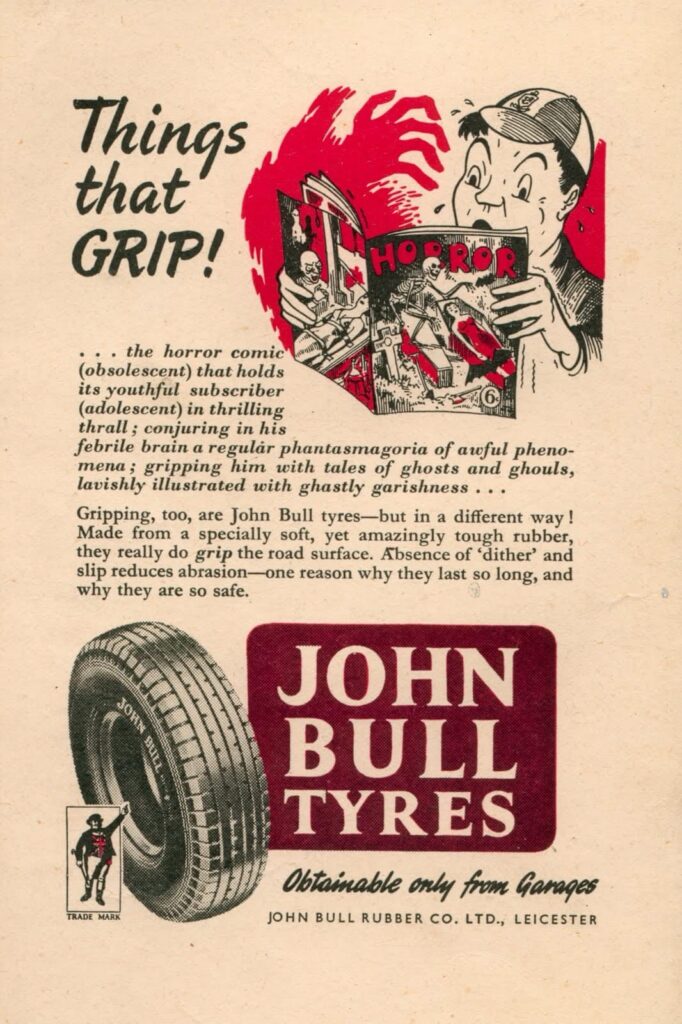
“However, the prominence of the press in the anti-comic campaign may seem paradoxical, considering that the animosity shown by newspapers towards comic books was identical to that which they themselves had suffered since the 1930s for publishing comic strips.”
Ignacio notes that when the Harmful Publications Act, aimed at restricting the circulation of comic books, was debated in England, several Tory MPs requested that the law also control the content of comic strips in newspapers, specifically mentioning the case of the Daily Mirror, highlighted for “Jane” by Norman Pett.
“The proposal sparked considerable controversy, as it was considered that limiting the circulation of comic books was one thing, but adopting measures that could affect the daily press was quite another,” Ignacio notes. “This was partly because comic books were not considered to be a genuine exercise of press freedom.
“But, in addition, it was considered that allowing control over newspapers could be extremely dangerous, as it opened the door to politically biased censorship: not surprisingly, the Daily Mirror was a left-wing newspaper that was highly criticised by the Tories, so the intentions to restrict it could also be politically motivated.”
Moral criticism, meanwhile, focused on the idea that comics were destroying the ethical standards of British society. This criticism was particularly voiced by clergymen, and the press also helped to spread it.
“Thus, it was said that comics showed perversion and depravity,” Ignacio comments, “contaminating the impressionable minds of young people and preventing them from distinguishing between good and evil.”
Scary stuff!
• Read Ignacio Fernández Sarasola’s essay, The Role of the British Press in the Anti-Comic Campaign
Head downthetubes for…
• Follow Ignacio Fernández Sarasola on Facebook
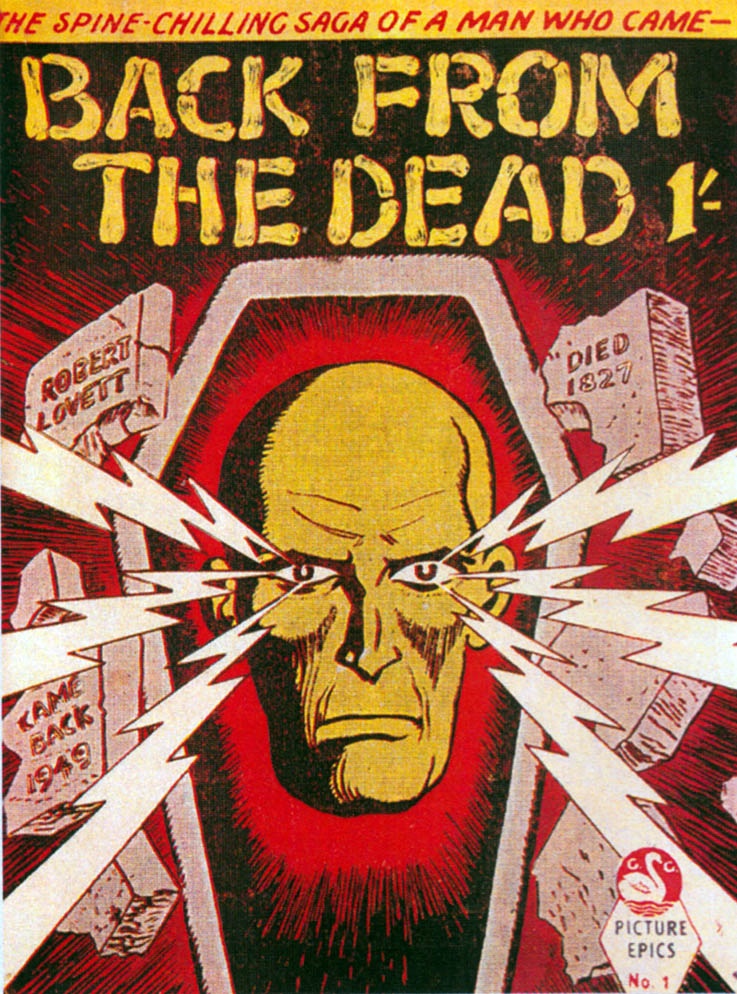
• downthetubes: The Comics That Shook 1950s Britain discovered in the National Archives
• Eagle Censored? Investigating bizarre claims during Ireland’s 1950s war on comics
• A Sensual Cesspool of Iniquity is available from Limit Break Comics and will be on sale at Dublin Comic Con, as well as on Amazon.co.uk (Affiliate Link) | Amazon.com | Amazon.ie
• The Leprechaun, and the Irish War on Comics by James Bacon
• Blimey! The year Britain got the Horrors over Horror Comics by Lew Stringer
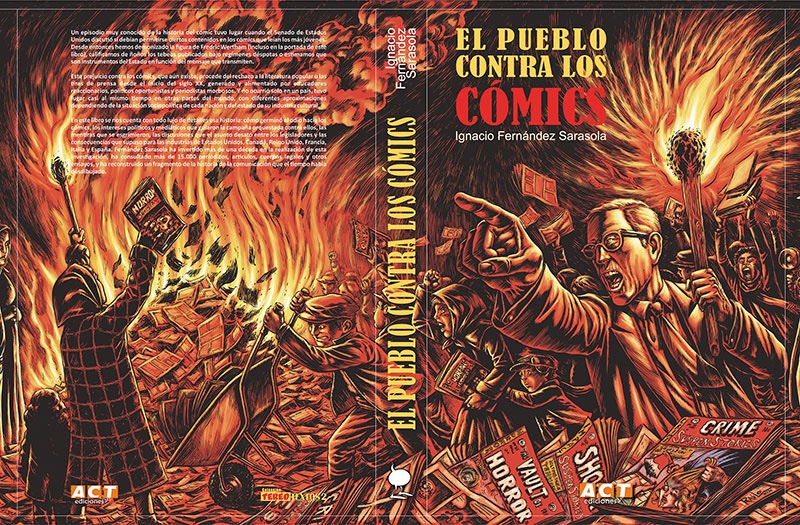
El pueblo contra los cómics: Historia de las campañas anticómic de Norteamérica a Europa (“The Public Against Comics: A History of Anti-Comic Campaigns From North America to Europe”) by Ignacio Fernández Sarasola | Cover by Raúlo Cáceres
The Tebeosfera Cultural Association (Spain), led by Manuel Barrero, published El pueblo contra los cómics (“The People vs. Comics”) in 2019. Fernández Sarasola spent over a decade conducting his research for the 520-page book, consulting more than fifteen thousand newspapers, articles, legal texts, and other essays to reconstruct a fragment of communication history that time had obscured.
The anti-comic campaigns, from North America to Europe, are a well-known episode in the history of the Ninth Art, debates in the United States Senate, for example, considering whether certain content should be permitted in the comics read by young people.
“Since then, we have demonised the figure of Fredric Wertham (even on the cover of this book),” noted publisher The Tebeosfera Cultural Association, “who dismissed comics published under despotic regimes as childish or insipid, or viewed them as instruments of the State, depending on the message they convey.
“This prejudice against comics, which persists to this day, stems from a rejection of popular literature and newspaper strips that began in the early 20th century, fuelled by reactionary educators, opportunistic politicians, and sensationalist journalists. It did not happen in just one country; it took place almost simultaneously in other parts of the world, with varying approaches depending on each country’s sociopolitical situation and the state of its cultural industry.”
El pueblo contra los cómics recounts that history in great detail: how hatred toward comics took root, the political and media interests driving the orchestrated campaign against them, the lies that were propagated, the debates that erupted among lawmakers, and the consequences for the industries in the United States, Canada, the United Kingdom, France, Italy, and Spain.
With thanks to Paul Gravett
- About the Author
- Latest Posts

John is the founder of downthetubes, launched in 1998. He is a comics and magazine editor, writer, and Press Officer for the Lakes International Comic Art Festival. He also runs Crucible Comic Press.
Working in British comics publishing since the 1980s, his credits include editor of titles such as Doctor Who Magazine and Overkill for Marvel UK, Babylon 5 Magazine, Star Trek Magazine, and its successor, Star Trek Explorer, and more. He also edited the comics anthology STRIP Magazine and edited several audio comics for ROK Comics; and has edited several comic collections and graphic novels, including volumes of “Charley’s War” and “Dan Dare”, and Hancock: The Lad Himself, by Stephen Walsh and Keith Page.
He’s the writer of comics such as Pilgrim: Secrets and Lies for B7 Comics; “Crucible”, a creator-owned project with 2000AD artist Smuzz; and “Death Duty” and “Skow Dogs”, with Dave Hailwood.
Categories: British Comics, Comics, Creating Comics, downthetubes Comics News, downthetubes News, International Comic News, US Comics
 Voting opens for the 2025 Broken Frontier Awards