Early in the genesis of the creation of Dan Dare and EAGLE, the title’s editor Marcus Morris and artist Frank Hampson encountered Lieutenant Commander Terence Beresford Horsley RN – a journalist, glider pilot, broadcaster and newspaper editor. Was his inspirational life story an influence on the space hero’s early development?
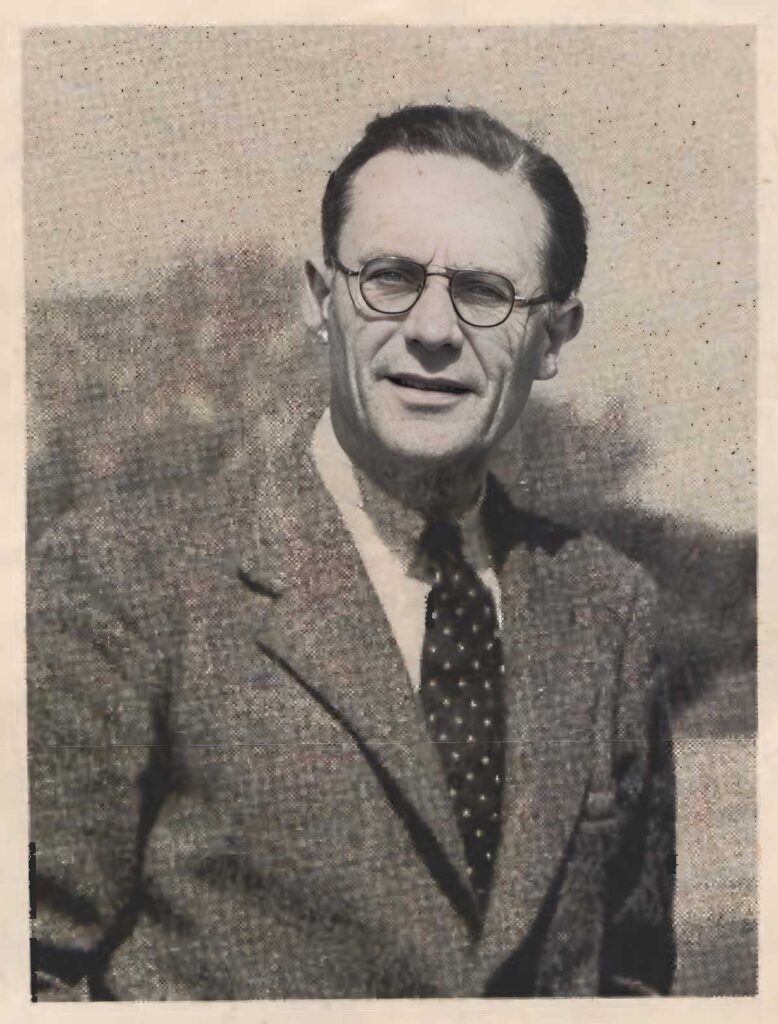
But for a tragic accident, however, this intriguing, often overlooked player in Dan Dare’s evolution might have seen a different, adult take on the space hero – as a newspaper strip, not a groundbreaking weekly comic star.
It’s well known, among EAGLE fans at least, that the short-lived Society for Christian Publicity, formed to take control of his acclaimed but loss making magazine, The Anvil, had plans to perhaps produce a new children’s comic, supported by the bishops of Blackburn, Liverpool and Coventry. Their plans were reported by several newspapers, including the Daily News on 28th January 1949 (“A comic with a serious aim” – subscription to British Newspaper Archive required for this and other links in this article), and Daily Mirror on Monday 31st January 1949 (“Bible people will feature in new comic strips”, an article published right alongside the paper’s often strip, “Jane”).
“It won’t be a dull comic just because it is religious,” insisted Marcus Morris talking to the Daily News, as Secretary of the Society. “Everyone says ‘Why doesn’t the Church do something to put itself across’. We are the first group to get down to that. We are here to issue propaganda, not for the Church of England, but Christianity.”
Marcus Morris champions an alternative to horror comics
The reports about a new children’s comic intrigued Southport journalist Norman Price, and the following month he met Morris, and helped him further his desire to bring a children’s comic to life by co-writing an article, “Comics That Take Horror Into The Nursery“, an opinion piece for the Sunday Dispatch published Sunday 13th February 1949 decrying “horror comics” – a further step in the process that would lead to the creation of the weekly boy’s comic published by Hulton Press.
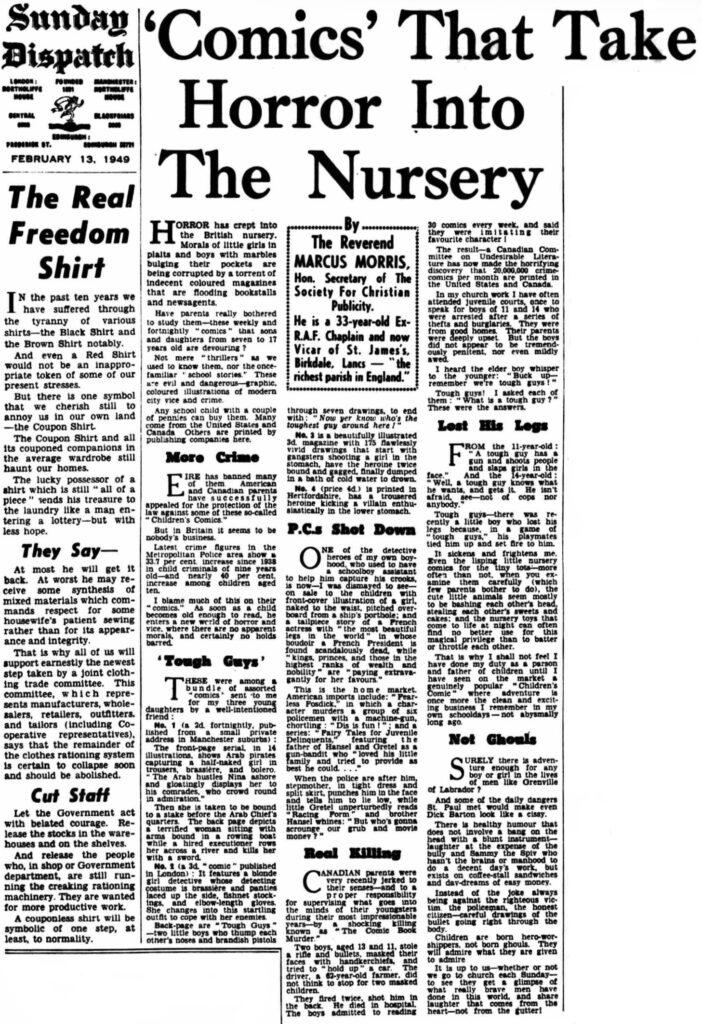
Morris’s article provoked a strong reaction from its readers; letters of support flooded into his home. Buoyed by the positive response, Morris began developing his ideas for a comic to compete with the horror and crime comics, both American and home grown, that were perceived, rightly or wrongly as corrupting influences on children.
He was supported in his efforts by The Anvil’s assistant editor, the Reverend Chad Varah, future founder of The Samaritans who, in his then new capacity as vicar of St Paul, Battersea in London, was researching children’s favourite comics and, the South Western Star reported on Friday 4th March 1949, already writing comic strips for the planned new title.
Comics “malign influence” not a view universally shared
As an aside, it should be noted that Marcus concerns about comics being some malign force was not universally shared. With reports of numerous “research groups” investigating children’s comics, Gordon Murray provided a robust defence, in an article for the Daily News, published Wednesday 2nd March 1949, praising titles such as CHIPS and Rainbow.
Research into children’s comics by a sub committee of the National Council of Women, still active today in the UK, found that of some 100 comics – American, Australian, South African, British and, intriguingly, Jamaican – members came to the conclusion that the majority published in Britain were harmless, a conclusion reinforced, the Richmond Herald of Saturday 9th April reported, by to “a big publishing firm” that told the sub-committee “a code of rules was followed as far children’s comics were concerned”, one smaller publishers were not aware of. In the opinion of the investigators British comics generally were better and more wholesome than those from Canada and America.
By 1953, Morris, by then editor of EAGLE, had changed his attitude to children’s comics, declaring at an event in York: “People nowadays are too apt to blame children’s comics for juvenile delinquency and there Is no evidence for it I ask for the removal of prejudice – do not let us condemn comics out of hand.” It was a view he offered at several meetings the same year, including an event recorded by the BBC in Reading in March, broadcast 28th March 1953, part of a panel chaired by John Newsom, alongside author Enid Blyton, the co-owner of World Distributors, Sydney Pemberton, the publisher and distributor of American comics Arnold Miller and Dr. Michael Lewis. Blyton declared bad comics would affect bad children.
However, concerns about the content of some comics, both imports and homegrown, were eventually discussed at the highest levels in 1954, gaining the attention of then Prime Minister Winston Churchill, that led to the 1955 Parliament passed The Harmful Publications Act (Children and Young Persons), seeking to protect the nation’s innocence).
Introducing “Lex Christian”
While Morris’ plans for a new children’s comic progressed, he worked up a concept that Frank Hampson drew: a strip called “Lex Christian” – meant not for children, but adults.
Marcus claimed that Lex, a “tough fighting parson in the East End of London”, who “went quite a long way towards evolving the character of Dan Dare”.
(It’s for this reason, perhaps, that the Dan Dare Corporation, for example, cites Morris as co-creator of Dan Dare, although it was Frank Hampson and his versatile creative team of artists who would go on to fully develop the character into the space adventure hero we know).
Histories of the early days of EAGLE note Morris couldn’t sell the strip as it was, and their intended publisher, Terence Horsley, editor of the Sunday Empire News, died on Sunday 24th April 1949 in a glider accident at Great Hucklow, Derbyshire, before they could improve it.
As Peter Hampson, Frank Hampson’s son relates: “Unperturbed they’d not launched the strip… they worked to create a complete comic. Lex became a flying padre, ‘the Parson of the Fighting Seventh’.
“That still didn’t seem right, so Marcus suggested he should journey into space. They then felt the name Lex Christian seemed less than perfect.”
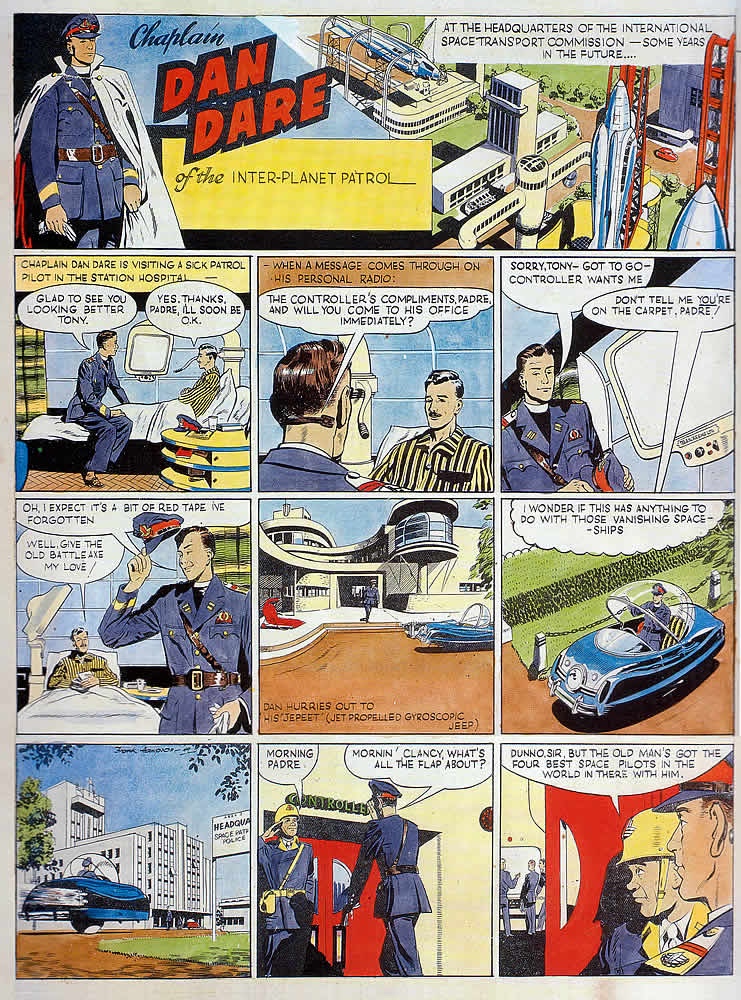
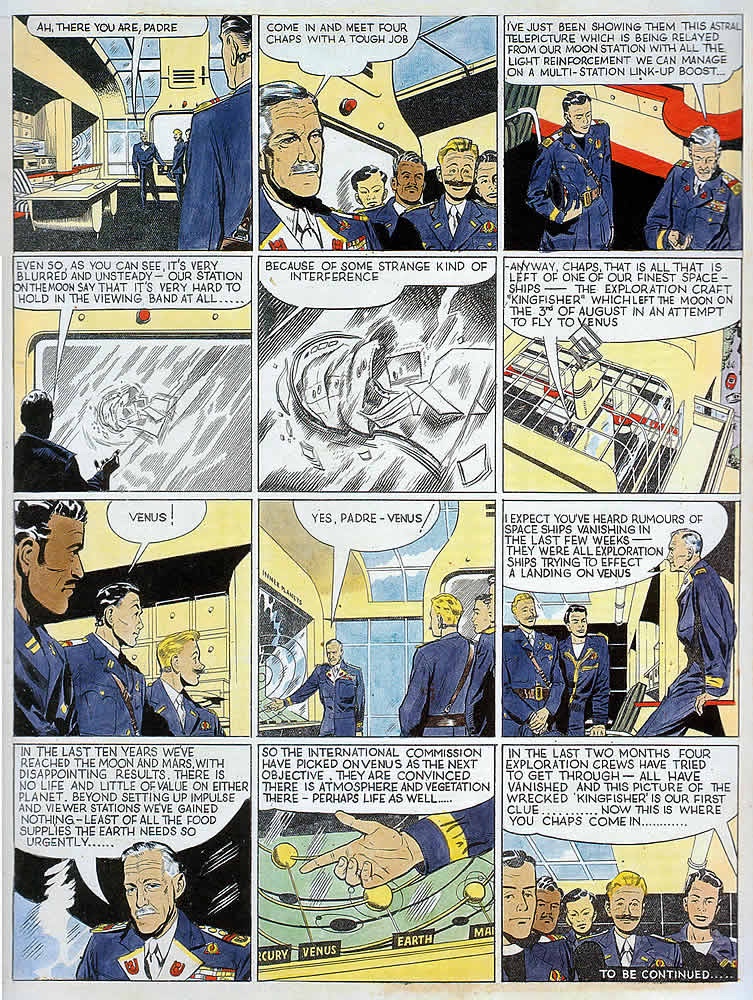
An early version of “Dan Dare” in an EAGLE dummy that Morris took to publishers, that led to Hulton Press, also publisher of Picture Post, to commission the title, features Dan as a priest, one step removed from the “Lex Christian” concept.
“Lex Christian” became “Chaplain Dan Dare of the Interplanet Patrol”, complete with dog-collar and cape. Finally, Peter Hampson relates, his father, who had also dreamed of writing about a woman detective Dorothy Dare, decided to drop the overt Christian message entirely and call him simply, Colonel Dan Dare.
“And so Dan Dare – the character whose adventures were to form the front page of the new comic and become ‘”the strip that sold the Eagle“, was born. His religious origins may now be hidden – but they were still undeniably there; Dan was named after Hampson’s mother’s favourite hymn, ‘Dare to be a Daniel’, and the comic’s title, Eagle, inspired by a large eagle-shaped lectern, wings outspread to support the bible, which Hampson’s wife, Dorothy, had mused upon in church.”
Who was Terence Horsley?
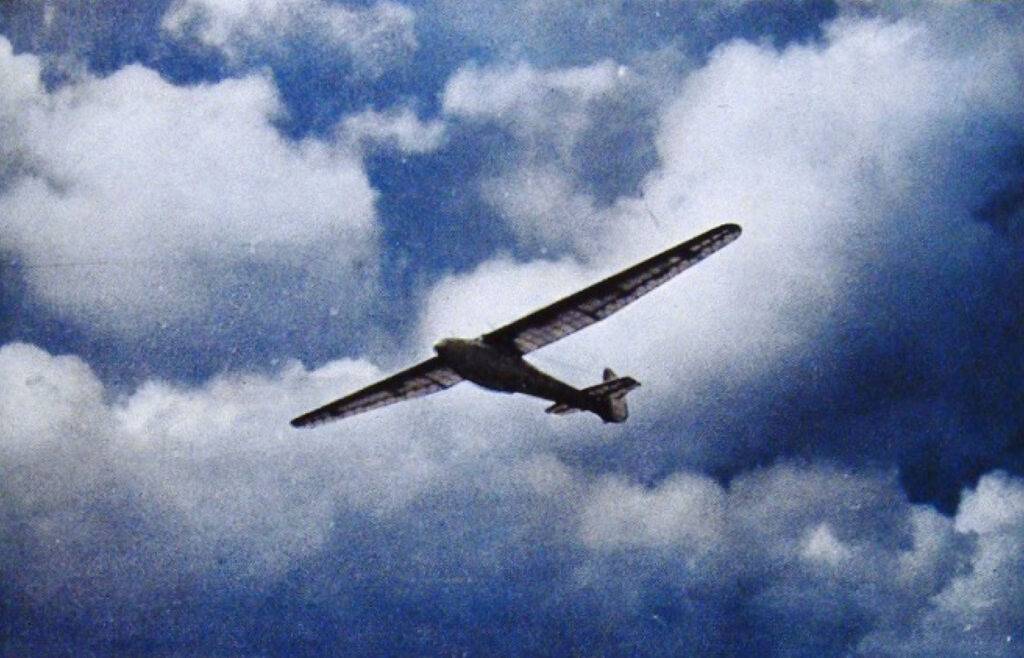
But here’s where EAGLE’s early history gets interesting, although, admittedly, some speculation on my part begins. After reading tributes to Terence Horsley after his death, via the British Newspaper Archive, I discovered he was one of Britain’s leading sailplane pilots, who pushed for glider use as part of Britain’s battle against Nazi Germany during World War Two.
It gave me pause to wonder if his widely reported life story didn’t inspire Morris and Hampson to pay him some homage, albeit indirectly, in the character of Dan Dare as we know him.
There is one tantalising clue to support my theory: that biographies of Dan Dare state that he was educated at Rossall School near Fleetwood, Lancashire, although this is never stated in the strip itself. Can it really be coincidence that a genuine old Rossallian was, apparently, Terence Horsley, who lived, for a time, in Fleetwood? (He was also, however, noted by several newspapers on his death as being educated at Rugby).
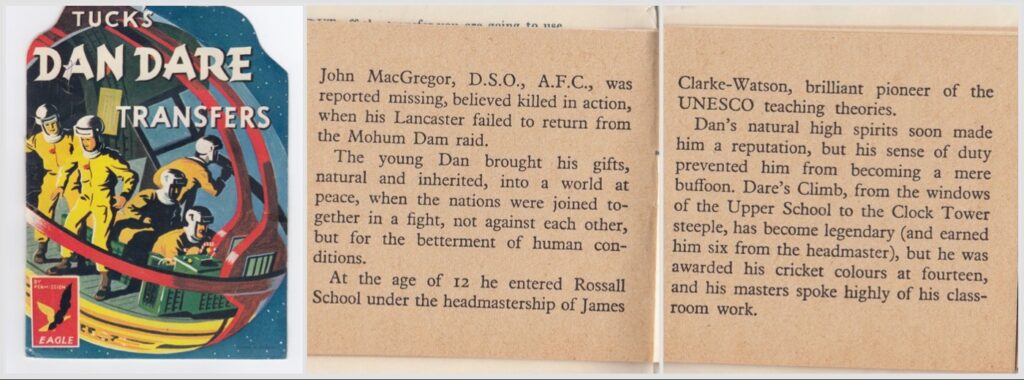
Given Horsley’s connections to Lancashire, Horsley also, it appears a member of the now defunct Lancashire Gliding Club, was the “Lex Christian” pitch more than just hopeful correspondence with the editor of the Sunday Empire News? Did Morris and Hampson meet him in person to pitch the idea?
Unfortunately, at present, we don’t know. Frank’s son, Peter Hampson is unable to shed any light on a possible connection, although early issues of Eagle Times, the Journal of the Eagle Society, may yet shed more light on this intriguing man.
Living with Eagles, the biography of Marcus Morris, gives him only passing mention, noting of the creation of “Lex Christian” that “Marcus and Frank were pleased with the result and Norman Price sent them to see Terence Horsley of the Empire News. They thought their strip cartoon infinitely superior to other samples he showed them. Horsley was enthusiastic and encouraging but suggested that their strip needed a little more work on it and they should come and see him again. Before they could do so, he was killed in a gliding accident on 24th April 1949.”
What we can tell you, for now, is that Lieutenant Commander Terence Beresford Horsley RN, born in West Hartlepool, was a keen sportsman, naturalist and glider pilot, who went to sea aged just 16 and worked his passage around the world; and flew Swordfish and other aircraft with the Fleet Air Arm, stationed in Scotland, during World War Two for three years, becoming a Lieutenant Commander. He wrote articles under the nom-de-plume of “Stringbag” and published a series of fascinating books on naval air power, gliding, shooting, fishing and flying, and presented programmes on gliding on the radio.
Prior to the war, among many articles he wrote, including praise for the launch of cheap Cherry Tree Books bringing literature to the masses, in 1936 he cautioned on the dangers of air war and the power of bombing, in an article syndicated to the Western Mail. He would subsequently pen a gripping article on air combat between fighter planes and bombers in an item for the Newcastle Chronicle, published in 1941.
He worked for the North Mail and Evening Chronicle in Newcastle, before going to the Dally Dispatch in Manchester. He was appointed editor of the Sunday Empire News in March 1947, when editor of the Manchester Evening Chronicle, a post he had held since January, 1946.
To give you some idea of his extraordinary character, in an article for Sailplane and Glider published in December 1970, A.E. Slater looked back at the magazine’s war years, recounting how, when war broke out, the London Gliding Club had been slopped from flying after 25th November 1939. The UK was the only country in the British Empire where gliding bad been forbidden (the article was headed “Verboten”), an article in the first issue of Sailplane and Glider published in 1940 noted, ruefully, that in Germany gliding had started again after a temporary stoppage, with 1,000,000 youths aged 15 to 18 being trained to C Certificate standard, according to The Daily Telegraph.
“It looked like the end of war-time gliding,” Slater wrote, “but the authorities reckoned without Terence Horsley, by then a well-known journalist in Lord Kemsley’s newspaper organisations. He had somehow discovered the secret telephone number of Fighter Command, so he rang up, and the man at the other end mistook Horsley for somebody he knew with a similar-sounding name, so did not immediately ring off.
“By the time the telephone conversation ended, Terence Horsley had got permission from Fighter Command for the London Club to fly at Dunstable during the following weekend only. For five more weekends we not only got permission to fly but, by the fifth, the club was told that it could fly any day of the week without bothering to get special permission, so two future instruction courses were arranged.”
The pardon didn’t last long: a telegram from the Air Ministry came eventually, forbidding flight. Fighter Command, apparently, bad no authority to let the Gliding Club do so. On top of this, on the same weekend, the German Army began advancing westwards. The “Phoney war’ had ended and the ‘Blitzkrieg” had begun.
Horsley died aged just 47, while he was piloting an “Olympia” gilder owned by newspapers owner Viscount Kemsley on the day of his death, which had just been launched. After rising to 400 feet, the sail plane failed to gain further height and crashed to the ground, 200 feet over the edge of the flying field. Wreckage was strewn over three fields.
Just a week previously, he had declared on air that “The sky is full of surprises… A few of them are rather frightening.”
He left a widow, and three children.
An inquest found Horsley to have been the victim of a tragic accident, after part of the tail assembly of his glider fell off, after the glider had struck an official.
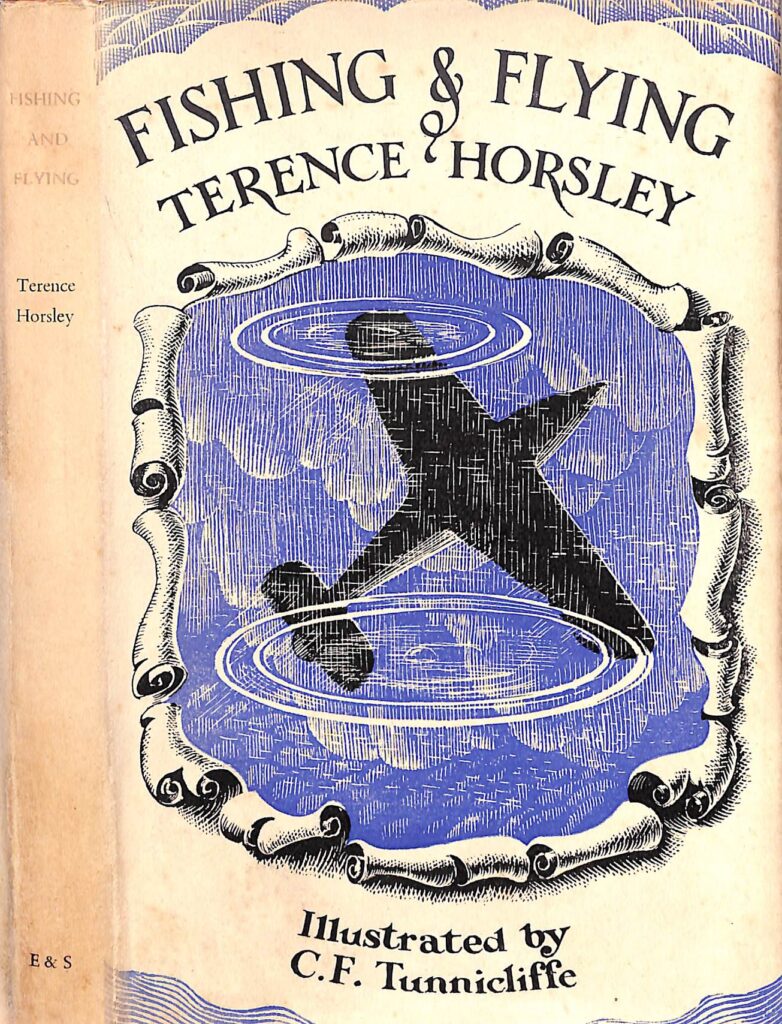
His classic book, Fishing and Flying, published in 1947, illustrated by C.F. Tunnicliffe, inspired many of his readers with the joys of flying high-performance aircraft to the quiet magic of night fishing for sea trout. Much of the book is based in Scotland with a particular affinity with the Finavon beat of the River South Esk in Angus.
His first book was Odyssey of an Out-of-Work, considered a classic, telling the story of a man walking from Newcastle to London in search of employment. It captured imaginations on publication in 1931, leading to commissions for associated articles in titles such as The Clarion.
His work also featured on radio. Narvik presumably based on his book, Norway Invaded, written with James Tevnan, was broadcast on Whit Monday 13th May 1940, offering, according to Radio Times “A dramatic reconstruction of a great naval feat of arms” including the “well known Admiralty message to the captain of HMS Hardy, “Use your own judgment”.
Torpedo Striking Force – a radio dramatisation of Fleet Air Arm action against the Italians – was broadcast on the BBC’s Home Service on 17th July 1941. “The enemy, especially the Italian Navy, has learned to respect the work of the Torpedo Striking Force,” a preview of the broadcast revealed, “and the highlight of this programme is an attack made on part the Italian Navy by both Fleet Air Arm dive bombers and torpedo carriers, with emphasis on the work of the torpedo carrying aircraft. Cecil McGivern, who produces, hopes to give an exciting sound picture of life on an aircraft carrier hafore the attack and the reactions of the pilots during their dangerous work.”
In an article by Alex Goody, “BBC Features, Radio Voices and the Propaganda of War 1939-1941”, he notes the Radio Times claimed that “Terence Horsley, with the help of Admiralty officials, has written this dramatic reconstruction of Narvik” and that “you will hear the sort of things men said to one another, the way they thought, and how they actually went into action against a greatly superior force.”
Horsley’s life story continues to fascinate, decades after his tragic death. Just last year, Drew Jamieson, absorbed into Horsley’s contrasting worlds of flying and fishing and into his own flying career in the Royal Air Force, published his account of Terence’s life, Fishing and Flying: A Homage to Terence Horsley.
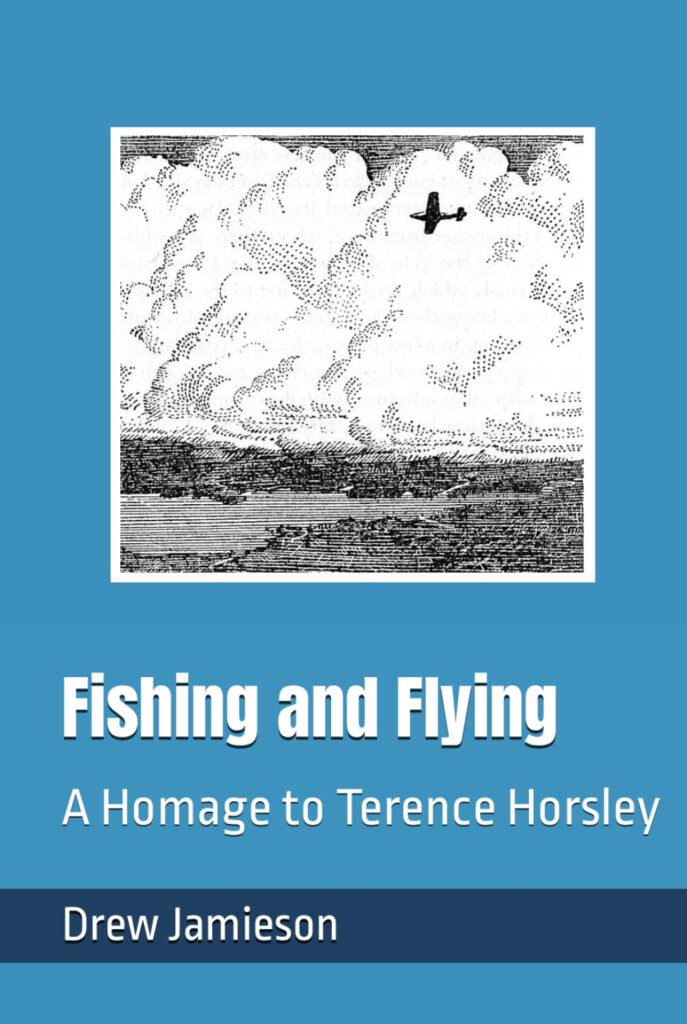
Over his own years of flying and fishing, Drew, author of several other books, a member of the Devon Angling Association, has frequently found himself standing, or sitting, in situations which Horsley had described – all those years ago. Formatted around the life-cycle of the salmon – Nursery Streams – Migration – Homing – this book takes the reader through some more recent adventures in flying and fishing – as a “Homage to Terence Horsley”.
What Might Have Been?
That the name, look and universe of Dan Dare is the creation of Frank Hampson, supported by an imaginative team of incredible artists, is not in doubt. It’s a tribute to the accomplished, award-winning artist and writer that he is so fondly remembered and so fiercely defended by his fans, both fellow artists and readers alike. But if the origins of EAGLE teaches us anything , it’s that it is, and remains, a success by the sum of its parts, creators and characters. Credit where credit is due sometimes gets muddied, the original players largely no longer present.
But now, perhaps, we have another to thank for Dan Dare, even though, had Terence Horsley lived, the character may never have flown, and “Lex Christian” did – although it’s clear any success with a “tough fighting parson in the East End of London” as a newspaper strip more likely would have helped progress the children’s comic Marcus Morris and team were already developing.
(Perhaps, for example, successful sale and syndication of the strip would have helped redress Morris documented financial problems caused by the cost of publishing The Anvil, and he could have funded EAGLE himself, rather than hawk it in Fleet Street).
Instead, tragedy led Marcus Morris to pursue different means to fulfil his dream, and ensure Frank Hampson’s take on Dan Dare was as we know it, still inspiring others to emulate its success… just as Terence Horsley was an inspiration in his day.
John Freeman
Sources for this article include newspapers digitised by the British Library available through the subscription service, the British Newspaper Archive. My thanks to Peter Hampson and Steve Winders for additional information
Dan Dare ©️ Dan Dare Corporation
Books by Terence Horsley
Where listed as available, AmazonUK Affiliate Links. The dates below are, hopefully, first publication dates where known – some books were republished several times
• Odyssey of an Out-Of-Work (1931)
• Round England in an Eight Pound Car (1932)
• Norway Invaded (with James Tevnan, 1940)
Tells of the German invasion of Norway, a story of treachery and corruption that has no parallel. It is based on reports and eye-witness accounts
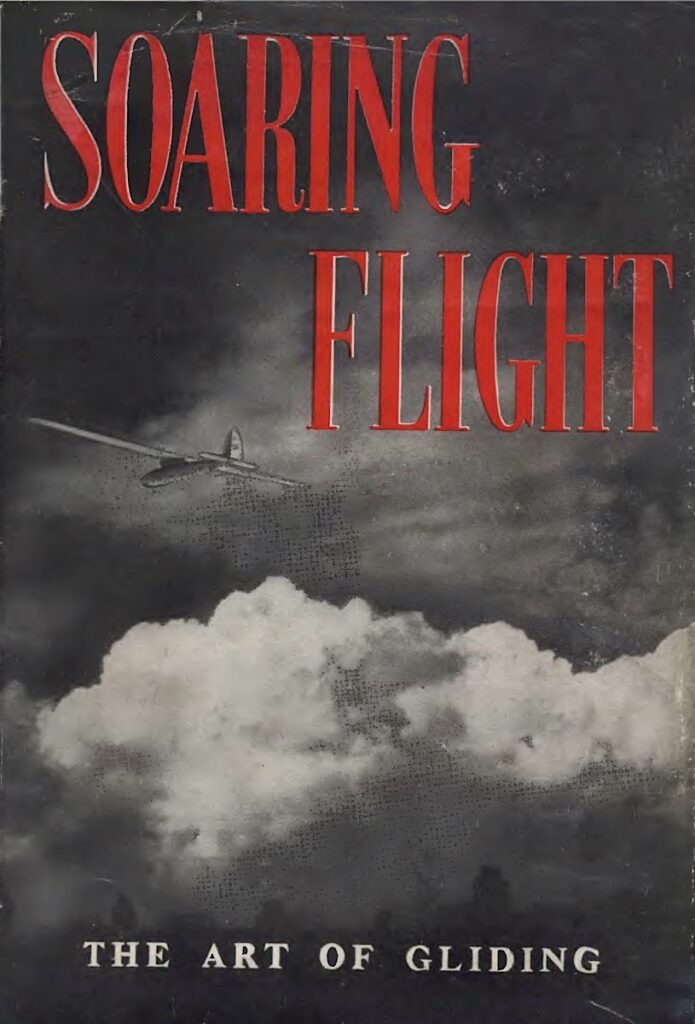
• Soaring Flight: The Art of Gliding (1944)
From the introduction by Rear-Admiral R. H. Portal, D.S.C:. “Tens of thousands are actively engaged in flying. Where are we to find the outlet for this interest and spirit of adventure in the years to come, when the need of the Services for flying men, and women, has fallen to the level of peace requirements? The author of this book points the way in his description of the merits of soaring flight in gliders, not only as a fascinating hobby, but, by inference, as a training ground for the development of the qualities of courage, initiative, discretion and self-reliance, and as a school for furthering the ‘knowledge of the air’ which is so indispensable to the flying man.”
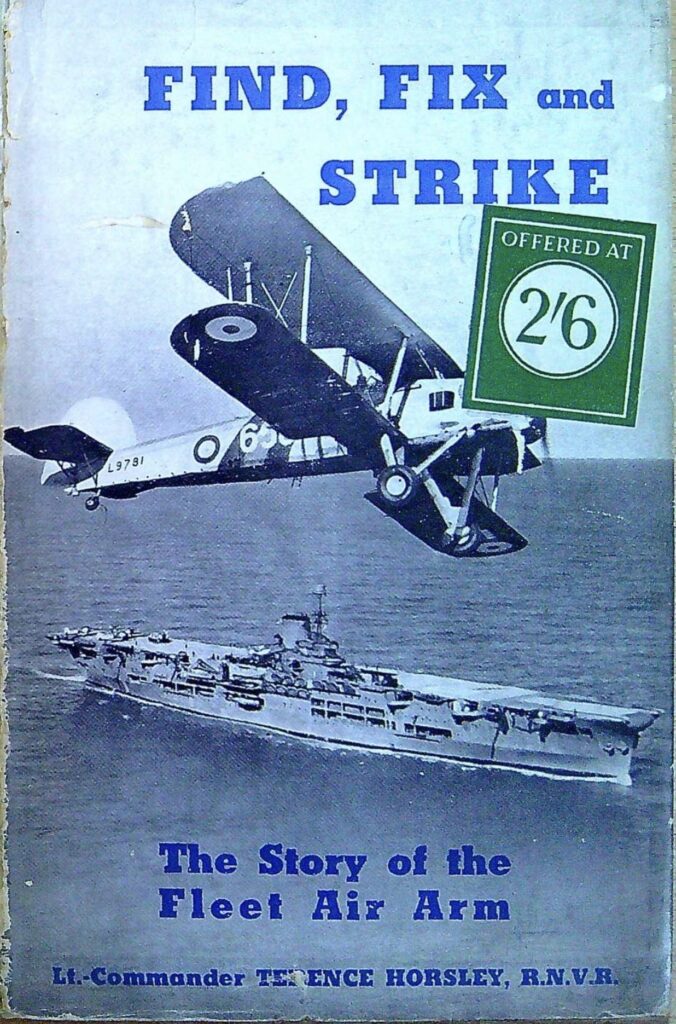
• Find, Fix and Strike: The Work of the Fleet Air Arm (1943)
• Fishing for Trout and Salmon (1947)
• Sporting Pageant: A Gun, A Rifle, and an Aeroplane (1947)
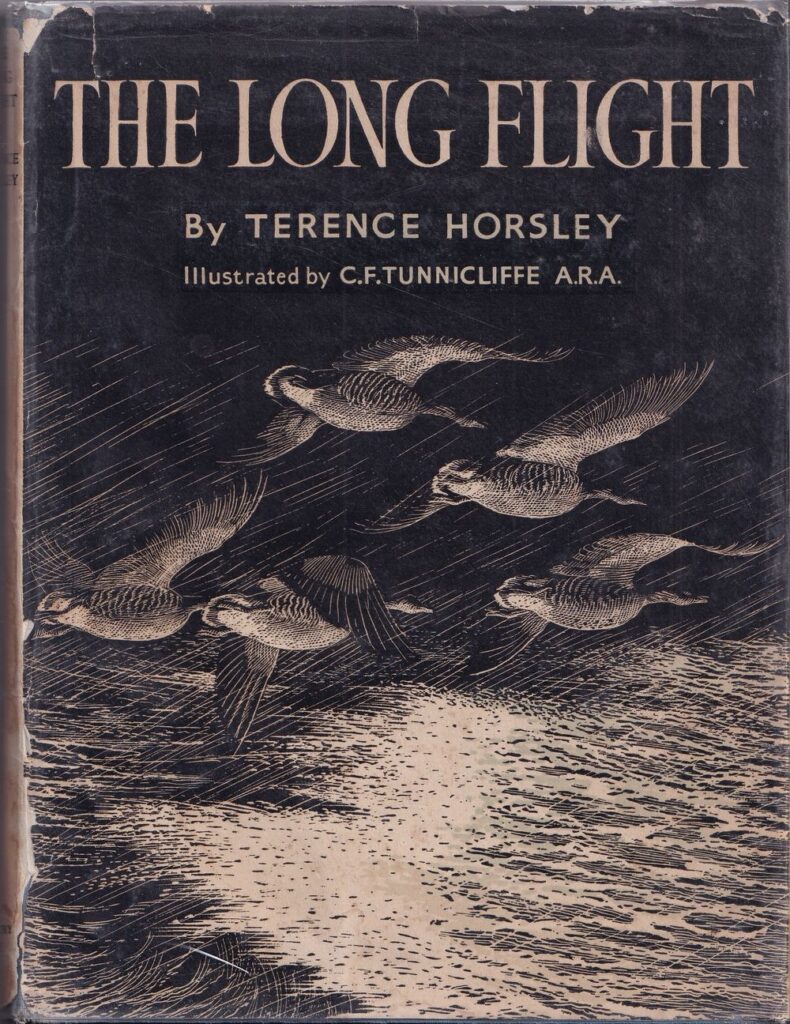
• The Long Flight (1947)
Describes the dramas and romance of long-distance travel by fish, wildfowl and aircraft. Contains a series of tales of migration, telling of “the grey geese flying in from the snowy wastes of the Arctic, the duck finding sanctuary in Britain after their journey across the sea, the salmon complete their mysterious life-cycle in our estuaries, and last, the Transatlantic airman battling against the hazards of storm and cloud.
• Jamie (1949)
Apparently a novel, posthumous publication
• The Radio Listener’s Week-end Book (1950, posthumous publication)
• Fishing and Flying (In Arcadia) (2016 edition)
Head downthetubes for…
• downthetubes: British Comic Characters Profiled | Dan Dare
Run by the EAGLE Society
• Frank Hampson: Official Site
• The Lost Characters of Frank Hampson
• Living with Eagles: Marcus Morris, Priest and Publisher by Jan Hallwood (AmazonUK Affiliate Link) – published 12th May 1998
• Fishing and Flying: A Homage to Terence Horsley
by Drew Jamieson (2024)
- About the Author
- Latest Posts

John is the founder of downthetubes, launched in 1998. He is a comics and magazine editor, writer, and Press Officer for the Lakes International Comic Art Festival. He also runs Crucible Comic Press.
Working in British comics publishing since the 1980s, his credits include editor of titles such as Doctor Who Magazine and Overkill for Marvel UK, Babylon 5 Magazine, Star Trek Magazine, and its successor, Star Trek Explorer, and more. He also edited the comics anthology STRIP Magazine and edited several audio comics for ROK Comics; and has edited several comic collections and graphic novels, including volumes of “Charley’s War” and “Dan Dare”, and Hancock: The Lad Himself, by Stephen Walsh and Keith Page.
He’s the writer of comics such as Pilgrim: Secrets and Lies for B7 Comics; “Crucible”, a creator-owned project with 2000AD artist Smuzz; and “Death Duty” and “Skow Dogs”, with Dave Hailwood.
Categories: British Comics, British Comics - Newspaper Strips, Classic British Comics, Comics, Features
 New Carol Day newspaper strip collection cut-off date for pre-orders fast approaches
  Forgotten Comic Characters: Pip, Squeak and Wilfred
Wow, very Interesting!