Review by Tim Robins
WARNING: SOME SPOILERS
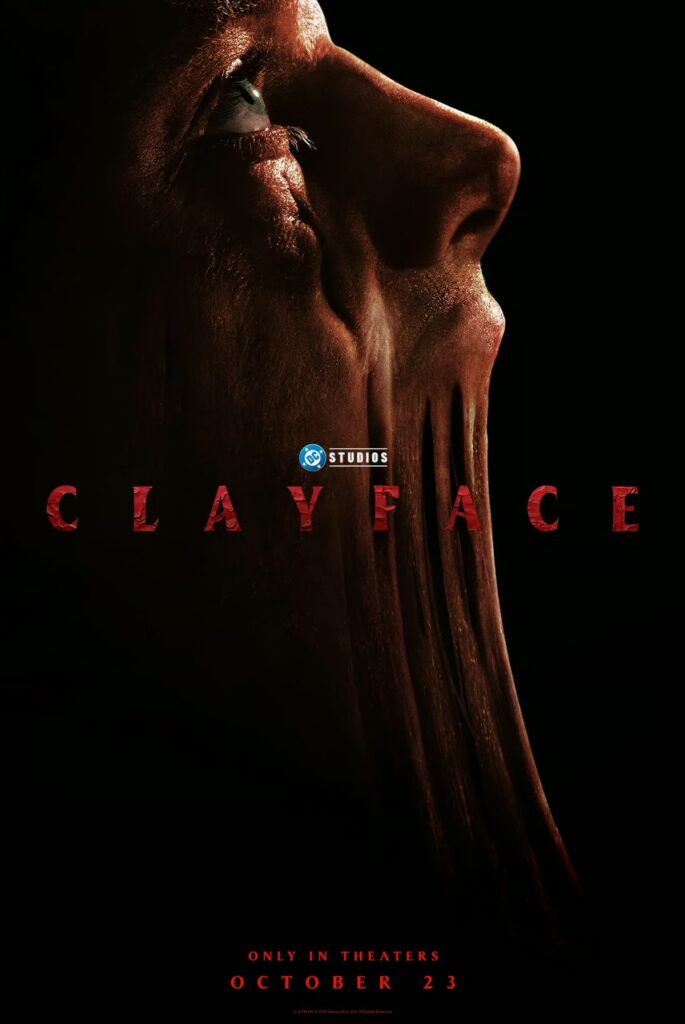
If you fancy spending just over one hour and 40 minutes being mogged by pretty boy Tom Rhys-Harries as his character, Matt Hagen, takes looksmaxxing to an alarming new level, then Clayface is for you.
The film, directed by James Watkins from a screenplay by Mike Flanagan and Hossein Amini, stars Rhys-Harries as actor Hagen, who is nominated for an Oscar which he is hotly tipped to win. His career prospects take a turn for the worse however when, persuaded by his friend, played by Joshua James, to celebrate his nomination by going to a mob run nightclub. There, an inebriated Hagen is seduced by a combination of alcohol and the sultry good looks of Mia Torrez (Joana Ribeiro), the moll of the club’s mob boss owner, Markos Szabo (David Dencik).
Hagen’s night of passion ends with Szabo taking revenge on his face. One sliced nose, slit mouth and scarified cheeks later, the actor has lost his appeal for the Hollywood Glitterati and audiences alike. An attempt to bring Szabo to book instead triggers an orchestrated smear campaign. In effect, the actor is cancelled. Worse, his best friend seems to have set him up as part of a feud between Szabo and the actor’s father.


Outcast, homeless and penniless, the actor offers himself as a no-liability test subject for a scientist, Dr Caitlyn Corr (Naomi Ackie), who is experimenting with programmed nanocellsas an advance in the field of plastic surgery. The cells are programmed by AI, so what could possibly go wrong?
Everything goes wrong. Soon Hagen’s face is melting and he’s cutting off his eye lids, before gaining some control over his newfound powers to look like anyone he wants, without needing to take a tiny hammer to his face. It’s as if he’s made of clay, (a “clayface”, if you will). It’s a power ideally suited for taking revenge on those who betrayed him. Many wrong decisions later, his whole life is going down the drain.
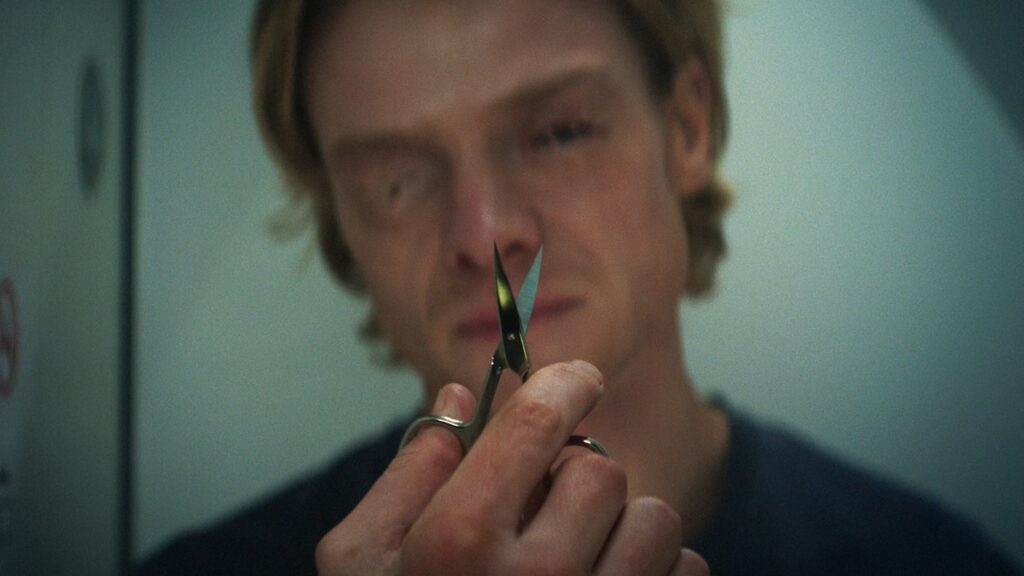
Clayface is a watchable evening entertainment, although it never quite fulfills its potential as an ‘R’ rated horror movie. It’s been described as “body horror”, but that was a category invented by an academic to explore the relationship between cinematic, often male, bodies at the time of the 1980s’ AIDS panic. You can take the term out of that context much as you can take the term film noir out of its context of Film Theorist’s discussion of particular 1940s’ movies, but I’m not convinced anything is gained.
Instead, Clayface is more an example of the cartoon body in which characters can be squashed and stretched but eventually retains their bodily integrity. Bob Hoskins’s Eddie Valiant exemplified this more malleable form of masculinity, but the trope has become more common with CGI.

It is, therefore, telling that Clayface is based on a comic book villain, whose final form – briefly seen here – was popularised in the cartoon Batman: The Animated Series and the tie-in comic The Batman Adventures. Indeed, the movie takes its cue from “Feat of Clay”, a two episode story in Batman: The Animated Series, not to be confused with an episode of Birds Of Prey with the same title.
As audiences left the cinema, there was some talk of the film’s relationship not so much to the horror genre but to looksmaxxing, that weird combination of ‘Manosphere’ and Incel cultures which have developed against a wider, cross gender context of body modification. I can’t help feeling that part of this also feeds into transgender surgery – “we are who we are, and now we can have the bodies to reflect who we are”. We are in an age where the body has indeed become as malleable as clay.
Sadly, Clayface hardly touches on contemporary interests in body transformation. There’s just a few lines about Hollywood being superficial and obsessed with surfaces. But it is this film that really needs more depth. Its characters barely have characters. That’s not the performers’ fault, it’s the script, or the script and the editing.
Back stories, such as Hagen’s upbringing in the city’s ghetto-like “narrows” are skimmed over, often in dialogue. There’s a missed opportunity when Dr Corr’s fiancé, a detective for Gotham’s police force, decides to investigate Hagen’s past. But there’s no suspense or surprise. The actor is not revealed to be a wrong-un, even though he clearly is.
Some critics have wondered why Hagen tries to seduce his Doctor, but we’ve already seen this behaviour earlier in the film when he sleeps with Torrez, knowing full well that she has a mob boss as a lover. Drunkenness isn’t the cause. Alcohol is, as ever, merely the permission giver.
Perhaps it is fitting that the film’s most noticeable characteristic is its colour scheme. Orange is my favourite colour, but it appears in the most sickening hues and alongside blood reds and a bilious shade of green. The combination works well and is mainly used for interiors.

Liverpool, England, stands in for Gotham city, with long shots supplemented by a truly raggedy, painted skyscape punctuated by random and unconvincing towers. The colour scheme switches to cold blues and whites, as if Blade Runner’s Los Angeles had given up the ghost. The change of colour tone comes as a welcome relief from the excessive use of orange, but it signifies nothing except, as one audience member commented, the film had the wrong colour palette to be a proper horror movie.
There are one or two creepy scenes – one where Dr Corr watches Hagen sleeping while transforming to look like herself. In another scene, she returns home and we can’t tell if she is Hagen or herself. And, when her fiancé notices her voice has changed, we fear the worst. There is also an entertaining cameo by Rob Brydon as an obsequious chat show host, a role he seems born to play.

But the direction here is weak. James Watkins has a flexography that reasonably dabbles withdarkness. His filmic debut, Eden Lake (2008) raised concerns about its portrayal of “hoodies” as a negative stereotype of the working class. Strangely, these criticisms were mostly voiced in right-wing newspapers here in the UK, notably The Sun and The Daily Telegraph, who have no great love of the working class. Then again, lefty Owen Jones wrote, in his 2011 book Chavs: the Demonization of the Working Class “Here was a film arguing that the middle classes could no longer live alongside the quasi-bestial lower orders”.
Alas, the gangsters in Clayface are a lot less interesting than Eden Lake’s chavs. Watkins has no real feel for the kinds of grotesque villainy that is part of everyday life in Gotham city and instead serves up a motley crew of tepid gangsters. The director’s staging of an attack by Hagen across a dance floor to infiltrate the mob boss’s sanctum sanctorum is confused if superficially entertaining.
And Clayface is entertaining. It takes its cue from the problematic first Joker (2019) movie which at least showed a Batman villain could hold his own in a movie without the Bat (reviewed here). For a Thursday, just- past-tea-time screening, it was relatively packed, with an audience of young adults who enjoyed the film but enjoyed critiquing it even more.
There’s really nothing too horrifying to see here. In this, the film is nothing like The Fly (1986). It lacks that film’s fevered intensity and mounting terror. I can see that Dr. Corr’s final confrontation with her creation echoes a somewhat similar situation between Jeff Goldblum’s and Geena Davis’s characters but, crucially, they had characters I cared for. I had fun watching the film for all its uncertainties, but, in retrospect, I fear its director has feet of clay.
Tim Robins
Clayface is in cinemas now
Head downthetubes for…
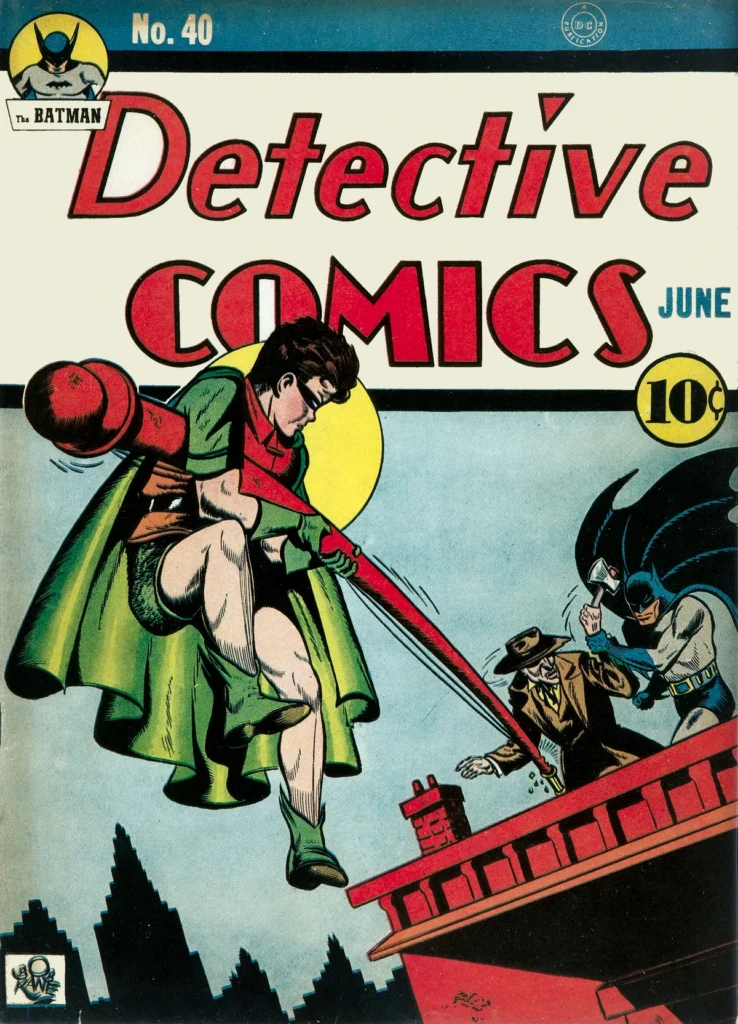
Created by Bob Kane and Bill Finger, Clayface made debut in Detective Comics #40, “The Murders of Clayface”, but has had other incarnations since
• DC.com: Rounding up the Easter Eggs in Clayface
• Clayface in Animation: A Retrospective
Clayface Comic Collections
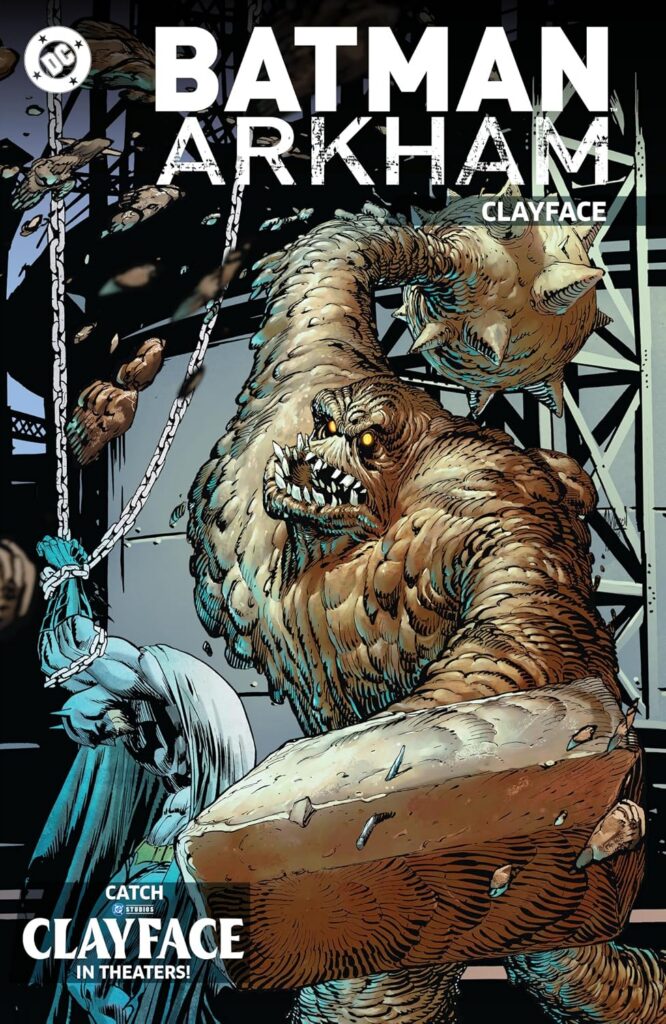
Batman Arkham: Clayface (2026 Edition) (AmazonUK Affiliate Link)
The greatest Clayface stories from across the decades, collected in one volume.
Washed-up actor Basil Karlo. Matt Hagen, a common crook. Preston Payne, tragic scientist. These are just a few of the many people who have claimed the name Clayface! Some of them have incredible shape-changing abilities, while others have a deadly touch that can melt a person into a puddle of protoplasm. All of them have tormented the citizens of Gotham City and been defeated by the Dark Knight and his allies. Now witness the origins of their transformations and learn their ultimate fate!
Batman Arkham: Clayface collects some of the villain’s greatest stories by some of the industry’s greatest creators, including Ed Brubaker (Captain America), Len Wein (Swamp Thing), Mike W. Barr (Batman and the Outsiders), Darwyn Cooke (DC: The New Frontier), J.H. Williams III (Batwoman), Mike Mignola (Hellboy), and many more.
Collects Detective Comics #40, #298, and #478; Outsiders #21; Secret Origins #44; Batman #550; Catwoman #4; Batman: Gotham Knights #23 and #69-71; and Batman Villains Secret Files #1
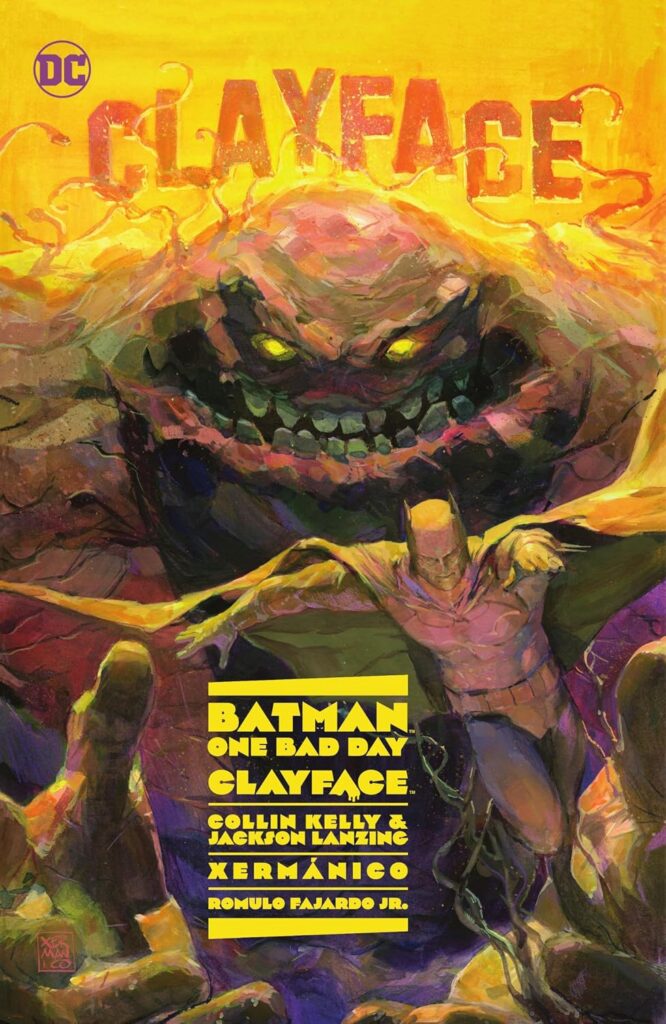
All Basil Karlo ever wanted to be was an actor… no… one of the greatest actors there’s ever been. However, his life went off course when he became the shape-shifting monster known as Clayface.
After years of doing battle with Batman in Gotham City and distancing himself from his dream, Clayface goes out west to Los Angeles. Creating a new identity, he pursues his dream of acting only to find that Gotham City isn’t the only place with an overwhelming sense of dread to it, and that he might not have what it takes to make it in the City of Angels. So he’ll reshape the city to fit his needs in a deadly pursuit of stardom.
From the rising-star creative team of Collin Kelly and Jackson Lanzing (Batman Beyond: Neo-Year, Captain America: Sentinel of Liberty) and Xermanico (Flashpoint Beyond), this is an epic tragedy not to be missed…
Following DC Studios’ Clayface movie, witness the longtime Batman villain bring the mud and the pain in a terrifying all-new solo story!
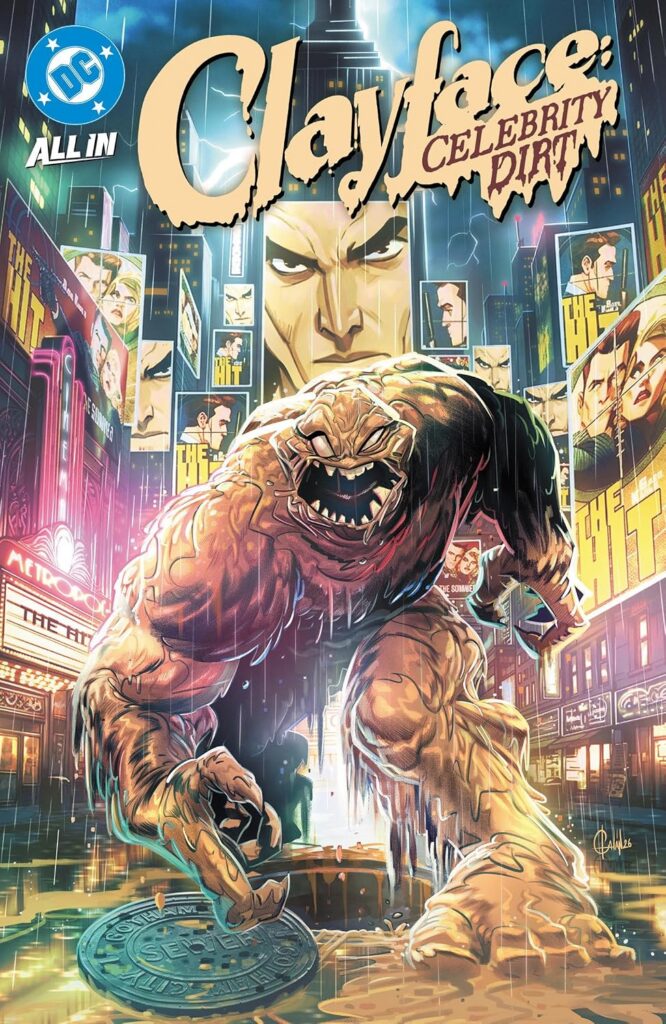
Before he was the monstrous Clayface, Basil Karlo was one of the hottest celebrities in Hollywood. Unfortunately for him, however, that life has been all but forgotten, and Basil has since traded in the limelight for the murky darkness of Arkham Towers. But that may be about to change, as Basil has hatched an escape plan that could mark the beginning of his Hollywood comeback.
There’s just one problem: Upon his successful escape, Basil discovers that someone else is already living his dream, and this “Basil Karlo” is a star. Now, Basil must work to unravel the mystery of the imposter as he claws his way back to fame. But the glitz and glam of Los Angeles may hide even darker secrets, and the truth Basil seeks to expose may end up being more dangerous than even he can imagine.
Acclaimed horror writer Jude Ellison S. Doyle (MAW, The Neighbors, Dead Teenagers) and artist Fran Galan join forces on a miniseries that is equal parts Hollywood glamour and body horror, featuring one of Batman’s most tragic and multifaceted villains.
Collects Clayface: Celebrity Dirt #1-6
- About the Author
- Latest Posts

John is the founder of downthetubes, launched in 1998. He is a comics and magazine editor, writer, and Press Officer for the Lakes International Comic Art Festival. He also runs Crucible Comic Press.
Working in British comics publishing since the 1980s, his credits include editor of titles such as Doctor Who Magazine and Overkill for Marvel UK, Babylon 5 Magazine, Star Trek Magazine, and its successor, Star Trek Explorer, and more. He also edited the comics anthology STRIP Magazine and edited several audio comics for ROK Comics; and has edited several comic collections and graphic novels, including volumes of “Charley’s War” and “Dan Dare”, and Hancock: The Lad Himself, by Stephen Walsh and Keith Page.
He’s the writer of comics such as Pilgrim: Secrets and Lies for B7 Comics; “Crucible”, a creator-owned project with 2000AD artist Smuzz; and “Death Duty” and “Skow Dogs”, with Dave Hailwood.
Categories: Features, Film, Other Worlds, Reviews
 In Review: Avengers: Endgame Encore
 In Review: Hope
 In Review: Resident Evil
 In Review: Raiders of the Lost Ark
Leave a Reply