Review by Tim Robins
After the Trojan War, King Odysseus (Matt Damon) wants to return to his family. But the journey home is more difficult than expected, as Odysseus faces a long adventure full of danger. And back home, time is running out for his wife Penelope (Anne Hathaway) and his son Telemachus (Tom Holland)…
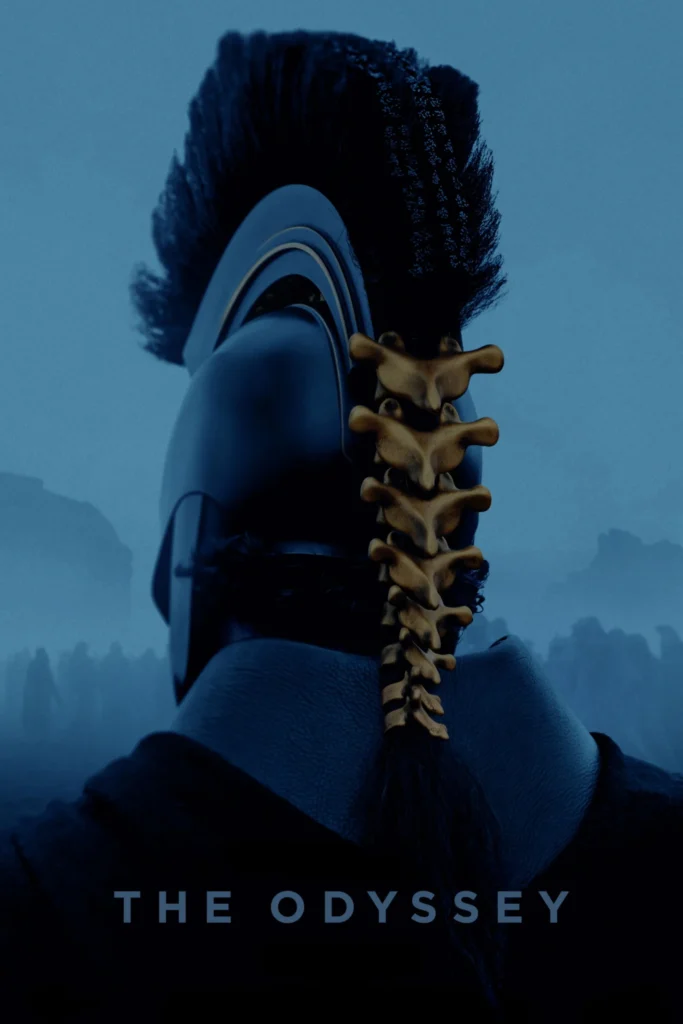
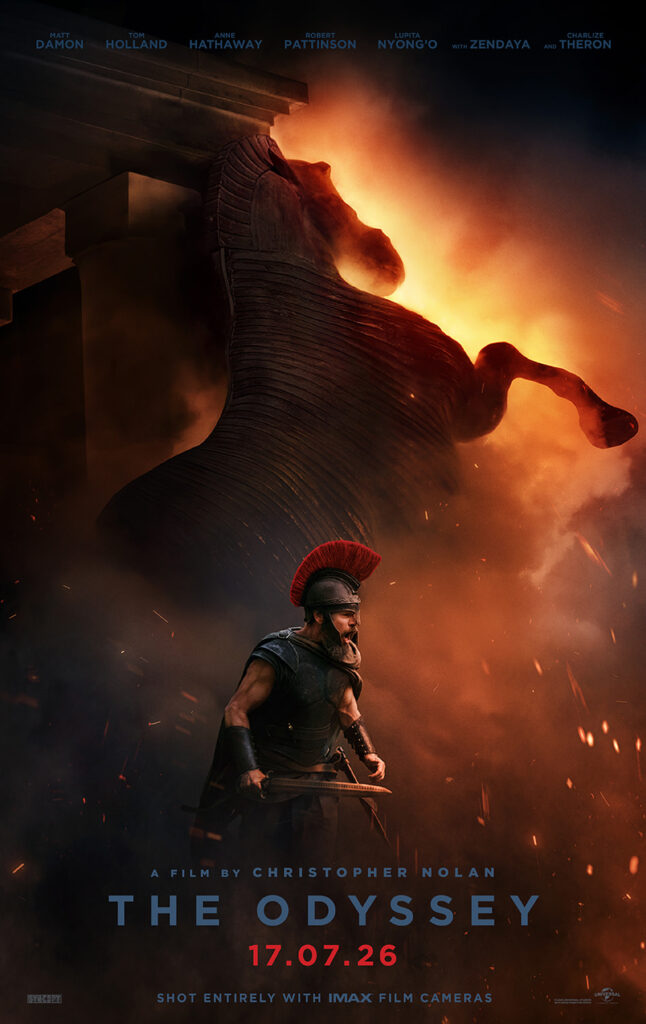
The Odyssey is Christopher Nolan’s best movie. It has characters you’ll care about, creepy creature effects and, from the director who brought you Tenet and Inception, a surprisingly coherent story line. No, I have not been paid by anyone, let alone a film studio, for writing a positive review and, also no, having a different opinion to yours doesn’t mean I’m lying.
Of course the film, based on Homer’s epic poem, The Odyssey, has omissions from available translation. Thank goodness for that. I really don’t need to see Odysseus dodge the whirlpool created by the monster Charybis on two separate occassions. Anyway, Homer’s Odysseus was an unreliable narrator and Homer – if he existed – was an unreliable historian.

The film’s journey to general release has been something of an odyssey in its own right. The usual right wing have leapt on everything, including inaccuracies in costumes, dialogue and choice of casting, to spin a well worn and wrong-headed narrative about woke Hollywood. Worse, harried by online trolls, Lupita Nyong’o, the film’s Helen, has been turned into the face that launched a thousand racist shit posts. You either feel that an AI image of the actress as a gorilla is disgusting or you are welcome not to read any further.
Fortunately, there is actual online scholarship if you know where to look, and two useful YouTube hosted videos are detailed below.
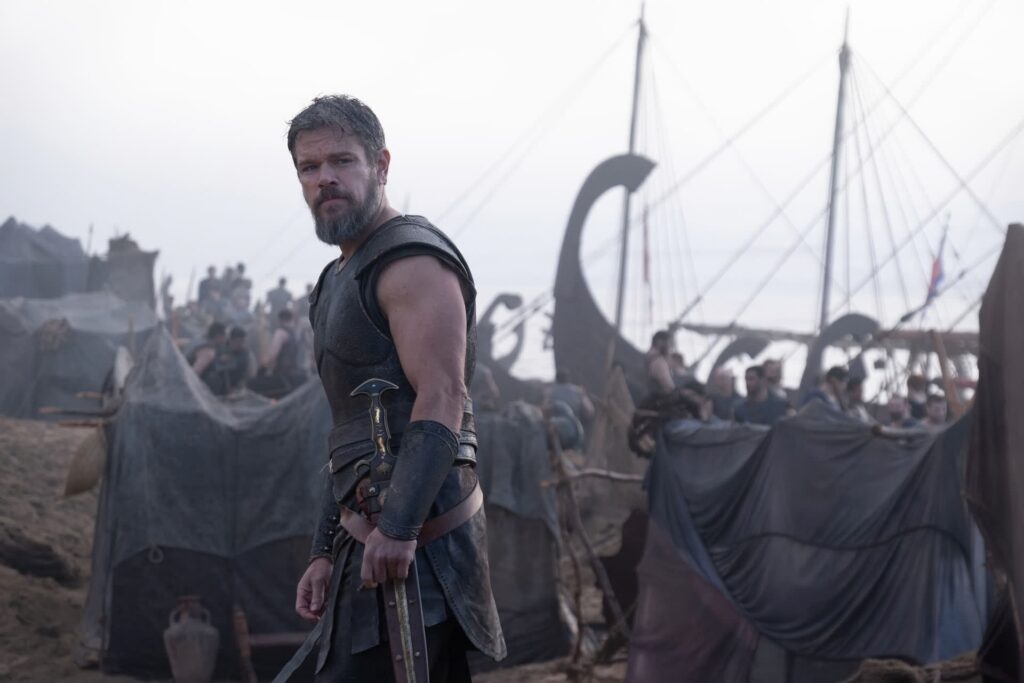
Of course, your favourite event or character of legend may be misrepresented or excluded altogether, but the director’s intelligent script is selective out of necessity. After all, the poem documents at definatively epic length the hugely delayed, incredibly diversionary and sometimes just repetitive journey of King Odysseus and his men from the battle for Troy to his home in Ithaca.
Not even the movie’s three hour running time could capture all the years spent dawdling on islands, Penelope’s the shroud weaving, her son, Telemachus’ complete quest for news of his father. Still, Nolan gives the story more than his best shot and even manages to include scenes from the sack of Troy itself, something not even in the poem.
In my heart, I wished Arnold Schwarzenegger could have been cast as Odysseus. The button nosed Matt Damon certainly didn’t strike me as a Greek hero even though, as many have pointed out, he has made a career out of playing characters who are trying to get home. Odysseus was never a gym bro, and Damon is adept at playing the torment of man struggling to remember his past life and who he really is while taking all the gods can throw at him.
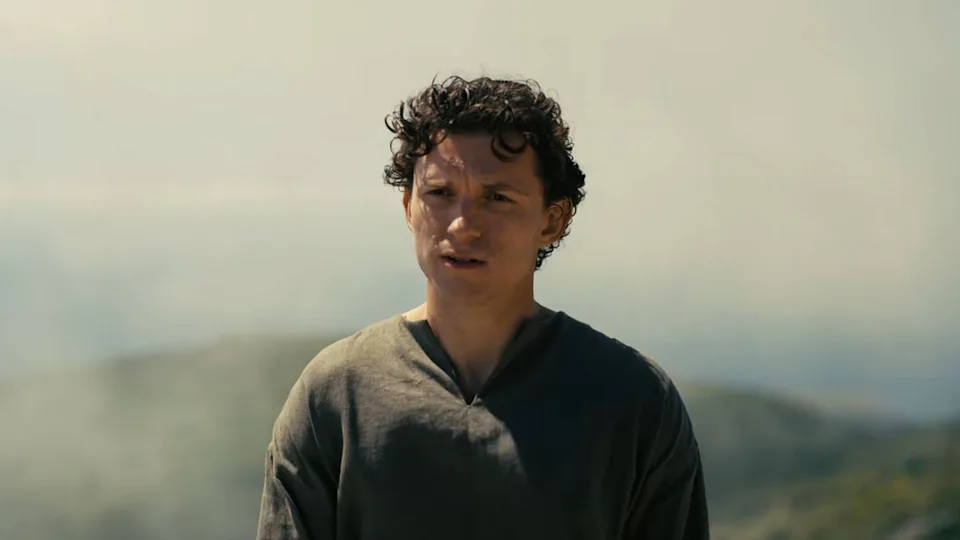
Tom Holland is outstanding as Telemachus, growing up surrounded by a place full of suitors, all eager to marry his mother while drinking them out of house and home and having their wicked way with the serving girls. We follow Telemachus as he goes on a quest to learn news of his father, leaving Ithaca as a boy and returning as a prince among men. I was left wondering how it will be to watch Holland as Peter Parker. I think he really has outgrown that role.
The Odyssey is seen as the archetypal ‘hero’s journey’,as Carl Jung and his analytic psychology ilk would have it. This is characterised as a particularly masculine, symbolic quest for individuation – broadly, an independent sense of self. That doesn’t mean that women don’t have important roles in the story, even if the feminine ‘anima’, lurking in a man’s psyche, is often represented in monstrous forms such as the serpent-like Scylla and the bird-like sirens.
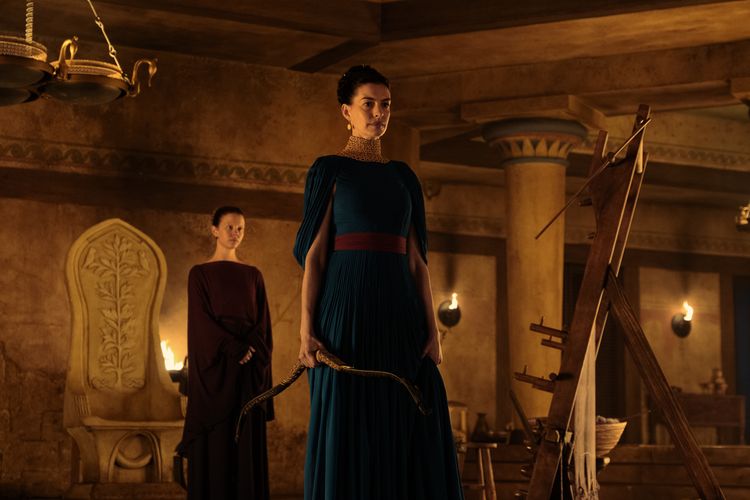
Among the on-screen women, Anne Hathaway is a commanding presence as Ulyssey’s wife, Penelope, having to cope with her own feelings of hope and grief as well as those of her son. Penelope must also ward off the aggressive courting of suitors who abuse her hospitality by having more than their fill of wine and available, young serving women . The suitors are led by Robert Pattison as the somewhat one note and single minded Antinous.
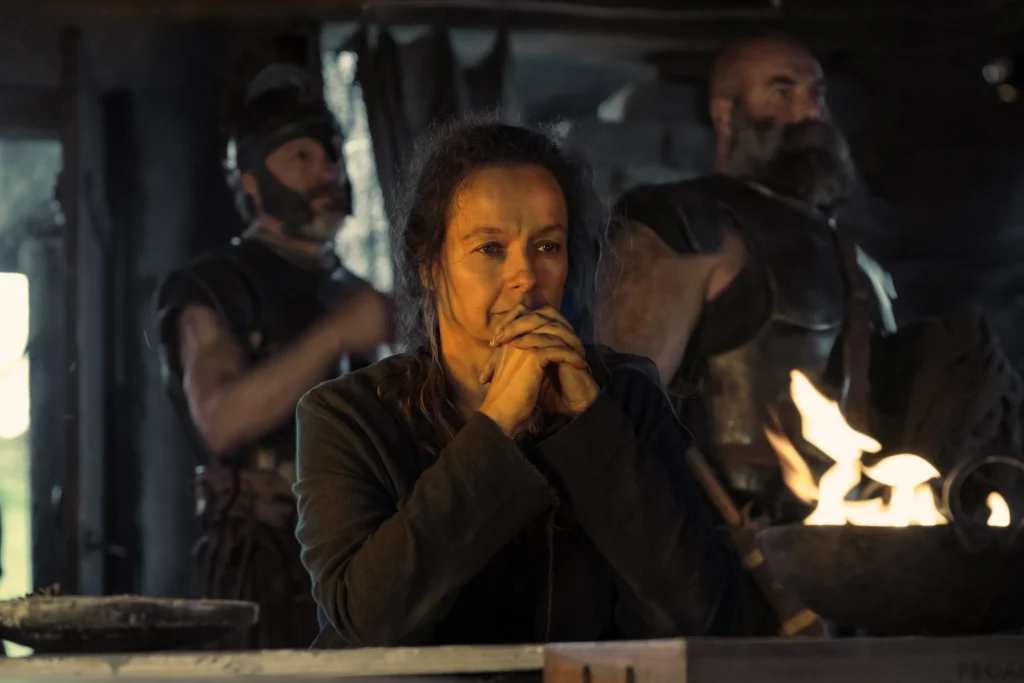
Samantha Morton plays the weather beaten witch, Circe. The character is played as nervy, and duplicitous, but not quite as seductive as she is in the poem, where she seduces and beds Odysseus for about a year, bearing him two children. Still, Morton provides the film’s standout moment when Circe transforms his men into swine – a sequence partly achieved by reversing the film so the men’s prosthetics are being removed rather than revealed, or so an animator friend tells me.
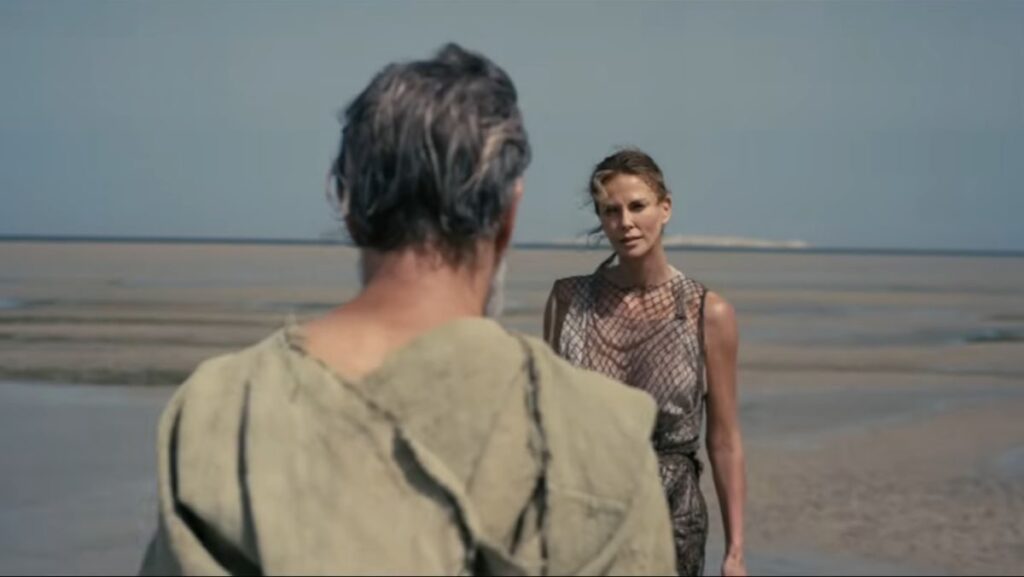
Charlize Theron is the beautiful and arresting Calypso, who detains Odysseus for seven years as a mortal toy boy lover, eventually offering him immortality. In the film, Calypso is combined with the voyagers’ encounter with The Lotus Eaters. By eating the Lotus flower, Odysseus’s men are condemned to oblivion, the flower robbing them of their memories.
Nolan himself doesn’t want to forget about the incident. However, by a kind of filmic enjambement, his script runs together different moments into a continuous idea, one that explains why Odysseus abandoned his quest for seven years and the hold Calypso has over him.
The director walks a tightrope when it comes to the gods themselves. They aren’t ignored, and are talked about at length. What the characters call ‘The law of Zeus’ is xenia, an ancient Greek of hospitality by which hosts must honour guests, bestowing food, gifts, and otherwise safe passage upon them while guests must reciprocate by honouring their hosts.
The film has numerous examples of xenia being obeyed and broken. An example is from Odysseus’s encounter with Polyphemus, a cyclops and the imputed son of Poseidon. There’s a whole lot of xenia wrongness going on here. Odysseyus and his men help themselves to Polyphemus’s stock of cheese. In return, Polyphemus helps himself to Odysseus’s men, biting their heads off.
Some scholars regret that Nolan has cut the scene in which Odysseus introduces himself to Polyphemus as “Nobody”. Later, when Odysseous and his men blind Polyphemus, the creature’s Cyclopean friends ask who is attacking him. Polyphemus shouts, “Nobody! Nobody is attacking me!”. His friends fail to help him, fearing he is being tormented by an invisible Zeus.
Where the film’s Polyphemus is achieved, in part, by a startling, disturbing work of puppetry, the multi-headed snake thing called Scylla is a disappointing work of CGI. Nolan has said that he was influenced by the stop-motion work of Ray Harryhausen, but I can’t help thinking that animator would have done better – giving the creature’s movements greater clarity, weight and personality.
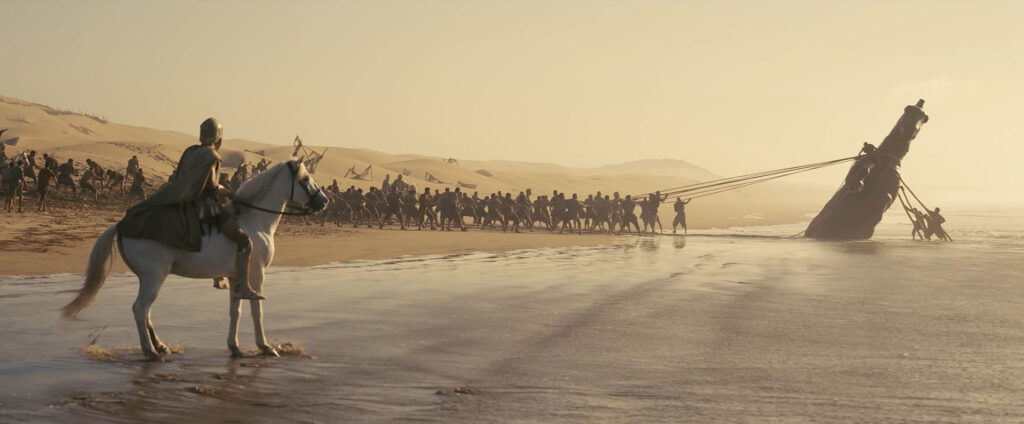
Elsewhere, Harryhausen’s influence on Nolan is more creative, particularly when Odysseus and his men journey to the shores of Hades. Hungry for the blood of sacrifice, the shades haul themselves out of the ashy soil. The scene obviously recalls the skeleton soldiers arising from the soil in Jason and the Argonauts. In contrast, it may be just me who thinks that the stylised figure of King Agamemnon is reminiscent of Talos from the same movie – although obviously not in height.
Are the monsters in Nolan’s fictional world intended to be real? We really don’t know. As scholars of the poem have pointed out, we meet them mostly in Odysseus’s own account of his travels and he is an unreliable narrator, a trickster as much as a hero.
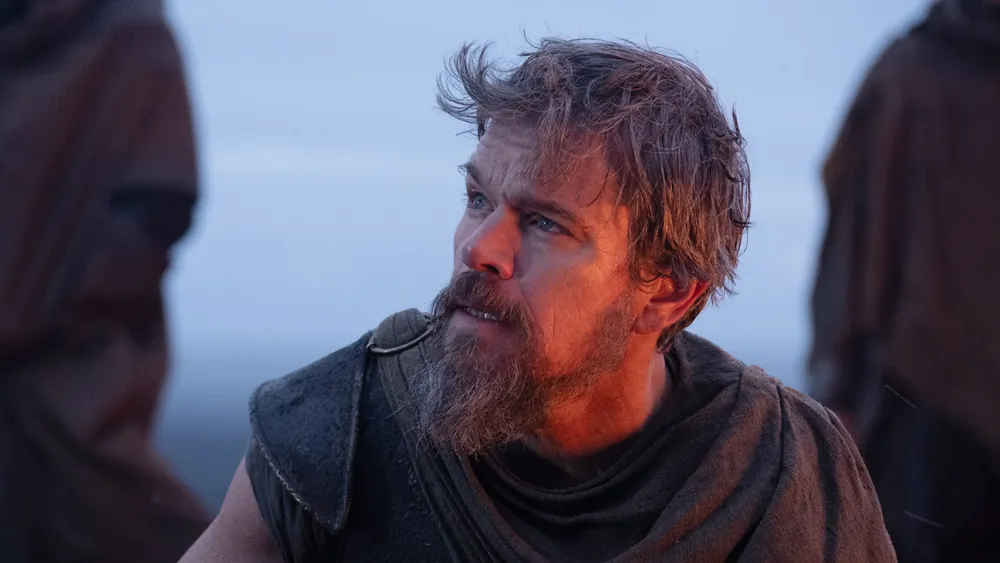
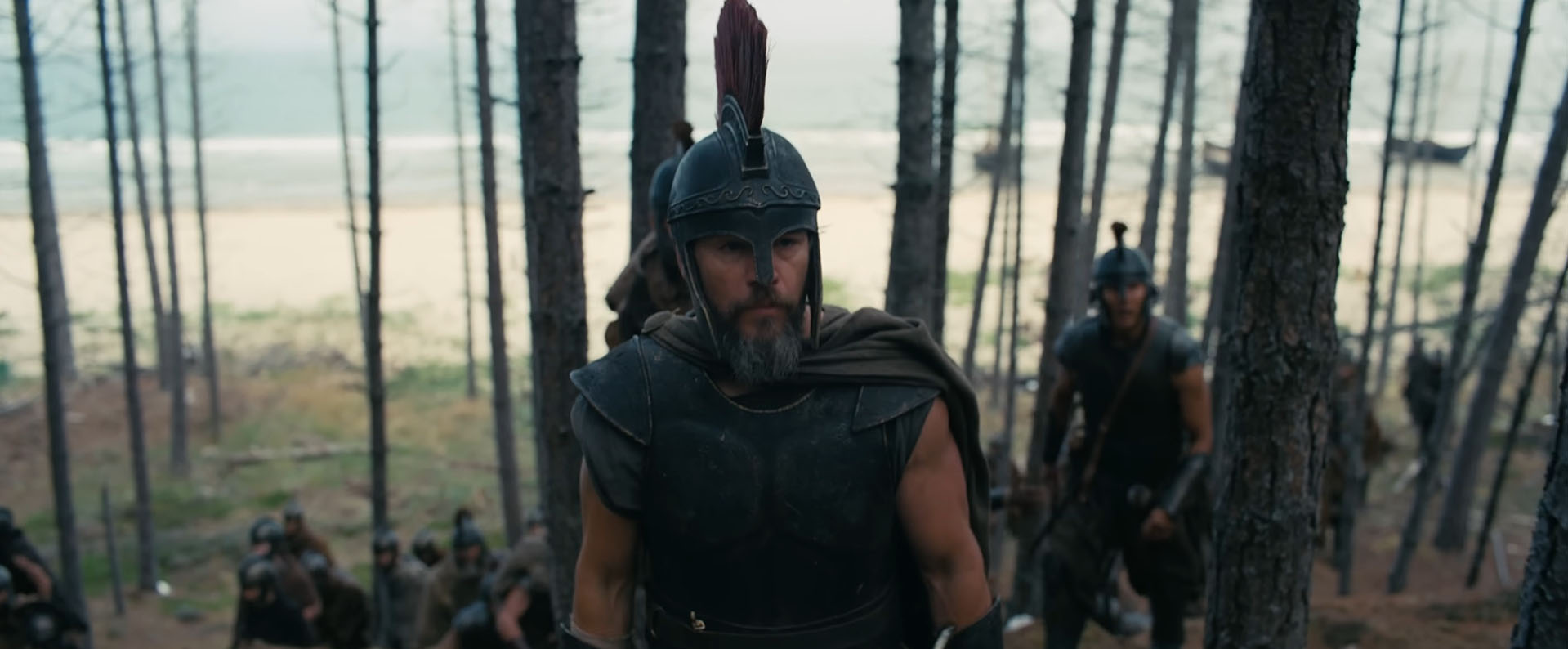
When it comes to the gods, Nolan suggests the hero’s visions of Athena might be the product of post-traumatic stress, particularly stemming from Odysseus witnessing a young girl being put to the sword in Troy. We eventually find that Athena resembles the child. This revelation certainly gives the hero a very modern-day, psychological depth but I could have done without it.
An opening credit suggests the film is set “in a time of apparent magic”. So it merely toys with the inclusion of gods. And that means Jason and the Argonauts (1963), for all its narrative inventions and inaccuracies, remains the best cinematic representation of the gods of Ancient Greece.
Harrhausen’s film is loosely based on Appollonius’s poem Argonautica, and is not in the least apologetic about portraying the all too human politicking of the Olympians, one reason the film remains rollicking fun.
Nolan’s The Odyssey has a different tone, its own way of world building. The film is deeply solemn. Dialogue is often expressed in hushed whispers, mumbled desires and a raw intensity that,unfortunately, buries the humour.
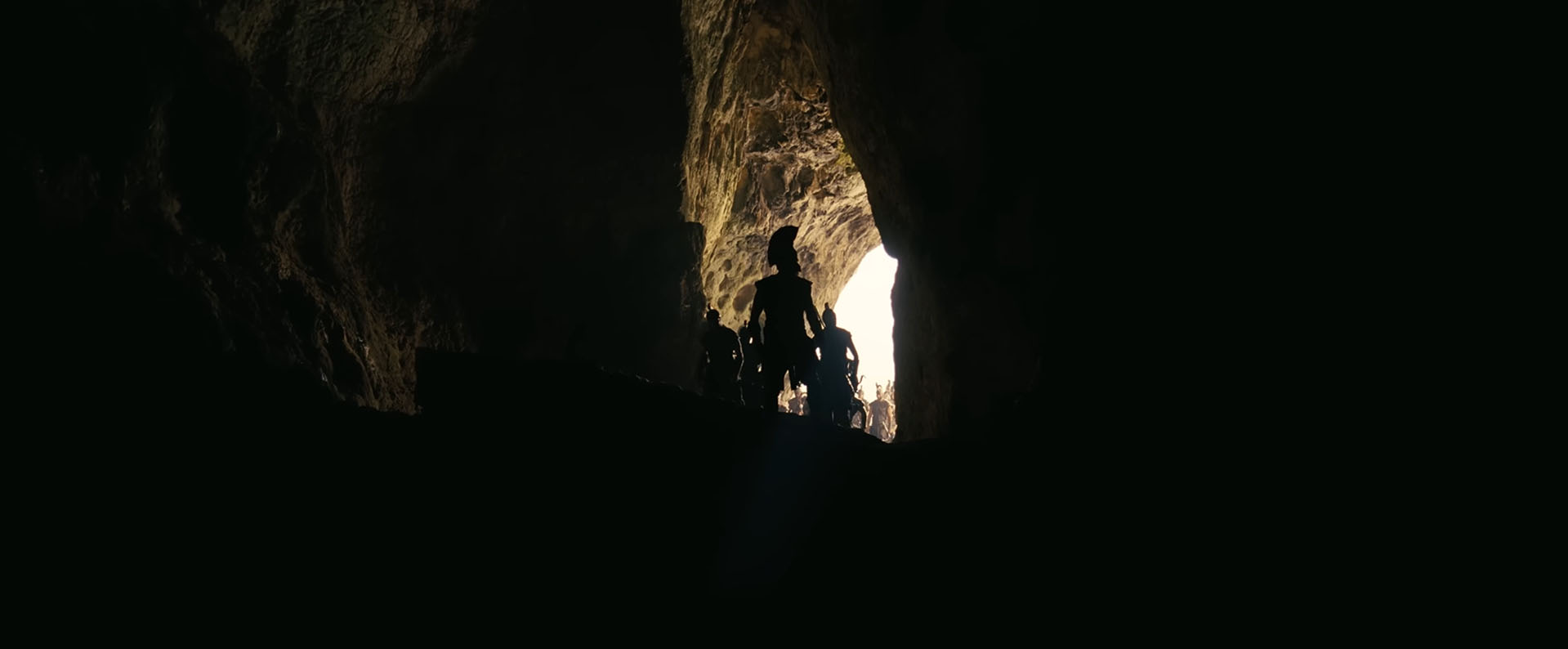
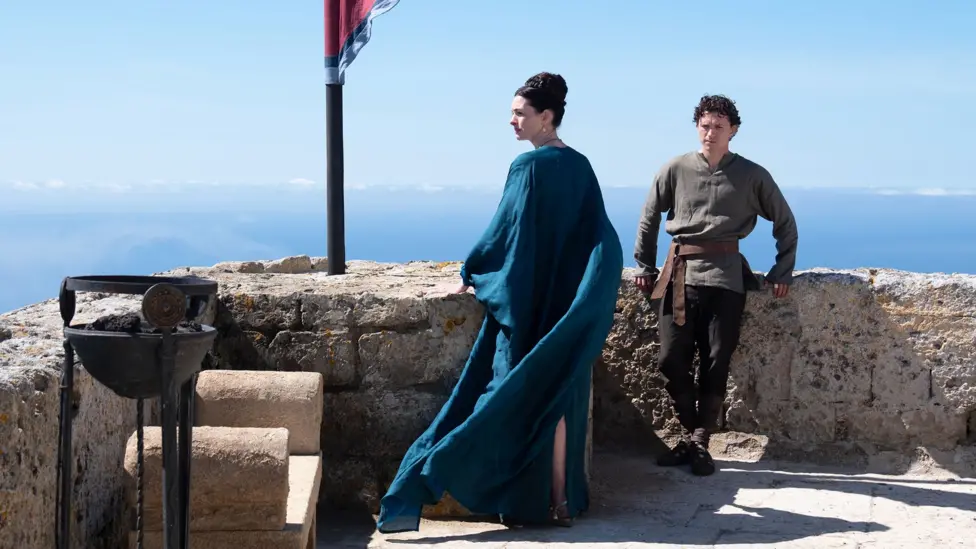
So, you may catch Telemechus’s quip that, if they’d wanted to arrive back at Ithaca in secret, they probably shouldn’t have brought along a bard. If you’ve read the poem, or read about the poem, you may pick up on Telemachus chiding his men for fearing that his mentor is really the goddess Athena in disguise. In the poem, the so-called Mentor is exactly that.
Nolan also toys with the audiences’ memory. I’ve seen critics say the opening of the film is slow, but its pace isn’t the issue. The script foreshadows all the key elements that will reappear in the climax, including Odysseus’s dog, his bow and his loyal servant and long suffering pig wrangler, Eumaeus (a reassuring performance by Joe Leguizamo). The early scenes are even cut as if they are a trailer for the rest of the movie.
If you want to learn more about The Odyssey, there’s plenty of accessible, scholarly sources, even on YouTube (see for example, this interview with Dr Emily Wilson the translator involved in the film, on the Archaeology with Flint Dibble channel; or “The Complete History of Homer’s Odyssey” on The Rest is History).
If you want to read the poem itself, the latest English translation is by Daniel Mendelsohn, or read Emily Wilson’s translation, which informed Nolan’s preproduction research. On the other hand, if you want to read the poem in prose, E V Rieu’s translation was the first ever Penguin Classic to be published and is still in print after revisions by his son.
Of course, if you want a spectacular start to this Summer, then go see The Odyssey. It is awesome. But I didn’t see it in Imax. (While he has favoured the IMAX format since The Dark Knight, The Odyssey is Nolan’s first movie to be filmed entirely with IMAX cameras). I like sitting back and enjoying movies. Imax is so up close, I feel like I’m being mugged by the screen.
Tim Robins
The Odyssey is in cinemas now
Dear reader, as ever, a review is an opinion. Other opinions are available, including yours.
Head downthetubes for…
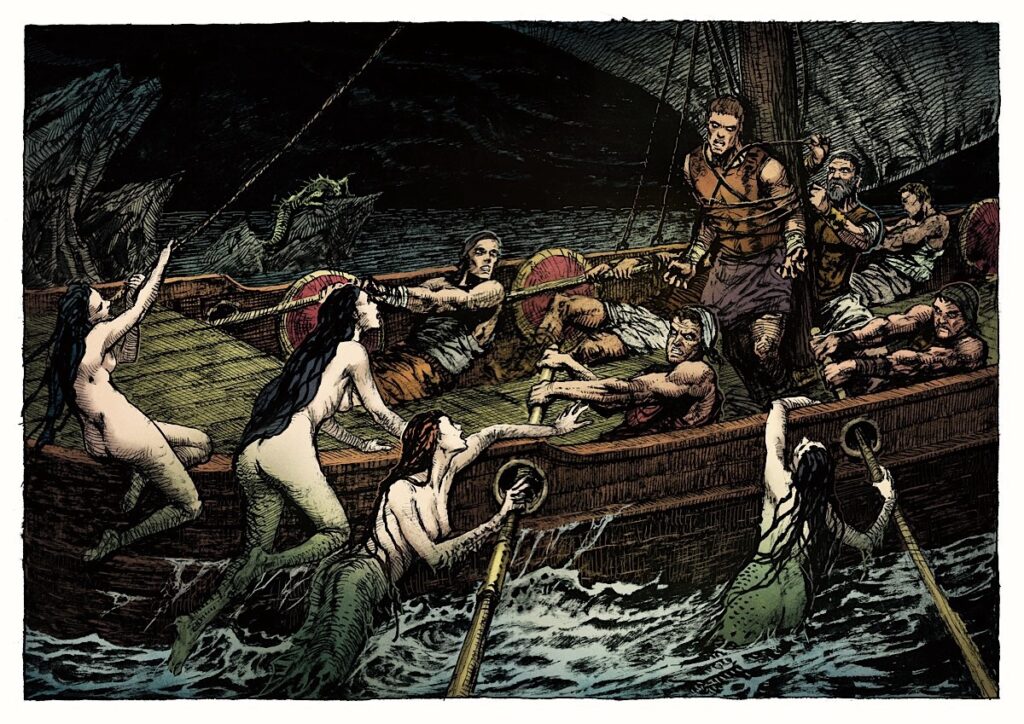
• Odysseus – In Defiance of the Gods. The Collection
The 156 page, collection of Odysseus – In Defiance of the Gods! Books One to Four from PSYComics, featuring stunning art by the awesome, sadly missed Vu Danh, in a new interpretation from Laurence Allison, is currently seeking support on Kickstarter
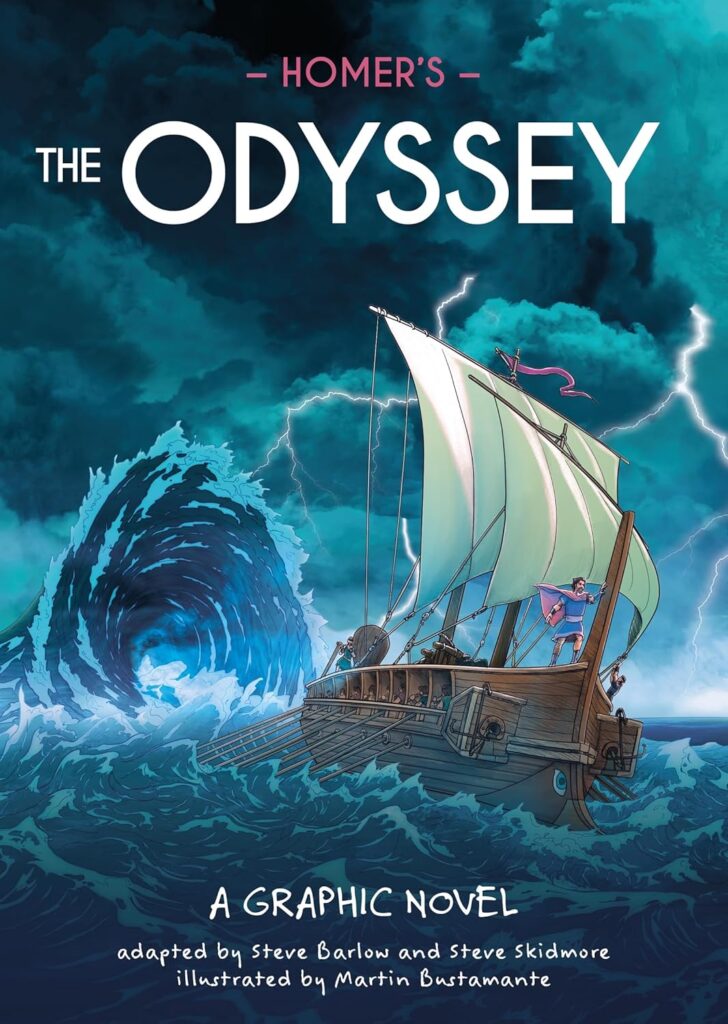
• Classics in Graphics: Homer’s The Odyssey (AmazonUK Affiliate Link) | Adapted by Steve Skidmore and Steve Barlow, with illustrations by Martin Bustamante | ISBN: 9781445198835
Homer’s The Odyssey like you’ve never seen it – or read it – before! Classics in Graphics: The Odyssey has been adapted into a graphic novel by expert authors, Steve Skidmore and Steve Barlow, with illustrations by Martin Bustamante. Readers join our hero, Odysseus, as his epic journey swirls across the page, dodging sea monsters, one-eyed giants and greedy humans before it’s too late …
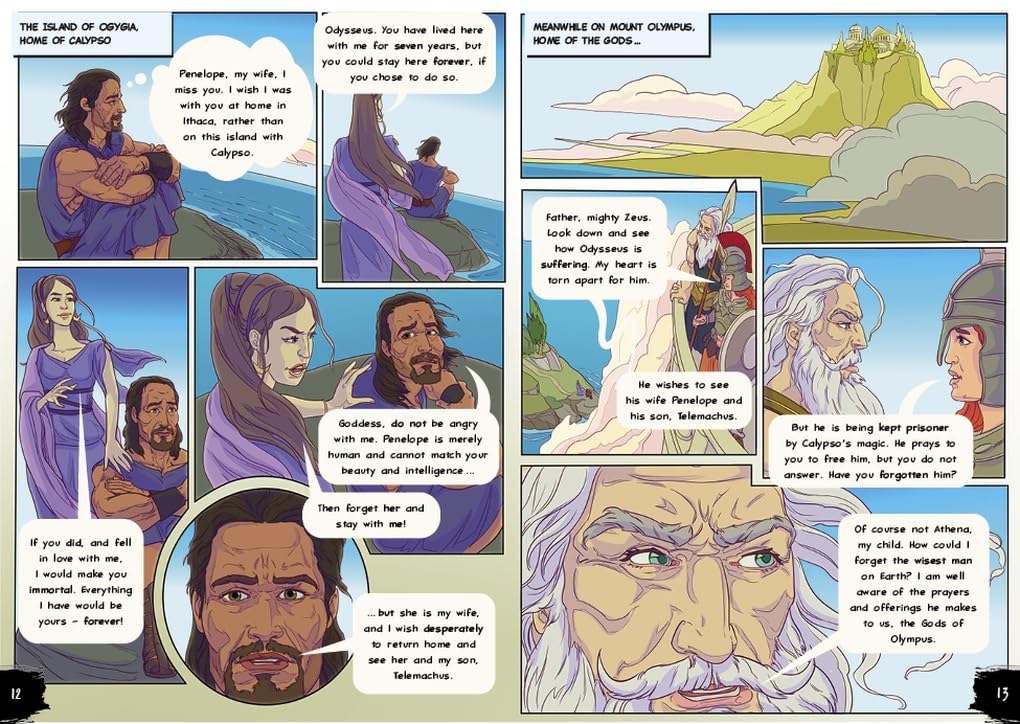
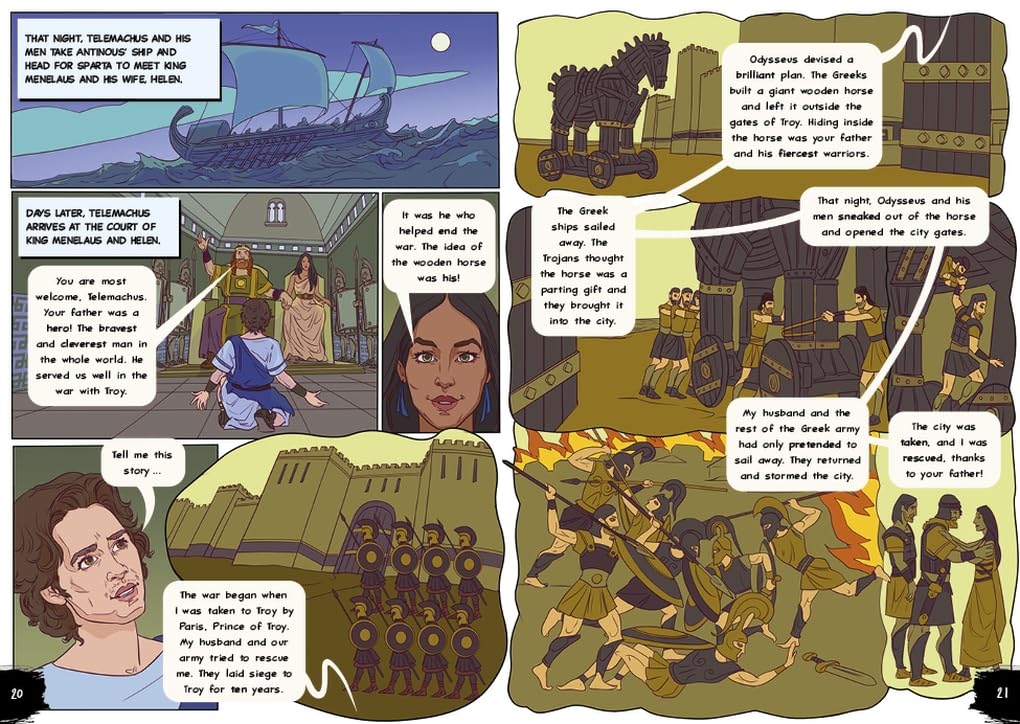
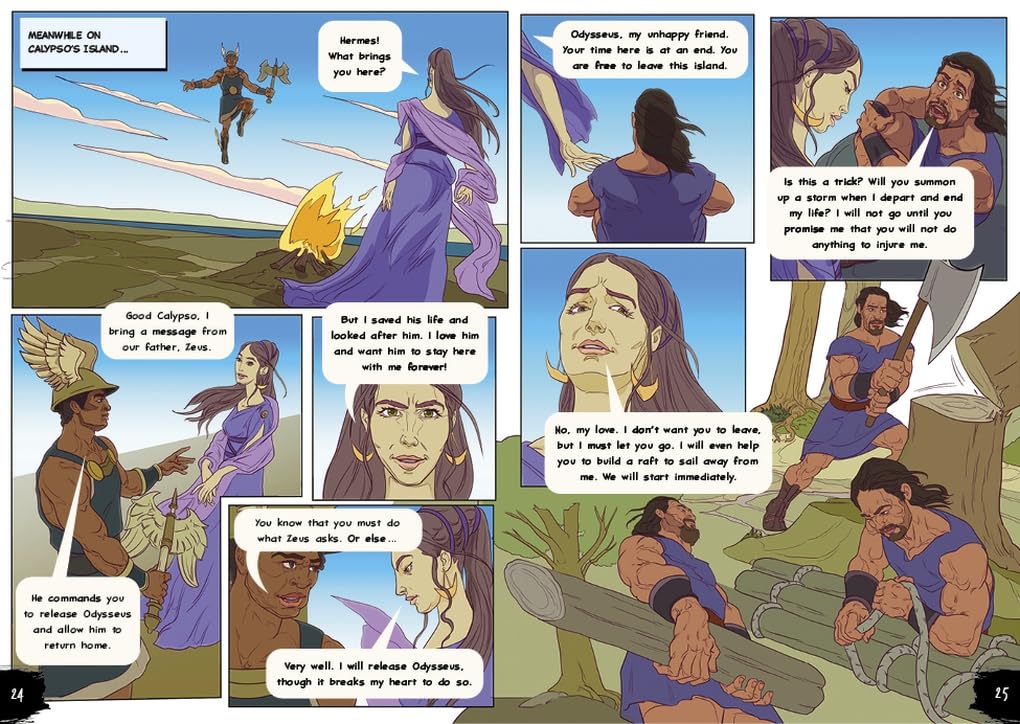
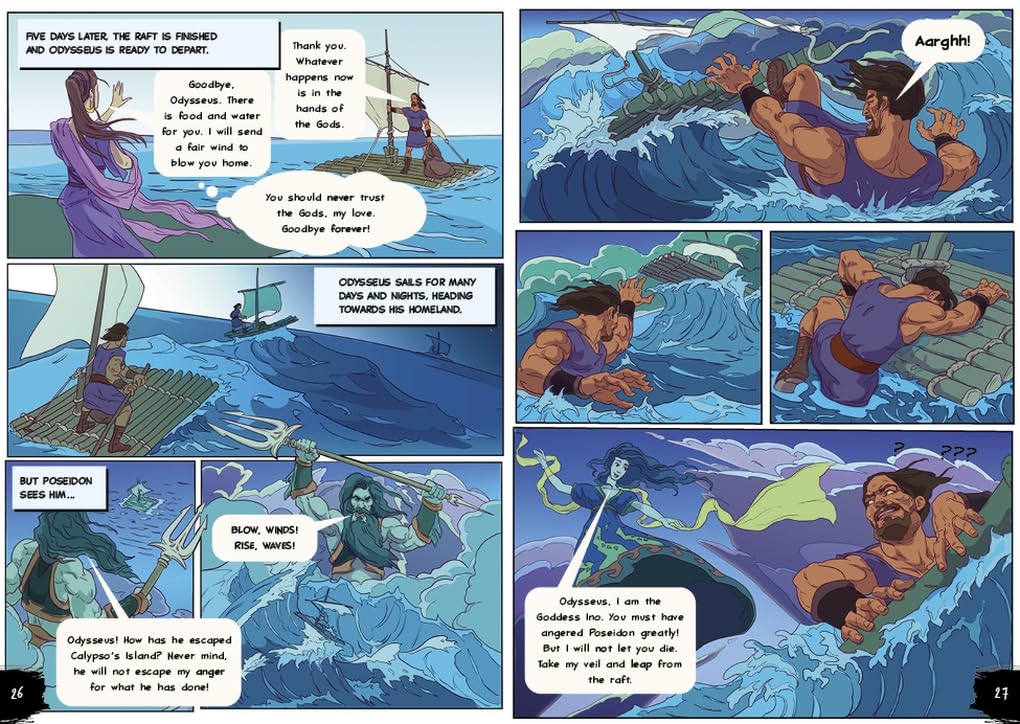
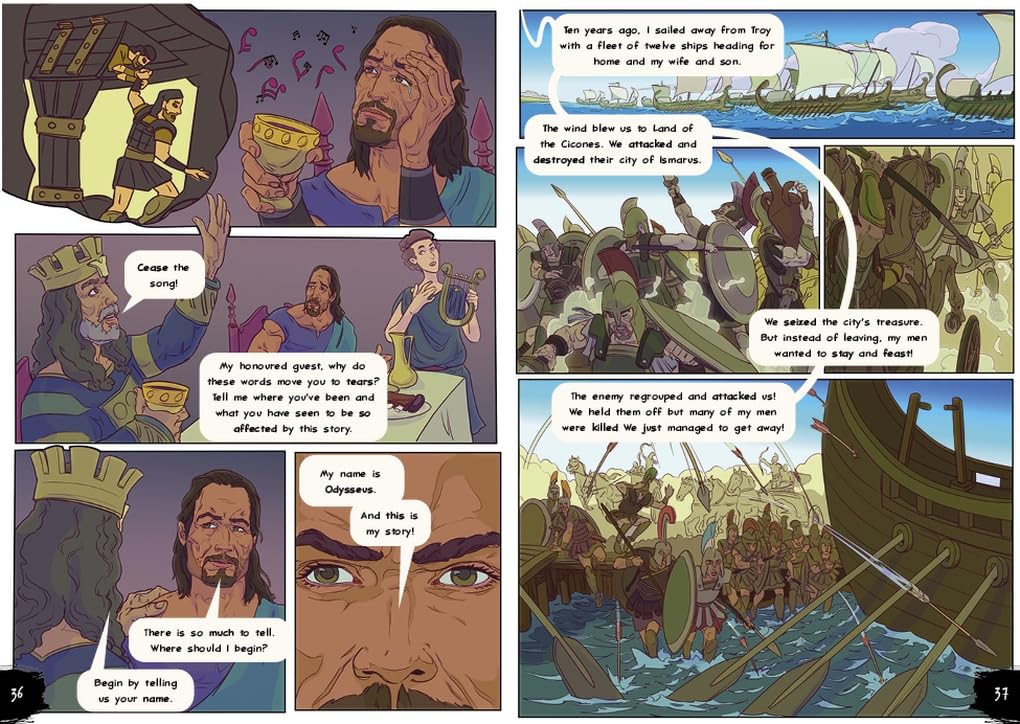
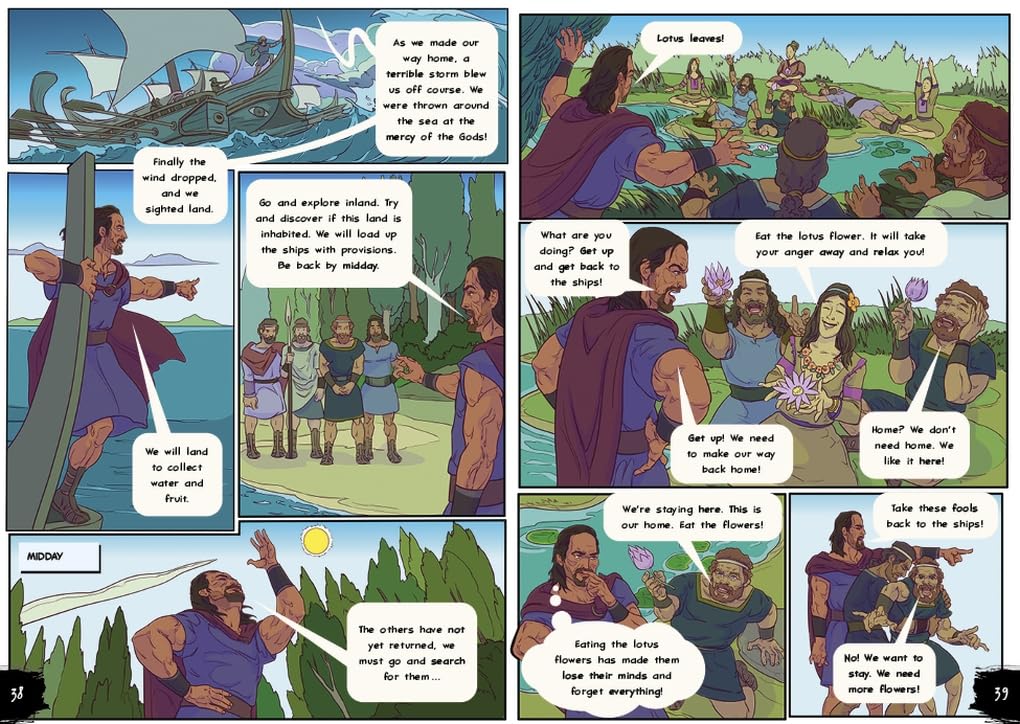
This series has inclusion at its heart, flinging wide the doors of literature for all to enter and understand. With dyslexia-friendly design for readers aged 10+; inclusive art so anyone can relate to iconic roles; snappy simplified text; introductory material to set the scene; heaps of material at the back, looking at the work’s themes, language, publication, a timeline of relevant history, and more!
Other Classics in this series available: Macbeth, The Tempest, Hamlet, Romeo and Juliet, A Midsummer Night’s Dream, Much Ado About Nothing, Othello, Twelfth Night, King Lear, The Merchant of Venice, Frankenstein, Dracula, A Christmas Carol, and Hound of the Baskervilles
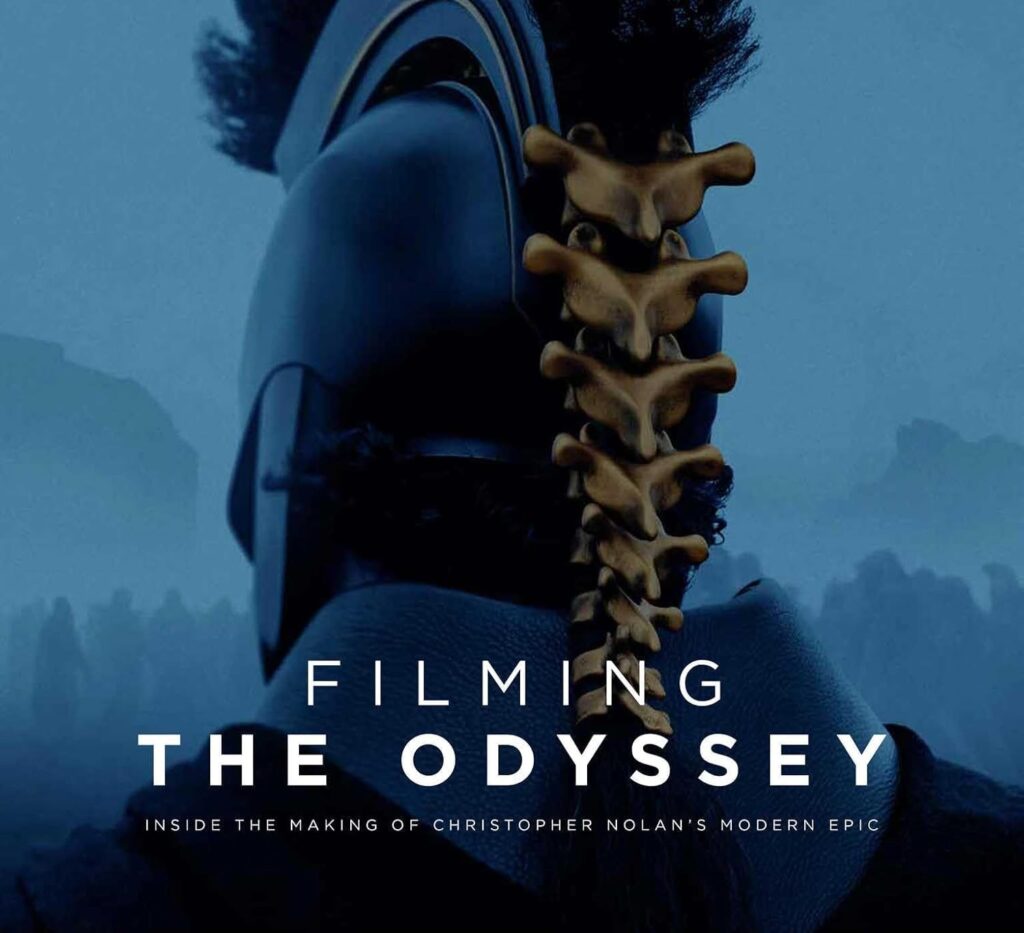
• Filming The Odyssey: Inside the Making of Christopher Nolan’s Modern Epic, by James Mottram (AmazonUK Affiliate Link) | ISBN: 978-1835419403
An exclusive behind-the-scenes look at Summer 2026’s most anticipated film. Filming The Odyssey: Inside the Making of Christopher Nolan’s Modern Epic traces the creation of Nolan’s latest film from script to screen through exclusive interviews with the director and his cast and crew accompanied by electrifying visuals from the film, including on-set photos, concept art, and research materials.
Dive into the creative process of the award-winning director Christopher Nolan, and get an insider’s view of his latest film, and others involved.
James Mottram is a film critic, journalist and author. He has written several books on cinema, including The Making of Memento, The Sundance Kids, and The Making of Dunkirk, and contributed to numerous critical anthologies on everything from Japanese cinema to war movies.
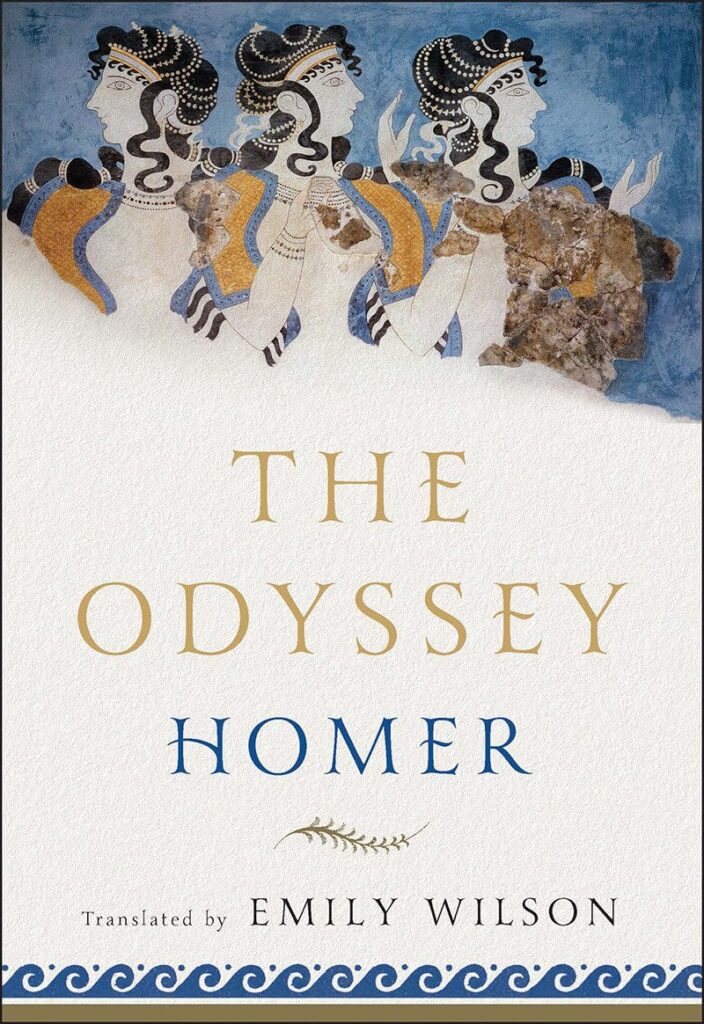
• The Odyssey by Homer (Author), Emily Wilson (Translator) (AmazonUK Affiliate Link)
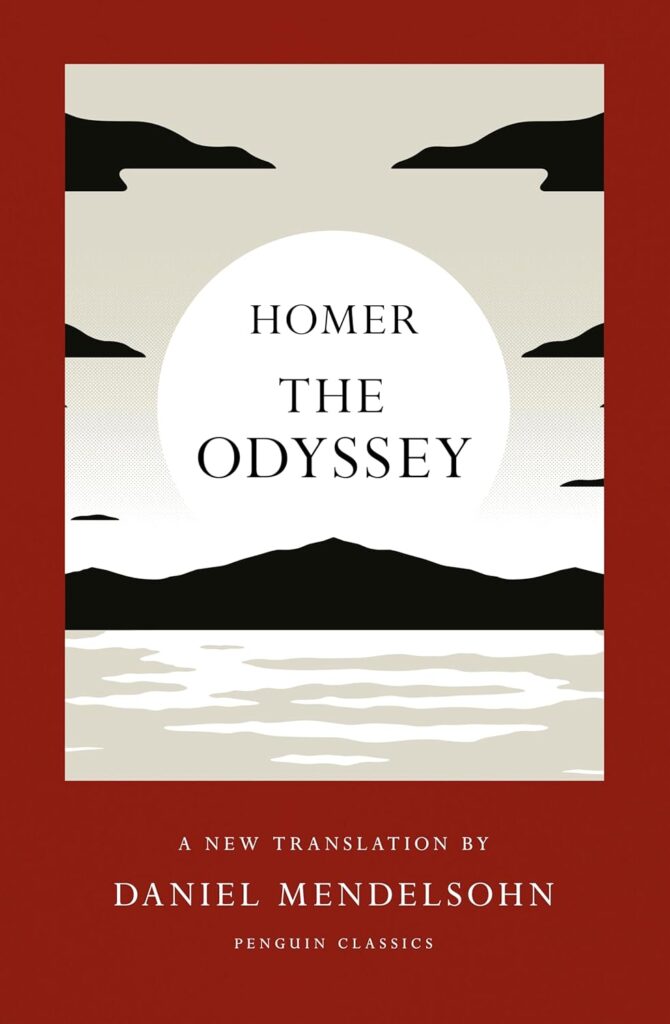
• The Odyssey by Homer (Author), Daniel Mendelsohn (Translator) (AmazonUK Affiliate Link)
This review was, like Odysseus, last savaged by bees on Wednesday 22nd July 2026, at the direction of Zeus. Oh, all right! It was Tim really.
- About the Author
- Latest Posts

John is the founder of downthetubes, launched in 1998. He is a comics and magazine editor, writer, and Press Officer for the Lakes International Comic Art Festival. He also runs Crucible Comic Press.
Working in British comics publishing since the 1980s, his credits include editor of titles such as Doctor Who Magazine and Overkill for Marvel UK, Babylon 5 Magazine, Star Trek Magazine, and its successor, Star Trek Explorer, and more. He also edited the comics anthology STRIP Magazine and edited several audio comics for ROK Comics; and has edited several comic collections and graphic novels, including volumes of “Charley’s War” and “Dan Dare”, and Hancock: The Lad Himself, by Stephen Walsh and Keith Page.
He’s the writer of comics such as Pilgrim: Secrets and Lies for B7 Comics; “Crucible”, a creator-owned project with 2000AD artist Smuzz; and “Death Duty” and “Skow Dogs”, with Dave Hailwood.
Categories: Comics, downthetubes News, Features, Film, Other Worlds, Reviews
 In Review: Spider-Man: Brand New Day
  In Review: Guido Crepax – “We loved you so much, Valentina” at the Galerie Martel, Brussels
  In Review: Superman (2025)
  Terrific Thessaloniki! A Special Report by James Bacon
I beg to differ in your mention of Damon not being the right choice for Odysseus. He is in fact the perfect choice as Nolan has also pointed out because of his ability to portray different characters in his portfolio of movies. It is brains as well as brawn that defines Odysseus, and Damon has both, in fiction as well as in reality. Spoiler alert, as there is a “Jason Bourne” moment at the end too. So, yes, it goes beyond mere appearances as Damon is known for his relationship to others, his leadership and collegiality among others. There is also the emotional thread that run through his character which we do not see clearly until you watch the movie a second time! The first time was in awe of the spectacle.
I also like to point out the sacking of Troy is not mentioned at all in Homer’s companion book the Iliad but is implied in The Odyssey through the story of the Trojan horse. In fact, the movie, “Troy” should, if it followed the Iliad, end with Hector’s death and return of the body. So, yes, the sacking of Troy should be portrayed in The Odyssey.
One line in this review confused me.
Tim, you say “Pseudo scholars have leapt on inaccuracies”. Are we to infer that you believe genuine scholars doggedly ignore inaccuracies?
Tim has revised his review slightly, clarifying points raised. We threatened him with bees.