Artist Louise Millar Watt publishes a marvellous website devoted to her illustrious cartoonist and artist grandfather, John Millar Watt, celebrated for his ground breaking Daily Sketch newspaper strip “Pop”, as well as some wonderful painted covers and interior stories for Fleetway’s Picture Libraries and Annuals.
It offers a fantastic overview of his work, across all the various aspects of his career, as well as insights into the creativity of his descendants.
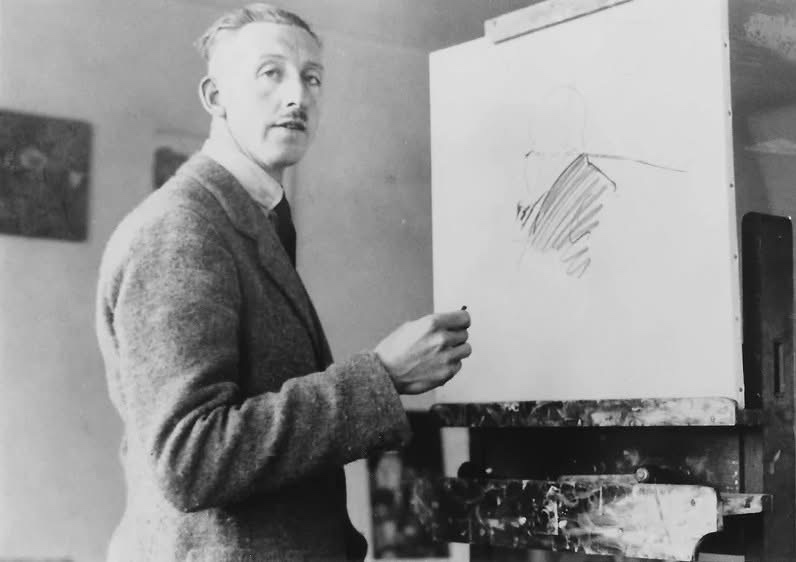
Launched in 2024, wattpop.com covers John’s life and career, both “Pop” and “Post-Pop” plus the other artistic members of the Millar Watt family, herself included.
John Millar Watt (14th October 1895 – 13th December 1975), or Millar Watt, as he was known, was an artist whose work exceptionally, embraced no less than four genres of commercial and fine art: cartooning, illustration, advertising and painting.
Born in Gourock, Clyde, he was educated in Ilford, Essex, and at John Cass School of Art (now the School of Art, Architecture and Design), studying metalwork at the latter, before studying anatomy under Henry Stabler. He was then apprenticed to Mather and Crowther, an advertising agency, whilst attending evening classes at the Westminster School of Art.
He was in the Army in World War One, serving as an officer in the Artists’ Rifles and the Essex Regiment, afterwards studying at Slade School of Fine Art, before returning to advertising work, supplementing his wages with sporting cartoons for the Daily Chronicle‘ and cartoons for The Sphere.
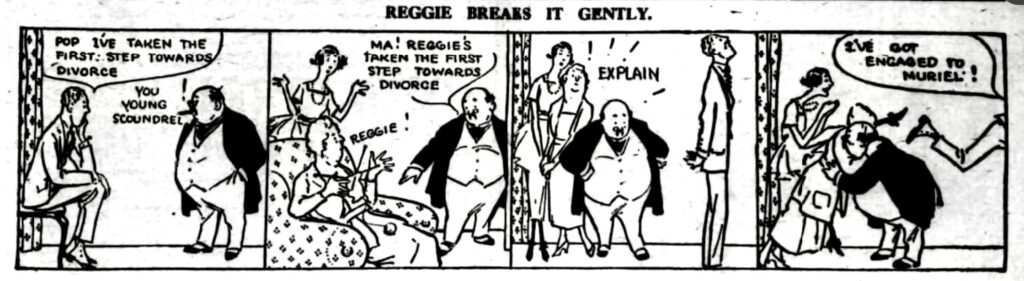
He created the comic strip “Pop” for the Daily Sketch, the character making his debut on 20th May 1921. His first appearance is titled “Reggie Breaks It Gently”, portraying as Pop as a rotund businessman who would usually be found in a bowler hat, waistcoat, striped trousers and spats.
The strip centred on Pop’s family and was later given the same name as the lead character, who proved a circulation boosting success for The Daily Sketch, and later launched tie-in, still collectable, merchandise, including toy figures.
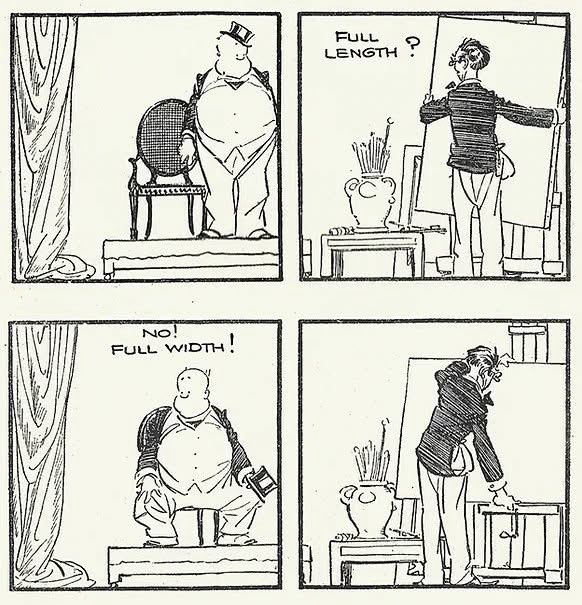
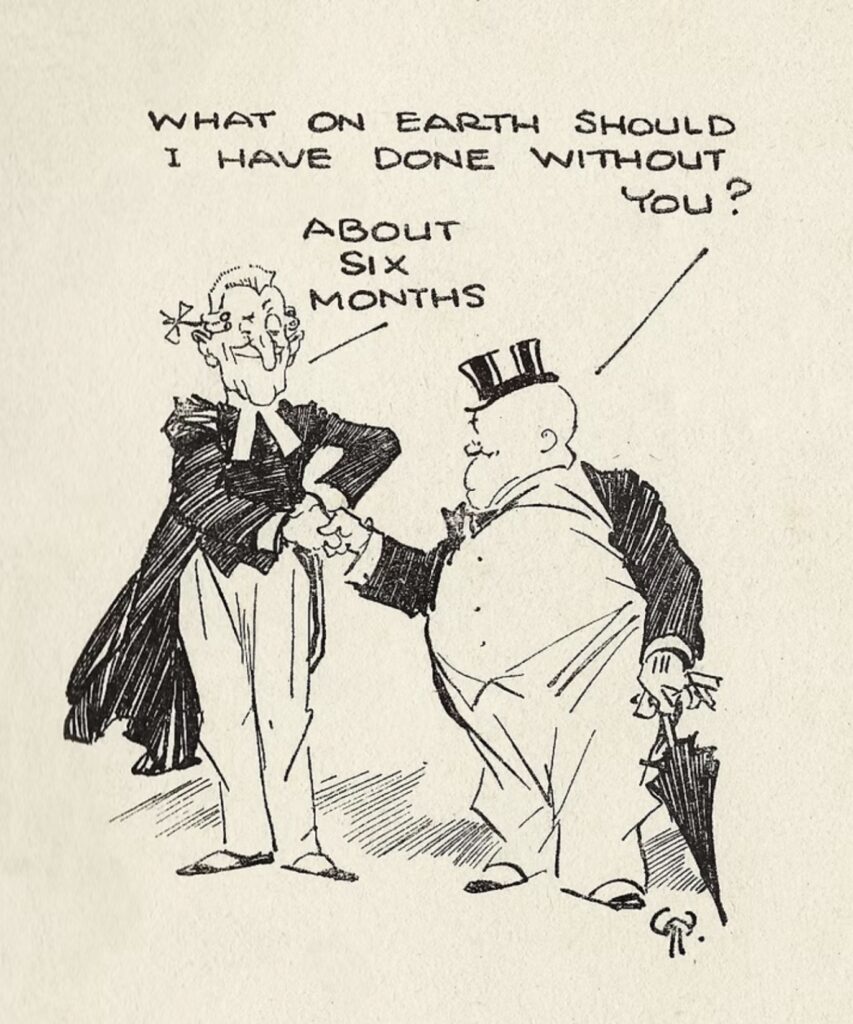
In the strip, Pop was a henpecked husband with two daughters, a son and a young baby. It is notable as it saw an early British use of incorporating speech inside the panels, the dialogue running continuously across panels rather than in balloons, and the use of polyptychs – a continuing landscape across the (usually four) panels, whilst the action was divided into frames in the foreground.
(“The Perishers”, which ran in the Daily Mirror, is another strip that, published later, uses this technique to great success).
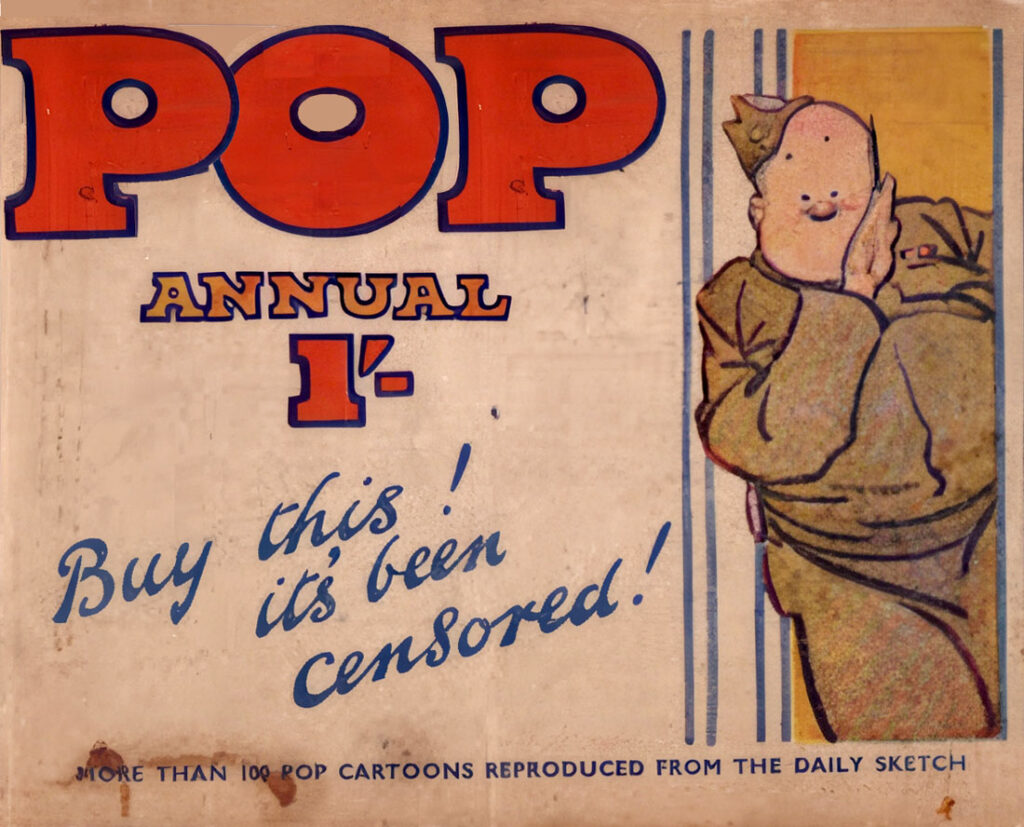
Watt’s strip was one of the few British strips to be successfully syndicated across the British Commonwealth and in the United States, and was considered so important to national morale during World War Two that Millar Watt was rejected for war work and instead drew “POP”Pop”, now tin-hatted in the Home Guard.
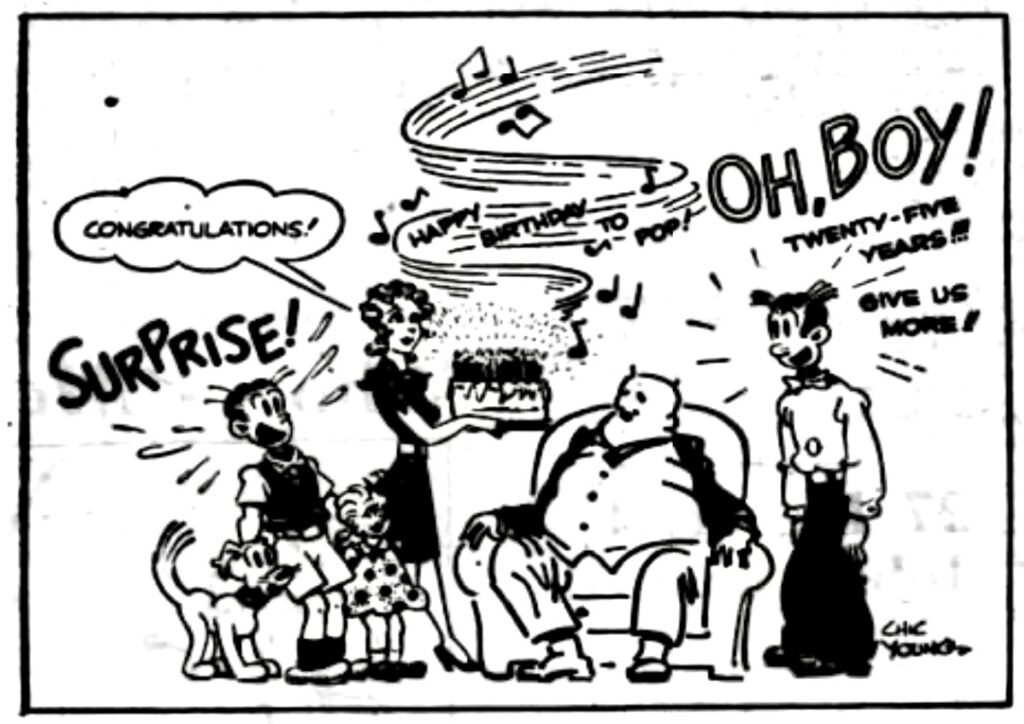
In a special 25th anniversary tribute published in the Daily Sketch on Tuesday 21st May 1946, was praised widely by artists as diverse as “Blondie” creator Chic Young, who provided a crossover cartoon for the occasion, and fellow British cartoonists Frank Reynolds and David Low.
The Suffolk Artists web site notes Watt married Amy Millar Watt née Biggs, in 1923, and they moved to Dedham, Essex where their daughter Mary Millar Watt was born.
He spent a period at Trenoweth, St Ives, Cornwall, where he was involved with the St Ives Society of Artists, and from where he exhibited at the Royal Academy in 1936.
Watt continued to draw “Pop” until 1949, leaving to concentrate on more lucrative advertising and illustration work. The strip was taken over by Gordon Adam Hogg, and continued, according to research by Paul Hudson for his A to Z of British Newspaper Strips, until the early 1960s (not 1971, as some sources claim).
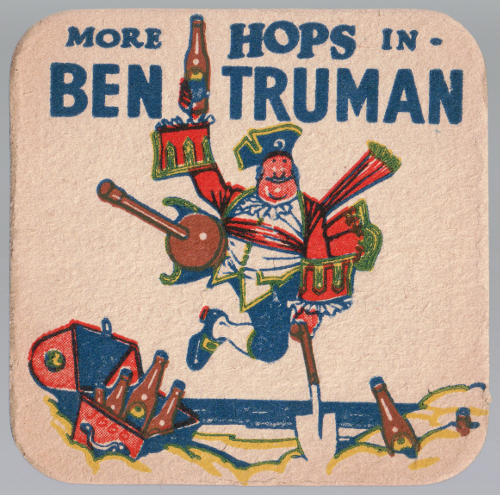
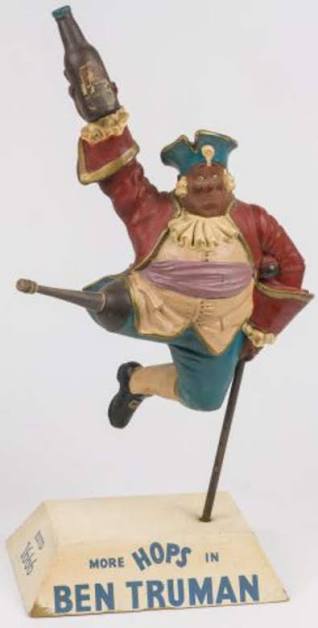
After World War Two, he and Amy made their home at Chelsea but when she died in 1956, John returned to East Anglia, living at Fir Tree Farm, Lavenham, Suffolk where he continued his commercial work, including the famous “More Hops in Ben Truman” campaign of the 1950s, his art used on beermats, and, it appears, as a model promotional figure.
Watt began contributing comic strips to the Amalgamated Press’s Thriller Comics Library in the mid 1950s, also producing many covers for the same title between 1956 and 1959. He also contributed to the Robin Hood Annual and the girls’ comic, Princess.
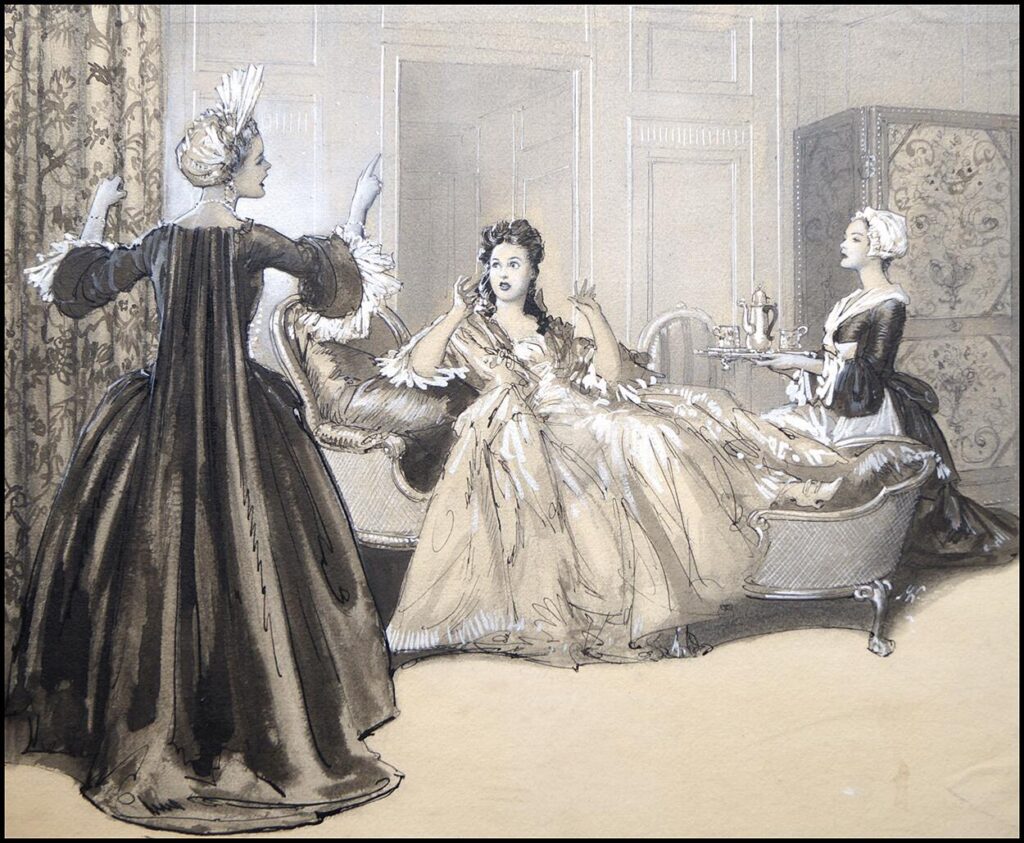
His full page illustrations in Look and Learn were a highlight of that magazine for many years, and he also provided illustrations for a range of books published by DC Thomson.
Although Dudley Watkins and Allan Morley were famously the only regular artists for DC Thomson’s comics who were given permission to sign their work, comic archivist Philip Rushton notes John Millar Watt was also so well regarded that he was allowed to sign the strips and illustrations he contributed to their annuals with his distinctive ‘MW’, which can be seen in the bottom left corner of the final page of this adaptation of King Arthur’s story.
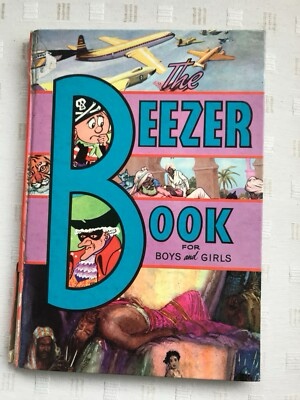
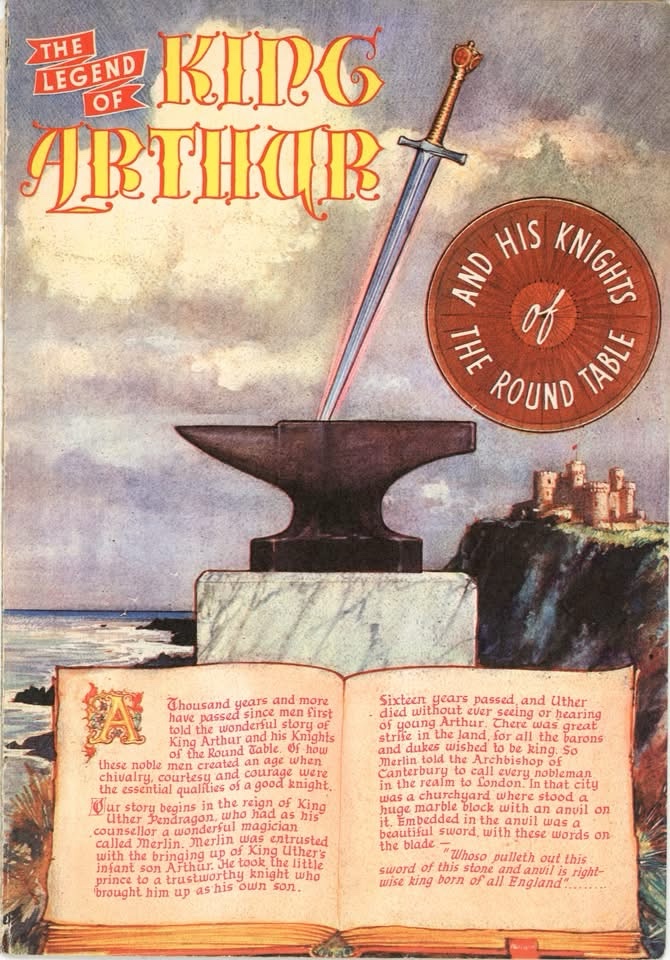
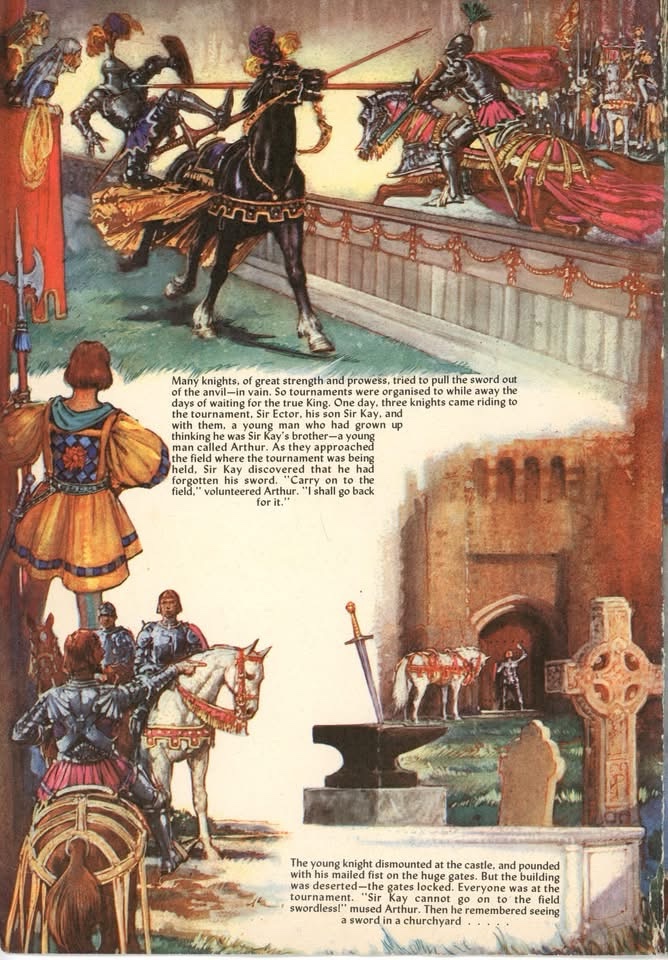
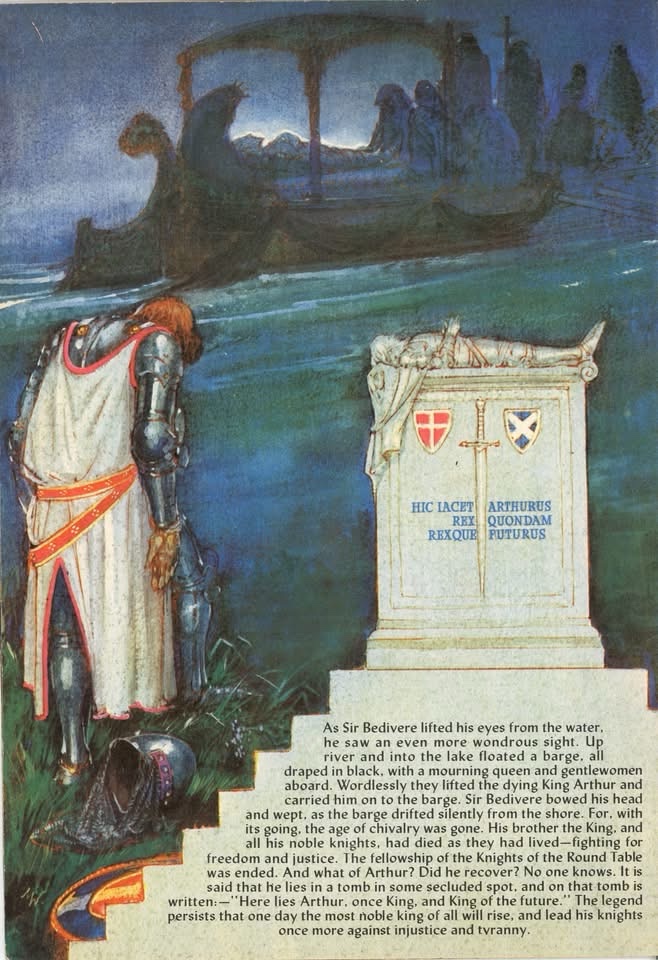
Among his works for the Dundee-based publisher was a beautifully illustrated (if deeply romanticised and historically inaccurate) re-telling of the King Arthur myth, from the 1962 Beezer Book, published by DC Thomson.
This 1960s Beezer version, with post Norman Invasion trappings is very much what kids at that time imagined or were told was the story of the fabled king, now thought to have been a real historical figure whose story was originally told as part of Welsh myth, later retold by Geoffrey of Monmouth, whose take on the character has dominated much modern media retellings.
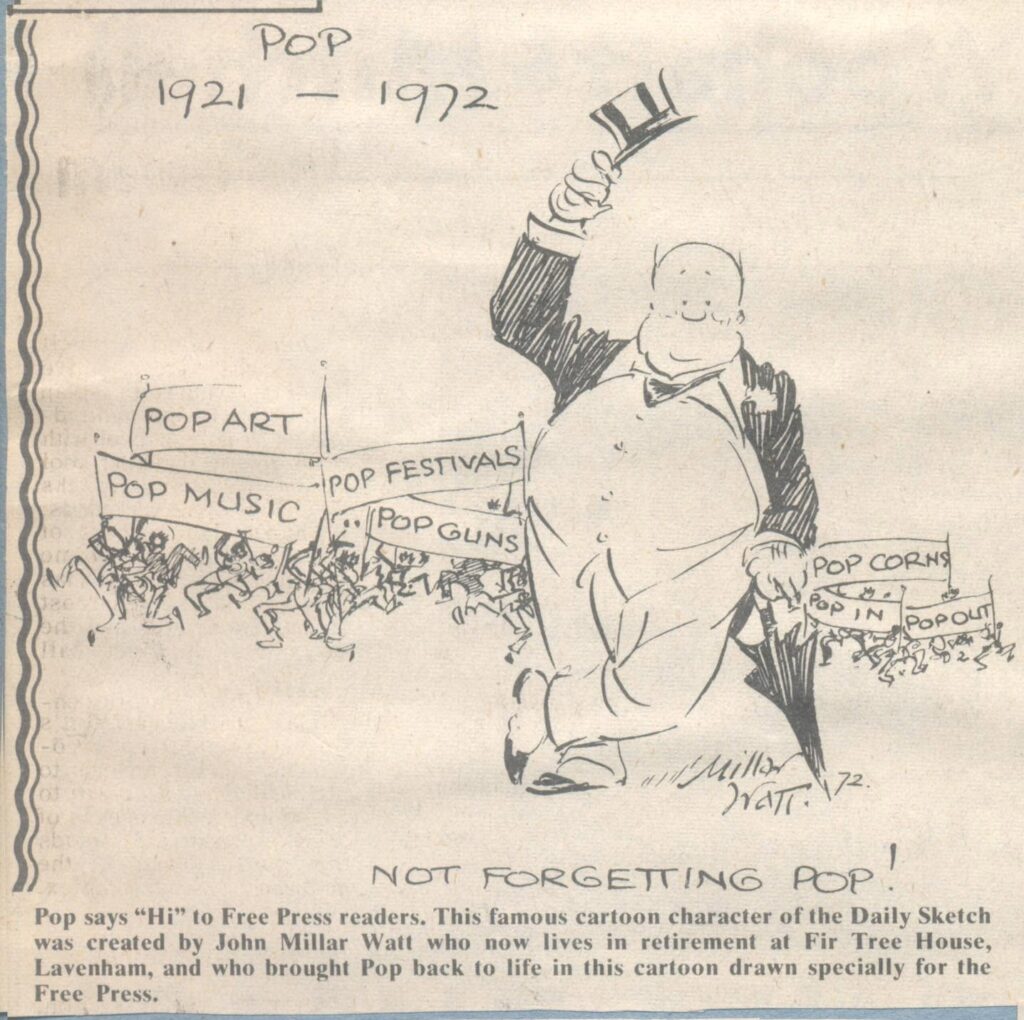
Sadly, the change of ownership of the Daily Sketch meant many of the some 9000 “Pop” cartoons, never returned to the artist, were lost, despite attempts by John to trace them in retirement. He did, however, revive “Pop” for one outing in his local Free Press newspaper…
Head downthetubes for…
• Suffolk Artists: John Millar Watt
• John Millar Watt: Art for Sale at The Book Palace
With thanks to Philip Alderman, who started me down this rabbit hole
- About the Author
- Latest Posts

John is the founder of downthetubes, launched in 1998. He is a comics and magazine editor, writer, and Press Officer for the Lakes International Comic Art Festival. He also runs Crucible Comic Press.
Working in British comics publishing since the 1980s, his credits include editor of titles such as Doctor Who Magazine and Overkill for Marvel UK, Babylon 5 Magazine, Star Trek Magazine, and its successor, Star Trek Explorer, and more. He also edited the comics anthology STRIP Magazine and edited several audio comics for ROK Comics; and has edited several comic collections and graphic novels, including volumes of “Charley’s War” and “Dan Dare”, and Hancock: The Lad Himself, by Stephen Walsh and Keith Page.
He’s the writer of comics such as Pilgrim: Secrets and Lies for B7 Comics; “Crucible”, a creator-owned project with 2000AD artist Smuzz; and “Death Duty” and “Skow Dogs”, with Dave Hailwood.
Categories: downthetubes News
 E.C. Tubb’s “Cap Kennedy” Saga: Background To a Space Hero Saga
  Tube Surfing: British Comic Kickstarters, Our Latest Top Picks
  Cosmic Lighthouse “Murderbot” graphic novel tie-in smashes crowdfunding target
  2000AD announces 50th Anniversary Event next March