Hibernia Comics has just published its collection of the very first “Doomlord” story from Eagle in Doomlord Volume 1: Zyn, available to order here. The collection’s designer, Richard Pearce, remembers his first encounter with the hugely popular alien executioner well…
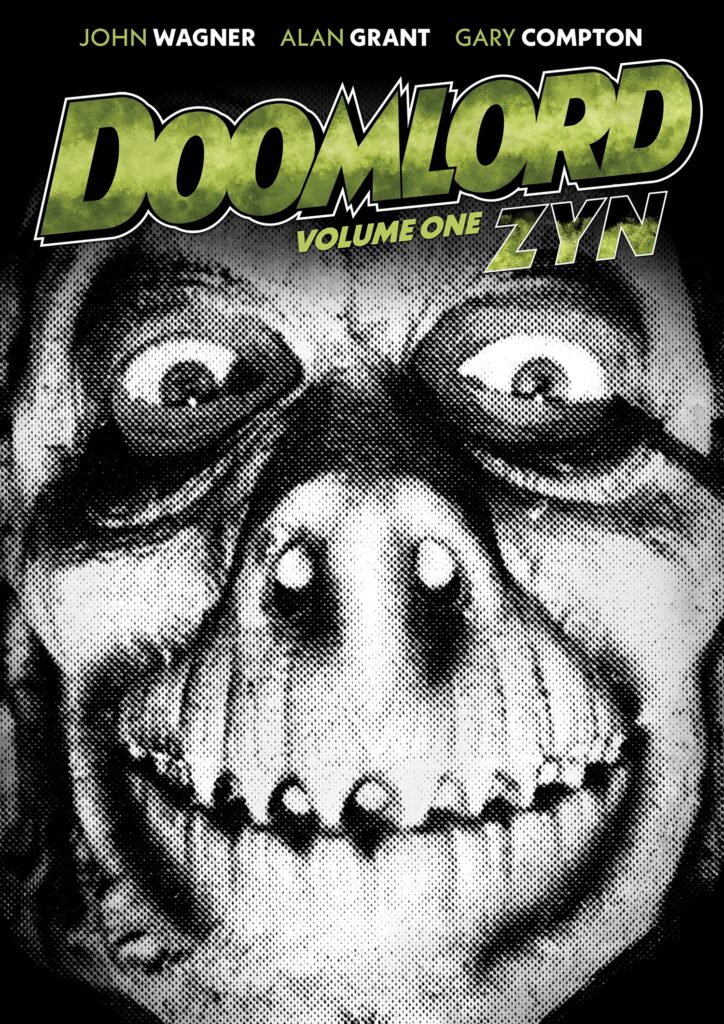
Doomlord lived in my grandparents’ house. I know that, because it’s where I first met him.
In my case though, this wasn’t a guest house run by a well-meaning, if chronically oblivious, landlady, but a tidy end-terrace in Ayr. I was visiting my grandparents and had discovered some old copies of the Eagle tucked away in a cupboard at the end of their narrow first floor hall. They had likely belonged to my uncle, my mother’s youngest brother, whose own interests had drifted away from comics to The Jam, scooters and football. Perhaps anticipating weekend visits from grandchildren, my Gran had kept them aside (along with, more appropriately for a Scottish city in the 1980s, a handful of copies of the Dandy Comic Library).
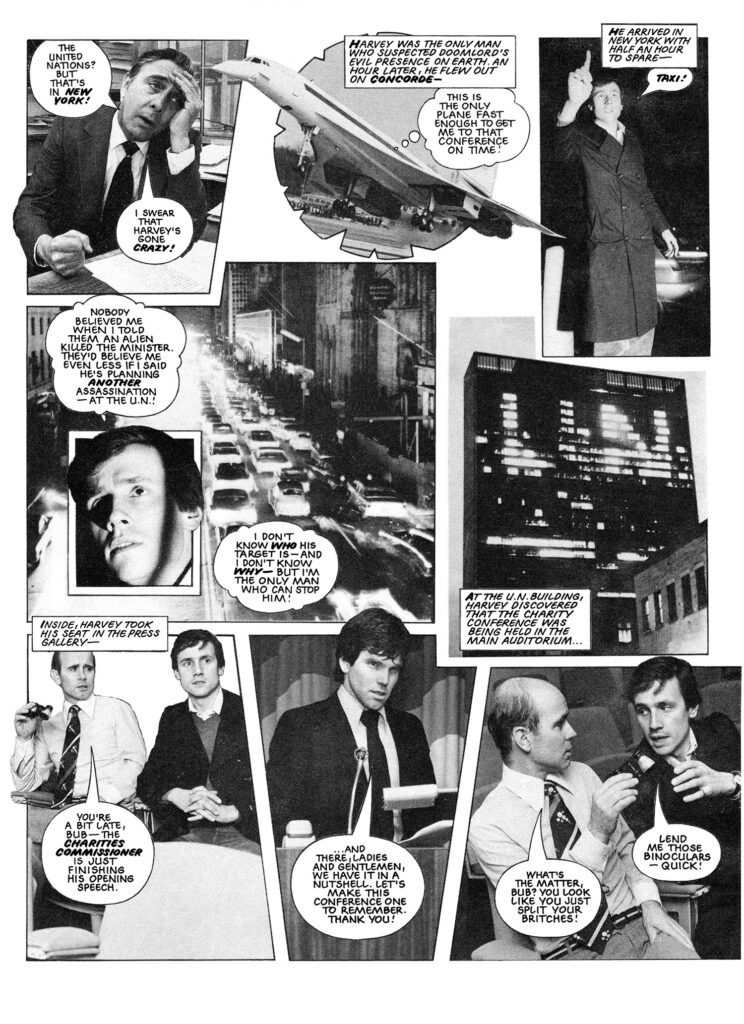
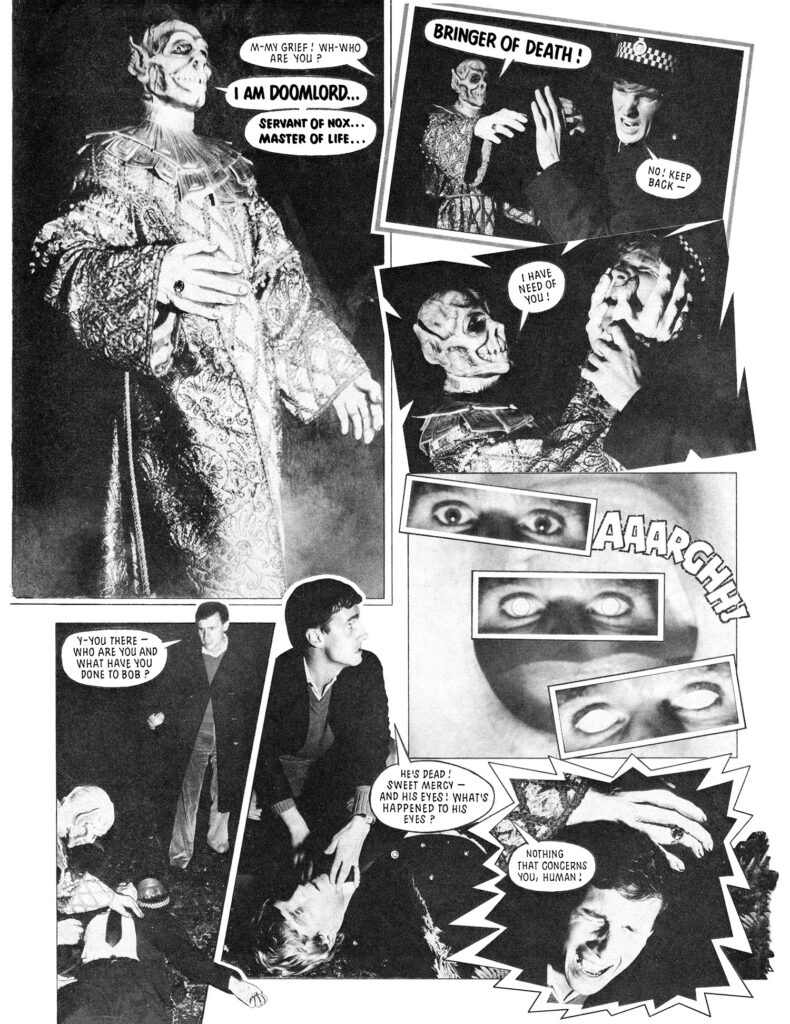
I had grown up with comics and was vaguely familiar with the Eagle, but I’d never seen anything quite like this. Photographs replaced line art and in these opening panels a group of hooded figures huddled together on the desolate planet Nox. They were preparing one of their own to venture across the void to investigate – and possibly judge – the inhabitants of Earth. The figure in front of them raised its hood to reveal a bizarre, skeletal face. Adopting the title of Doomlord, it set out across the stars and landed on Earth in the dead of night. Its arrival was witnessed by a passing tramp who found himself on the wrong end of the dread powers of the alien visitor. It drained his essence and transformed, taking on his physical form and setting off to continue his mission…
I read on quickly through the handful of issues in the small pile, following the story as Doomlord dispatched passing thugs and took on the identity of Eric Plumrose, a travelling salesman. The alien made his base on Earth at Mrs Souster’s guest house, where her sons quickly discovered that their mother’s new visitor wasn’t quite what he appeared.
There wasn’t a great deal of action, especially compared to the gothic carnage of “The A.B.C. Warriors”, a favourite from the pages of 2000AD. The Order of the Knights Martial had imprinted themselves on my pre-teen brain and I had thrilled to Kevin O’Neill’s sinister, angular robots executing war criminals, and the bizarre Deadlock riding out from the wreckage of the Knights’ crippled Watch-Tower aboard a jetbike. Doomlord was almost pedestrian by comparison, but there were threads of the same black humour and casual violence that laced my favourite 2000AD stories, and something about the juxtaposition of Doomlord’s casual disregard for human life with the cosy domesticity of the guest house (complete with flowery bed linen!) tickled me. And throughout it all, there was Doomlord himself, with his wide eyes and fixed half-smile, perpetually amused by the grim task his alien masters had set him.
It was years before I discovered how this particular story ended (short version: Doomlord brings the world to the edge of nuclear destruction to teach the human race a lesson and is then inadvertently marooned on Earth, returning to Mrs Souster’s guest house to await his next adventure) but Doomlord lingered on in my imagination.
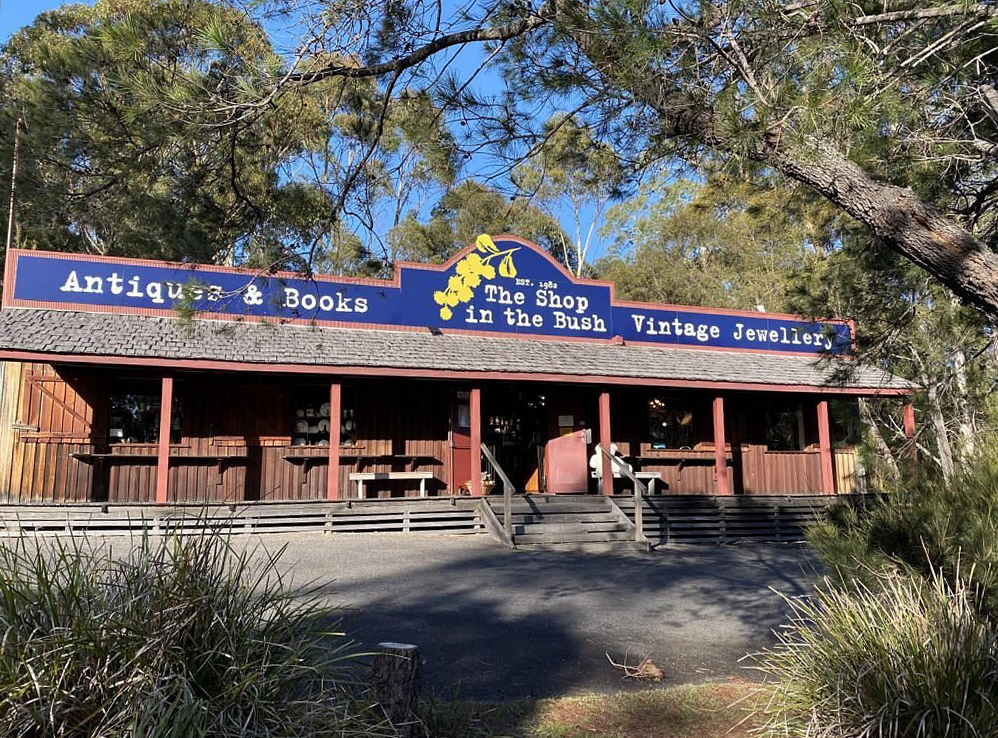
In 2003, I returned to the UK from a year abroad in Tasmania. My father had been recruited to work as a GP in St Helens, a small town on the east coast of the country, and the rest of the family joined him there. There, my comic collecting itch reappeared when I discovered a complete mint-condition run of Action in a small antiques shop called The Shop in the Bush off the Tasman Highway. When I returned to the UK, I started collecting again in earnest.
As my 2000AD collection was fairly complete, and I had recently completed a run of adjacent comics like Revolver and Crisis, I went looking for other British comics to collect. I stumbled across an eBay auction for a run of the new Eagle spanning issue 1 to somewhere in the early 300s. The seller’s photos promised a treasure trove of stories that were largely new to me, from Ian Kennedy’s gorgeous painted art on “Dan Dare”, to stories like “The House of Daemon”, “Computer Warrior”, “The Fists of Danny Pyke” and “Bloodfang”. However, it was the covers from the early issues that stood out, with a face fixed in a familiar half-smile staring out at the reader.
The comics arrived a week or so later in a pair of large boxes and I spent days unpacking, organising and reading them. Finally, I could find out what had happened after Mrs Souster’s sons came up with their plan to drill a hole in the ceiling of Doomlord’s bedroom, but I also discovered the tale of the first Doomlord, Zyn, and devoured the third photo-story that ended with a battle between Doomlord Vek and Zom, another Doomlord sent from Nox to complete the annihilation of the human race when Doomlord Vek refused. After that, there was the shift from photo-story to illustrated strips and the adventures grew wilder and wider in scale, as “Heinzl” (a pseudonym for Italian artist, Alberto Giolitti, and anonymous assistants from his studio) and Eric Bradbury inked these new tales.
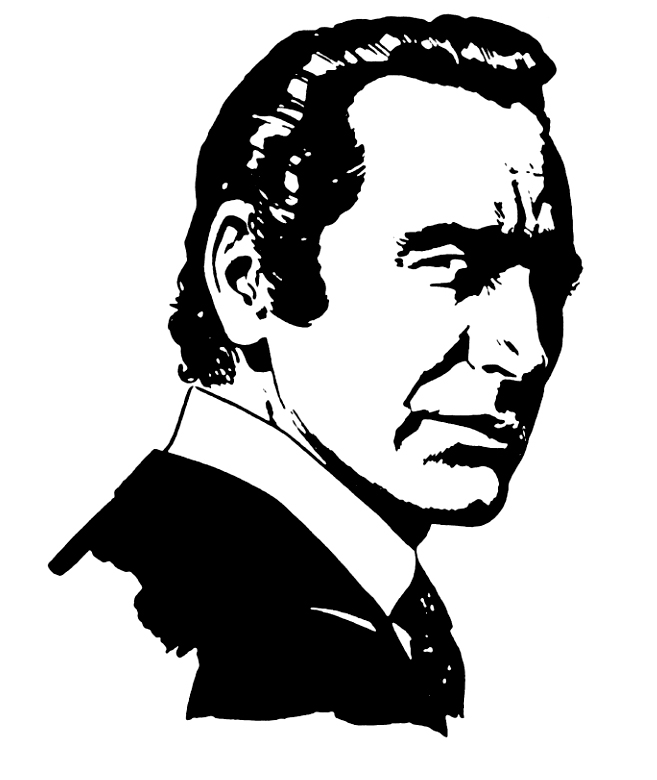
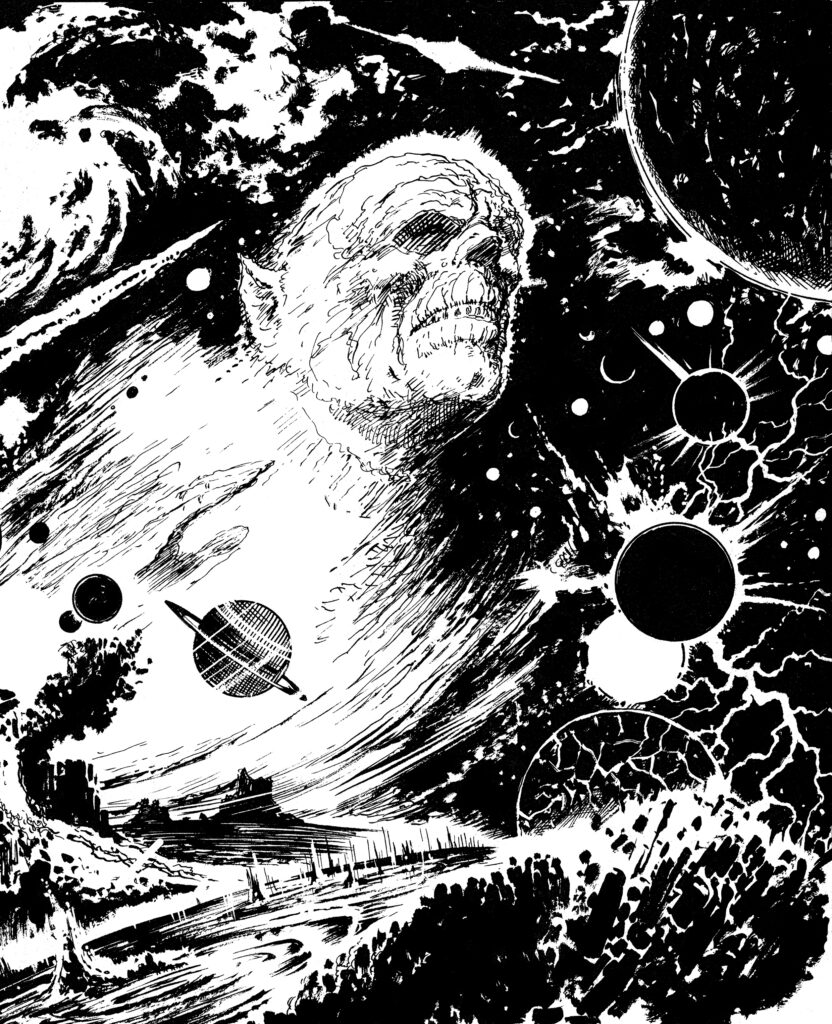
From the arrival of the Deathlords, to the Populators of Pollux, the establishment of Doomlord’s isolarium on the Moon (this, Vek’s own lunar Fortress of Solitude, was very much in line with the alt-Superman threads that ran through the series) and the creation of Vek’s son, Enok, the scope of the story grew with each new tale. Although “Dan Dare” was nominally the lead strip, it was clear that “Doomlord” was often the most interesting and entertaining (and, apparently, the most popular) story in these later issues.
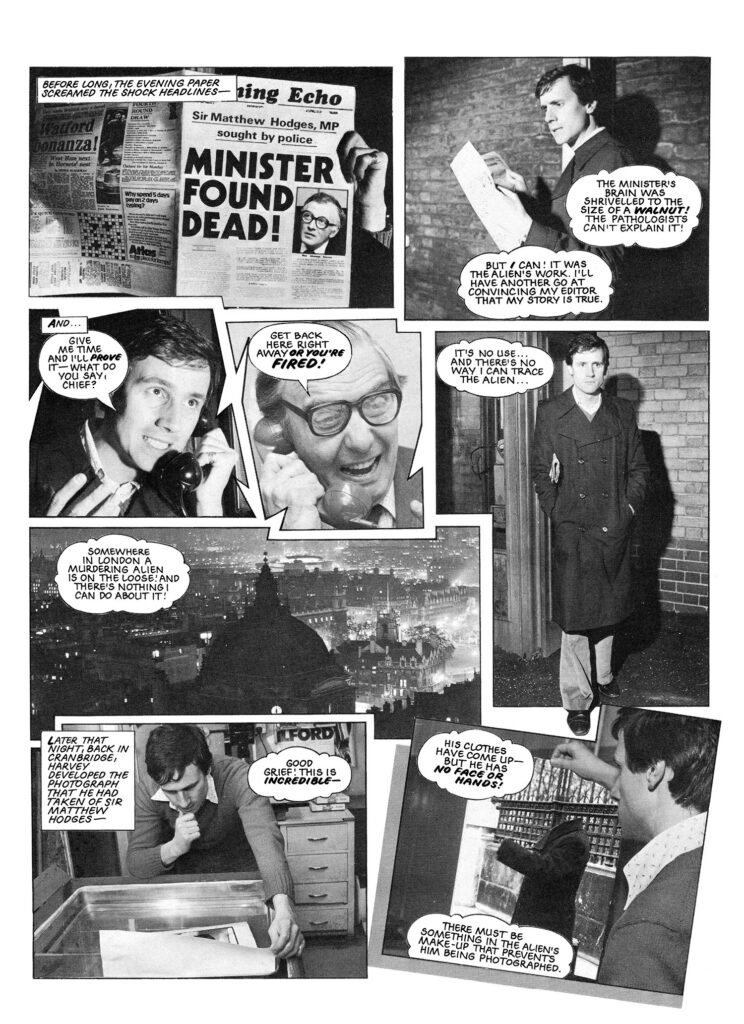
However, as much as I enjoyed these later adventures, there was still something about those first three photo-stories that resonated and intrigued in a way the later stories didn’t. Part of it was the sheer novelty; although photo-stories, known in Italy as fumetti, were popular and common in comics and magazines aimed at girls, the Eagle was really the only serious attempt to do something similar in the boys’ market and IPC had thrown their full weight behind the project. As well as “Doomlord”, there was the robot spy thriller, “Manix”, school football team drama in “Thunderbolt and Smokey”, undercover detective action in “Sgt. Streetwise”, private investigator “Joe Soap”, twist-in-the-tale one-offs in “The Collector”, and more. Although “Dan Dare” and tales like “The Tower King” and “The House of Daemon” – all more traditional illustrated strips – ran in these early issues, the novel photo-story format was to the fore in the 18 months of the New Eagle’s life.
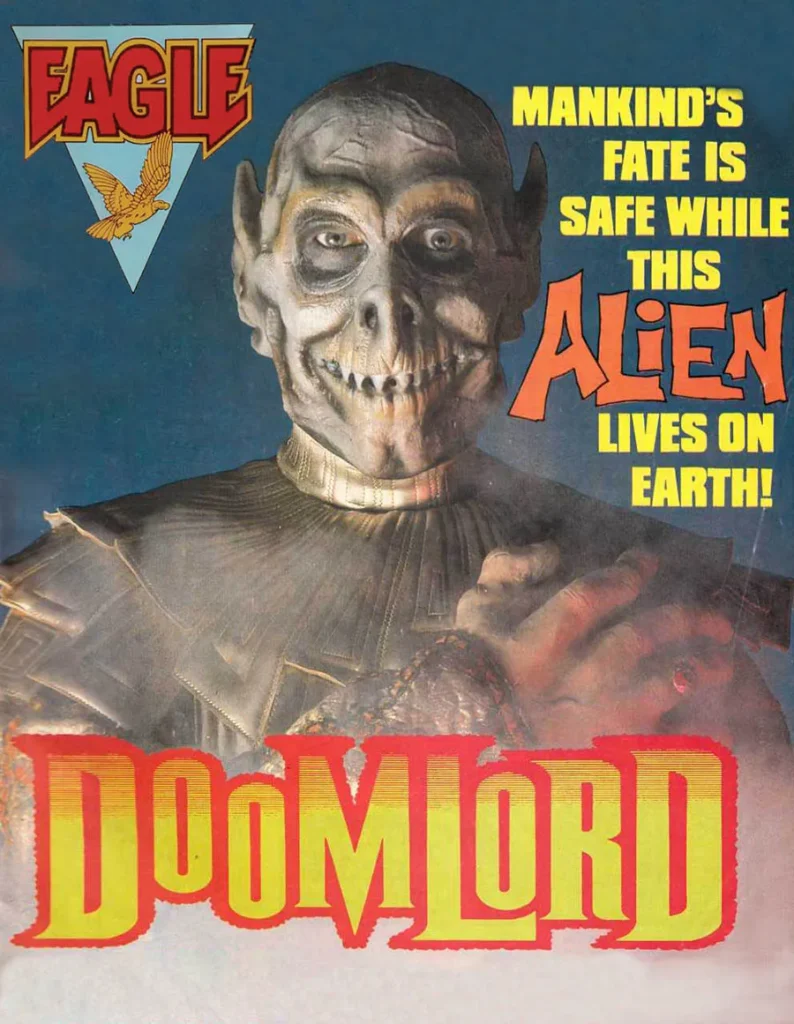
Another key element was the design of the character and the setting. Although clearly not the work of a professional effects artist, Doomlord’s look was striking and the mask was well-made, with that curious fixed half-smile giving it an unsettling air. Photographed to show it at its best, and with the input of Eagle’s art staff to tidy up the rough edges for print, the mask gave the character a unique and peculiar look. The familiar settings – small houses, hotel rooms, office buildings and car parks – all grounded things, and brought a texture and familiarity that gave the strip another part of its flavour. It’s perhaps worth noting that it’s when the series veers away from this with stock photos of global political meetings, foreign cities and airline flights that it feels at its shakiest.
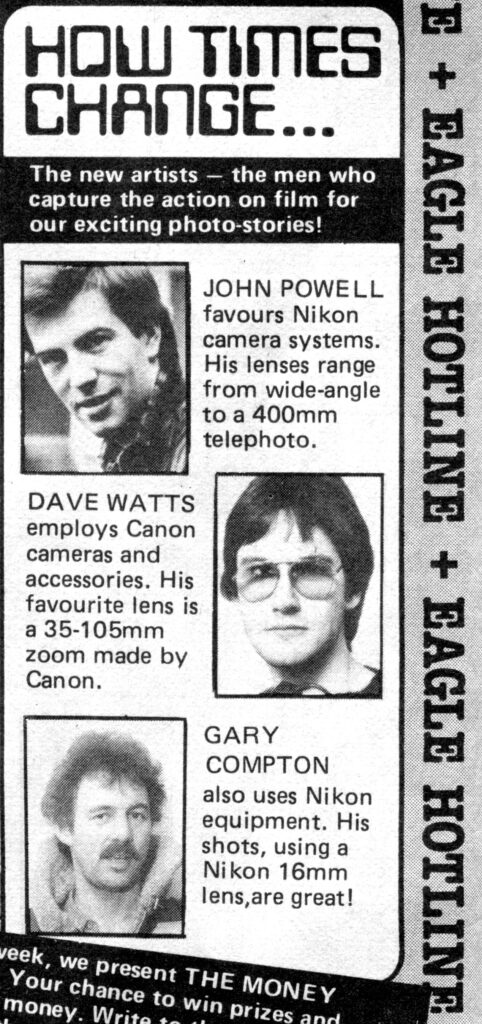
The actors were an interesting mix of half-familiar faces – someone you might vaguely remember seeing in a repeat of an older TV drama, or in the background of a music video – alongside more “normal” looking people and amateurs hamming things up, the photography was clear and exciting with some memorable scenes, and the stark black and white images – particularly the night-time scenes – gave the series an eerie flavour all its own. All of Doomlord’s adventures had been photographed by Gary Compton, but there was little available information about him, barring a brief bio and photo in an early issue of the Eagle. Revisiting “Doomlord” in Eagle had answered some of my questions, but left a few more that would set down roots and continue to grow.
Returning to collecting British comics, and as a long-time subscriber to 2000AD, I was a member of the 2000AD Usenet group alt.comics.2000ad (archived by Google here) and, later, the 2000AD Online Forum. In the pre-social media early 2000s they were a gathering place for fans, aspiring writers and artists, and a handful of professionals. A number of creators who would later go on to work for 2000AD, and for other larger publishers in the US, got their start in the burgeoning small press community that grew up around the forum, where fans met, exchanged ideas and launched their own publications.
Hibernia Comics, and locating Eagle’s photographers

David McDonald was a regular contributor and his 2004 reprint of Doomlord’s first major illustrated adventure – The Deathlords of Nox, with art by “Heinzl” – marked his own entry into the small press scene. We ended up in touch and I joined him to design his next release, The Thirteenth Floor, in 2007. That kicked off a series of reprints and non-fiction releases from Hibernia that continues to this day, and it’s been my pleasure to have helped David with design work on all of those. From The Thirteenth Floor to Captain Condor, early work from Kev O’Neill and nursery comic reprints, Hibernia have released a wide and eclectic range of comics, but if there was ever a “white whale” that David hoped to be able to bring back in to print it was Doomlord, particularly the character’s early photo-strip adventures. We talked about it infrequently over the years, and a combination of David’s enthusiasm for the character and my own history with the alien nursed those deep roots and I’d often find myself idly searching for more information on the development of the series.
One article, written by John Byrne for SFX #200, turned up online. Clearly written with a deep fondness for the character and all its idiosyncrasies, the article dove into the development of the character and, most intriguingly, mentioned a potential source for some of the actors:
“The main characters were played by hired actors and several leading actors’ agencies were used”, David Hunt explains. “Many of the guys selected were extremely grateful for the money photo-strip afforded them because of the vagaries and uncertainties of the acting profession“. The performers chosen may not always have been, as John Wagner recalls, of the “matinee idol” variety – “[They] specialised in odd-looking people – I think it was called ‘The Ugly Agency’” – but this absence of glamour only added to Doomlord’s weird charm.”
“The Ugly Agency” turned out, with a little investigation, to be London model agency, Ugly. Established in 1969 with a newspaper advert inviting any readers with an “interesting face” to contact them, they would go on to specialise in people with unusual and unique looks and now have over 1000 models on their books. They were also too intriguing a lead to pass up. Their contact email was a couple of clicks away, and half an hour later I’d written to them.
A few days later I got a reply from Coxy, the head booker at Ugly. Although he didn’t have any information on anything the company might have had to do with Doomlord, he was able to confirm that Ugly had provided models for photo-strips in the 1980s and he had taken some time out to photograph their 1981 model directory for me on the off-chance that there might be someone in there I would recognise. He also sent me contact emails for a photographer who had worked on photo-strips, and for a model on their books called Mace Richards, who had gone by the near-anagrammatic pseudonym “Acid Charmes” and had been an occasional My Guy and Oh Boy! cover star.
Unfortunately, the photographer was a bit of a dead end, as he had only very vague memories of his time on photo-stories, but he did suggest one or two other contacts that might be worth investigating.
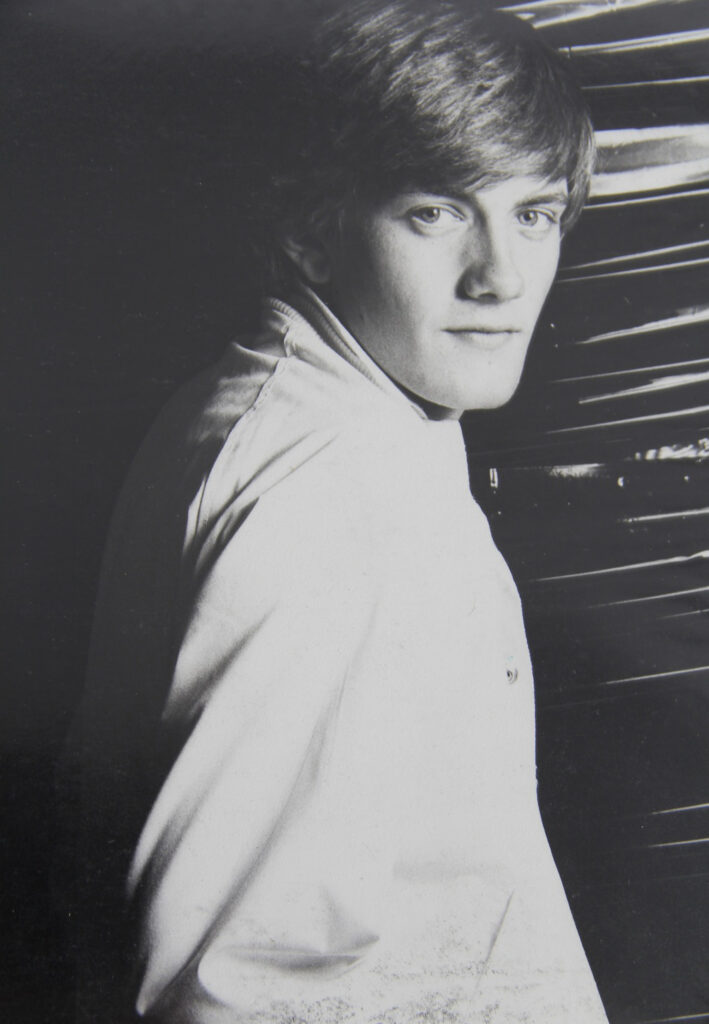
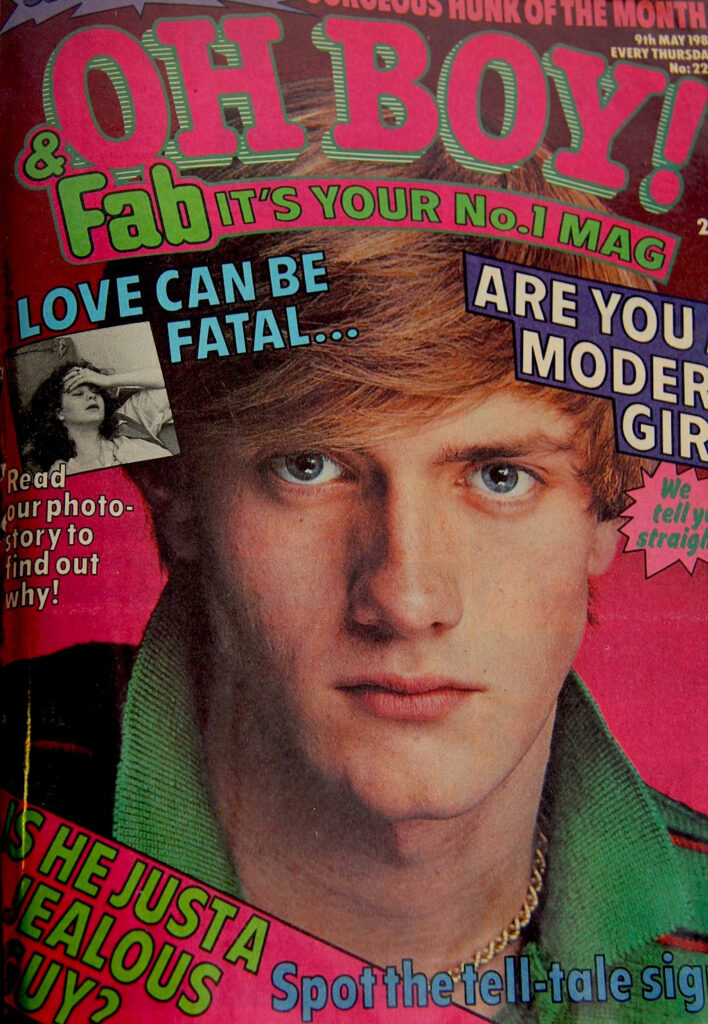
Mace was likewise unable to help, but proved to be a remarkable character and a pleasure to talk to. His father had apparently been head of PR and advertising with the Rank Organisation, and while Mace had been desperate to get into acting, his father had been set firmly against it as he considered acting a “terrible job” and refused to contribute to Mace’s RADA fees, even though he had been accepted by the academy.
Mace decided that modelling could give him an alternative route into acting, and, after graduating from the Lucie Clayton Charm Academy, he was picked up by the Askew Team agency and was soon modelling for My Guy, Oh Boy!, Photo Secret Love and others. Although he couldn’t offer any insight into the Eagle’s photo-stories or Doomlord, he did have a store of scurrilous stories about working on romance photo-shoots as a young man in 1980s London. None are repeatable, all were amusing and embarrassing by turn. He passed away a couple of years after our last conversation, and was by all accounts as much of a fascinating rogue in life as he was in writing.
One of the other contacts suggested was Mike Prior. Mike had shot a number of stories for the Eagle, including the android espionage tale “Manix” and the World War Two tale, “House of Correction”, and was still working for magazines like NME. When I spoke to him, he had fond memories of working on Eagle – blagging access to RAF Hendon and a Citroen Light 15 for “House of Correction”, among others – and while he wasn’t in regular contact with his old colleagues he recalled the name of Gary Compton’s website and suggested reaching out to him directly through that.
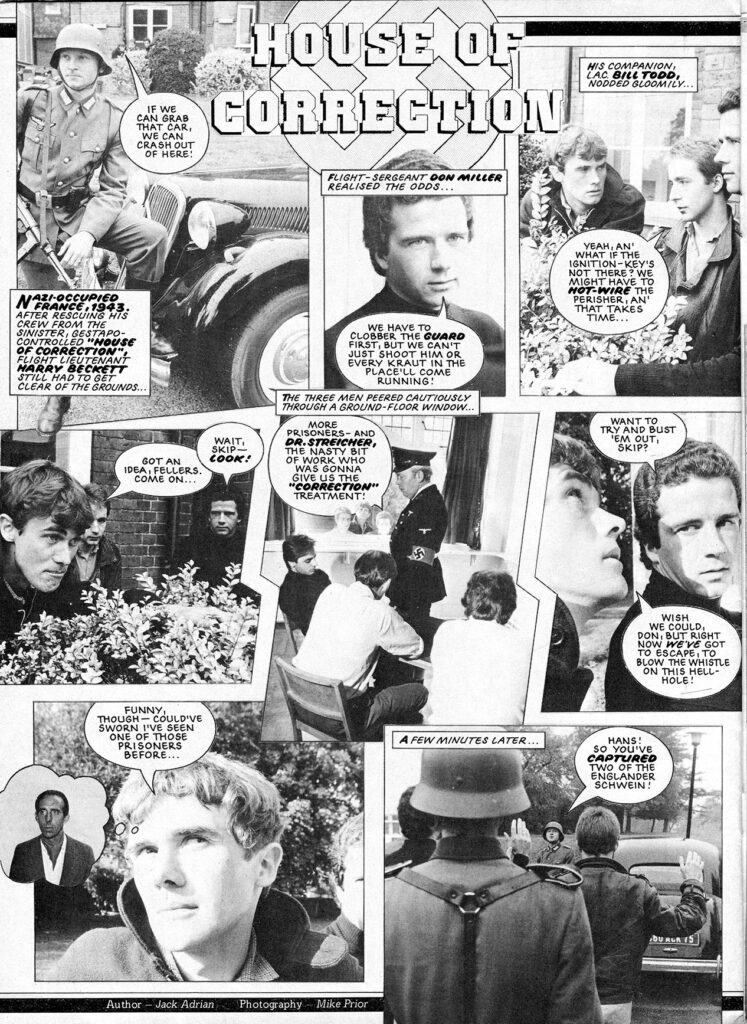
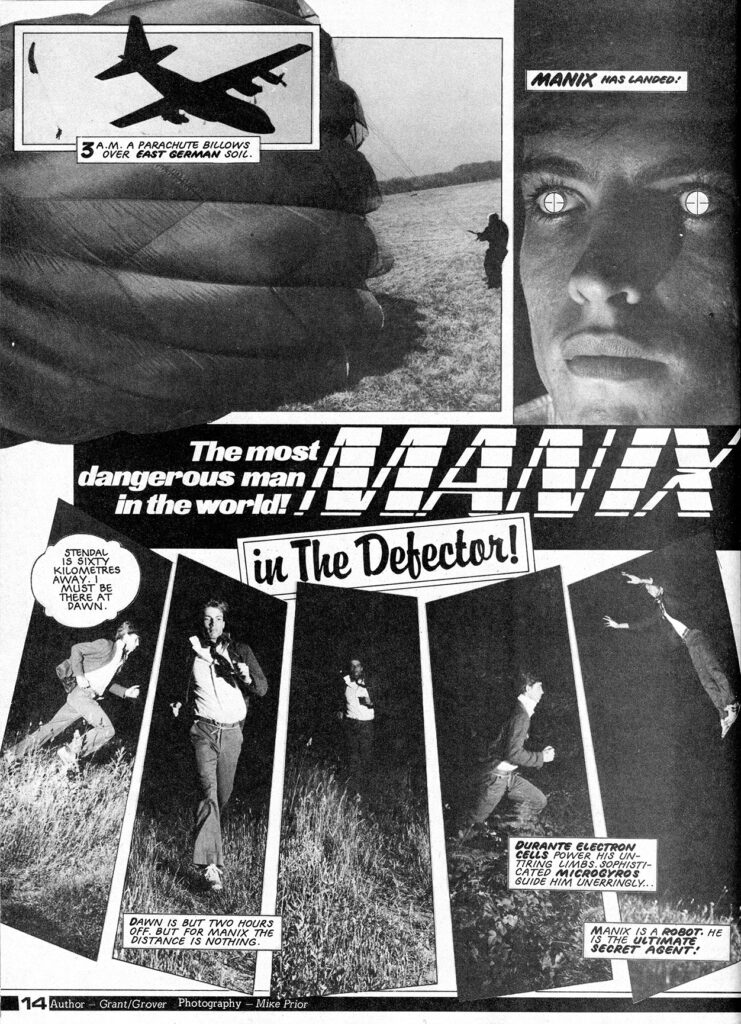
Unfortunately, Gary’s site hadn’t been updated for nearly 15 years and the address was now long-dead, but a look back through the Wayback Machine turned up a snapshot of the site with a contact email. Crossing my fingers, I sent an email…
Within a couple of days, I had a reply from Gary. He was hugely enthusiastic, generous with his time and his memories of the strip, and happy to answer the lengthy list of questions I had about his career, Doomlord and working for the Eagle.
Gary had been introduced to photography by his father, who had gifted him a Zeiss Ikonta. Although that sparked a passion for photography, it would be some years before that blossomed into career. He recalled:
“My professional photography began in my late twenties when I was asked to accompany my then-journalist girlfriend on an assignment to cover a story about Rod Stewart and Britt Ekland. This was for the IPC teen magazine Pink, and the story was to take a competition winner to have breakfast with them in Dublin, and for me to take the photos.
When I returned with the pictures the art director for the magazine asked me if I had considered doing it professionally. So that was it, I was off…”
He was soon shooting bands like The Jam, Boomtown Rats and Squeeze for Pink, as well as shooting live music for No. 1 and The Hit, and when IPC launched their girls’ photo-story titles he was on hand to start working for them too. Gary remembered sourcing models for these stories from Hemma and Michael Sulllivan’s Photopix agency, as well as working with young models like Tracey Ullman and Alex Kingston who would go on to become household names.
Working regularly for IPC put Gary in an ideal position when IPC editor Barrie Tomlinson was developing the new Eagle, and he remembers being involved early in taking Barrie and David Hunt out on shoots to show them how the process worked.
“I was unbelievably fortunate to be allocated ‘Doomlord’ as my story. The first script storyline that introduced the Doomlord character happens in the countryside at night. This was a new challenge, introducing Barry and Dave to the process in the middle of nowhere on a cold, dark winter’s night.”
The Doomlord Shoots
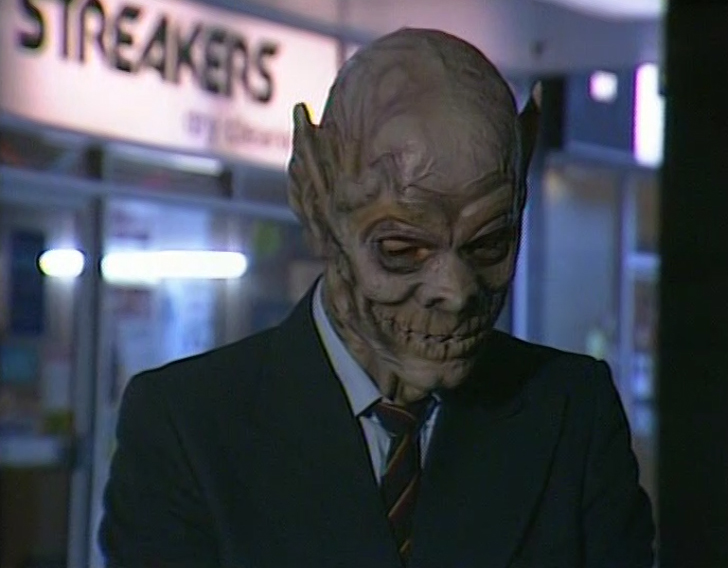
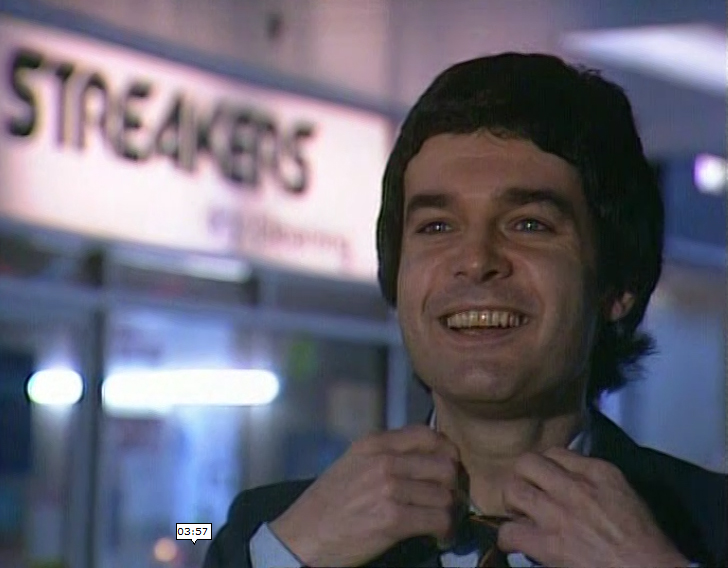
Location shoots for “Doomlord” ranged from Richmond Park to IPC’s headquarters in King’s Reach Tower, and even to Gary’s own back garden:
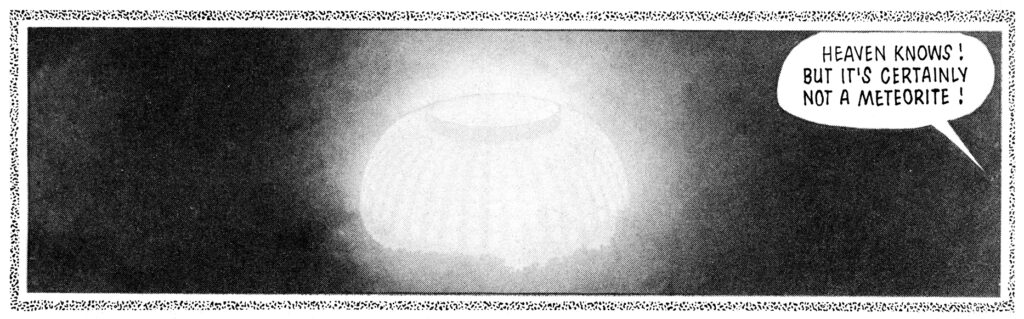
“Later on we had to shoot the spacecraft, which I thought would be best achieved back in my garden where I could employ some special effects. So, with the use of an upturned kitchen colander on my frosty lawn, I placed a powerful flashgun beneath it and had my assistant fire a CO2 fire extinguisher around the colander. I then took the picture which had shafts of light emanating from the holes through the vapour. The shot looked great, the spaceship was aglow!”
Gary worked alongside IPC staffer and future Marvel UK editor Ian Rimmer, who he had worked with closely on the girls’ titles, when Ian was brought onboard as assistant editor:
“[Ian] was a wonderful, calming personality, and had by then acquired a lot of experience working on the teen photo story mags.”
Although much of the process of producing photo-stories was the same as on the girls’ titles, there were some changes to the role of the writer that presented something of a trade-off for photographers:
“The way we worked in photo-story mags, was that a writer would produce a script, which would be divided into a series of frame descriptions, say from one to 35 frames, and underneath the scene descriptions would be the dialogue written beside the corresponding names or characters, a bit like a film script.
When photo-stories first began, the writer would also be the director and come out on the shoot and actively direct. In my opinion, this was how it worked best. But sadly, by the time the new Eagle came into being the directing was gone, and the photographers took charge of the whole process, and only had the script with the frame description dialogue in sequence in the storyline.
On the one hand this was good, as it gave us creative freedom, but on the other, the photographer was having to think ahead, read the script, set up and take the shots all at the same time.”
Despite the difficulties presented by this change in the working process, Gary still seemed to have relished the challenge of “Doomlord”, with its sci-fi theme and regular transformations giving him an opportunity to flex his creative muscles and come up with novel (and occasionally dangerous!) solutions for a shoot:
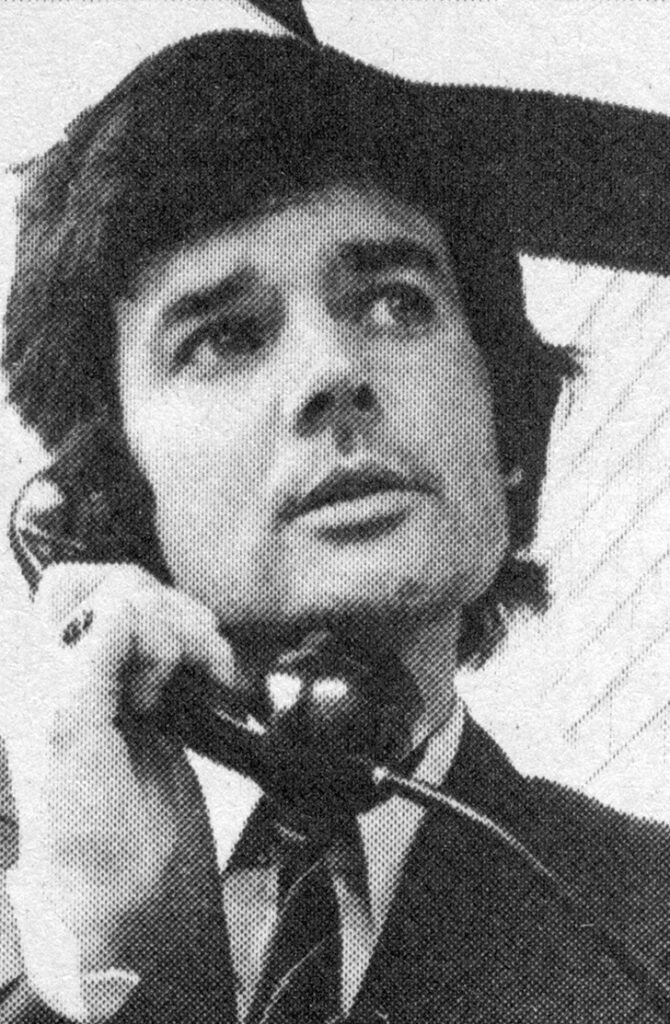
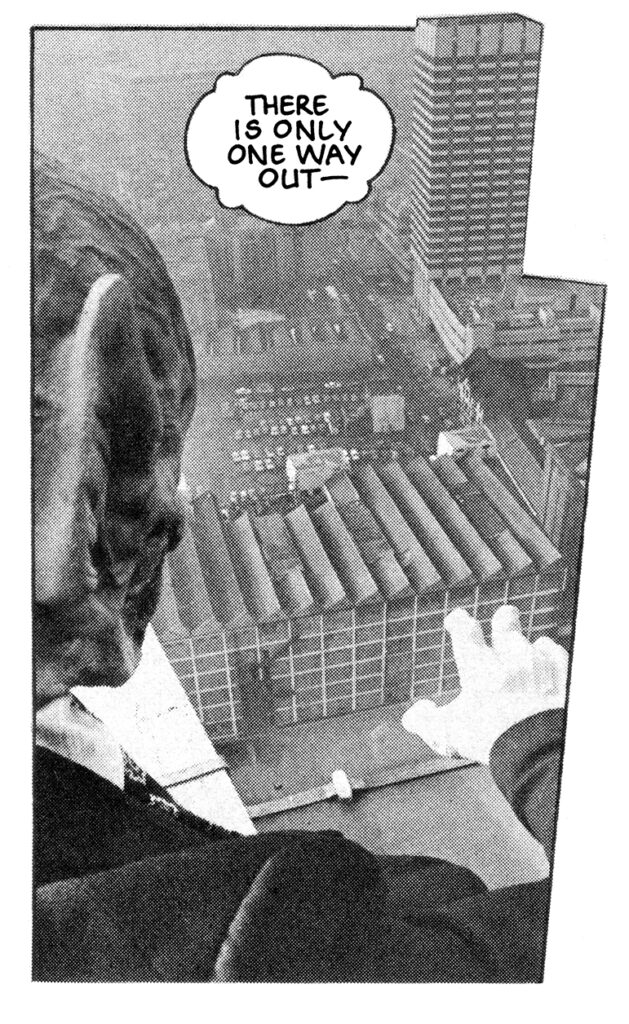
“As I had got to know almost everyone in security at IPC’s King’s Reach Tower over the years, and even photographing most of them at some time or other, I had the idea of arranging to be taken to the 32nd floor at the very top of the building, and to go outside on to one of the parapets where Doomlord would lean over the parapet with his arms outstretched, as if flying.
This would give us Doomlord looking down onto London for real, several hundred feet below, right on the edge of the Thames with the Houses of Parliament in perfect view. Now all that was required was for me to be above him, shooting down, so I stood on the parapet beside Doomlord where I was now on the edge, looking down on the terrifying scene below, where the cars looked like ants. I then got the security guy to hold my belt while I leaned forward over Doomlord and took the shot!
Needless to say, this worked perfectly, but on the next occasion I had the more sensible idea of having Doomlord 30 floors up lying on a table, this time in an office but beside a huge window with London below…”
Some other stories were less suited to Gary’s personality – “I think I would have hated the football story [Thunderbolt and Smokey], having to place the ball precisely in every single frame, especially when it was in the air!” – and there were others where he was glad to have seen one of his colleagues take charge:
“[David Watts] had the most unbelievable script writer that couldn’t be stopped from writing nightmare scenarios, like things taking place in an aeroplane, or with an army tank, or both together. They even had meetings to restrain him, but two weeks later he would be at it again with a burning building! This was to my mind a complete nightmare. Thank God I didn’t have that guy writing for me…”
Gary didn’t recall much about the development of Doomlord’s look, except that mask had been an off-the-peg piece and the robe had come from London costume house Berman’s and Nathan’s.
However, he did recall that the technical aspects of photography and reproduction were key to the look of Eagle’s photo-stories.
“We would try to print, or have images printed, in a very normal, not too contrasty fashion as the reproduction on the whole was pretty good, given the poor paper quality in the magazines.
Special effects during this time were mostly achieved by way of cutting out and making a collage to build up an image. A fair amount was done in camera, for example, double exposures, or zooming while shooting on a slower shutter speed to give a speed effect, or someone in a strange mental state, or falling… whatever worked best.
It was fun, and boy, were we experimenting and learning. This was certainly the right place for that!”
Although there was a degree of territoriality among photographers on the photo-stories – Mike Prior remembered no-one wanting someone “muscling in” on their job – the small professional circle led to some enduring friendships, and Gary recalled his colleagues fondly and was still in contact with Henry Arden, Mike Prior and David Watts. He was, in his own words, “not really a comic nerd” but he had loved working on the Eagle and had “in various ways […] been involved with people connected to comics.”
As for the impact of photo-strips on his own career, he noted:
“Well, the truth of it was clarified by Mike Prior, who reminded me a few years ago that the photo-stories paid for equipping our studios and building our future careers. If you didn’t know you could easily think that photo strip was our main work, but this has never been the case. From the outset I have shot live music, fashion, Beauty and record sleeves. After Eagle I simply got into doing more advertising work, music covers, and large studio sets.
Most of us have had our own studios from the beginning, and the photo-stories have been a healthy interesting adjunct to our main work, but boy, has it been valuable!”
Our last email exchange coincided roughly with the start of the COVID-19 pandemic, and all that that entailed, and despite several attempts to get back in touch in the years following I haven’t spoken to Gary since. It’s a shame, both as his memories of this curious experiment in boys’ comics were so clear and interesting, but also because subsequent to our conversations a couple of pieces of Doomlord history turned up that I had hoped to share with him…
Uncovering “Middle English”, and That Mask
There had been many posts about Doomlord on forums over the years, but a passing mention of the character once appearing on TV on the 2000AD forum caught my eye. The details in that led to a post on the Digital Spy forums that mentioned Doomlord appearing on the Thames TV show, Middle English, in the early 1980s. Armed with that lead, I spent some time trying to find listings for Middle English on various sites but at the time there wasn’t much information available and the programme itself appeared to have never been repeated, or digitised by anyone.
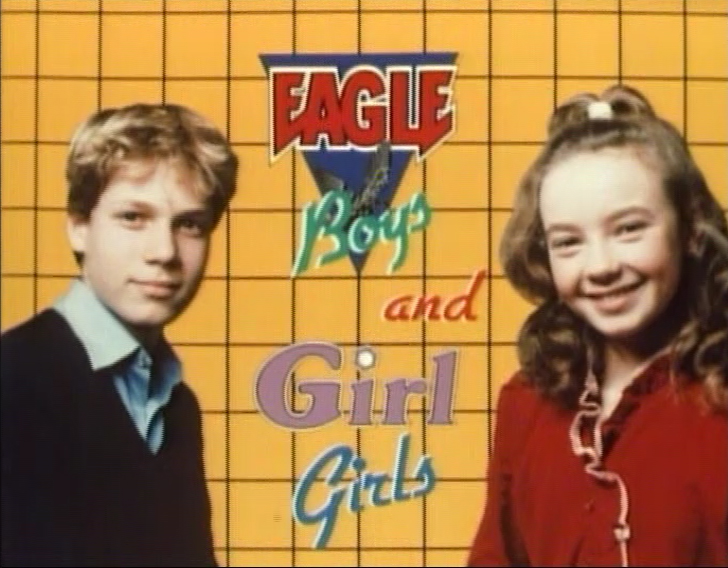
The Thames TV catalogue was now owned by Fremantle, so I reached out to their archive department to see if they could be of any help. Within half an hour, one of their archivists replied to tell me that they had an episode of Middle English titled “Eagle Boys & Girl Girls”, transmitted on 1st March 1983, listed in their records and that they still held the physical material. Although there was no further information in their archive about the programme, it seemed likely that this was what I had been looking for. More emails back and forward confirmed that Fremantle’s archive team would be prepared to provide a digital copy of the programme for a transfer fee.
A week later, I received another email to let me know that they had retrieved the one inch master tape from storage and sent it for duplication but that when it had arrived, the technician performing the transfer realised that the tape was creased in several places and suspected it may have been damaged or distorted. However, a round of chemical treatment and a careful transfer later, they had a digital copy of the original programme in its entirety ready for download.
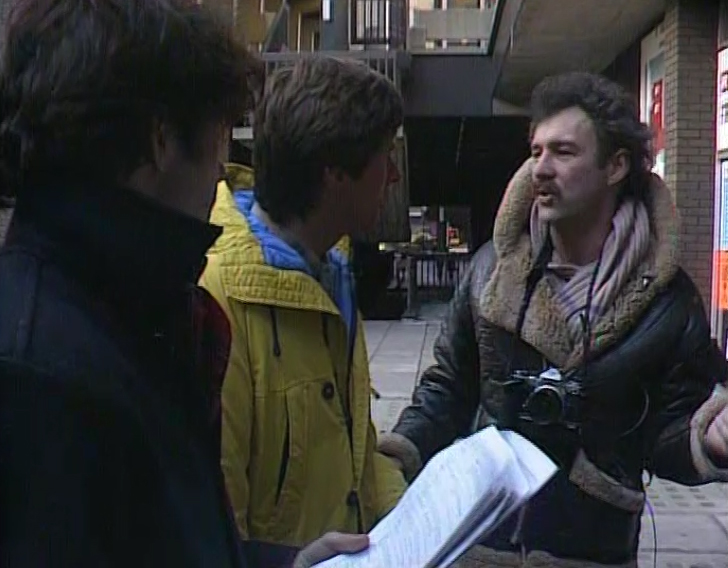
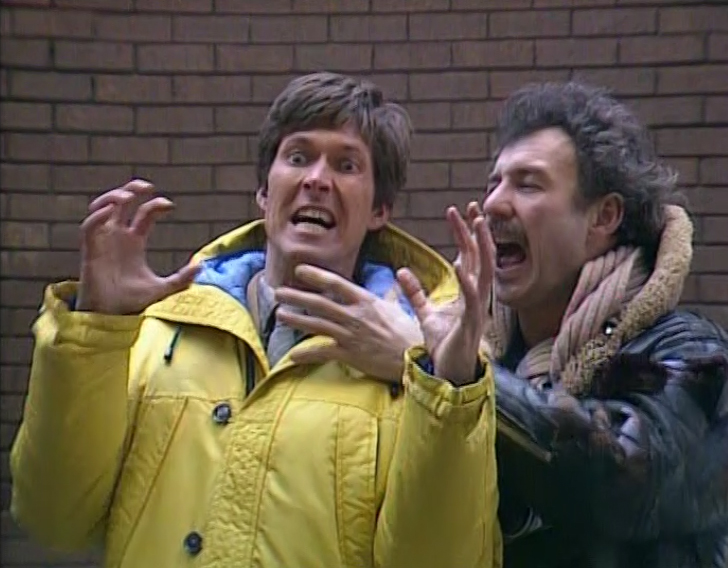
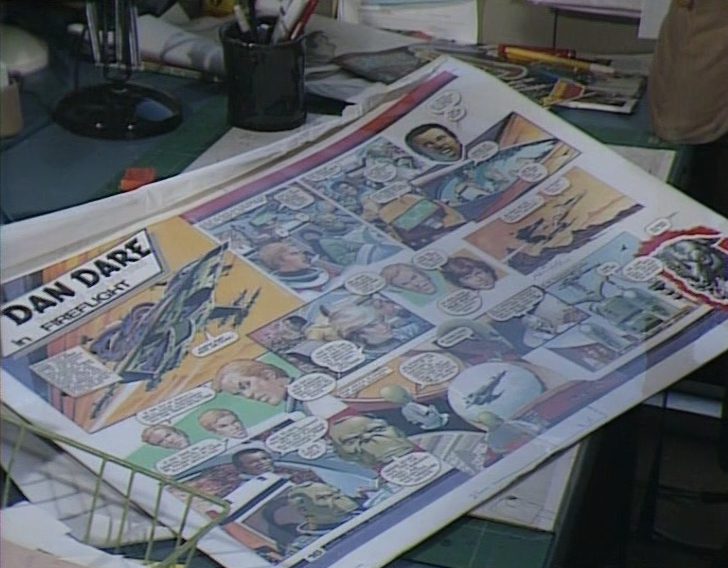
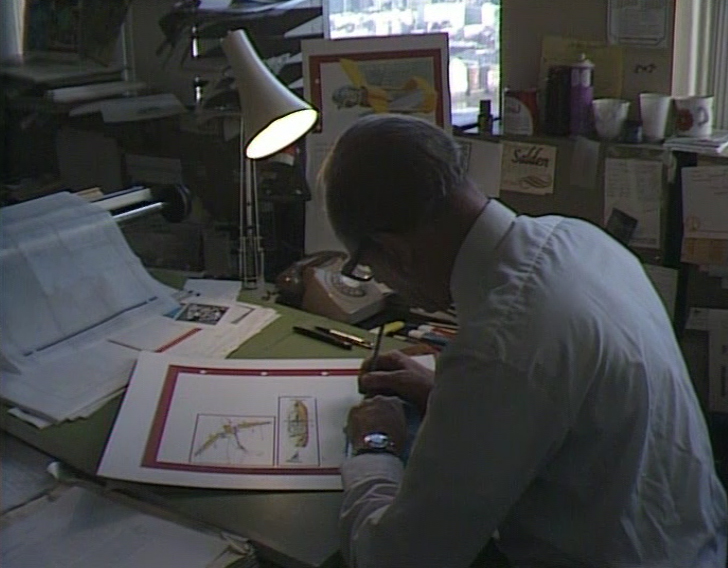
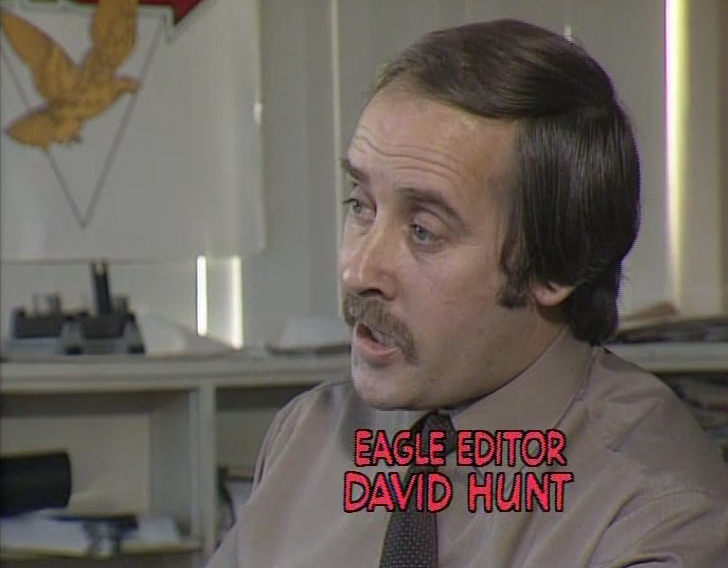
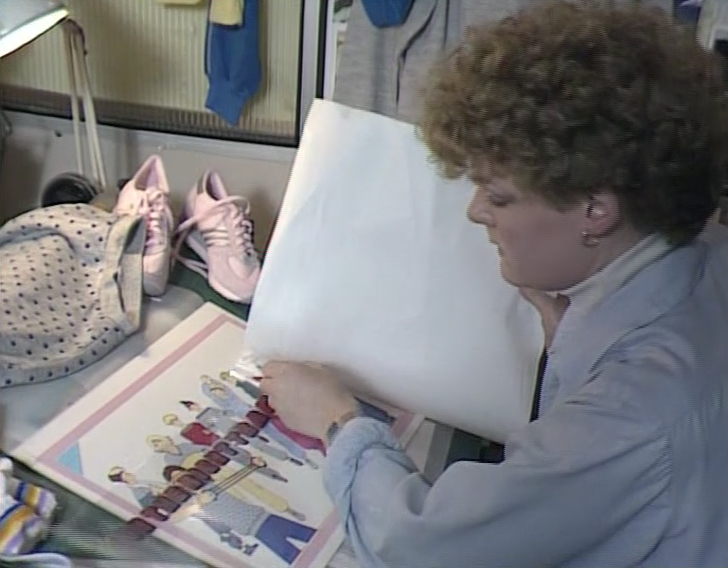
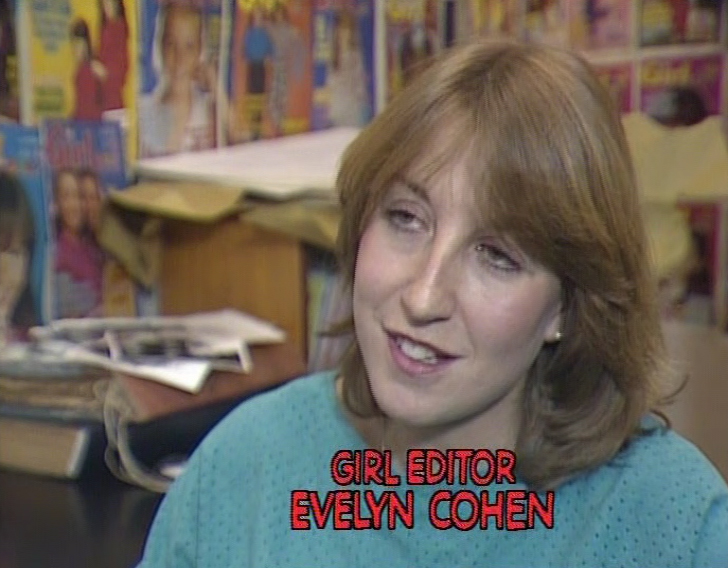
The programme itself was a 15-minute feature on Eagle and Girl, featuring interviews with Eagle editor David Hunt, and Evelyn Cohen, the editor of Girl. The programme was presented by Alan Hydes (now an artist, living and working in Mallorca) and was an interesting look at the two comics for a young audience. However, running partway through the programme there was a short segment taking viewers behind the scenes on a “Doomlord” shoot, which saw Alan interview the actor behind Doomlord’s mask (and the face of his human alter-ego, Eric Plumrose) Michael White, join Gary Compton on a photoshoot, and play a victim of Doomlord himself! Alan’s guest appearance would see print days after transmission in the 5th March and 12th March issues of Eagle, in the final Doomlord story, Doomlord III.
The full segment is available to watch here, and it’s a fascinating glimpse into the production of the story, with Gary Compton in full flow bringing a shoot to life.
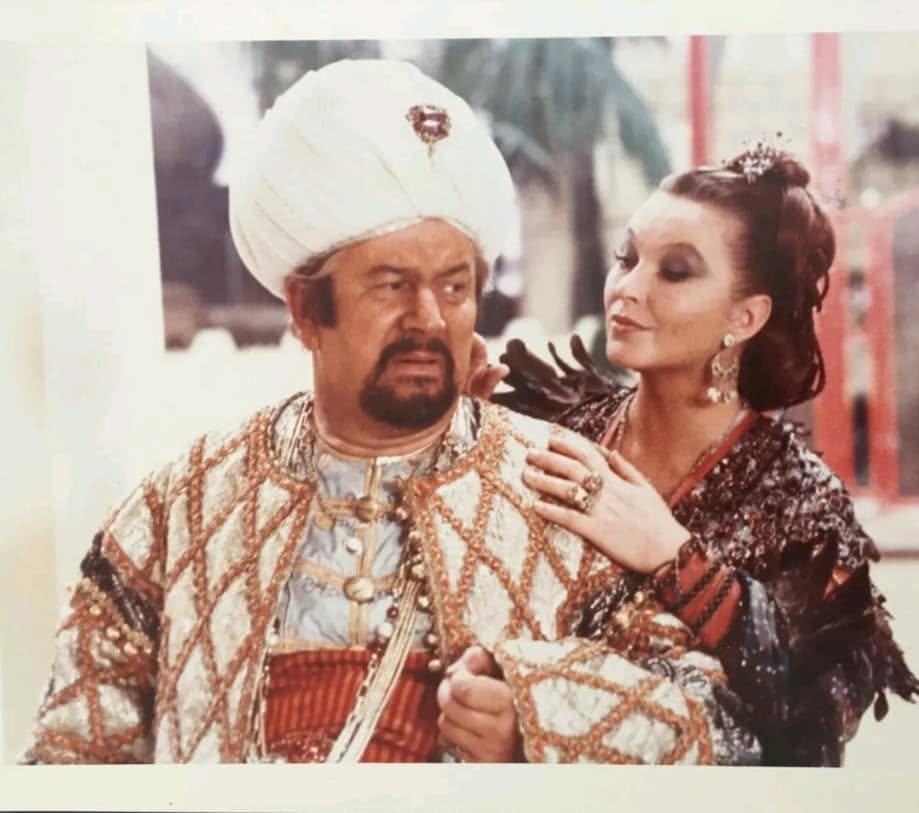
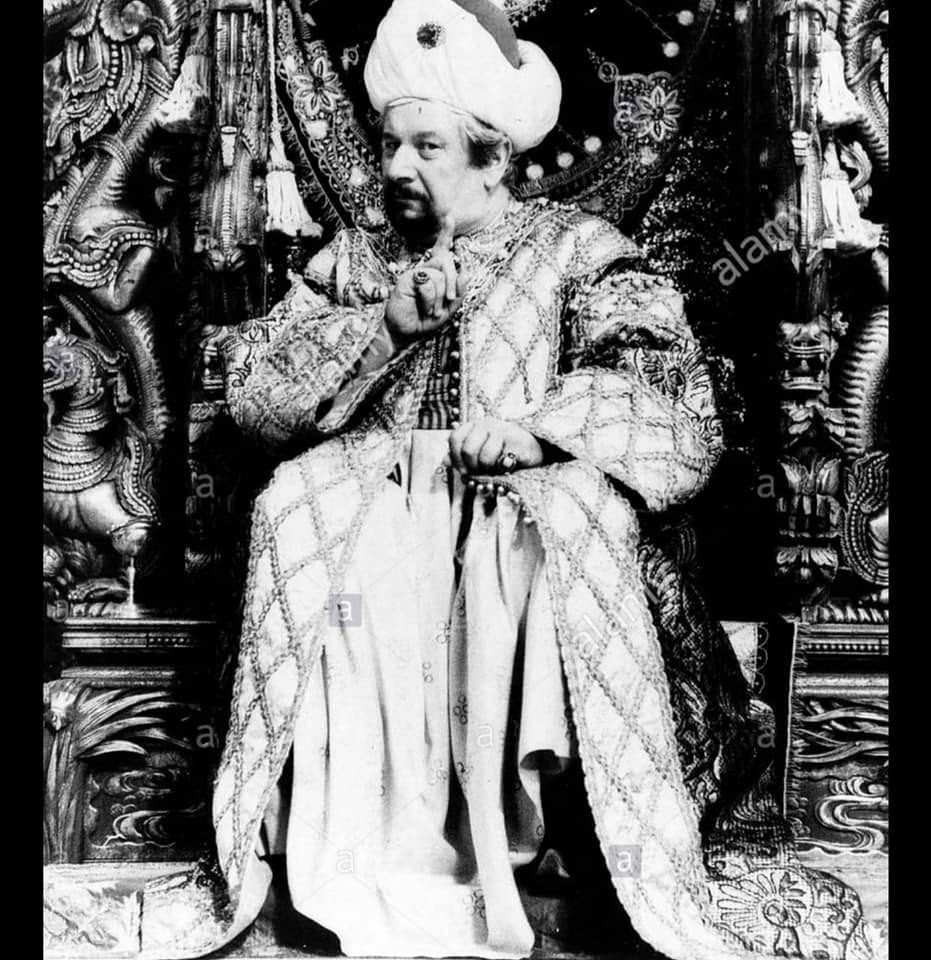
The final piece in the Doomlord puzzle was the look of the character. The memories of those involved, and detective work by fans, had largely put together the handful of elements that gave him his unique look: a cloak from The Thief of Baghdad, worn by Peter Ustinov, a collar from Space: 1999, and a mask produced by French mask-makers, Cesar, called Danse Macabre. Although Cesar were at the time still operating (they have since ceased trading and liquidated their warehouse stock) the mask itself was no longer available.
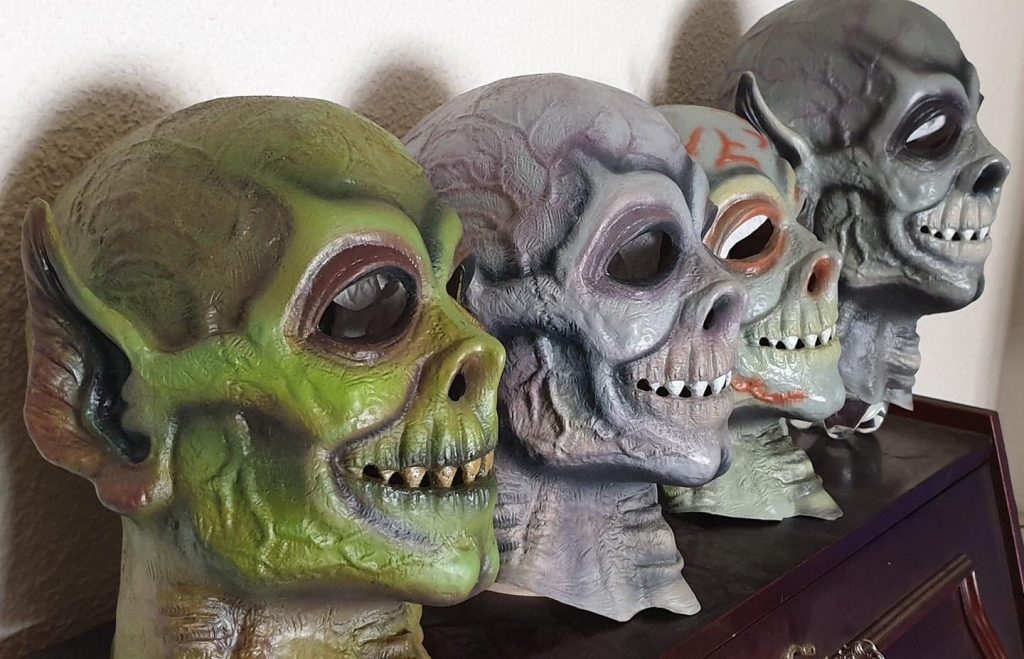
Enter Isidro Campos, an enormously enthusiastic fan of the character, from Ciudad Real in Spain. Isidro and I had spoken on and off for a couple of years about Doomlord, and he had got in touch to let me know that he’d finally managed to find an original mask and was working with an artist friend to produce recasts for sale. Isidro was kind enough to set one aside for me, and soon another Doomlord was making his way to the UK.
My conversations with Gary, Isidro’s discovery and the unearthing of the Middle English broadcast closed a circle for me. Although there were still questions about the character and the people behind it that would likely always remain unanswered, my own search for Doomlord that had begun with a copy of Eagle in a house in Ayr had come to an end.
Doomlord had lived in my grandparents’ house. He had lived in the pages of Eagle, and over years of talking to the people involved in his creation and the fans who remembered this strangest of anti-heroes, he lived still.
Like poor Walter Ballantyne we had all been infected by something alien, but unlike Wally we had loved it.
Richard Pearce
Postscript: While finishing writing this article, David McDonald got in touch to let me know that Isidro Campos had died. Shortly after, Barrie Tomlinson, the driving force behind so much of British comics, and of the new Eagle – also passed away. The two were both driven fans in their own way – Barrie, a fan of the original Eagle, determined to see it fly again in the 1980s, and Isidro so affected by a character from Barrie’s new Eagle that he was compelled to recreate it and share it with other fans – and both will be much missed by those who knew them.
Check out the special offers in the shop too! (Some copies of Hibernia’s first Doomlord collection, The Death Lords of Nox, published some years ago now, are still available)
Do note that shop prices are in Euro. For British buyers, price, including postage to Great Britain will be approximately £19.50
The obligatory reminder, humans: Doomlord Volume 1: Zyn is dispatched from Ireland and all postal charges are charged extra and at cost at Checkout. Please allow Three Weeks delivery to the UK and Europe, and Six Weeks for all countries outside of Europe. Delivery is usually much quicker but delays do happen. Irish orders can be expected within a week.
More Doomlord on downthetubes
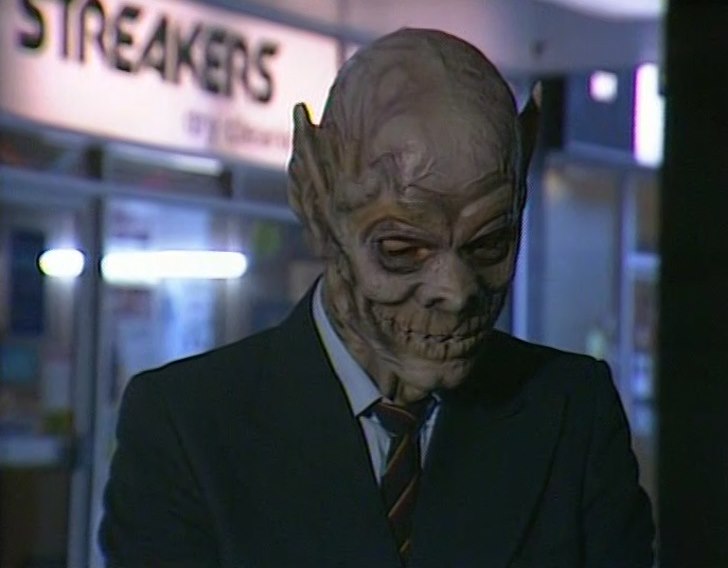
• Behind the Scenes on Eagle: Secrets of Doomlord Revealed
When Eagle was revived in the 1980s, it initially featured a number of fumetti-style photo strips, and “Doomlord” was the most popular of them all. Almost 40 years on, it’s still fondly remembered – but who played the characters who featured in the strip – and where might you find Doomlord’s mask today, if at all?
• Behind the Scenes of Eagle comic – An Interview with Dan Dare and Doomlord FX designer, Julian Baum
• Celebrating 20 Years of Hibernia Comics
Publisher David McDonald reflects on 20 years of plundering comic archives!
Head downthetubes for…
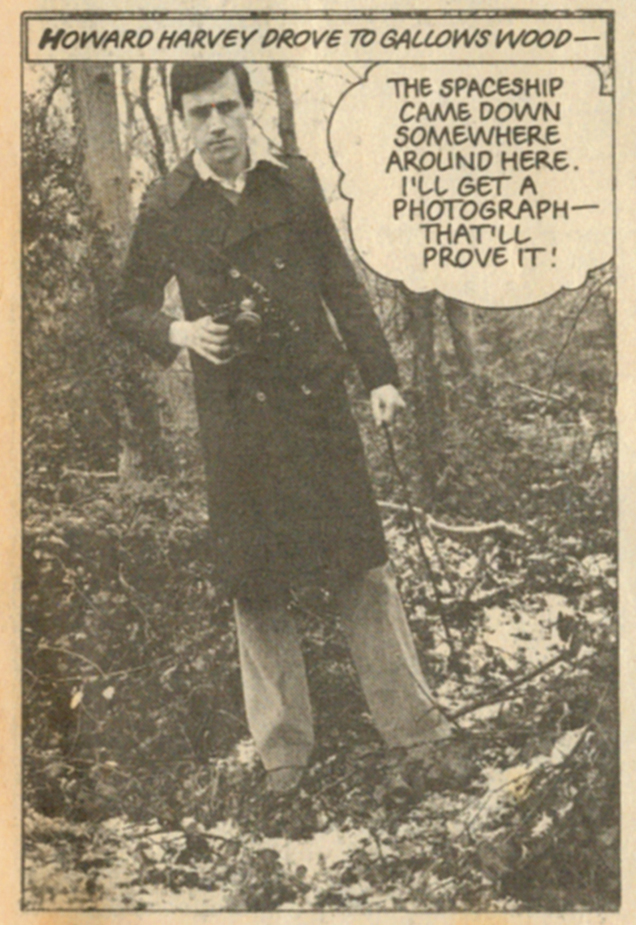
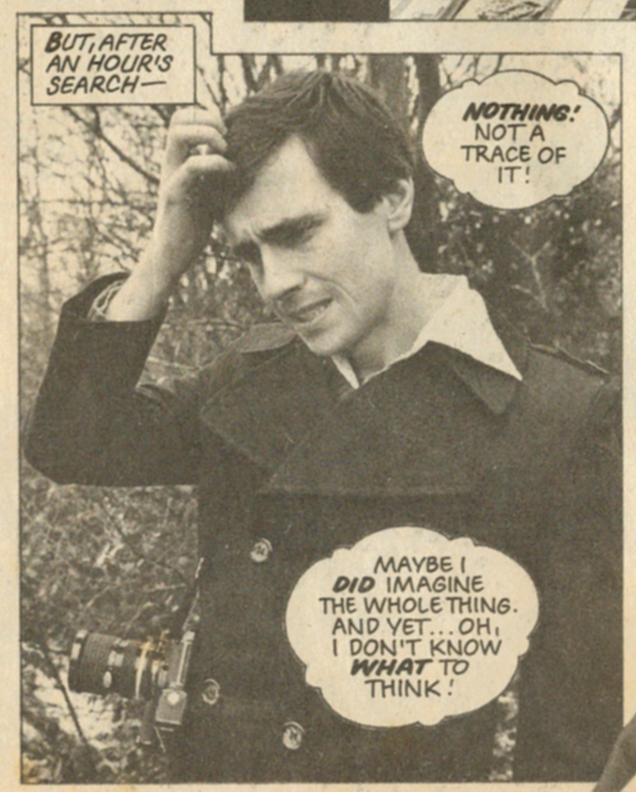
• The Haunted Generation: Mike Mungarvan, Doomlord and Eagle Comic
Bob Fischer talks to the actor who portrayed journalist Howard Harvey
• Tebeosfera: “Doomlord” in Spain, published as “Exterminus”
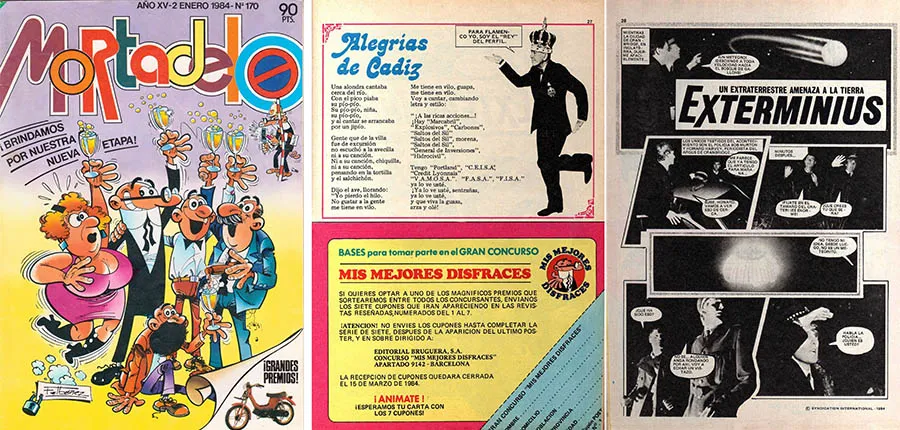
• Doomlord TV show 1983 intro pilot episode
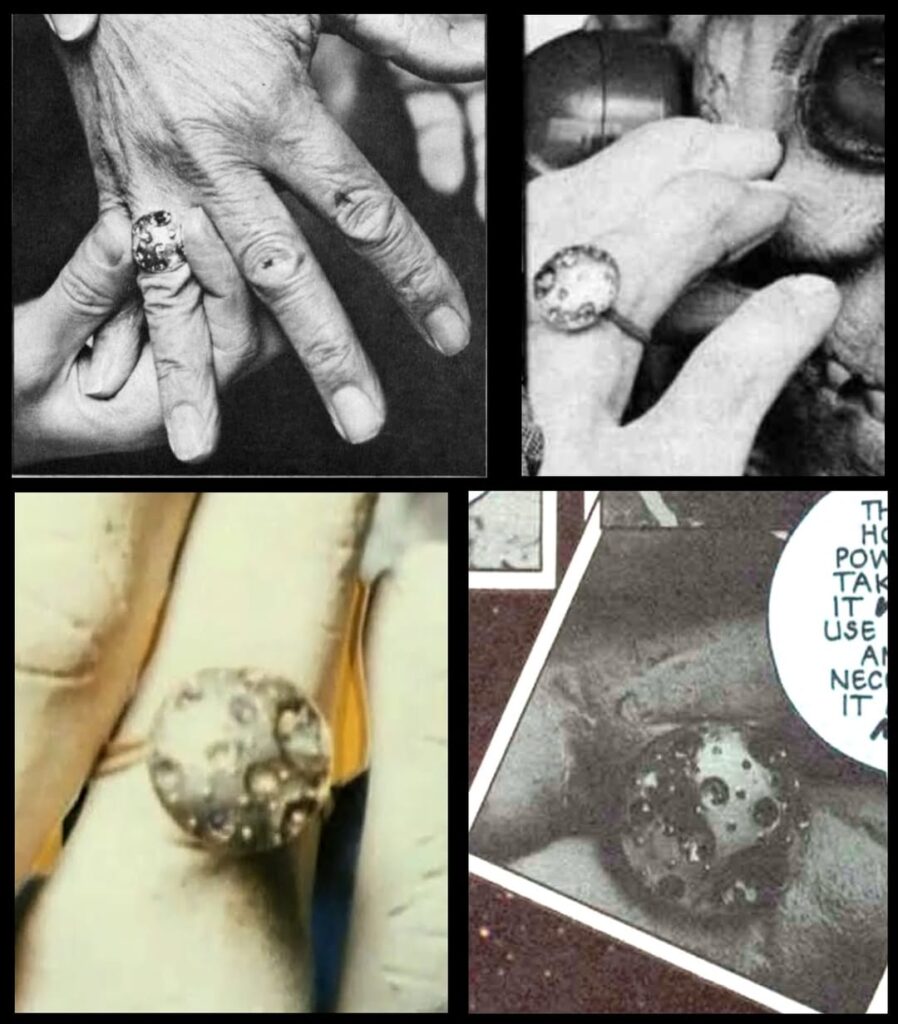
Costume Conundrums: One of the pieces of the puzzle about Doomlord yet be solved is the origin of his energiser ring. Does this ring look familiar to anyone? It looks like a cheap silvery dome-shaped ring with embedded rhinestones.
- About the Author
- Latest Posts

One of many guest posts for downthetubes.
Categories: British Comics, British Comics - Collections, Comics, Creating Comics, downthetubes Comics News, downthetubes News, Features
 6000 Not Out: A Chat with Commando writer Ferg Handley
  Creating Comics: An Interview with Dan Abnett
Great article but am I alone in not liking the photo stories regardless of how good the actual story is/was?